 Skip to content
Unified Platforms
LinkedIn Ads Agency
Unified Platforms is a LinkedIn ads agency for B2B teams that need pipeline, not applause. We build audience-first campaigns on the only platform where you can target by job title, company, and buying committee, then manage the economics honestly, because LinkedIn clicks are the most expensive in advertising and every one of them has to be spent like it matters.
- Pipeline reported, not impressions
- Audience-first, title and account targeting
- CRM-connected measurement
Our Clients
Brands that have worked with us
From global giants to fast growing startups, teams trust Unified Platforms with their growth.

What LinkedIn Ads Agency Covers
- Audience architecture and ABM targeting
- Campaign strategy across the funnel
- Creative built for the feed it lives in
- Lead gen forms and landing path design
- Bidding, budget, and cost control
- CRM integration and pipeline reporting
Overview
A LinkedIn Ads Agency That Answers to Your Pipeline
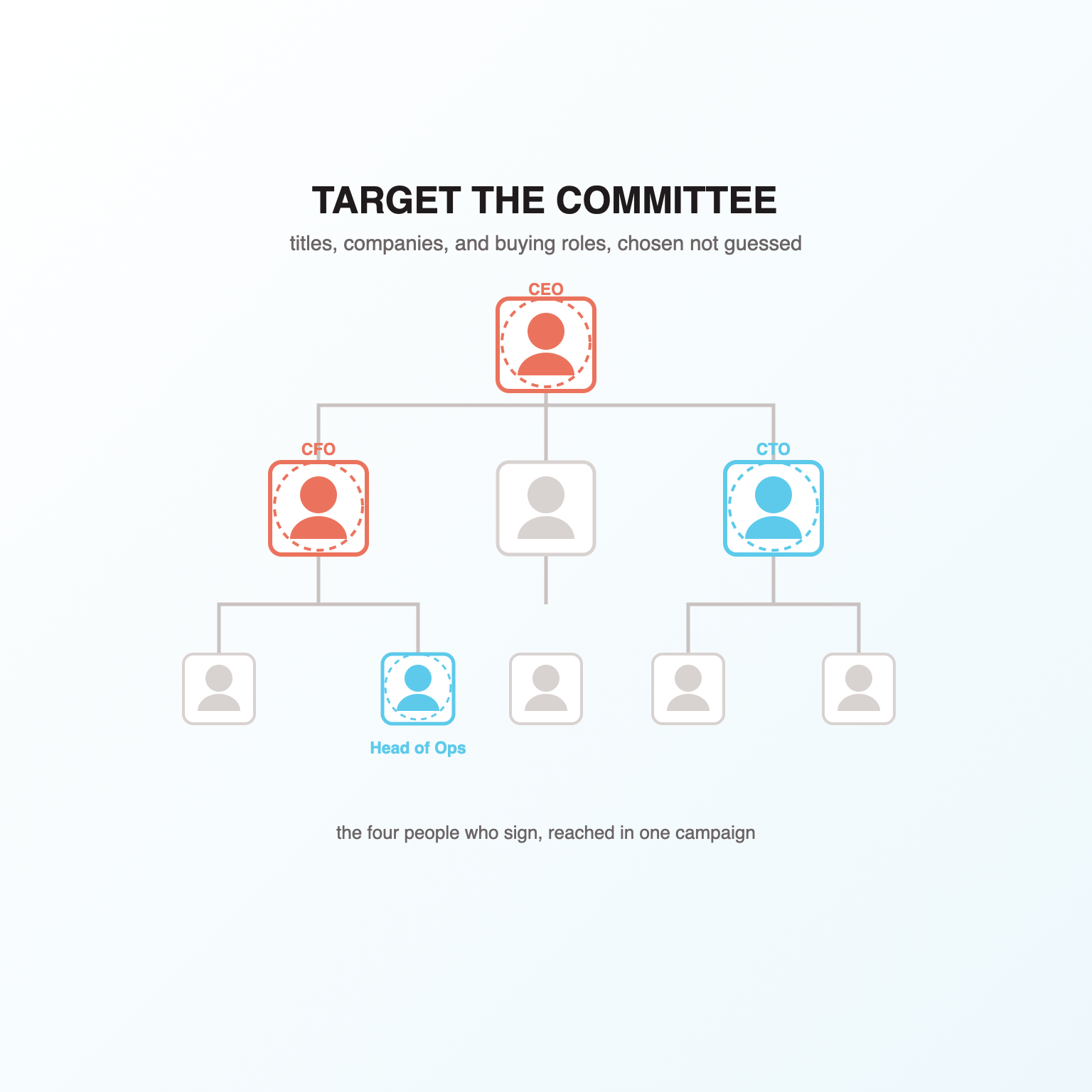
LinkedIn is the only advertising platform where B2B targeting is native rather than inferred. You are not hoping an algorithm finds decision makers; you are choosing them: job titles, seniorities, industries, company lists, buying committees. That precision is why LinkedIn clicks cost five to ten times what Meta charges, and why the platform punishes sloppy campaigns so brutally. Run it like Facebook and it burns budget; run it like an account-based channel with disciplined economics and it produces the highest quality pipeline paid media can buy. Our LinkedIn ads agency practice exists for the second outcome.
The pattern we see in inherited accounts is consistent: audiences too broad because narrow ones felt expensive, lead gen forms harvesting contacts nobody calls, creative recycled from other channels, and reporting that stops at cost per lead because the CRM was never connected. The result is a channel that looks busy and produces nothing the sales team respects. Fixing it is rarely about clever hacks; it is about matching the campaign to how B2B buying actually works: committees, long cycles, and trust built before the form fill.
Our approach starts with who, not what. We build the audience architecture first, ideal customer profile translated into targetable segments, account lists synced from your CRM, buying committee roles mapped to content, and only then design campaigns and creative for each stage: awareness that earns attention from cold accounts, engagement that warms them, and conversion assets that a serious buyer would actually trade their details for. The sequencing matters, because on LinkedIn a conversion campaign aimed at a cold audience is just an expensive way to be ignored.
Economics run through everything. LinkedIn only works when the arithmetic is done against deal values, not lead counts: a 4,000 rupee cost per lead is catastrophic for a webinar funnel and trivial for an enterprise deal. We agree the maths with you before spending, then manage bids, formats, and frequency against it, with the CRM connected so cost per qualified opportunity, not cost per form fill, is the number the account optimises toward. That connection alone reforms most struggling accounts.
Creative deserves its own mention, because LinkedIn punishes borrowed advertising harder than any platform. The feed is professional identity theatre: people scroll it to look informed, and they engage with content that makes them better at their jobs. Ads that teach something specific, name a real problem, or show a practitioner talking like a practitioner get read; repurposed display banners and stock-photo slogans get scrolled past at full price. We produce creative in the platform's own grammar and test it like media, because on small, expensive audiences a fatigued message is a silent budget leak that compounds every week nobody notices it.
We run LinkedIn as part of the wider system too: retargeting site visitors sourced from cheaper channels, syncing audiences with email and outbound motions, and handing engaged accounts to sales with context rather than just contact details. The 8,400 plus B2B registrations in our results band came from exactly this kind of orchestration, and the same operating discipline, test, measure, reallocate, runs every account we manage.
Audience architecture and ABM targeting. The audience is the strategy on LinkedIn. We translate your ideal customer profile into layered targetable segments, title and seniority matrices, industry and company-size filters, uploaded account lists, and CRM-synced retargeting pools, then map buying committee roles to the content each should see. Exclusions get equal care: existing customers, open opportunities, and irrelevant seniorities are removed so precision spend stays precise.
Campaign strategy across the funnel. Cold accounts do not convert on first contact, so we structure LinkedIn as a sequenced system: thought leadership and video to earn attention, engagement retargeting to warm the interested, and conversion campaigns, demos, lead magnets, events, aimed only at audiences that have shown intent. Budget splits across stages by design rather than defaulting to bottom-funnel, because that default is the single most common way B2B accounts waste money.
Creative built for the feed it lives in. LinkedIn creative fails when it looks like an ad and works when it looks like insight. We produce single image, carousel, video, and document ads in the platform's native grammar: specific claims, real numbers where you have them, founder and practitioner voices over brand slogans. Every concept ships as a testable variant set, and fatigue is managed on a calendar because LinkedIn's small audiences burn creative fast.
Lead gen forms and landing path design. Native lead gen forms convert at multiples of landing pages, but only earn their keep when the offer is worth a real buyer's details and the follow-up is immediate. We design the offer ladder, configure forms with qualifying fields that filter rather than pad volume, wire instant CRM delivery with alerting, and use landing paths where the sales motion needs richer context. Speed to first touch gets treated as part of the campaign, because it is.
Bidding, budget, and cost control. LinkedIn's auction rewards attention and punishes autopilot: automated bidding on a small audience will happily double your costs. We manage manual and cost-cap strategies by objective, control frequency before it breeds resentment, and pace budgets against audience size so campaigns never strangle themselves. The 44 percent below target cost figure in our results band is what disciplined auction management looks like in practice.
CRM integration and pipeline reporting. We connect the ad account to your CRM so every lead carries its campaign, audience, and creative lineage into the pipeline, then report on what sales actually accepted: qualified opportunities, meetings, and revenue influence, alongside the media metrics. Campaigns get optimised against downstream quality, which routinely reverses what the platform metrics alone would have you scale. This is the difference between buying leads and buying pipeline.
The Difference
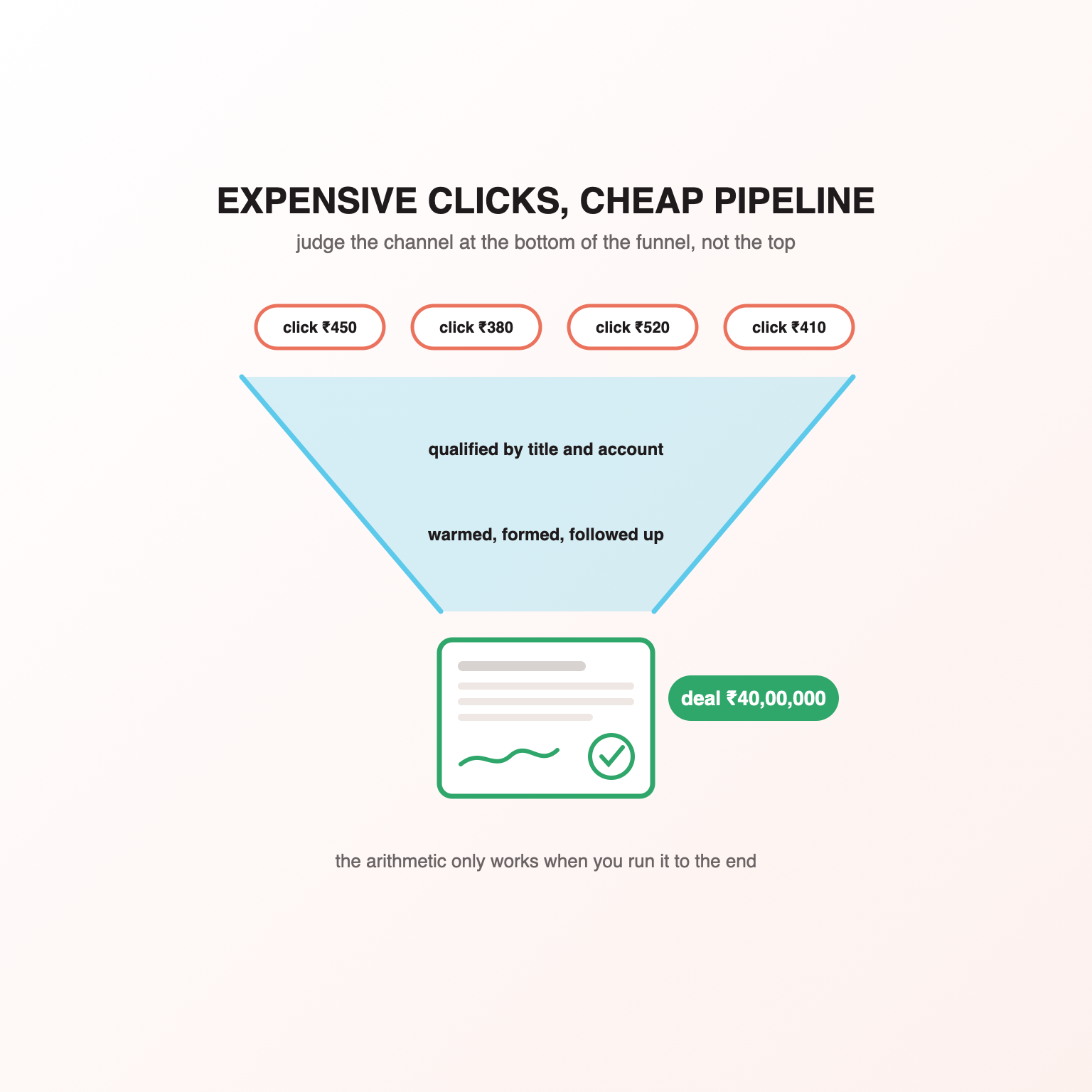
Expensive Clicks, Cheap Pipeline
LinkedIn's click prices scare off teams who judge channels at the top of the funnel, which is precisely why the buyers there face less competition than they should. When the arithmetic runs on qualified opportunities and deal values, the most expensive click in advertising routinely produces the cheapest enterprise pipeline. We do that arithmetic before spending, and manage the account so it stays true.
Book a Strategy CallOur Process
How We Run a LinkedIn Ads Engagement
A disciplined sequence, adapted to your competitive landscape. Open each step.
01ICP and account audit
02Economics and target setting
03Audience and campaign build
04Creative production and launch
05Optimisation cadence
06Pipeline review and scale
Why Unified Platforms
Why B2B Teams Choose Us for LinkedIn Ads
The working habits behind every engagement.
B2B economics, done before spending
Most LinkedIn budgets die from denominator error: judging the channel on cost per click when the business runs on cost per closed deal. We set the arithmetic with you first, deal values, close rates, allowable acquisition costs, and manage the account against it. Sometimes that maths says LinkedIn is wrong for you, and we will say so before taking the retainer.
Audience craft over autopilot
LinkedIn's expensive clicks make audience precision the highest-leverage work in the account. We build layered segments with deliberate exclusions and committee mapping, and we refuse the broad-audience shortcut that makes dashboards look healthy while sales complains about junk. Precision is why the channel exists; we keep it precise.
Creative that respects the reader
B2B buyers scroll LinkedIn to learn, not to be advertised at. Our creative earns attention with specifics, real numbers, named problems, practitioner voices, and skips the stock-photo corporate wallpaper that trains audiences to scroll past you. It is also tested like media, not admired like branding, with rotation calendars that outrun fatigue.
Pipeline truth via the CRM
We wire the CRM in before scaling anything, so optimisation runs on qualified opportunities rather than form fills. That connection routinely reverses what the platform would have you scale, and it means our monthly reviews talk about pipeline and revenue influence in your own system's numbers, not screenshots of a flattering ads dashboard.
Proof from real B2B campaigns
The 8,400 plus B2B registrations at 44 percent below target cost in our results band came from a campaign we ran for METRO, and we are happy to walk through how: the audience build, the offer, the follow-up orchestration. Ask about any number on this page and you will get the full story, including what failed on the way to it.
Senior operators, documented accounts
The people running your campaigns have B2B scar tissue, not just certifications, and everything they do sits in your account with naming conventions, change logs, and measurement definitions your team can audit. Forty plus years of collective channel experience, and none of it hidden behind an agency login you cannot open. If you ever bring the channel in-house, the account itself will teach your team how it was run, which is exactly how an agency should leave a room.
Industries
Industries We Work With
Deep experience across the sectors we serve, with strategy tailored to each.
Get a Straight Read on Your LinkedIn Maths
Tell us who you sell to and what a closed deal is worth, and we will give you a straight read: whether LinkedIn can hit your acquisition maths, what budget the audience size honestly supports, and where an existing account is leaking. The first conversation usually answers the question teams have been debating internally for months, because we have seen the same maths play out across dozens of B2B accounts. If the arithmetic says the channel is wrong for your business, we will tell you that too, before it costs you a quarter's budget to find out.
Book a Strategy CallQuestions
Frequently Asked Questions
Straight answers before you ever get on a call.
LinkedIn Ads Basics
What does a LinkedIn ads agency actually do?
Why should we use LinkedIn ads instead of Google or Meta?
What do LinkedIn ads cost in India?
What ad formats work best?
Strategy and Targeting
Which targeting attributes actually matter on LinkedIn?
How narrow should our targeting be?
Can you run account-based marketing campaigns?
Do lead gen forms produce junk leads?
Working With Us
What budget do we need to start?
How long until LinkedIn ads produce pipeline?
Do you also handle the creative and copy?
Campaign Operations
How often should LinkedIn creative be refreshed?
Should we run LinkedIn ads always-on or in bursts?
Can you work with our existing content and thought leadership?
Do you manage LinkedIn organic or just paid?
Measurement
What tracking needs to be in place before spending?
How do you measure LinkedIn ads beyond cost per lead?
Our last LinkedIn campaign produced leads sales ignored. Why?
Can you prove the ads influenced deals and not just touched them?
Reach the Committee Before Your Competitor Does
B2B budgets are shifting toward the channels that can prove pipeline, and LinkedIn rewards the shift only for teams disciplined enough to run it properly. The window is real: most of your competitors are still treating the platform as a place to repost brochures, which means attention among your exact buyers is cheaper than it will be once they learn better. Somewhere on LinkedIn right now, the exact committee that will approve your next enterprise deal is scrolling past generic ads from vendors they will never call. Reaching them is not a targeting trick; it is a system: precise audiences, creative that earns attention, economics set against deal values, and a CRM connection that keeps everyone honest. That is what a serious LinkedIn ads agency builds, and it is what we run every day. Book a free strategy call and bring your deal maths; we will bring a straight answer about whether LinkedIn can hit it, and a plan for how.
Book a Strategy CallRelated: social media marketing services.
Explore more