 Skip to content
Unified Platforms
AI Search Optimization Services
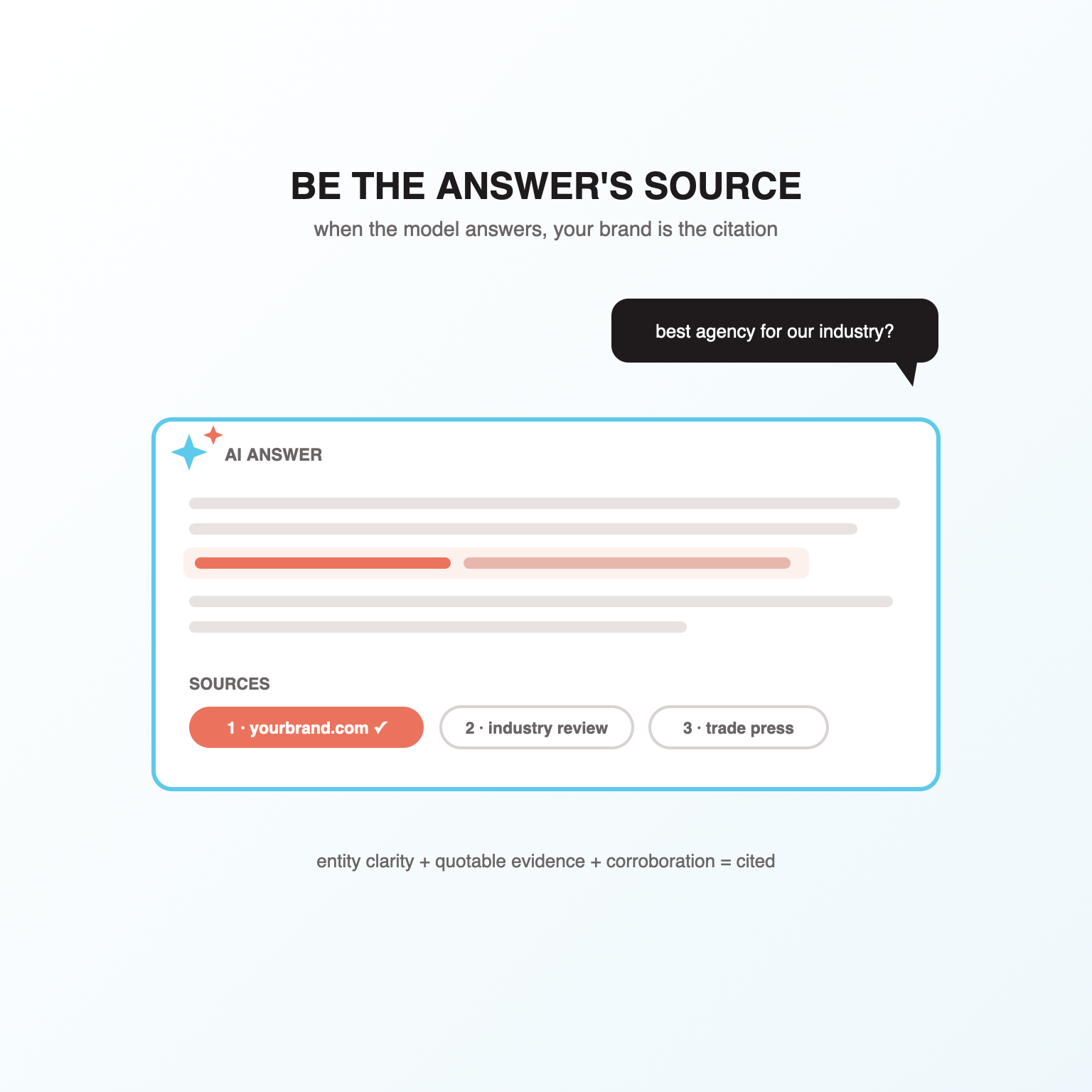
Unified Platforms is an AI SEO agency providing AI search optimization services for brands that want to stay visible as search itself changes shape. Google AI Overviews, ChatGPT, Perplexity, Gemini, and Copilot now answer questions your buyers used to click through to answer for themselves. We make sure those answers know who you are, cite you, and send you the demand, measured properly rather than guessed at.
- Cited in answers, not just ranked in links
- Entity and evidence engineering
- AI visibility measured, not assumed
Our Clients
Brands that have worked with us
From global giants to fast growing startups, teams trust Unified Platforms with their growth.




What AI Search Optimization Services Covers
- AI visibility audit
- Entity engineering and knowledge foundations
- Citation-worthy content architecture
- Third-party corroboration
- Technical readiness for AI crawlers
- AI visibility measurement
Overview
AI Search Optimization That Gets You Into the Answers
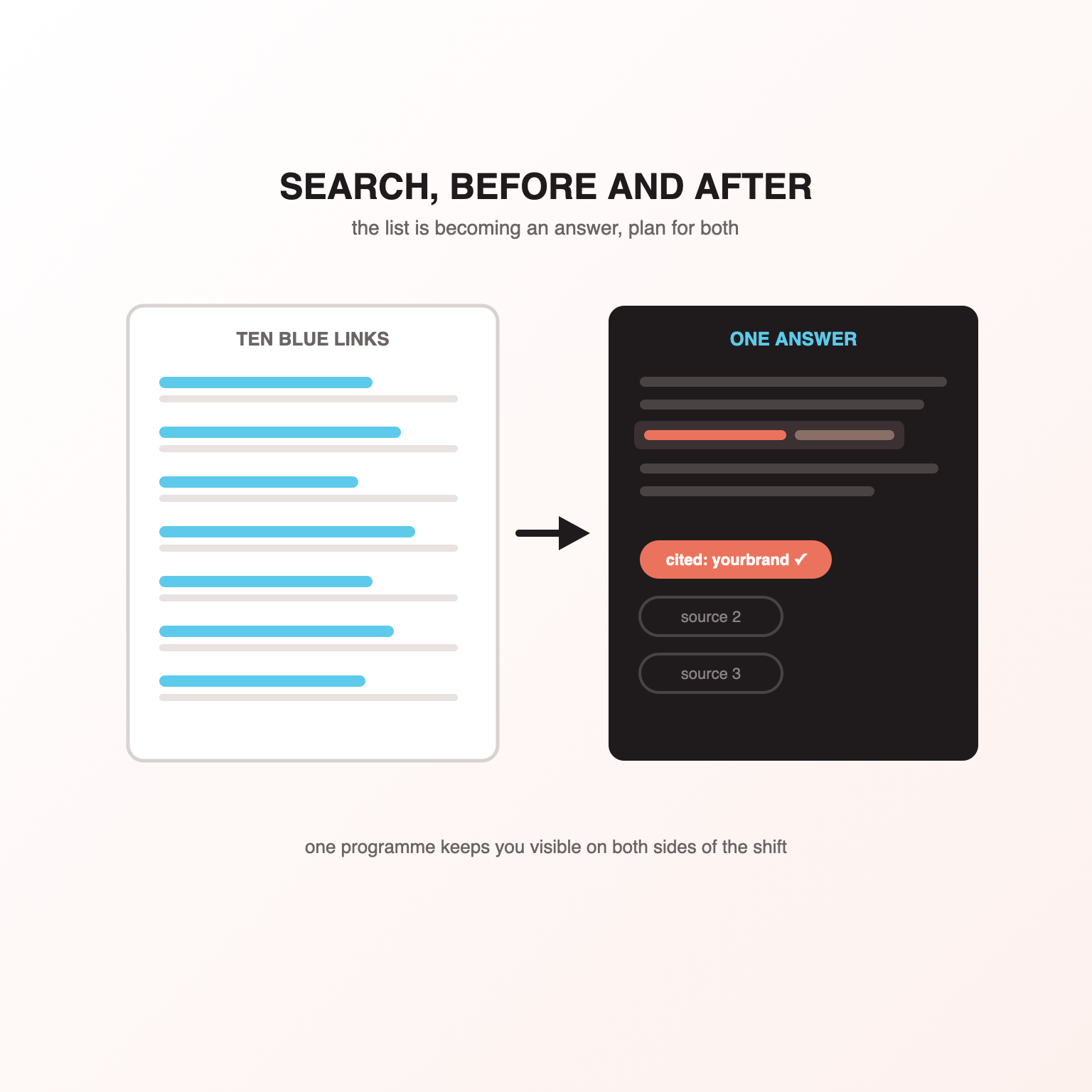
Search is splitting in two. The familiar half is a results page with ten blue links; the growing half is an answer, composed by a model, delivered directly, with a handful of citations if you are lucky. Google's AI Overviews now sit above the results your SEO fought for, and a meaningful share of research that used to start on Google now starts in ChatGPT, Perplexity, or Gemini. AI search optimization is the discipline of earning visibility in that second half: being the brand the answer mentions, the source it cites, and the recommendation it makes when your buyer asks the question that matters.
The mechanics differ from classic SEO in ways that punish assumption. Language models do not rank pages; they synthesise answers from what they have read and retrieved, weighting sources that are structured, consistent, corroborated, and unambiguous about who they are. A site can rank well and still be invisible to AI answers because its expertise is locked in prose too vague to quote, its entity identity is scattered, or the sources models retrieve from have never heard of it. Fixing that requires a different toolkit: entity engineering, citation-worthy content structure, third-party corroboration, and technical foundations that make your facts machine-liftable.
Our AI search optimization services cover that full toolkit. We audit how every major AI surface currently answers the queries your revenue depends on, and whether you appear. We rebuild your entity footprint, schema, knowledge panel signals, consistent naming, authoritative profiles, so models can resolve who you are. We restructure key content into the direct, evidence-backed, quotable form that answers get assembled from, and we build presence in the third-party sources AI systems trust. Then we measure it all on a rhythm, because AI answers change weekly and unmeasured visibility is just hope.
This work compounds with classic SEO rather than replacing it. The same clarity that gets a paragraph quoted by a model wins featured snippets; the same entity hygiene that earns a knowledge panel strengthens every ranking; the same third-party authority that models trust builds the links traditional search rewards. Brands that treat AI visibility as an extension of a strong organic foundation get both; brands that chase it as a gimmick get neither. We run it as one integrated programme, alongside our SEO practice, on the foundations our fifteen live service and case pages already demonstrate.
The stakes distribute unevenly, which is worth being honest about. Categories with considered purchases and research-heavy buyers, software, healthcare, finance, industrial equipment, education, are seeing AI answers absorb the largest share of early-funnel questions, while impulse and habit purchases feel it less. If your buyers compare, shortlist, and ask what is the best X for Y before they ever contact anyone, the answer layer is already shaping your pipeline, and the brands it names are harvesting consideration you used to compete for on the results page. Knowing where your category sits on that curve is part of the audit, and it decides how aggressive the programme should be.
We were early to this work, and the results band shows real outcomes from it: a deep-tech client established as a cited entity across three LLM platforms, visible on fourteen commercial AI search queries, with a 31 percent featured snippet win rate on target questions. The programme that produced those numbers, entity foundation, quotable content, corroboration, measurement, is the same one described on this page, and the window to run it while competitors hesitate is open right now.
AI visibility audit. We start by asking every surface the questions your buyers ask: Google AI Overviews, ChatGPT, Perplexity, Gemini, and Copilot, across your priority queries. The audit maps who gets mentioned, who gets cited, what the models believe about your category, and where they are wrong about you specifically. It ends in a gap map: the queries worth winning, the sources the answers draw from, and the shortest path to appearing in them, ranked so the first month of work lands on the queries with revenue attached.
Entity engineering and knowledge foundations. Models must be able to resolve who you are before they can recommend you. We build that resolution: organisation schema done properly, consistent naming and descriptions across the web, Wikipedia-grade profile hygiene, knowledge panel signals, sameAs graphs connecting your presences, and authorship identities for the people behind your expertise. Ambiguity is the enemy: every inconsistency is a reason for a model to cite someone clearer instead.
Citation-worthy content architecture. AI answers are assembled from passages that state facts plainly, so we restructure priority content into that shape: direct answers up front, claims backed with numbers and sources, definitions a model can lift whole, and FAQ structures that mirror real query phrasing. This is not dumbing down; it is evidence-forward writing, and it reliably wins featured snippets and human trust at the same time it wins citations.
Third-party corroboration. Models weight what multiple independent sources agree on, so being excellent only on your own website is structurally insufficient. We build your presence in the places AI systems retrieve from and trust: industry publications, directories and review platforms, expert roundups, data-rich guest content, and the community surfaces where your category gets discussed. Every mention is another vote that your brand is the answer, and the votes that matter most are the ones your competitors have not thought to campaign for yet.
Technical readiness for AI crawlers. AI systems read the web through their own crawlers and retrieval pipelines, and sites block or starve them without noticing. We handle the plumbing: crawler access policies decided deliberately rather than inherited from a security plugin default, rendering that does not hide content behind JavaScript walls, clean semantic HTML, structured data coverage, llms.txt and feed surfaces where they help, and page experiences fast enough that retrieval does not time out and move on.
AI visibility measurement. We track your presence in AI answers the way rank trackers track blue links: scheduled query panels across the major surfaces, mention and citation logging, sentiment of how models describe you, and movement over time against competitors. Reports connect it to business reality, branded search lift, assisted conversions, referral traffic from AI surfaces, so the programme answers to pipeline rather than screenshots.
The Difference
The Answer Box Is the New Front Page
Ranking used to mean being on the list your buyer scanned. Increasingly there is no list, just an answer, and either your brand is in it or it is not. Getting in it on merit is the whole job: an entity machines can resolve, evidence they can quote, sources that corroborate you, and measurement that proves it is working. The brands doing this now are writing the answers their competitors will spend years trying to edit.
Book a Strategy CallOur Process
How Our AI SEO Agency Builds AI Search Visibility
A disciplined sequence, adapted to your competitive landscape. Open each step.
01Query and surface mapping
02Entity and technical foundation
03Content restructure and creation
04Corroboration campaign
05Measure, adjust, expand
Why Unified Platforms
Why Brands Choose Our AI SEO Agency for AI Search Optimization
The working habits behind every engagement.
Early, with receipts
We were running AI visibility programmes when most agencies were still debating whether AI Overviews mattered, and the results band on this page shows real confirmed outcomes: cited entity status across three LLM platforms for a deep-tech client with limited consumer brand recognition. Ask for the walkthrough and you will get methods, not mystique.
Built on real SEO foundations
Sold as a standalone trick, this discipline is mostly theatre. Ours sits on a serious organic practice, the same team behind enterprise, ecommerce, and local SEO programmes with results measured in tens of millions of visits, because entity authority, content quality, and technical health are the shared substrate of both disciplines. One programme, both halves of search.
Evidence-forward content, not generic AI filler
It is grimly ironic that most content produced for AI visibility is unquotable filler generated by AI. Models cite specificity: numbers, definitions, firsthand expertise, and claims that check out. Our editorial gates enforce exactly that, which is why the same pages win snippets, citations, and human buyers at once.
Measurement you can stand behind
Anyone can screenshot one good ChatGPT answer. We run scheduled query panels with logged results over time, across surfaces, against competitors, and report movement honestly, including the queries we have not cracked yet. If a surface changes and visibility dips, you hear it from us first with a diagnosis, not from a prospect who asked and got our competitor.
Integrated with everything else you run
AI visibility touches SEO, content, PR, and product marketing, and we already operate those adjacencies: the SEO cluster on this site, the content practice, the paid channels that retarget AI-referred visitors. One team seeing the whole system means the AI programme feeds and is fed by everything else, instead of running as an isolated experiment.
Honest about the frontier
This discipline is young, platforms change monthly, and anyone promising guaranteed placement in AI answers is selling weather control. What we promise is the inputs, done rigorously, and the measurement to see what they produce, and our clients hold us to it. So far, that rigour has been enough to put them in the answers while their competitors wait for best practices to be written.
Industries
Industries We Work With
Deep experience across the sectors we serve, with strategy tailored to each.
See What the Answers Say About You
Ask us for a free AI visibility snapshot: we will run your five most important commercial queries across Google AI Overviews, ChatGPT, Perplexity, and Gemini, and show you exactly who the answers mention, who they cite, and whether you exist in them at all. Most teams are surprised twice, once by their own absence, and once by which competitor the answers keep naming. It is the fastest way to turn this from an abstract worry into a concrete plan, and the snapshot is yours either way.
Book a Strategy CallQuestions
Frequently Asked Questions
Straight answers before you ever get on a call.
AI Search Basics
What is AI search optimization?
How is this different from GEO, AEO, or traditional SEO?
Do people actually buy after asking AI tools?
How It Works
How do AI systems choose which brands to mention or cite?
Can you guarantee my brand appears in ChatGPT or AI Overviews?
Does blocking AI crawlers protect my content, or hurt my visibility?
Working With Us
Is this only for big brands, or can challengers win AI citations too?
We already do SEO. How does this fit alongside it?
How long until we see AI visibility results?
What does an engagement look like commercially?
Scope Details
Which AI surfaces do you cover?
Does this help with voice assistants and chat interfaces too?
Can you fix how AI systems describe our products, not just our brand?
Do you work with our PR team on this?
Measurement and Risk
How will we know if AI answers are costing us pipeline today?
How do you measure visibility inside AI answers?
What if the AI describes my brand incorrectly?
Is AI search optimization risky, like early SEO tricks were?
Claim Your AI Search Optimization Category While It Is Still Open
There is a version of this story where you read about AI search for another year, the way many brands read about mobile in 2012 and social in 2009, and a version where you spent that year building the entity clarity, the quotable evidence, and the corroborated authority that the answers reward. The gap between those two versions is where categories change hands. Every month, more of your buyers' questions get answered before a single website is visited, and the brands named in those answers are collecting the demand quietly. The encouraging part: most categories are still unclaimed, because most competitors are still waiting to see how this plays out. That is the window. Book a free strategy call, ask for the AI visibility snapshot, and see with your own eyes what the answers currently say about your category, and who they say it about. Then decide whether you want to be in them.
Book a Strategy CallExplore more
AI SEO by industry and location
AI Search Optimization by industry
Specialist AI search optimization built for how buyers in your field now ask AI who to choose. Each program is tailored to your industry and measured in real outcomes, not visibility scores.