 Skip to content
Unified Platforms
Ad Spend Audit Services
Unified Platforms runs ad spend audit engagements that tell you, in plain numbers, where your paid media budget is working, where it is leaking, and what to do about both. Google Ads, Meta, LinkedIn, and marketplace accounts, read line by line by senior operators, with findings ranked by the money they would recover. No theatre, no forty-slide deck padding, and no obligation to hire us for the fixes.
- Findings ranked by recoverable money
- Senior operators, not junior checklists
- Yours to keep, act on it with anyone
Our Clients
Brands that have worked with us
From global giants to fast growing startups, teams trust Unified Platforms with their growth.








What Ad Spend Audit Services Covers
- Google Ads audit
- Meta ads audit
- Measurement and tracking audit
- Cross-channel budget analysis
- Structure and scaling readiness
- Findings, sized and sequenced
Overview
An Ad Spend Audit That Reads Like a Recovery Plan
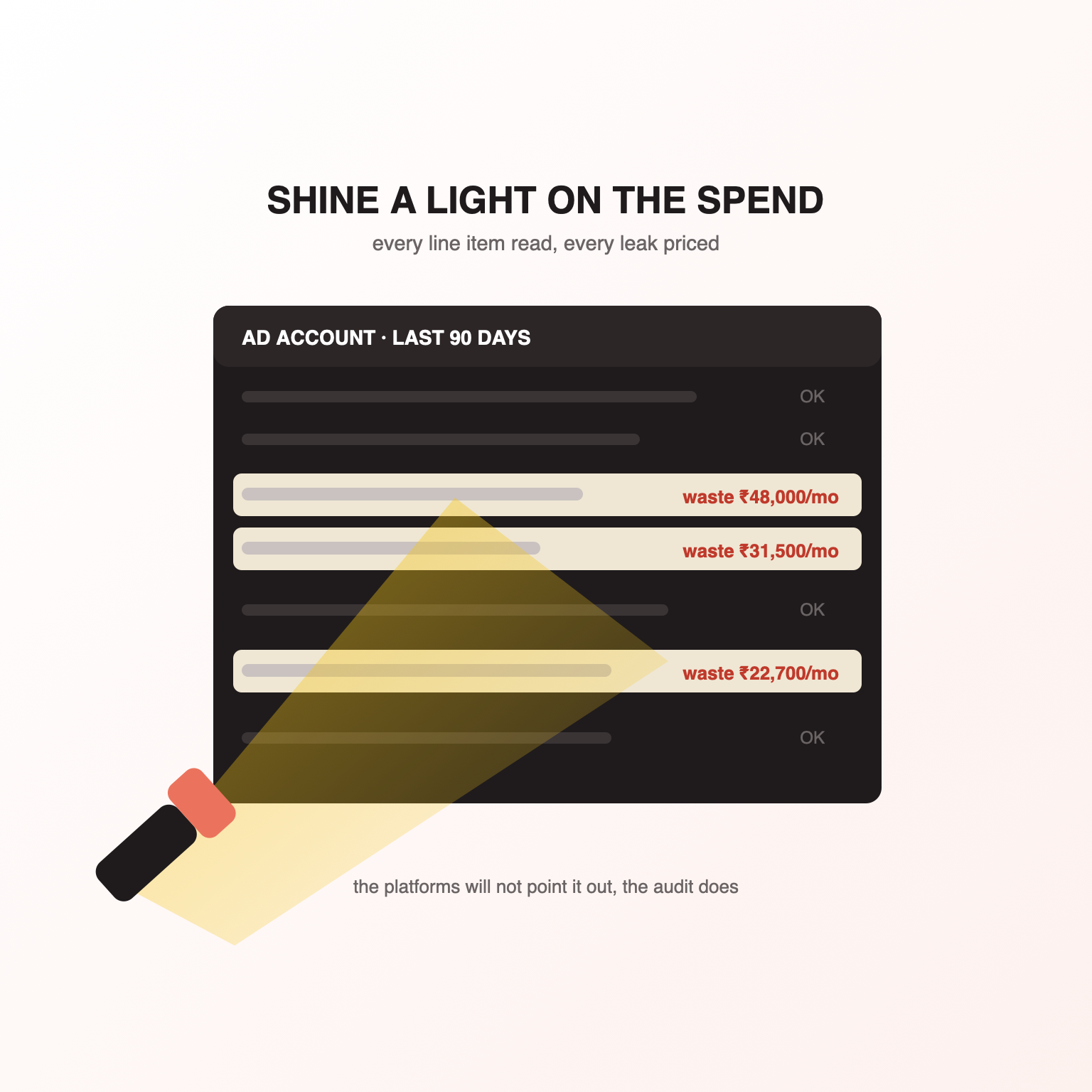
Every ad account accumulates waste the way a house accumulates clutter: gradually, invisibly, and fastest in the corners nobody looks at. Search terms that stopped converting a year ago still spending daily. Brand campaigns quietly claiming credit for customers who were coming anyway. Audiences overlapping until you bid against yourself. Tracking that double-counts, budgets pacing into placements nobody chose, and automated recommendations accepted in bulk because the notifications would not stop. An ad spend audit is the disciplined walk through every room, and in most accounts it pays for itself before it is half finished.
The audit we run is an operator's read, not a tool's printout. Automated audit scores measure compliance with the platform's preferences, which is a polite way of saying they measure how much money you let the algorithm spend unsupervised. Our team reads the account the way someone who has managed crores of media reads one: where the money actually goes week by week, what it returns after the accounting tricks are unwound, and which structural decisions, match types, audience architecture, bidding strategies, feed quality, are taxing everything downstream.
Measurement gets equal scrutiny, because half of all wasted spend is really a measurement problem wearing a media costume. Conversions that fire twice, view-through claims counted as causation, brand and non-brand blended into one flattering average, offline sales invisible to the bidder: any of these can make a losing campaign look like your best performer, and the account will keep funding the illusion until someone unwinds it. We verify what the numbers mean before judging what they say.
The platforms themselves make this problem worse every year, by design. Automated campaign types bundle decisions that used to be yours, placements, audiences, bids, into sealed systems scored by metrics the platform chooses, and the recommendations tab exists to raise spend, not returns. None of this is scandalous; it is simply what happens when the scorekeeper also sells the tickets. The counterweight is periodic independent reading of the account by someone whose incentives point at your P&L, which is precisely what an audit is. Advertisers who commission one on a rhythm, annually, or around every major scaling decision, consistently run tighter accounts than those who wait for a crisis to force the question.
What you receive is built to be acted on: a findings document in plain language, every issue sized in monthly rupees, ranked by recovery value and effort, with the fix specified precisely enough that any competent team can implement it. The audit is yours to keep. Take it to your in-house team, your current agency, or to us; the document works the same in all three rooms, and we are comfortable with all three outcomes.
The numbers in our results band show what disciplined account surgery produces: a 54 percent reduction in cost per booking for Housejoy alongside a hundredfold scaling of volume, and paid social running 30 percent more efficient than search benchmarks. Those results started the same way every engagement starts, with an honest audit of where the money was really going, and the same discipline runs every audit we deliver.
Google Ads audit. Search, Shopping, Performance Max, and Display, read structurally: query and placement waste, match type drift, brand traffic subsidising reported ROAS, bidding strategies fighting the account's own goals, budget pacing into low-value hours and geographies, and PMax behaviour pulled into daylight. Every finding carries a monthly rupee figure and a specified fix, so the document reads like a recovery plan rather than a report card.
Meta ads audit. Audience architecture first, because that is where Meta accounts bleed: overlap that bids you against yourself, retargeting pools burning frequency on the converted, exclusions missing so prospecting pays for customers you already own. Then creative fatigue patterns, learning phase thrash from constant edits, attribution settings inflating the scoreboard, and placement spend that never earned its share. The output separates what to stop, what to fix, and what to scale.
Measurement and tracking audit. We verify the data before trusting any of it: conversion events firing once and only once, values matching reality, deduplication across platforms, consent handling, server-side setups actually sending what they claim, and the split between brand and non-brand, new and returning, made visible. Accounts optimise toward whatever the tracking rewards, so this section frequently explains mysteries the media sections then fix.
Cross-channel budget analysis. Platforms grade their own homework generously, and three of them will happily claim the same customer. We read the portfolio as one system: blended cost per acquisition against the P&L, marginal return by channel, duplicated credit unwound, and the honest answer to where the next rupee and the last rupee should move. This is the section that most often changes what leadership decides to do next quarter.
Structure and scaling readiness. Beyond waste, the audit maps whether the account can grow: campaign structures that consolidate or fragment signal, naming and change hygiene, experiment history, feed and asset quality for commerce accounts, and the guardrails that keep scaling from just buying more of the same mistakes. You learn not only what to fix but what the account could support if it were fixed.
Findings, sized and sequenced. Everything lands in one prioritised document: each issue described in plain language, sized in monthly spend at stake, scored for implementation effort, and sequenced into a thirty, sixty, ninety day recovery plan. A walkthrough call closes the engagement, your questions answered, your team briefed, and the plan ready to execute with whoever you choose to execute it. Six months later we check back on what got implemented, on the house.
The Difference
The Cheapest Media You Will Buy This Year Is the Waste You Stop
New campaigns need budgets, creative, and patience. Recovered waste needs none of them: the money is already yours, already allocated, already flowing, just in the wrong direction. That is why audit findings are the highest-margin improvement in paid media, and why serious advertisers commission independent eyes on their accounts on a rhythm, not just in a crisis. The platforms will never volunteer this document; someone has to go looking.
Book a Strategy CallOur Process
How the Audit Runs
A disciplined sequence, adapted to your competitive landscape. Open each step.
01Scope and access
02Money map
03Measurement verification
04Deep structural read
05Recovery plan and walkthrough
Why Unified Platforms
Why Teams Trust Us With the Audit
The working habits behind every engagement.
Operators, not report generators
The people reading your account manage live budgets every day across search, social, and marketplaces, and it changes what they notice: not just rule violations but the judgment calls, the bidding strategy that is technically fine and practically expensive, the structure that works today and caps growth next quarter. Forty plus years of collective media experience reads between the settings.
Findings priced in money, not severity colours
Audit reports love traffic-light severity ratings because they are unfalsifiable. Ours commit to numbers: this search term set spent this much over this period for this return; stopping it recovers roughly this much monthly. Sizing forces honesty on us and gives you a document that reads like a business case, because that is what it is.
No conflict of interest built in
The audit is a complete, priced product, not a fishing trip for a retainer. You keep the document, the walkthrough briefs whoever you choose, and if the right answer is that your current team just needs the findings, we say so. Enough audit clients later hire us that we can afford to run it straight, and the ones who do hire us start with earned trust instead of a pitch.
Measurement scepticism as standard
We assume the data is lying until verified, because in most audited accounts some of it is: double-firing tags, generous attribution, brand traffic wearing a performance costume. Reading media through unverified measurement produces confident nonsense, which is exactly what many audits deliver. Ours verifies first, which is slower, and correct.
Proof from the other side of the audit
The Housejoy numbers in our results band, cost per booking down 54 percent while volume scaled one hundredfold, came from acting on exactly this kind of account surgery. We know what a finding is worth because we have implemented hundreds of them ourselves, and that implementation experience is what makes the recommendations specific enough to execute rather than politely vague.
Fast, bounded, and risk-free
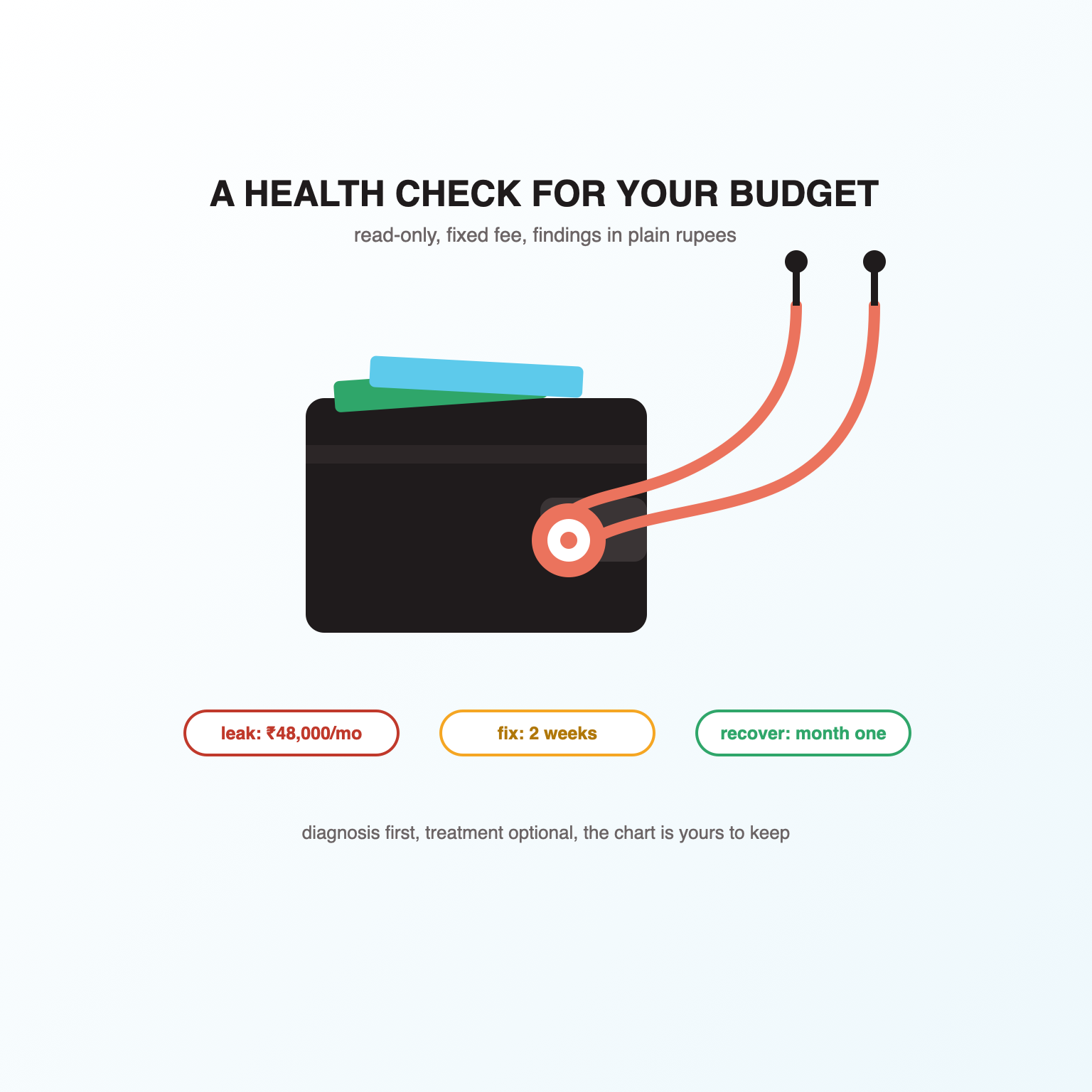
Read-only access, a fixed timeline measured in weeks not quarters, a fixed price agreed up front, and zero changes to your live accounts. The worst realistic outcome is a document confirming your account is genuinely tight, which is itself worth having the next time someone in a meeting claims otherwise. Most outcomes are considerably more profitable than that, and every outcome ends with you knowing your accounts better than you did the month before.
Industries
Industries We Work With
Deep experience across the sectors we serve, with strategy tailored to each.
Scope Your Audit in One Call
Tell us your platforms and rough monthly spend, and we will scope the audit in one call: what it covers, what it costs, and when the findings land. Bring the question that made you consider an audit in the first place, costs creeping, a scaling decision, a dashboard you have stopped trusting, and we will tell you whether the audit answers it or something simpler does. If your spend is small enough that a full audit is overkill, we will say so and point you at the three checks worth doing yourself, no charge. Budgets deserve honesty before they deserve optimisation.
Book a Strategy CallQuestions
Frequently Asked Questions
Straight answers before you ever get on a call.
Ad Spend Audit Basics
Can we audit just one platform, or does it have to be everything?
How often should an account be audited?
What is an ad spend audit?
How is this different from the free audit agencies offer?
How much wasted spend do audits typically find?
Scope and Process
Which platforms do you audit?
How long does an audit take?
Do you need anything beyond read-only access?
The Deliverable
How disruptive is the audit to our team and current agency?
What exactly do we receive?
Can our in-house team or current agency implement the findings?
Will you implement the fixes if we ask?
Common Findings
What are the most common sources of wasted ad spend?
What measurement problems do you find most often?
Do you also look at creative, or just settings and structure?
Can the audit tell us if our agency is doing a good job?
Fit and Timing
Does an audit make sense before we scale spend aggressively?
When is the right time to commission an audit?
Is there a minimum spend where an audit makes sense?
We just switched agencies. Audit now or later?
Find Out Where the Money Is Going
Marketing budgets are being questioned harder this year than they have been in a decade, and the teams that thrive under that scrutiny are the ones who can show their spend has been independently read and stands up. An audit is how you get there before the question arrives in a board deck. Somewhere in your ad accounts right now, money is doing nothing, and the platforms are not going to point it out. An ad spend audit finds it, prices it, and hands you the plan to recover it, with read-only access, a fixed fee, and no obligation beyond the document itself. Book a free scoping call, tell us your platforms and spend, and we will tell you what the audit would cover and whether it is worth commissioning at all. The honest answer is free; the profitable one comes with page numbers.
Book a Strategy CallExplore more