 Skip to content
Unified Platforms
Email Marketing Services
Unified Platforms runs email marketing services for brands that want the channel to earn its reputation as the highest-return one they own. Strategy, lifecycle flows, campaigns, deliverability, and segmentation, built on your data and measured in revenue per email, so the list you already paid to build finally pays you back on a schedule.
- Revenue per email, not open-rate theatre
- Lifecycle flows that sell while you sleep
- Deliverability engineered, not assumed
Our Clients
Brands that have worked with us
From global giants to fast growing startups, teams trust Unified Platforms with their growth.










What Email Marketing Services Covers
- Lifecycle and automation flows
- Campaign strategy and production
- Segmentation and personalisation
- Deliverability and list health
- Design, copy, and templates
- Measurement and revenue attribution
Overview
Email Marketing Services Measured in Revenue, Not Opens
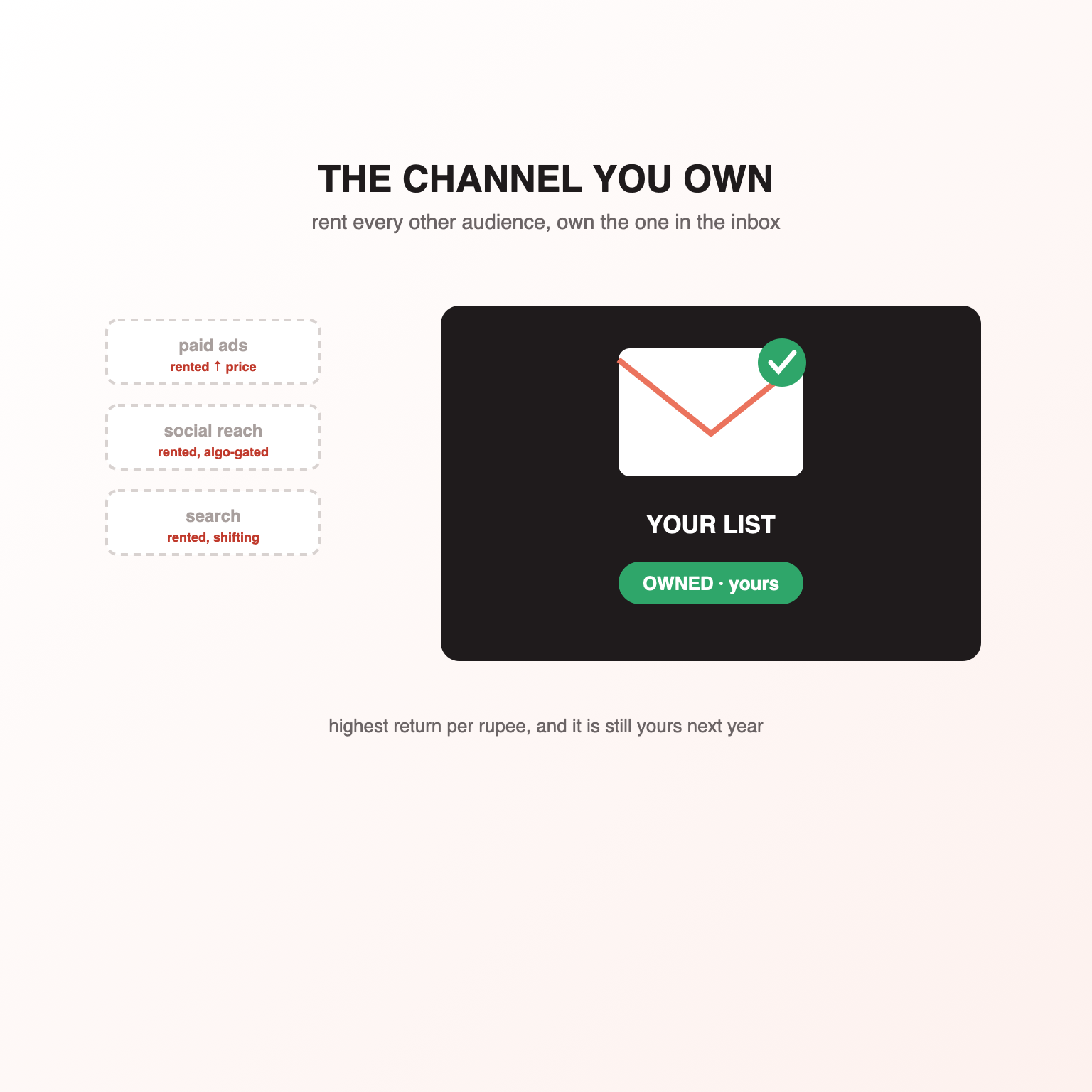
Email is the last channel you actually own. Social reach is rented from algorithms, paid traffic costs more every quarter, and search keeps changing shape, but the list of people who handed you their inbox is yours, and it will still be yours next year. That is why email consistently returns more per rupee than any other channel, and also why so many brands waste it: they blast the whole list occasionally, watch a vanity open rate, and never build the flows and segmentation that turn an inbox permission into predictable revenue. Our email marketing services exist to fix exactly that gap.
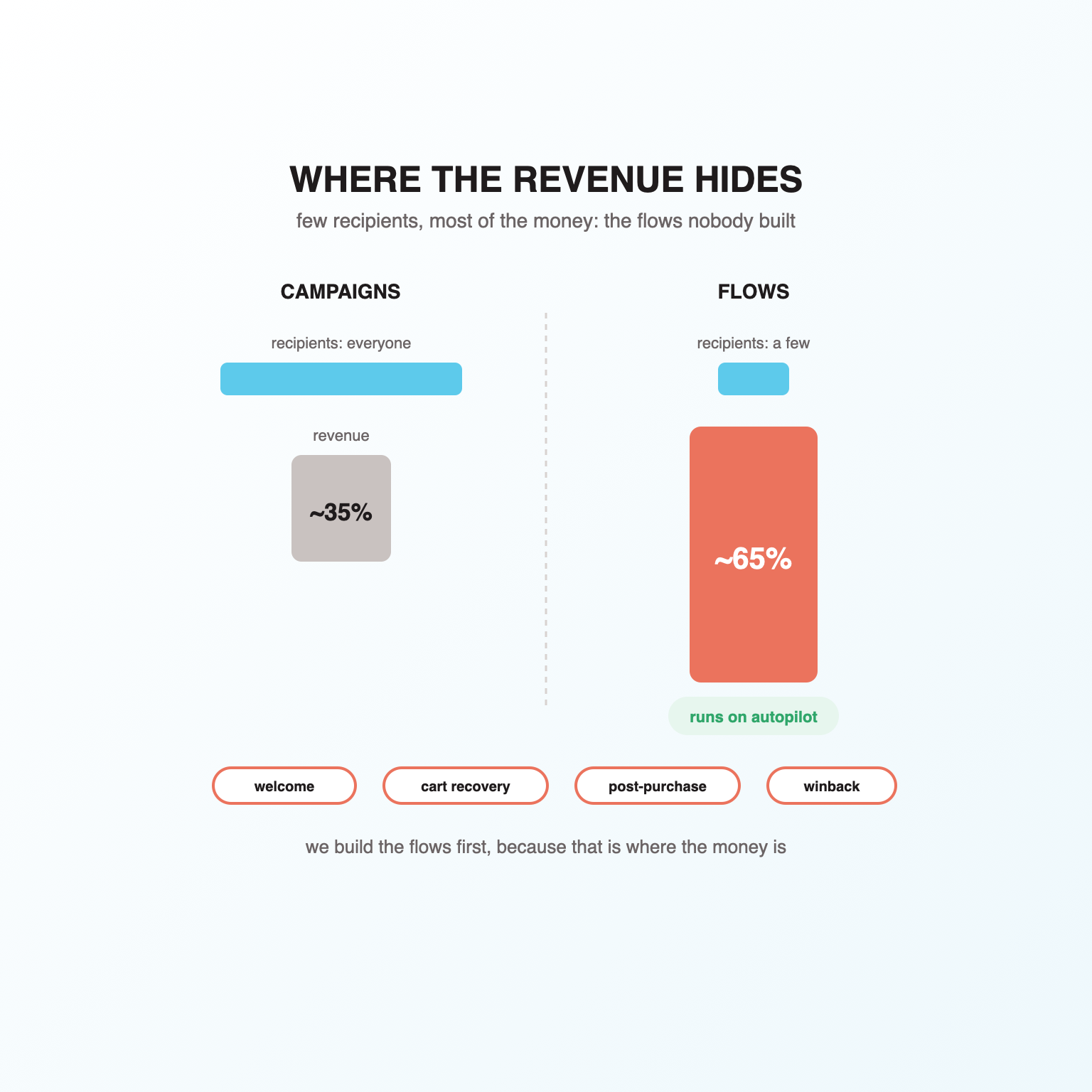
The work splits into three engines. Lifecycle flows, the automated sequences triggered by what a subscriber does, welcome, browse and cart abandonment, post-purchase, winback, run continuously and quietly produce the majority of email revenue for the brands that build them. Campaigns, the broadcasts you send to segments, drive launches, offers, and stories on top of that base. And the foundation under both, deliverability, data, and segmentation, decides whether any of it reaches the inbox and speaks to the right person. Most brands have some campaigns and almost no flows, which is precisely backwards.
We start where the money is: the flows nobody set up. A welcome sequence that introduces the brand and makes the first offer, cart and browse recovery that catch revenue already halfway out the door, post-purchase series that turn one order into two, and winback campaigns that wake dormant subscribers before they are gone. Each flow is mapped to the customer journey, written to sound like a person rather than a template, and measured on the revenue it recovers. For most brands these automations are the single fastest email improvement available, and they keep paying long after they are built.
Deliverability is the unglamorous half that decides everything. An email that lands in spam converts at zero regardless of how good the copy is, so we treat inbox placement as engineering: authentication done properly, sender reputation protected, list hygiene that removes the addresses dragging you down, and sending patterns that keep the mailbox providers trusting you. Brands come to us with declining open rates that turn out to be declining deliverability, and fixing the plumbing often lifts results more than any creative change could.
It helps to picture the two halves side by side, because the imbalance is where the opportunity lives. A typical brand sends a campaign to its whole list every week or two, watches the open rate, and calls that email marketing. Meanwhile the automated flows that should be catching every abandoned cart, welcoming every new subscriber, and reviving every lapsing customer either do not exist or were switched on once and never touched. Those flows reach far fewer people than the campaigns, yet for well-run brands they produce most of the channel's revenue, because they fire at the exact moment intent is highest. Rebalancing effort toward the flows is usually the single most profitable change we make, and it is invisible to anyone still staring at the campaign calendar.
Everything answers to revenue, not to the metrics email people hide behind. Opens became unreliable the moment Apple started pre-loading images; what we report is revenue per recipient, flow and campaign contribution to sales, list growth quality, and the compounding value of a subscriber over time. The numbers in our results band come from a real rebuild: a quick-commerce brand whose open rates sat below eight percent, lifted to 24.3 percent with click-to-open up 3.1 times and email-attributed GMV up 4.2 times. That is what email looks like when it is run as a revenue system instead of a newsletter.
Lifecycle and automation flows. The sequences that run themselves and produce most email revenue: welcome and onboarding, browse and cart abandonment, post-purchase and replenishment, winback and sunset. Each one is mapped to the customer journey, built in your platform with the right triggers and timing, written to sound human, and tuned on the revenue it recovers. Set up once, they sell every day without another send button being pressed.
Campaign strategy and production. The broadcasts that carry launches, offers, seasons, and stories, planned on a calendar that matches your business rather than a random cadence. We handle strategy, segmentation, copy, and design, ship them tested, and read every send for what it added to revenue and what it cost in unsubscribes, so the programme gets sharper each month instead of just busier.
Segmentation and personalisation. Blasting the whole list is how brands train subscribers to ignore them. We segment by behaviour, purchase history, engagement, and lifecycle stage, then personalise content and offers to each, so a first-time browser and a loyal repeat buyer never get the same generic email. Relevant sending lifts revenue and protects deliverability at the same time, because engaged opens are the reputation currency mailbox providers watch.
Deliverability and list health. The engineering that gets you into the inbox: SPF, DKIM, and DMARC authentication, sender reputation monitoring, warmup for new domains, list hygiene that removes hard bounces and chronic non-openers, and sending patterns that keep providers trusting you. When open rates fall, this is usually why, and fixing it is often the highest-return work in the whole programme because it multiplies the reach of everything else you send.
Design, copy, and templates. Emails built to be read on a phone in five seconds: clear hierarchy, one obvious action, copy that sounds like your brand talking to a person, and templates that render correctly across the messy world of email clients. We build a reusable system so your team can ship on-brand sends fast, and we test the elements that move revenue, subject lines, offers, layout, rather than redesigning on taste.
Measurement and revenue attribution. Reporting that speaks in money: revenue per recipient, flow and campaign contribution, list growth and its quality, deliverability trends, and subscriber lifetime value. We connect email to your store or CRM so attribution is real rather than platform-flattered, and every review answers the only question that matters, what did email make this month, where did it come from, and where is the next rupee hiding.
The Difference
The Channel You Own, Finally Run Like It
Every other channel rents you attention and raises the price each year. Email hands you an audience outright and asks only that you treat it well: relevant sends, working deliverability, flows that catch intent, measurement that tells the truth. Run that way, the list you already built becomes the cheapest revenue in your business, compounding quietly, month after month, while your competitors keep renting and buying the same clicks twice over.
Book a Strategy CallOur Process
How We Build Your Email Revenue Engine
A disciplined sequence, adapted to your competitive landscape. Open each step.
01Audit and opportunity map
02Foundations and deliverability
03Core flows live
04Campaign engine and segmentation
05Test, optimise, and grow
Why Unified Platforms
Why Brands Choose Us for Email Marketing
The working habits behind every engagement.
Flows first, because that is the money
Most agencies sell you a calendar of campaigns because campaigns are visible and billable. Our instinct is lifecycle flows first, because that is where the revenue actually hides, and they keep earning without another send. It is a less glamorous pitch and a far better return, which is exactly the trade we make on every channel we run.
Deliverability treated as engineering
We diagnose inbox placement the way an engineer diagnoses a system, authentication, reputation, hygiene, sending patterns, because the best email in the world converts at zero from the spam folder. Brands routinely arrive blaming their copy for falling opens when the real culprit is deliverability, and fixing the plumbing is the quiet lever that lifts everything else.
Revenue reporting, not open-rate theatre
Apple's privacy changes made opens a vanity metric, yet most reports still lead with them. We lead with revenue per recipient and channel contribution, connected to your actual store or CRM data, so the programme is judged on money and optimised toward it. If a beautiful campaign loses subscribers without moving sales, you will hear that plainly.
Proof from a real rebuild
Open rates below eight percent lifted to 24.3 percent, click-to-open up 3.1 times, and email-attributed GMV up 4.2 times: those are the numbers from a quick-commerce email rebuild we ran, and we will walk you through the segmentation, deliverability, and flow work that produced them. Ask about any figure and you get the method, including what took more than one attempt.
Built into the rest of your marketing
Email does not live alone, and neither do we: it retargets the visitors our SEO and paid work bring, recovers the carts our ecommerce work drives, and shares the customer language our content practice mines. One team seeing the whole funnel means email amplifies every other channel instead of running as an isolated newsletter nobody quite owns.
Your list, your platform, your data
We work in your Klaviyo, Mailchimp, HubSpot, or whichever platform you run, and everything stays yours: the flows, the segments, the templates, the documentation. If we part ways, your programme keeps running and your team can extend it. We are building you an owned revenue engine, not a dependency you rent back from an agency.
Industries
Industries We Work With
Deep experience across the sectors we serve, with strategy tailored to each.
Get a Free Email Revenue Audit
Give us read access to your email platform and store, and we will send back a free audit: which flows you are missing and what they are worth, where deliverability is leaking, how your revenue splits between automation and campaigns, and the three moves we would make first. Most brands are startled by how much revenue is sitting in automations they never built, and the audit is yours to keep either way. It usually pays for the whole engagement in the first flow we recommend, before a single campaign is sent.
Book a Strategy CallQuestions
Frequently Asked Questions
Straight answers before you ever get on a call.
Email Marketing Basics
What do email marketing services actually include?
Is email marketing still worth it with social and paid channels?
Why are our open rates falling even though nothing changed?
Flows and Strategy
What makes a welcome flow actually work?
Which automated flows should we set up first?
How often should we send campaigns?
Do you write the copy and design the emails, or just the strategy?
Deliverability and Data
How do you keep emails out of spam?
Should we ever buy an email list?
How do you handle consent, unsubscribes, and compliance?
Which email platforms do you work with?
Ecommerce and Retention
How much of ecommerce revenue should email drive?
How does email fit with SMS and WhatsApp?
Can you rebuild a programme with terrible engagement, like ours?
Working With Us
How quickly will we see results?
Do you work with our existing team or run it fully?
How do you charge for email marketing services?
What happens in the first ninety days?
Collect the Revenue Waiting in Your List
The list you have already built is quietly worth more than most of your ad budget, and for most brands it is sitting half-used, blasted occasionally and automated barely at all. Turning it into a revenue system is not a mystery; it is flows, deliverability, segmentation, and honest measurement, applied with discipline. Book a free strategy call, let us audit your programme, and we will show you in your own numbers how much revenue is waiting in the inbox permission you already earned, and exactly how to go and collect it. It is the rare marketing investment where the audience is already yours and only the system is missing.
Book a Strategy CallExplore more