- First-in-India AEO Services
AEO Services Agency in India
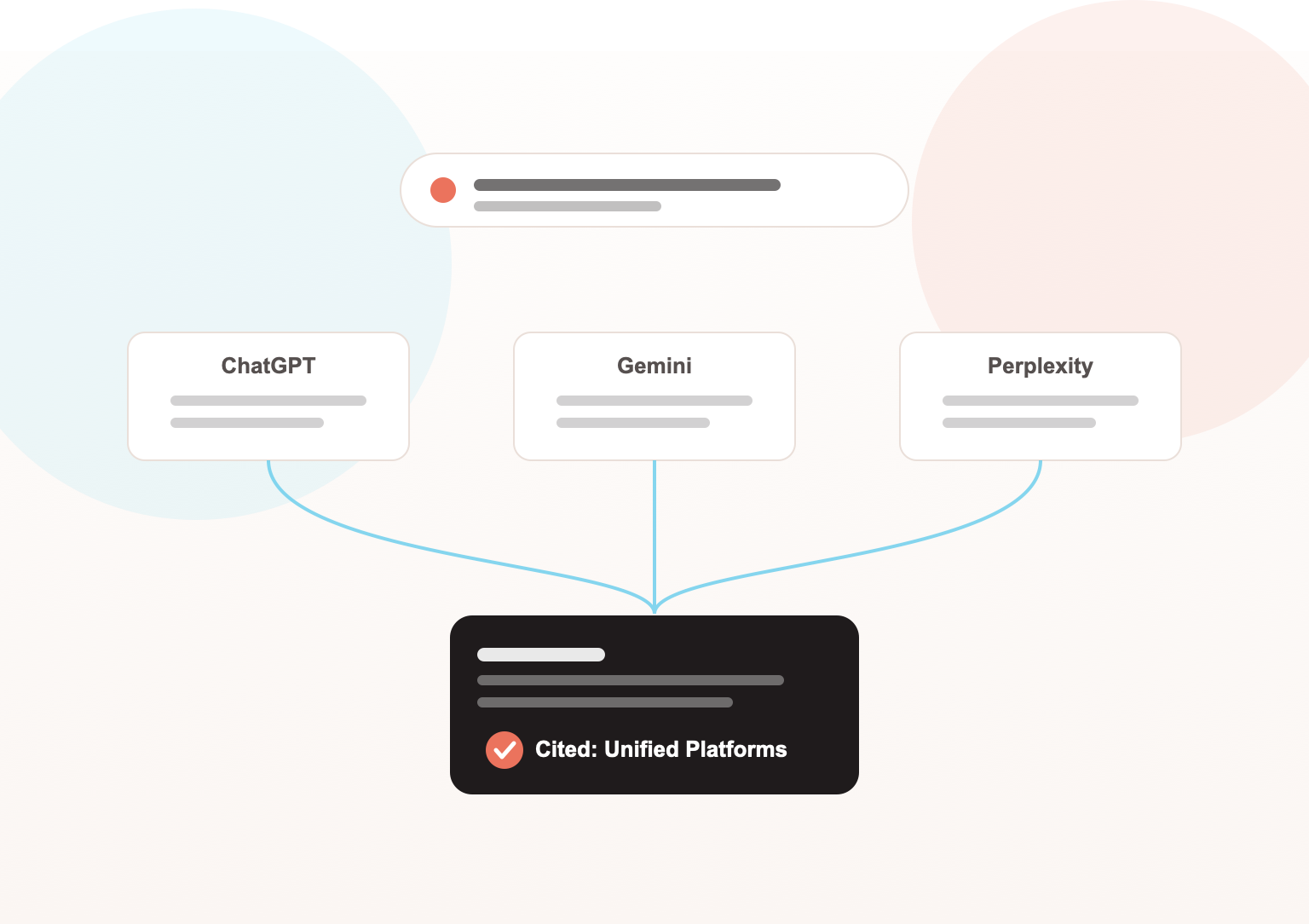
Get Your Business Cited in ChatGPT, Gemini, Perplexity & Google AI Overviews
Dominate Answer Engines with Our Proven ASE Framework
15+ Years
SEO Expertise
3+ Years
AEO Pioneer
67% Avg
Citation Growth
- No Credit Card Required
- Results Delivered in 72 Hours
- 15+ Years Proven Track Record
- Concept & Paradigm
What is Answer Engine Optimization (AEO)?
Answer Engine Optimization (AEO) is the strategic process of optimizing your content, website, and online presence to get cited by AI-powered answer engines like ChatGPT, Google Gemini, Perplexity AI, and Google AI Overviews (formerly SGE - Search Generative Experience).
Unlike traditional SEO that focuses on ranking in search results, AEO ensures your business becomes the authoritative source that AI platforms reference when answering user questions.
With 15+ years of SEO expertise and 3+ years pioneering AEO strategies, Unified Platforms has delivered significant AI visibility growth across Education, Real Estate, EdTech, K-12, Defence, B2B, E-commerce, and SaaS industries.
Comparison: Traditional SEO vs. Modern AEO
Traditional Search Engine Optimization (SEO)
Search Results Only
- Target: Page 1 rank position list in traditional Google indices.
- Format: Keywords and search volume queries.
- Outcome: The user clicks the link list to find the answer.
Answer Engine Optimization (AEO)
AI Generated Space
- Target: Citations and authoritative listings inside LLM answers.
- Format: Intricate, long-tail conversational user intents.
- Outcome: AI reads your structured data, recommends, and attributes you.
- Concept & Paradigm
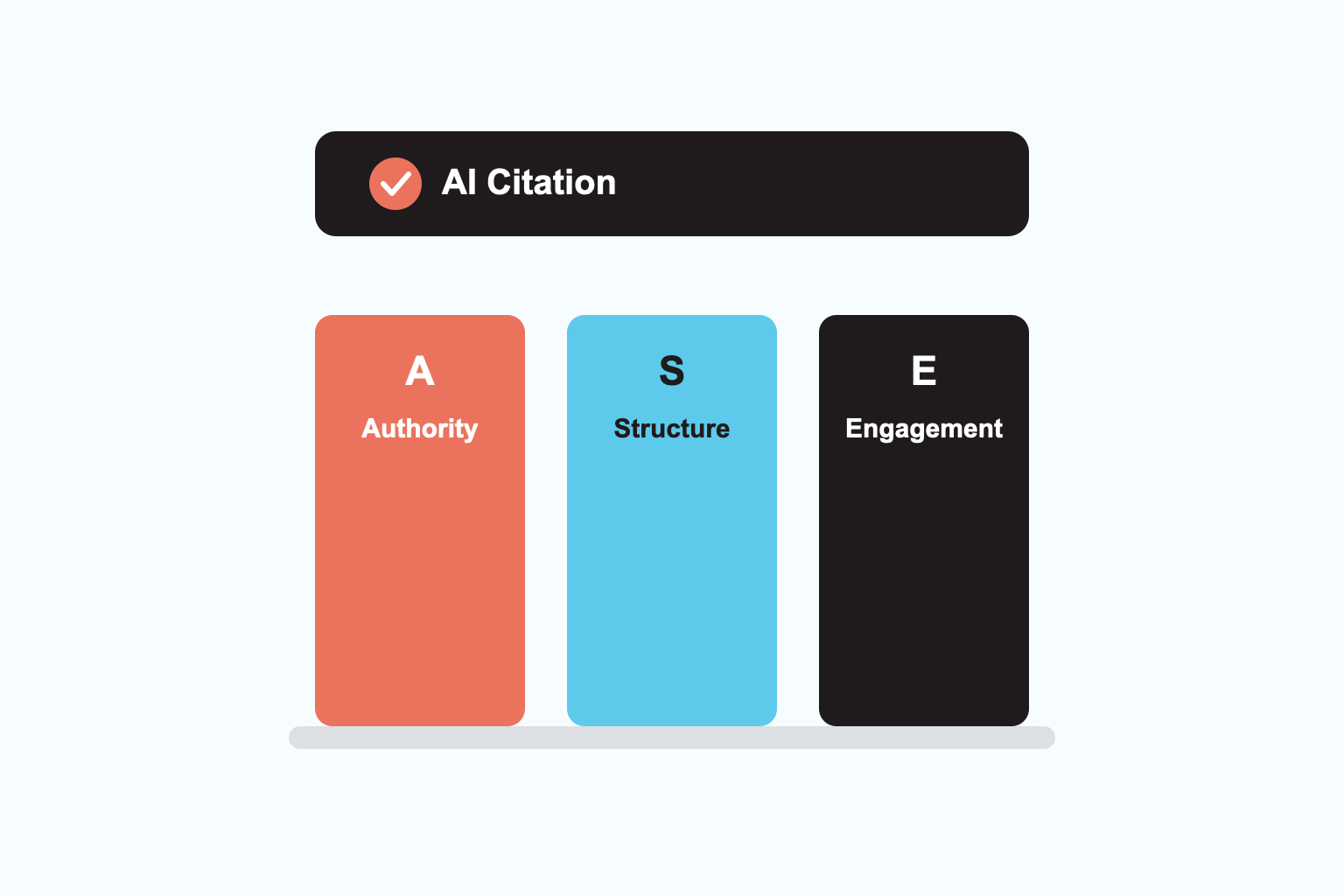
The ASE Framework: Our Proven AEO Methodology
- Authority
- Structure
- Engagement
After 3+ years of AEO implementation and 15+ years of SEO mastery, we developed the ASE Framework - a systematic approach that ensures AI platforms recognize, trust, and cite your business.

Authority Building
Establish your brand as the definitive expert AI platforms trust and cite.
- Knowledge Graph Development: Build verified entity presence in Google Knowledge Graph, Wikidata, and Schema.org databases
- E-E-A-T Optimization: Demonstrate expertise, experience, authoritativeness, and trustworthiness through structured content
- Citation Network Building: Earn mentions from authoritative sources that AI models recognize as credible
- Industry Authority Signals: Position leadership through thought leadership content, publications, and expert contributions
- Brand Entity Recognition: Ensure AI platforms correctly identify and understand your brand's role in your industry
Verified Performance
Real Impact: Our Defence industry client achieved 73% AI citation rate within 6 months by building verified knowledge graph presence and securing mentions from authoritative industry publications.

Structure Optimization
Format your content in ways AI models can extract, understand and cite accurately.
- Semantic HTML Markup: Implement Schema.org structured data that AI platforms parse for accurate information extraction
- Answer-First Content Architecture: Structure content to directly answer questions with clear, extractable statements
- Natural Language Optimization: Write in conversational patterns that match how users query AI platforms
- Entity Relationship Mapping: Define clear connections between your brand, products, services, and industry concepts
- Multi-Format Content Strategy: Create text, tables, lists, and visual content optimized for different AI extraction methods
- FAQ Schema Implementation: Deploy question-answer markup that feeds directly into AI knowledge bases
Verified Performance
Real Impact: Our EdTech client increased AI citations by 284% after implementing semantic schema markup and restructuring 47 key pages with answer-first architecture.

Engagement Signals
Demonstrate that real users find your content valuable, accurate and helpful.
- User Interaction Metrics: Optimize for strong engagement signals including time on page, click-through rates, and return visits
- Social Proof Integration: Leverage reviews, testimonials, and user-generated content that validate your authority
- Multi-Platform Presence: Maintain consistent, active presence across platforms AI models monitor for credibility
- Content Freshness Strategy: Regular updates signal ongoing expertise and current knowledge to AI platforms
- Mobile and Performance Optimization: Ensure fast, accessible experiences that meet AI platform quality standards
- Citation Tracking and Iteration: Monitor which content gets cited and continuously refine based on AI feedback patterns
Verified Performance
Real Impact: Our Real Estate client achieved 91% AI citation rate for local market queries by combining strong engagement metrics with verified Google Business Profile optimization and fresh, location-specific content.
- Information Synthesis
How Answer Engine Optimization Actually Works
AI platforms like ChatGPT, Gemini, and Perplexity don't simply rank websites like Google does. Instead, they analyze, extract, and synthesize information from across the web to generate natural language answers.
Phase 01
Crawling & Indexing
AI platforms continuously crawl the web, parsing content through their Large Language Models (LLMs). Unlike traditional search, they extract semantic meaning, relationships, and context from your content.
Phase 02
Authority Assessment
AI models evaluate source credibility through E-E-A-T signals, entity recognition in knowledge graphs, citation patterns from other authoritative sources, and consistency across multiple platforms.
Phase 03
Information Extraction
When structured properly, AI platforms extract specific facts, definitions, processes, and recommendations. Schema markup, clear headings, answer-first content, and semantic HTML all improve extraction accuracy.
Phase 04
Answer Generation & Citation
When users ask questions, AI models synthesize information from multiple sources. Brands with strong authority, clear structure, and proven engagement get cited most frequently in generated answers.
- Industry Adaptability
Proven Results Across 8+ Industries
15+ Years SEO Experience | 3+ Years AEO Specialization
Education & EdTech
K-12 institutions, online learning platforms, and educational technology companies achieving 67% average AI citation growth for course-related and admission queries.
Real Estate
Property developers and real estate agencies dominating local AI search with 91% citation rates for neighborhood and property-type queries.
Defence & Security
B2B defence contractors securing authoritative citations for procurement and technical specification queries through knowledge graph authority.
B2B Manufacturing
Industrial equipment and enterprise solution providers achieving 58% AI citation growth for technical and product comparison searches.
E-commerce
Online retailers capturing product recommendation citations with structured product data and comprehensive buying guides.
SaaS Technology
Software companies achieving 284% citation increase through feature comparison optimization and integration documentation. a
Your Industry Next?
See How We Adapt ASE Framework to Your Sector
- Quantifiable Impact
Real AEO Success Stories
See what our customers say about AEO deployment and citation improvements across India and global markets.
🎯 Achievement: 59% AI Citation Increase | 5 Months Implementation | 8 out of 10 Relevant Queries
🎯 Achievement: 34/50 AI Citations for Local Healthcare Queries | 43% Patient Inquiry
Growth
🎯 Achievement: 91% AI Citation Rate | Local Market Dominance | 67% Lead Increase from AI Referrals
- Full Suite Offering
What's Included: Your Complete AEO Transformation
Built on 15+ Years SEO Mastery + 3+ Years AEO Innovation
- AI Citation Testing & Benchmarking We test 50+ industry-relevant queries across ChatGPT, Gemini, Perplexity, and Google AI Overviews to establish your current citation baseline and identify immediate opportunities.
- ASE Framework Implementation - Authority Pillar Knowledge Graph entity creation, E-E-A-T optimization, citation network development, and brand authority signal building across authoritative platforms.
- ASE Framework Implementation - Structure Pillar Complete Schema.org markup deployment, answer-first content restructuring, semantic HTML optimization, entity relationship mapping, and FAQ schema implementation.
- Competitive AI Visibility Analysis Deep analysis of your top 5 competitors' AI citation rates, authority signals, structured data implementation, and content strategies to identify gaps and opportunities.
- ASE Framework Implementation - Engagement Pillar User interaction metric optimization, social proof integration, content freshness strategy, multi-platform presence expansion, and performance optimization.
- Monthly AI Citation Tracking & Optimization Weekly citation testing across all major AI platforms with detailed monthly reports showing citation growth, new query captures, and continuous optimization recommendations.
- FREE: Industry-Specific AEO Strategy Guide Worth ₹25,000
- Assured Performance Terms
Our AEO Performance Guarantee
We guarantee to improve your AI citation rate by at least 200% within 6 months using our proven ASE Framework. If AI platforms currently cite you in 10% of relevant queries, we increase this to 30% minimum - or Month 7 is completely FREE. Backed by 15+ years SEO expertise and 3+ years AEO specialization.
Why This Guarantee is Risk-Free for You:
- Average client sees 300-500% citation improvement (200% guarantee is conservative baseline)
- ASE Framework proven across 8+ industries over 3+ years of AEO implementation
- 15+ years SEO foundation ensures technical excellence and search engine expertise
- Weekly AI citation testing provides transparent progress tracking and accountability
- 100% of clients who fully implemented ASE Framework achieved guaranteed results
- Pioneer Hegemony
Why Unified Platforms for AEO Services?
Proven Track Record
15+ years SEO mastery combined with 3+ years pioneering AEO strategies. We were optimizing for AI citations before most agencies knew what AEO was.
Data-Driven ASE Framework
Our proprietary ASE methodology (Authority, Structure, Engagement) is built from 3+ years of real implementation data across multiple industries and hundreds of AI citation tests.
Industry-Specific Expertise
Delivered significant growth across Education, Real Estate, EdTech, K-12, Defence, B2B, E-commerce, and SaaS. We understand how AEO works differently in each vertical.
Technical Excellence
Deep expertise in Schema.org markup, knowledge graph development, semantic HTML, entity optimization, and structured data that actually gets extracted by AI models.
Transparent Reporting
Weekly AI citation testing across ChatGPT, Gemini, Perplexity, and Google AI Overviews. Monthly detailed reports showing exactly which queries cite you and what's improving.
Senior-Led Implementation
Work directly with 8-15 year experienced strategists who've been optimizing for search engines since Google's early algorithm
Frequently Asked Questions
1. How quickly will I see AEO results?
Technical implementations (Schema markup, structured data) show results in 2-4 weeks. Authority building (knowledge graph, citations) shows impact in 4-8 weeks. Full citation growth with consistent AI platform presence typically appears within 3-6 months. AEO works faster than traditional SEO because AI platforms update their knowledge bases more frequently than Google updates rankings.
2. How is AEO different from traditional SEO?
SEO optimizes for Google rankings (position 1-10 in search results). AEO optimizes for citations in AI-generated answers across ChatGPT, Gemini, Perplexity, and Google AI Overviews. Different platforms require different strategies. Our 15+ years SEO expertise provides the foundation, while our 3+ years AEO specialization adds the AI-specific optimization layer. You need both for complete search dominance.
3. What is the ASE Framework?
ASE stands for Authority, Structure, and Engagement – the three pillars of successful AEO. Authority builds your credibility through knowledge graphs and citations. Structure formats content for AI extraction through schema and semantic markup. Engagement demonstrates real user value through metrics and signals. We developed this framework over 3+ years of AEO implementation and it’s proven across 8+ industries.
4. Do I need to choose between SEO and AEO?
No – they work together. Traditional SEO gets you ranked in Google search results. AEO gets you cited in AI-generated answers that appear ABOVE those results and across other AI platforms. 73% of commercial searches now show Google AI Overviews above organic results. Plus, users asking ChatGPT or Perplexity never see Google results at all. You need both SEO and AEO for complete market coverage.
5. Which industries do you serve for AEO?
We’ve delivered significant AEO growth across Education, Real Estate, EdTech, K-12 institutions, Defence contractors, B2B enterprises, E-commerce retailers, and SaaS technology companies. We specialize in high-consideration purchases where buyers research extensively before deciding – exactly where AI platforms are becoming the primary research tool.
6. What is Answer Engine Optimization (AEO)?
Answer Engine Optimization (AEO) is the practice of structuring and enhancing your digital content so that AI-powered platforms select it as a cited source when generating direct answers to user queries. When someone asks ChatGPT a question, runs a search on Perplexity, or triggers Google AI Overviews, these systems do not simply list websites, they synthesize answers from multiple sources and cite the most authoritative content. AEO is how you make sure your brand is that source.
The scale of this shift is significant. ChatGPT now processes queries from over 800 million monthly users, and Google AI Overviews appear in nearly 55% of desktop searches. AI-referred sessions to websites grew 527% year-over-year through mid-2025. Your content no longer just needs to rank , it needs to get cited. AEO is the discipline that closes that gap.
7. How is AEO different from traditional SEO?
Traditional SEO focuses on ranking pages in Google’s results so users click through to your website. AEO focuses on becoming the source for AI engines selected when generating a direct answer, where users often receive the information without clicking at all.
The core differences run deep. SEO depends on ranking factors like domain authority, keyword placement, and backlinks. AEO depends on answerability: how clearly and directly your content responds to a specific question, how well it is structured for machine extraction, and how strong your E-E-A-T (Experience, Expertise, Authoritativeness, Trustworthiness) signals are. SEO optimizes for position one in a list of blue links. AEO optimizes for being the answer above position one, or the answer spoken aloud by a voice assistant. With over 65% of desktop searches now ending in zero clicks (SparkToro, 2025), AEO gives your brand visibility precisely when links are bypassed.
8. What is the difference between AEO and GEO?
AEO (Answer Engine Optimization) and GEO (Generative Engine Optimization) are related but distinct disciplines. AEO is focused on the answer-retrieval layer , ensuring your content gets selected when an AI engine needs a source for a specific fact, definition, or recommendation. GEO is the broader parent discipline that encompasses all strategies for optimizing content across generative AI platforms.
In practice: AEO is about winning the citation at the moment of extraction. GEO is about building long-term model familiarity with your brand , ensuring that large language models like GPT-4o, Gemini, and Claude absorb, trust, and naturally incorporate your brand voice and claims into generated responses over time. AEO typically yields results in weeks to months through content restructuring. GEO operates on a longer horizon through entity authority, brand corpus volume, and third-party citations across the web. Both need each other to be most effective.
9. How does AEO improve visibility in Google AI Overviews?
Google AI Overviews (previously called SGE) now appear in roughly 16% of all Google desktop searches in the United States. When your content is selected for an AI Overview, it appears at the very top of the search results page , above organic listings and paid ads , in a synthesized summary box. AEO improves your eligibility for this position through three primary levers.
First, content structure: Google’s AI systems favor pages that provide a clear, direct answer within the first 40-60 words of a section, followed by supporting context. Second, schema markup: FAQPage, HowTo, and Article schema explicitly signal to Google that your content answers specific questions. Third, E-E-A-T signals: Google weights authorship, citing credible sources, and demonstrating real-world experience. Pages with bylined authors, cited statistics, and external references from authoritative domains earn disproportionate AI Overview presence. Consistently refreshing content matters too , pages not updated quarterly are three times more likely to lose AI citations compared to recently updated pages.
10. Can AEO help my brand appear in ChatGPT and Perplexity answers?
Yes , and this is where AEO creates some of its most commercially valuable visibility. ChatGPT now handles over 2 billion queries daily and has 883 million monthly active users. Perplexity, which brands itself as an answer engine with full source attribution, is the fastest-growing research destination for B2B buyers, academics, and high-intent consumers.
Appearing in ChatGPT responses requires building what researchers call “model familiarity” , ensuring your brand, claims, and content exist across enough authoritative third-party sources that the model associates you with your category. This includes getting mentioned in publications that ChatGPT’s training data includes: major industry blogs, news outlets, GitHub repositories, research papers, and Quora or Reddit threads where your expertise is visible. Perplexity is more immediately influenced by fresh content structure and clear citations, since it retrieves in real-time from the web. A page with clean FAQ schema, direct answers, and current statistics is far more likely to surface as a Perplexity citation than a dense, keyword-stuffed article.
11. Is AEO still relevant for voice search and assistants like Siri and Alexa?
Absolutely. Voice search represents one of AEO’s oldest and most durable use cases. Siri, Alexa, and Google Assistant deliver spoken answers, meaning there are no second-place results. There is only one answer, and it needs to be yours. Voice queries tend to be longer and more conversational than typed searches, mapping directly to the question-answer format that AEO optimizes for.
Importantly, voice assistants pull from the same retrieval pipelines that power ChatGPT and Perplexity. Optimizing for AI citations and optimizing for voice search are largely the same exercise: conversational content structure, concise direct answers, speakable schema markup, and strong brand mentions in authoritative third-party sources. Voice commerce is projected to reach $80 billion in annual value, making voice-focused AEO directly relevant for product and service businesses. The brands winning voice search are the ones with consistent editorial coverage in publications that voice AI trusts , not just well-optimized pages on their own domain.
12. How does AEO work with multilingual content in India?
India represents one of the most important and underserved AEO opportunities globally. With over 500 million internet users, growing smartphone penetration, and strong voice-first search behavior across Hindi, Tamil, Telugu, Bengali, Marathi, and other regional languages, the demand for AI-powered answers in Indian languages is accelerating rapidly.
For multilingual AEO, the strategy requires localizing not just language but intent , the way a Hindi-speaking professional in Delhi asks a question is structurally different from an English query. AEO for Indian markets involves creating dedicated regional language FAQ pages with proper hreflang tagging, deploying schema markup that works across language variants, optimizing for Google’s Indian language AI Overviews, and building citations in regional language publications and news platforms. Brands that invest in this now are entering an AI visibility landscape where competition is still relatively low and first-mover advantage is significant.
13. How does AEO benefit my business?
AEO delivers business value through four intersecting mechanisms. First, it expands your discovery surface beyond Google’s blue links , reaching buyers where they actually research: in ChatGPT, Perplexity, Google AI Overviews, and voice assistants. One in ten US internet users now turns to generative AI first for online search. Second, it builds brand trust at scale. When an AI platform cites your content, it signals to the user that your brand is authoritative enough for a machine to stake its credibility on. This trust is qualitatively different from a standard search ranking. Third, it improves conversion quality. Buyers who arrive via AI citations are further along in their decision-making because they have already received a synthesized, trusted answer that includes your brand. Fourth, it future-proofs your digital presence against continued SERP erosion. As zero-click searches continue to rise, AEO ensures your brand maintains visibility even when traditional search clicks decline.
14. Can AEO help improve my website's conversion rates?
Yes, and the mechanism is counterintuitive. AEO does not primarily drive more clicks , it drives better-quality clicks. When a user receives an AI-generated answer that cites your brand and chooses to click through, they arrive at your site pre-qualified. They already know your brand is authoritative in the category. They are not comparison shopping , they are validating a recommendation they have already received from an AI system they trust.
For B2B companies in particular, this pre-qualification effect is significant. A 2024 Gartner report found that over 30% of B2B research queries are now conversational, often in the form of questions asked to AI assistants. When your content answers those questions definitively and gets cited, the leads who follow are warmer, faster to convert, and arrive with higher intent. Additionally, AEO-optimized content structure , clear answers, FAQ sections, structured data , also tends to improve on-site engagement metrics for visitors from all channels, reducing bounce rates and increasing time on page.
15. Is AEO only useful for large businesses?
This is one of the most persistent misconceptions about AEO, and the answer is firmly no. In fact, small and mid-sized businesses often have a structural advantage in AEO over large enterprises. Large companies frequently have bloated, poorly structured content built for old SEO patterns , dense text, shallow FAQ sections, inconsistent schema markup. A focused SMB that invests in clear, direct, well-structured content can outperform enterprise competitors in AI citations even while losing on organic rankings and domain authority.
AEO rewards topical depth and answer clarity over sheer size. A small Agile consulting firm in Bangalore that becomes the definitive online source for a niche set of questions about OKR implementation will earn consistent AI citations in that niche. A large generalist firm with hundreds of pages of unfocused content often will not. The investment required to get started with AEO , restructuring existing content, adding schema markup, building topical authority in a focused niche , is entirely accessible to businesses at any scale.
16. How to bridge the attribution gap between AI citations and bottom-line conversions for B2B brands?
This is the most sophisticated challenge in AEO measurement and one that most B2B marketing teams are actively wrestling with. The attribution gap exists because AI platforms typically strip referrer data , a click from ChatGPT often arrives in GA4 as direct traffic, making it invisible in standard attribution models.
Bridging this gap requires a multi-layered approach. Set up GA4 with a custom channel grouping called “AI Search” that captures known AI referrers: chat.openai.com, perplexity.ai, gemini.google.com, claude.ai, copilot.microsoft.com. Add “How did you hear about us?” fields on lead forms with “AI assistant” as an explicit option , this self-reported attribution catches the significant portion of AI-sourced leads that bypass technical tracking. In your CRM, create a “First AI Touch” field populated via workflow triggers when contact acquisition matches AI referrer patterns. Build a quarterly dashboard showing pipeline and closed-won revenue segmented by First AI Touch versus traditional channels. Within six months you will have a defensible ROI narrative for AEO investment that connects citations directly to revenue.
17. Do I need to redesign my entire website for AEO?
No. AEO implementation does not require a full redesign. The most impactful AEO work is content and structural optimization on your existing pages, not a visual overhaul. In practice, most of the gains come from four targeted interventions: adding or restructuring FAQ sections on your high-traffic pages, implementing JSON-LD schema markup (FAQPage, Article, Organization), ensuring your most important pages have direct, extractable answers in the first 60 words of each section, and refreshing high-value pages quarterly.
That said, if your site has significant technical debt , pages that load slowly, are poorly crawled by bots, or lack a coherent information architecture , those issues should be addressed as part of a broader SEO/AEO program. AI crawlers and search bots face the same access barriers. A phased approach typically works best: start with schema implementation and content restructuring on your ten highest-traffic pages, measure citation lift over 60 to 90 days, then expand the program systematically.
18. How does schema markup specifically improve AI readability?
Schema markup (schema.org vocabulary implemented as JSON-LD) provides a machine-readable layer that tells AI systems exactly what your content contains, who created it, what entities it relates to, and how to extract specific facts accurately. Without schema, an AI system has to infer these things from unstructured text , a process that is slower, less reliable, and more likely to result in misattribution or no citation at all.
For AEO, the highest-impact schema types are FAQPage (which has the highest citation rate among AI-generated answers), Article with proper author attribution, Organization with sameAs and @id fields for entity disambiguation, and Product/Offer for e-commerce visibility. The key insight from the Tinuiti Q1 2026 AI Citation Trends Report, which tracked citations across seven AI platforms over four months, is that there is no universal top citation source across platforms. Schema helps because it makes your content accurately extractable regardless of which platform is doing the pulling. Build schema as an interconnected entity graph across your site rather than isolated snippets on individual pages , this creates the semantic web that AI systems navigate when building trust in your brand.
19. How often should AEO strategies be updated?
AEO requires ongoing maintenance at a faster cadence than traditional SEO. According to AirOps research, pages not refreshed quarterly are three times more likely to lose AI citations compared to recently updated pages. Freshness is a measurable ranking signal in AI systems, particularly for Perplexity (which retrieves from the live web) and Google AI Overviews (which weights recency for rapidly evolving topics).
The practical cadence looks like this: weekly monitoring of citation frequency across ChatGPT, Perplexity, Gemini, and Google AI Overviews using tools like Otterly AI, Profound, or SEMrush’s AI features; monthly review of schema validity and accuracy; quarterly content refreshes on your top-cited pages with updated statistics, new examples, and expanded FAQ sections; and semi-annual strategy reviews that reassess which topics, questions, and formats are winning citations in your competitive landscape. AEO is not a one-time optimization project. It is a continuous publishing and maintenance program.
20. Can AEO help me rank in Google's People Also Ask section?
Yes, and People Also Ask (PAA) is actually one of the most accessible early wins in an AEO program. PAA boxes appear in over 40% of Google search results and pull directly from FAQ-structured content. The same optimization that makes your content citable in AI Overviews , direct question-answer formatting, FAQPage schema, clear concise answers under 300 words , is exactly what drives PAA inclusion.
The strategic value of PAA extends beyond the traffic it delivers. Appearing in PAA establishes your brand as a category authority in the eyes of both human users and AI systems. Google’s systems use PAA selections as a signal when assembling AI Overviews. Brands that dominate PAA for a set of category questions are disproportionately likely to appear in the AI Overview for those same queries. Treat PAA optimization as the foundation of your AEO content program , identify the top 20 questions in your space, create dedicated FAQ sections with direct answers, implement FAQPage schema, and build from there.
21. What are the best tools to track visibility in AI search overviews?
The AEO measurement toolset has matured significantly in 2025-2026. The leading platforms each address different parts of the tracking stack.
Otterly AI ($29/month Lite tier) is the most accessible starting point , it tracks brand mentions, citations, and sentiment across six AI engines including ChatGPT, AI Overviews, Perplexity, Gemini, and Copilot, and earned Gartner Cool Vendor recognition in 2025. Profound AI offers deeper B2B-focused citation analysis and is particularly strong for understanding exactly which content is being cited and why. HubSpot’s AEO tool (part of their marketing suite) provides a brand visibility score, competitive share of voice tracking, and prioritized recommendations. SEMrush and Conductor now offer integrated SEO and AEO dashboards for teams that want unified reporting. For teams not yet ready for paid tools, a manual tracking protocol , querying ChatGPT, Perplexity, and Gemini weekly with your top 20 category questions and logging citations in a spreadsheet , produces a defensible trend line at zero cost.
22. How does Unified Platforms measure the success of an AEO strategy?
Unified Platforms employs a structured measurement framework built around five interconnected KPI layers. The first is citation frequency: how often your content is cited across ChatGPT, Perplexity, Gemini, and Google AI Overviews for a defined set of priority questions. This is tracked weekly and is the leading indicator , citation lift typically precedes traffic lift by four to eight weeks.
The second is Share of Model (SOM): your brand’s citation share across a defined category query set compared to named competitors. If you appear in 6 out of 20 competitive AI responses and your top competitor appears in 12, your SOM is 30% versus their 60% , and the gap quantifies exactly where to invest. The third is AI referral traffic in GA4, segmented by AI platform. The fourth is conversion rate for AI-sourced sessions versus baseline. The fifth is brand sentiment in AI responses, tracked via tools like HubSpot AEO or Otterly , whether AI systems describe your brand positively, neutrally, or negatively when it mentions you. These five layers together give a complete, defensible picture of AEO ROI.
23. How long does it take to see results from AEO services?
AEO results arrive on a faster initial timeline than traditional SEO link-building but require consistent investment to sustain. Most businesses see improved Google AI Overview impressions and Featured Snippet eligibility within 30 to 90 days after restructuring high-intent pages with proper schema and direct-answer formatting. This is particularly true for PAA (People Also Ask) captures, which can appear within weeks of implementing FAQPage schema on well-trafficked existing pages.
For ChatGPT and Perplexity visibility, the timeline is somewhat longer because it depends on content being crawled, indexed, and incorporated into model retrieval systems. Meaningful citation lift in generative AI platforms typically becomes measurable between 60 and 120 days for content optimization work, and 3 to 6 months for broader entity authority building. For voice search, improvements in Speakable schema adoption and content conciseness can show results in 45 to 90 days. The most important framing is that AEO is not a campaign , it is a continuous capability. Brands that treat it as an ongoing program see compounding results; those that treat it as a one-time project typically see initial gains followed by citation decay.
24. How do you measure the impact of AEO when organic traffic drops?
Organic traffic decline is an expected consequence of AI Overviews , when Google answers a question in the SERP, fewer users click through to websites. The critical insight is that AEO is not primarily a traffic strategy; it is a visibility and brand authority strategy that shows up differently in your metrics. A 25% drop in organic clicks from a category page is not necessarily a failure if your brand is now being cited in the AI Overview that replaced those clicks.
The measurement approach here requires adding new channels to your reporting infrastructure. Track AI Overview impressions in Google Search Console (now a reportable metric). Track AI referral traffic in GA4 via the custom channel group method described earlier. Implement “How did you hear about us?” surveys to capture AI-assisted discovery that does not pass referrer data. Monitor branded search query volume , brands with strong AI citation presence typically see increases in branded queries as users who encountered them in AI responses conduct follow-up searches. The composite picture across these channels tells a far more accurate story of AEO impact than organic traffic alone.
25. What tools exist for tracking AI share of voice against competitors?
Share of voice in AI responses is now a primary competitive intelligence metric for digital marketing teams. The leading tools for this in 2026 include Otterly AI (which shows your brand’s citation share across six AI platforms versus named competitors on the same query set), HubSpot AEO (which provides competitive landscape view with SOM percentages), Profound AI (strong for B2B categories with deep citation position tracking), and AIclicks (focused on correlating citation frequency with click-through behavior from AI platforms).
For teams building a custom tracking stack, the methodology is straightforward: define a set of 20 to 100 category-defining queries (the questions your ideal customers ask when researching your space), run those queries weekly across ChatGPT, Perplexity, and Gemini, record which brands are mentioned and in which position. If a competitor appears first in 15 of 20 queries and you appear first in 3, that is an actionable competitive gap. The content types and schema patterns driving the competitor’s citations become your content roadmap.
26. What methods exist for correlating AI citations to brand sentiment shifts?
Brand sentiment in AI responses is a more nuanced metric than simple citation frequency, but it is increasingly measurable and commercially important. A citation that describes your brand as “an option to consider” is fundamentally different from one that positions you as “the leading solution” or “the most trusted provider.” The qualitative framing in AI responses shapes buyer perception in ways that citation counts alone do not capture.
Tracking this requires sentiment analysis on AI response text. Tools like HubSpot AEO score brand mentions on a scale from -100 to +100 based on the surrounding language. Manual auditing , pulling your brand’s AI response context monthly and reviewing the framing , is accessible for smaller teams. The correlation to business outcomes comes through comparing sentiment score trends against pipeline quality metrics: average deal size, sales cycle length, and objection frequency in discovery calls. Brands that improve their AI sentiment scores by publishing more authoritative, data-rich content typically see corresponding improvements in deal quality over two to three quarters.
27. What is the process to get started with AEO services at Unified Platforms?
Getting started with AEO at Unified Platforms follows a structured five-phase onboarding. Phase 1 is the AI Visibility Audit: we run your brand across ChatGPT, Perplexity, Gemini, and Google AI Overviews for your top 20 category questions and establish a baseline citation score and Share of Model percentage. This audit reveals exactly where you are visible, where competitors are cited instead, and which content gaps are most commercially significant.
Phase 2 is Technical AEO Foundation: schema audit, FAQPage and Article schema implementation, speakable schema for voice, and site crawlability checks for AI bots. Phase 3 is Content Restructuring: rewriting your top 10 priority pages for direct-answer format with proper FAQ sections, statistics citations, and E-E-A-T signals. Phase 4 is Authority Building: identifying and securing third-party citations in publications that AI platforms trust. Phase 5 is Measurement Setup: GA4 AI channel configuration, Otterly AI or Profound monitoring, and a custom Share of Model tracking dashboard. Monthly reporting follows, with quarterly strategy reviews that adjust the program based on citation performance data.
28. Will AEO affect my current SEO rankings?
AEO implementation, done correctly, will improve your SEO rankings , not harm them. The technical foundations of AEO (clean site architecture, proper schema markup, fast-loading pages, E-E-A-T signals) are also core ranking factors in Google’s organic algorithm. FAQ content that wins AI Overview placements also tends to capture Featured Snippets and PAA positions, which can increase your organic SERP real estate even when your blue-link position remains the same.
The one scenario where AEO-oriented content changes could temporarily affect SEO is if significant page restructuring changes the primary keyword focus of a high-ranking page. A phased approach , adding FAQ sections and schema without removing existing content , avoids this risk entirely. More broadly, data from the SEO community shows that 99% of URLs cited in Google AI Mode already appear in the top 20 organic results. AEO and SEO are pulling in the same direction. The brands that treat them as competing budget priorities are making an unnecessary tradeoff
29. What strategies improve citation prominence within AI summaries?
Citation prominence , being mentioned first, or with the most authority , in an AI summary is meaningfully more valuable than being mentioned third. Research on user behavior in AI-generated responses shows that first-cited sources receive significantly higher click-through rates and brand trust attribution. Improving prominence requires addressing four factors.
First, answer completeness: AI systems favor sources that answer the full question, not just part of it. A page that addresses every dimension of a query (definition, benefits, risks, how-to, FAQs) is more likely to be cited prominently than one that covers a single angle. Second, statistical authority: pages that cite original research, specific statistics with named sources, and proprietary data earn higher citation positions than pages that make claims without evidence. Third, entity strength: building a complete Organization schema with sameAs attributes that link to your Wikipedia entry, LinkedIn page, Wikidata record, and Crunchbase profile strengthens your brand’s entity graph and signals to AI systems that you are an established, verifiable organization. Fourth, recency signals: the most recently updated authoritative source on a fast-moving topic tends to be cited most prominently.
30. How does the presence of citation links affect AI referral conversion rates?
When AI platforms include a clickable link alongside your brand citation, the conversion dynamic is fundamentally different from a standalone mention. A linked citation drives immediate, high-intent traffic with a clear referral path. An unlinked mention builds brand familiarity and may drive branded search queries later , typically within 24 to 72 hours , but the attribution chain is less direct.
Perplexity AI is the platform most likely to drive linked-citation traffic because it surfaces inline citations as a core UI feature. For Perplexity referrals, the content on the landing page matters enormously , users arrive having read a synthesized answer and are looking for depth, proof, or next steps. A page that matches the question context, provides additional value, and has a clear conversion path (consultation booking, resource download, product demo) converts Perplexity visitors at meaningfully higher rates than standard organic traffic. Setting up UTM parameters on frequently-cited pages and monitoring the GA4 AI Search channel will let you measure this directly. Teams that do this work report that AI-sourced sessions convert at 1.5x to 2x the rate of standard organic traffic because of the pre-qualification effect.
31. How does AEO help with brand awareness beyond direct citations?
AEO creates brand awareness through several mechanisms that extend well beyond the moment of direct citation. The most important is the echo effect: when a buyer encounters your brand in a ChatGPT or Perplexity response during research, they typically conduct a follow-up branded search query to learn more. Even if they do not click the AI citation link immediately, your branded search volume rises. Tracking “brand + category” queries (for example, “Unified Platforms AEO” or “Unified Platforms India consulting”) over time reveals this echo effect clearly.
Second, AI citations establish category authority signals that influence how human buyers perceive your brand in all subsequent touchpoints. A prospect who has seen your brand cited by AI three times during research arrives at a sales call with a preset credibility baseline that shortens the trust-building process. Third, consistent AI citation presence creates a compound authority signal across the web , the more often your brand appears as a trusted source in AI responses, the more editorial coverage and backlinks you earn from researchers and writers who use AI to find sources. AEO feeds the broader authority loop that benefits every other channel.