 Skip to content

The Complete Guide to SEO in 2026 (Rankings + AI Search)
The complete guide to SEO in 2026: how search and AI answers actually work, and how to win both. Keyword research, on-page, technical, content, links, local SEO and AEO, explained in depth.
Quick Answer
SEO in 2026 is the practice of earning visibility across both traditional rankings and AI-driven search, by building technically sound, genuinely authoritative, answer-first content. The fundamentals, intent-matched content, clean technical health, and real authority, still decide rankings, and they now also determine whether AI engines cite you.
SEO, or search engine optimization, is the practice of improving your website so it earns more visibility in search, which now means two things at once: ranking in Google’s classic results and being cited inside the AI answers from ChatGPT, Perplexity, Google AI Overviews and Gemini. In plain terms, SEO is how you get found by people who are actively looking for what you sell, without paying for every click. This complete guide explains how search and AI answers actually work in 2026, and walks through every discipline that moves rankings and leads, keyword research, on-page, technical, content, authority, local, and the new AI-search layer, in enough depth that you can either do the work or judge whether it is being done well. It is written from 15+ years of SEO practice and 3+ years of AI-search work, including growing a US brand from about 100 to over 11,000 organic clicks a month.
Key Highlights
- In 2026, SEO means winning two surfaces at once: ranking in Google’s classic results and being cited inside AI answers from ChatGPT, Perplexity, Google AI Overviews and Gemini.
- Keyword research still sets the foundation, target real search demand and buyer intent, not high-volume vanity terms that never convert.
- Technical SEO is the price of entry: if search engines cannot crawl, render and index your pages, nothing else you do will rank.
- On-page and content win by being the most complete, genuinely useful answer to a query, keyword stuffing and thin pages no longer work.
- Authority, earned through quality links, brand demand and real E-E-A-T, is what makes both search engines and AI models trust and cite you.
- Local SEO and answer engine optimization (AEO) are now distinct disciplines layered on top, each with its own signals worth deliberate work.
What SEO is, and how it actually works in 2026
SEO is the work of making your website the answer a search engine wants to show when someone searches something related to your business. When it works, you earn a stream of relevant visitors who found you on their own, and that stream keeps flowing long after the work is done, unlike ads that stop the moment you stop paying. That durability is why SEO remains the highest-return channel for most businesses that commit to it.
What has changed in 2026 is where that visibility happens. Search is no longer only ten blue links. A growing share of searches are answered by an AI directly, either as a Google AI Overview above the results or inside an assistant like ChatGPT or Perplexity, often naming a few specific brands and citing sources. So modern SEO has two jobs: rank in the classic results, and become one of the sources the AI cites. Our AEO and GEO work covers the second job in depth, and this guide treats them as one connected discipline because in practice they are.
Underneath both, the fundamentals are the same. Search engines and AI models both try to surface the most relevant, trustworthy, well-structured answer to a query. Everything in this guide is ultimately about becoming that answer, for a human scrolling results and for a model deciding who to cite.
How search engines rank pages
Three things happen before you can rank. First, a search engine crawls the web, following links to discover pages. Second, it indexes what it finds, storing and understanding the content. Third, when someone searches, it ranks the indexed pages it judges most relevant and trustworthy for that query. If a page is not crawlable or not indexed, it cannot rank at all, which is why technical health comes first.
Ranking itself is driven by hundreds of signals, but they cluster into a few that matter most: relevance (does the page genuinely answer the query and its intent), authority (do other credible sites and signals vouch for it), experience (is the page fast, clear and easy to use), and trust (does the site demonstrate real expertise and legitimacy, what Google calls E-E-A-T: experience, expertise, authoritativeness and trust). AI answer engines weigh a very similar set, plus how cleanly your content can be extracted and attributed.
The practical takeaway: you do not chase individual ranking factors, you make your site the most relevant, authoritative, well-built answer for the queries that matter to your business. The rest of this guide is how you do that, discipline by discipline.
Keyword research: the foundation
Keyword research is how you learn what your buyers actually search, in their words, and which of those terms are worth pursuing. Skip it and you optimise for phrases nobody types. Done well, it becomes the map for everything else: which pages to build, what to write, and where the winnable opportunities are.
A sound process looks like this. Start with seed topics from your services and your customers’ language. Expand them with a keyword tool to find real search volumes and the difficulty of ranking. Then sort by intent: informational (learning), commercial (comparing), and transactional (ready to buy). Most businesses under-invest in the commercial and transactional terms that actually convert. Finally, prioritise by a simple test: is the volume real, is the difficulty winnable for a site your size, and is the intent close to revenue. A low-volume term where buyers are ready to act often beats a high-volume term they only browse.
Two techniques separate good research from great. First, content-gap analysis: look at what already ranks for your target terms and find the questions those pages fail to answer, then answer them better. Second, mine where your buyers actually talk, forums, communities and social threads, for the exact pain points and phrasing they use, then build content around those real problems rather than guessed ones.
On-page SEO: making each page the best answer
On-page SEO is everything you control on the page itself to make it the clearest, most complete answer to its target query. It starts with intent: match what the searcher actually wants (a definition, a comparison, a how-to, a product) rather than what you wish they wanted. A page that answers the wrong intent will not rank no matter how well it is written.
The mechanics that matter: a clear, keyword-relevant title tag and a compelling meta description (these drive both ranking and click-through), a single descriptive H1 and a logical heading structure, the target term and its natural variants used where they belong rather than stuffed, genuinely useful depth, internal links to and from related pages, descriptive image alt text, and a clean, readable layout. Answer the core question in the first paragraph, then expand, this helps both featured snippets and AI extraction.
Above all, write for the person, not the algorithm. The pages that win are the ones a real buyer finds genuinely more useful than the alternatives, because that is exactly what search engines and AI models are built to reward.
Technical SEO: the foundation Google can crawl
Technical SEO makes sure search engines can crawl, render and index your site without friction, and that the experience meets modern standards. It is invisible to users but decisive for rankings: the best content in the world cannot rank on a foundation Google struggles to read.
The essentials: a crawlable, logical site architecture; fast load times and healthy Core Web Vitals; a mobile-first experience; clean indexation (no important pages blocked, no thin or duplicate pages diluting the site); correct canonical tags; a valid XML sitemap and sensible robots directives; HTTPS; and structured data (Schema.org) that tells engines and AI models exactly what your content is. Structured data matters more every year because it is how machines extract and attribute your information cleanly.
Most sites are held back by a handful of fixable technical issues rather than a lack of content, which is why every serious engagement should begin with a technical SEO audit to find and prioritise them before spending on anything else.
Content and topical authority
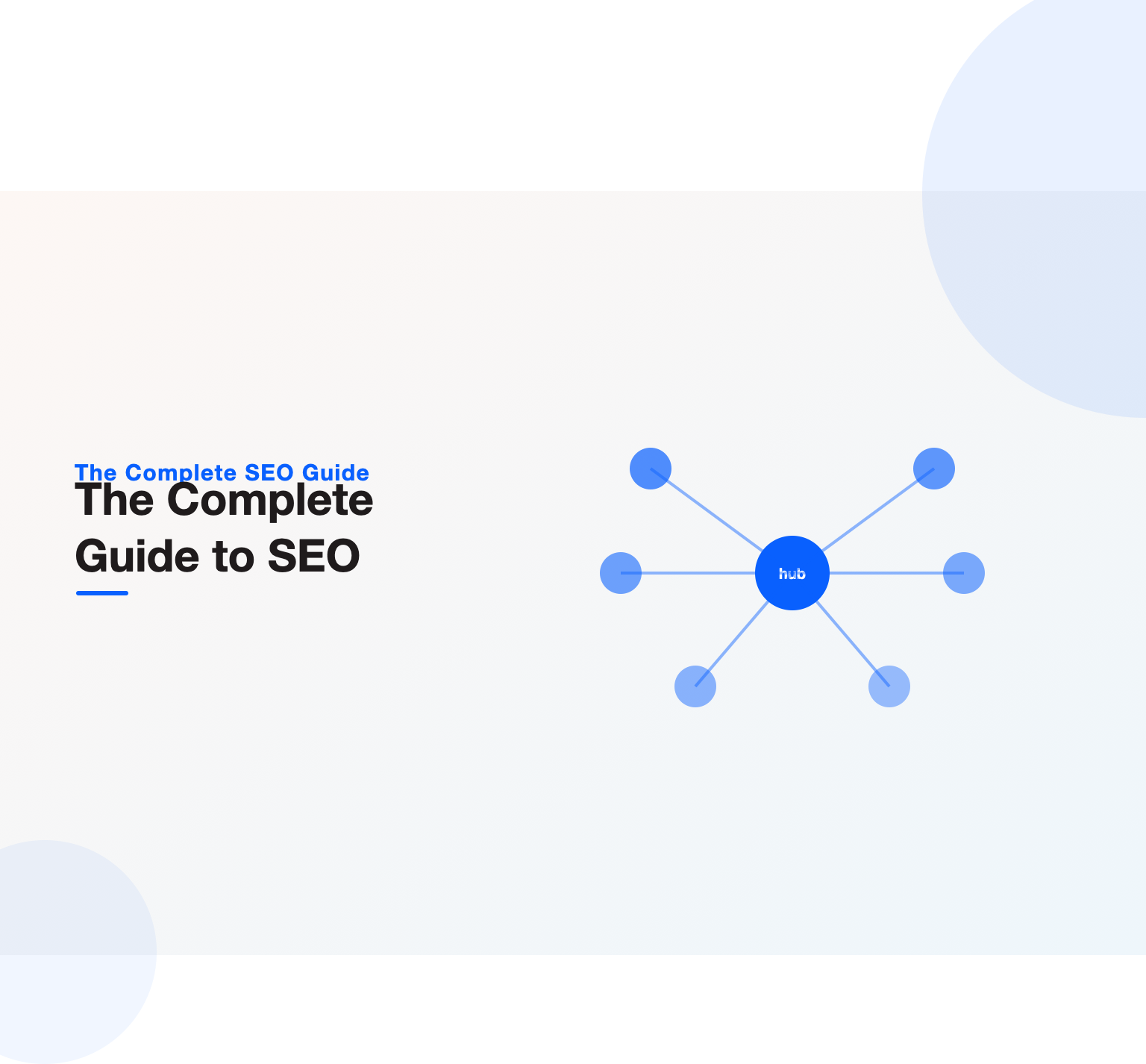
Content is where SEO is won or lost. Not volume of content, depth and authority. Search engines and AI models both reward sites that comprehensively cover a topic, because that signals genuine expertise. The modern model is the pillar-and-cluster: a comprehensive pillar page on a core topic (a guide like this one) supported by focused articles on every sub-topic, all interlinked. That structure builds topical authority that a scattered blog never will.
The content that ranks and gets cited shares a few traits: it answers a real question a real buyer has, it goes deeper or clearer than what already ranks, it is structured so both people and machines can extract the answer, and it demonstrates first-hand expertise rather than rehashing the same generic points. Our own SaaS SEO strategies and SEO project ideas pieces are examples of topic-focused spokes that support a pillar like this one.
The honest test for any piece of content: is this genuinely the best answer on the internet for this query? If not, it will struggle, and it should. That bar is exactly why depth, backed by real data and experience, is the durable way to win.
Off-page SEO: authority and links
Off-page SEO is everything that happens away from your site to build its authority, and the biggest factor is still backlinks: links from other credible websites that act as votes of confidence. A handful of links from trusted, relevant sites is worth far more than hundreds of low-quality ones, and cheap link schemes are the fastest way to a penalty.
The durable way to earn links is to deserve them: publish genuinely useful content and original data that others want to reference, earn editorial mentions through digital PR, contribute expertise where your audience already is, and build the kind of brand that gets cited naturally. Authority built this way lifts the whole domain, so every page ranks more easily, and it is exactly the authority AI models look for when deciding whose content to trust and cite.
This is the slowest discipline and the one with the highest ceiling. For competitive commercial terms, authority is usually the difference between page two and page one, which is why it should be a deliberate, ongoing part of any serious programme rather than an afterthought.
Local SEO: winning your market and your map
If you serve specific places, local SEO is how you show up when people search with local intent or a near-me query. It is a distinct discipline layered on top of the fundamentals. The pillars are a fully optimised Google Business Profile, consistent name, address and phone details across the web (citations), genuine reviews, and location-relevant content that speaks to each market you serve.
Local also fractures by area. A business serving a large metro competes differently neighbourhood by neighbourhood, so location pages that carry real local context, not thin city-name swaps, are what win the map pack and the local organic results. We build exactly that: for example our SEO services in New York and Los Angeles pages are built around each market’s real economy rather than a template. If local is your game, this is where a focused business out-ranks bigger, less local competitors.
AEO and GEO: SEO for AI answers
This is the layer most guides mention in a sentence and few actually explain, and in 2026 it is where a growing share of your buyers now start. Answer engine optimization (AEO) and generative engine optimization (GEO) are about becoming one of the sources AI assistants cite when they answer a question, rather than just ranking in the classic results below the AI answer.
It matters because behaviour has shifted. A buyer increasingly asks ChatGPT or Perplexity to recommend options, reads a single synthesised answer that names a few brands, and forms a shortlist before ever clicking a link. If your brand is not one of those names, you are invisible at the exact moment the decision is being shaped, no matter how well you rank in the traditional sense. And models tend to keep citing the sources they already trust, so early movers build a durable advantage.
The good news is that AEO and classic SEO pull in the same direction. Clean technical foundations, answer-first structure, valid schema and real authority are what earn both a featured snippet and an AI citation. Our full method for the AI-search side lives in our answer engine optimization guide and our AEO and GEO services, built to work as one programme with the SEO fundamentals in this guide.
Measuring SEO: the metrics that actually matter
SEO measurement goes wrong when it fixates on vanity metrics. Rankings and traffic are means, not ends. The metrics that matter, in order, are: qualified organic leads and revenue; conversions from organic; organic traffic to the pages that drive business; rankings for the specific commercial terms that convert; and, increasingly, your citation rate inside AI answers for your category questions.
A useful reporting stack ties it together: Google Search Console for impressions, clicks, positions and the queries you appear for; analytics for what visitors do once they arrive; rank tracking for the terms that matter; and AI-citation checks for your presence in answer engines. The point of measurement is not a prettier dashboard, it is knowing which work produced pipeline so you can do more of it. Any programme that cannot connect its activity to leads and revenue is not being measured properly.
One nuance worth understanding, because it trips up most people reading their own reports: impressions without clicks almost always means you are ranking on page two or below, where click-through is near zero by nature. It is not a broken title, it is a position problem, and the fix is authority and internal links over time, not fiddling with the page. Reading your data correctly is half the battle.
Common SEO mistakes that quietly kill rankings
Most SEO failures are not exotic, they are the same avoidable mistakes repeated. Chasing keywords with no buying intent, so you rank for terms that never convert. Publishing thin content in volume instead of depth, which signals low quality to both Google and AI models. Ignoring search intent, so the page answers a question nobody asked. Neglecting technical health, so great content sits on a foundation Google cannot crawl. Buying cheap links that trigger penalties. And treating SEO as a one-time project rather than an ongoing programme, then quitting three months in, right before the curve turns up.
Two subtler mistakes cost the most. The first is cannibalization: creating several pages that target the same keyword, so they compete with each other and none ranks. The fix is one clear page per intent, with a deliberate structure. The second is optimising for the algorithm instead of the person: keyword-stuffing, manipulative linking and thin doorway pages all backfire now, because search engines and AI models are built to reward genuine usefulness. Avoid these and you are ahead of most competitors before you optimise a single page.
The SEO tools worth using
You do not need a huge stack, you need a few tools used well. For measurement, Google Search Console is free and essential, it shows exactly what you rank for and where. Google Analytics shows what visitors do after they arrive. For keyword research and competitor analysis, a dedicated tool such as Ahrefs, Semrush or similar pays for itself by showing real volumes, difficulty and the gaps competitors leave open. For technical audits, a crawler surfaces the crawl, indexation and speed issues that cap rankings.
Increasingly you also need to track AI visibility, whether your brand is cited by ChatGPT, Perplexity and Google AI Overviews for your category questions, since that is where a growing share of decisions form. The tools matter far less than the judgment applied to them: the same data leads a novice to chase vanity terms and an expert to find the winnable, revenue-driving opportunities. Tools inform the work, they do not do it.
How long SEO takes, and what it costs
Two honest expectations. First, timeline: technical fixes can show within weeks, but meaningful ranking and traffic gains typically build over three to six months, with the biggest returns compounding after that. SEO is an investment that keeps paying, not a switch you flip. Anyone promising instant number-one rankings is selling something that ends in a penalty.
Second, cost: for most US businesses professional SEO runs between $1,000 and $7,500 a month depending on competition and scope, with enterprise programmes higher. The right number depends on how hard your goal is and how far your site is from reaching it. Our full breakdown of how much SEO costs walks through every pricing model and what actually drives the number up or down, so you can judge a fair quote.
The way to think about it is return, not price. If a program can plausibly produce even a few extra high-value customers a month, it pays for itself and then keeps paying, because the assets you build keep earning long after the work.
This guide is how we think about SEO. A free strategy call shows how we would apply it to your site, your market and your goals, classic rankings plus the AI-search visibility that protects you as search changes.
Your first 90 days: a practical roadmap
If you are starting from scratch, sequence matters, because doing things in the wrong order wastes months. A sensible first 90 days looks like this. Weeks 1 to 2: run a technical audit and fix the crawl, indexation and speed issues that cap everything else, and set up Search Console and analytics so you can measure. Weeks 3 to 4: do proper keyword research and map intents, then decide the handful of pages that will drive the most revenue.
Weeks 5 to 8: optimise your most important existing pages and money pages first (the fastest wins are usually pages already ranking on page two), and start publishing depth content against your priority keywords. Weeks 9 to 12: build the internal-link structure that funnels authority to your money pages, begin earning authority through genuinely useful content and digital PR, and layer in the AI-search work so you are being cited as well as ranked. Then measure, keep the work that produced leads, and compound. The businesses that follow a disciplined sequence like this pull away from the ones that publish randomly and hope.
Doing SEO yourself vs hiring an agency
You can absolutely learn and do SEO yourself, and this guide is a real starting point. The honest question is not capability but leverage: SEO spans technical, content, authority and now AI search, and doing all of it well, consistently, alongside running a business, is where most in-house efforts stall. The choice is usually do-it-yourself for a local or low-competition niche, versus a specialist team when the terms are competitive and the customer value is high enough to justify it.
If you do hire, judge providers on transparency, senior-led work, and reporting tied to leads and revenue rather than vanity metrics, and be wary of anyone selling guarantees or suspiciously cheap packages. Proof beats promises: ask for real results. Ours are documented in our case studies, including a US brand we grew from about 100 to over 11,000 organic clicks a month and a Canadian client to roughly 29 times its baseline. When you can see the plan and the proof, the decision gets easy.
Whichever path you choose, the principle in this guide holds: SEO in 2026 rewards the business that genuinely becomes the best, most trustworthy answer to its buyers’ questions, in Google’s results and inside the AI answers that now sit above them. Do that consistently and the rankings, the clicks and the leads follow, and they keep compounding long after the work.
Key Takeaways
- Start with keyword and intent research, then map content to the funnel.
- Fix technical health and on-page structure before chasing links.
- Build genuine authority and answer-first content that also earns AI citations.
- Measure against pipeline and visibility, not vanity metrics, and invest consistently.
Frequently asked questions
What is SEO in simple terms?
SEO, or search engine optimization, is improving your website so it earns more visibility in search, which in 2026 means both ranking in Google’s classic results and being cited inside AI answers from ChatGPT, Perplexity and Google AI Overviews. It brings people who are actively searching for what you sell to your site without paying for every click.
How does SEO work?
Search engines crawl the web to discover pages, index what they find, and rank the most relevant, authoritative and well-built pages for each query. SEO is the work of making your site that answer, through keyword research, on-page and technical optimisation, content depth, authority building and, increasingly, optimising to be cited by AI answer engines.
How long does SEO take to work?
Technical fixes can show within a few weeks, but meaningful ranking and traffic gains usually build over three to six months, with the biggest returns compounding after that. SEO is a durable, compounding investment rather than an instant fix, and any provider promising overnight top rankings is a red flag.
Is SEO still worth it in 2026 with AI search?
Yes, more than ever, but the definition has widened. SEO now spans classic rankings and getting cited inside AI answers (AEO and GEO). The two share the same foundations, so a modern SEO programme wins both. Ignoring either leaves you invisible to a growing share of buyers.
What is the difference between SEO and AEO or GEO?
SEO traditionally targets a ranking position in Google’s links. AEO (answer engine optimization) and GEO (generative engine optimization) target being the source an AI cites inside a generated answer. The technical foundations overlap heavily, but AI search adds entity authority, answer-first structure and citation building. You need both for full coverage in 2026.
How much does SEO cost?
For most US businesses professional SEO runs between $1,000 and $7,500 a month on a retainer, depending on competition, scope and how far your site is from its goals, with enterprise higher. Our full guide to how much SEO costs breaks down every pricing model and what moves the number.
The complete SEO playbook: keep reading
This guide is the map. The deep dives below are the terrain, each a full walkthrough of a decision or discipline this guide only introduces. Start wherever your question is most urgent.
Planning, hiring, and budgeting
- What SEO actually costs in 2026, with real US pricing bands and what drives your quote up or down.
- Whether the investment pays off, including the honest ROI math and when SEO is not worth it.
- How long results really take, and the 30/60/90-day signals that tell you it is working.
- Vetting an SEO agency, with the live test that exposes weak providers before you sign.
- Choosing between in-house, an agency, and a freelancer, with the fully-loaded cost math.
- Deciding between SEO and paid search, and where AI answers fit as a third channel.
Doing the work
- Finding the right keywords by reading demand across search, AI answers, and your own data.
- Optimising the page itself for intent, entities, and answer-first structure that earns AI citations.
- Getting the technical foundation right, from crawlability and indexation to Core Web Vitals.
- Earning authority and links the way that survives Google spam updates.
- Diagnosing and recovering a traffic drop when rankings or clicks suddenly fall.
Ready to put this into practice?
Talk to the team that runs SEO, AI search and paid growth programs every day.
Book a Strategy Call →