 Skip to content

How to Increase Sales: The Levers That Work
How to increase sales by working the real levers: convert more leads, raise average order value, sell more often to existing customers, and tighten follow-up, then fix the weakest lever first.
Quick Answer
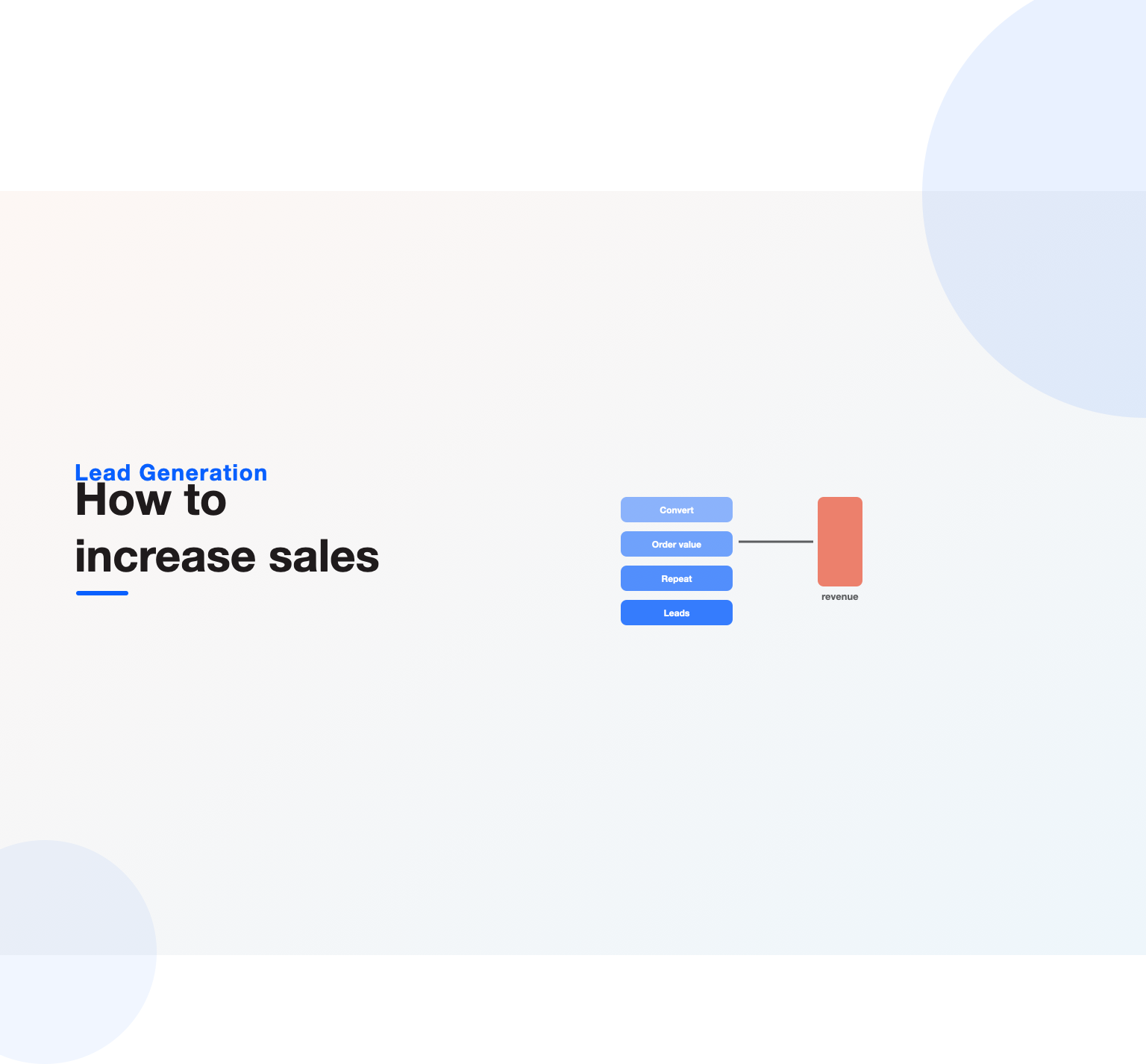
To increase sales, work every lever in the revenue equation rather than only chasing more leads: convert more of the traffic and leads you already have, raise the average value of each sale through upselling and bundling, sell more often to existing customers through retention and repeat purchases, and speed up and tighten your follow-up so fewer opportunities slip away. The fastest wins usually come from converting and retaining better, not from pouring in more traffic, because improving conversion or repeat rate multiplies every lead you already pay for. Knowing how to increase sales is really about finding which lever is weakest and fixing it first, then measuring the result and moving to the next.
Key Highlights
- Sales grow by working four levers: conversion, order value, repeat purchase, and lead volume.
- Converting existing leads better is usually faster and cheaper than finding new ones.
- Raising average order value through upsells and bundles lifts revenue with no extra traffic.
- Selling again to existing customers is the cheapest sale a business can make.
- Fast, disciplined follow-up recovers opportunities that would otherwise slip away.
- The right move is to find the weakest lever, fix it, measure, and repeat.
Understand the levers first
Before any specific tactic, it helps to see that revenue comes from a small number of levers, and that pulling the right one matters more than pulling hard. Broadly, sales equal the number of customers times the average value of each sale times how often they buy, which means revenue can grow by winning more customers, by making each sale larger, or by selling more often. Most businesses fixate on the first and ignore the other two, leaving easy growth untouched.
This framing turns a vague goal into a diagnosis. Rather than asking how to sell more in general, you ask which lever is weakest: are you failing to convert the interest you already attract, leaving money on the table at each sale, or losing customers who could buy again. The answer points to where effort will pay back fastest, which is almost never the same for two businesses. Knowing how to increase sales starts here, with an honest look at which lever is holding revenue back, because working the wrong one wastes effort on a stage that was already fine.
Convert more of the leads you already have
The fastest way to increase sales for most businesses is to convert more of the interest they already attract, because improving conversion multiplies every lead without spending more to acquire it. A business converting three percent of its traffic that lifts to four keeps a third more revenue from the same visitors, which is usually cheaper and quicker than raising traffic by a third. Yet conversion is the lever most often neglected in favour of chasing more clicks.
The moves here are concrete: sharpen the offer, remove friction from the path to purchase, add proof that answers buyers’ doubts, and make the next step obvious. Systematically improving these is the work of conversion rate optimisation, which treats conversion as something to be tested and improved rather than left to chance. As a discipline related to how conversion rate optimization works, it turns the same traffic into more sales. The lesson is to fix conversion before buying more traffic, because a leaky funnel wastes every extra visitor, while a tighter one multiplies them.
Raise the average value of each sale
A lever many businesses overlook when working out how to increase sales is the average value of each transaction, which can often be raised with no extra traffic at all. Upselling a better version, cross-selling a complementary product, bundling items together, or simply presenting a premium option can lift what each customer spends, and because the customer is already buying, the cost of doing so is minimal. A ten percent lift in average order value flows almost entirely to the bottom line.
The moves work because a customer who has decided to buy is receptive to relevant additions that genuinely help them, provided the offer is useful rather than pushy. A thoughtful bundle, a well-timed upgrade prompt, or a recommendation of what pairs well with their choice adds value for the customer as well as revenue for the business. The discipline is relevance: additions that fit the customer’s need lift both satisfaction and spend, while irrelevant ones annoy. The lesson is that raising order value is among the cheapest ways to grow revenue, because it extracts more from demand you have already won rather than paying again to win more.
Sell more often to existing customers
The cheapest sale a business can make is the next one to a customer it already has, which makes retention and repeat purchase one of the most powerful levers for increasing sales. Winning a new customer costs far more than keeping an existing one, and existing customers who trust you buy more readily, more often, and at higher value. A business that only ever chases new customers while its existing ones drift away is filling a leaky bucket.
The moves here span keeping customers happy enough to return, reminding them to, and giving them reasons to buy again: loyalty incentives, lifecycle messaging through disciplined email marketing, and genuinely good service that earns repeat trust. Much of this runs on marketing automation, which lets a business nurture existing customers toward the next purchase at scale. The lesson is that retention is not a customer-service afterthought but a sales lever in its own right, often the highest-return one, because selling again to someone who already trusts you is faster, cheaper, and more reliable than winning a stranger.
Tighten and speed up follow-up
A great deal of revenue is lost not to competitors but to slow or absent follow-up, which makes tightening the sales process one of the most immediate ways to increase sales. A lead followed up within minutes converts far better than one contacted days later, because intent decays fast, and many businesses simply lose deals by responding too slowly or not persistently enough. Fixing this often lifts sales without any new marketing at all.
The moves are process rather than spend: respond fast, follow up more than once, and make sure no enquiry falls through a gap. A clear process, supported by reminders and a tidy record of every lead, ensures opportunities are worked rather than forgotten. In markets like India, a fast WhatsApp response to a fresh enquiry often outperforms a slower email, because it reaches the buyer on the channel they actually check. The lesson is that speed and persistence in follow-up recover deals that were already half-won, and that a disciplined process turns interest a business has already paid to create into sales it would otherwise have quietly lost.
Generate more qualified leads
Once the levers you already have are working, generating more qualified leads becomes worthwhile, because pouring more into a funnel that converts and retains well compounds properly. The emphasis is on qualified: more of the wrong leads just wastes sales time, while more of the right ones, people who genuinely fit what you offer, translates into more sales. Quality of lead matters more than raw quantity here.
The moves span the channels that attract fitting buyers: useful content that ranks through a disciplined SEO program, targeted advertising, referrals, and a presence where your buyers gather. Building these deliberately, and feeding them into a coordinated demand generation program, is what keeps the top of the funnel supplied without dropping quality. For the tactics in depth, our guide to how to generate leads covers how to attract and capture the right people. The lesson is to grow lead volume only after conversion and retention are sound, so the extra leads land in a funnel that actually turns them into sales rather than leaking them.
Price with intent
Pricing is a lever for increasing sales that is often left untouched out of fear, yet small, considered changes can lift revenue substantially. This does not always mean raising prices; it can mean presenting options so buyers choose a higher tier, removing a discount habit that trains customers to wait, or packaging value so the price feels justified. Because pricing flows straight to the bottom line, even a modest, well-judged change moves revenue more than most campaigns.
The moves work because price is also a signal: too low can undersell quality, while a clear good-better-best structure guides buyers toward the option that suits them and often lifts the average. The discipline is to change pricing deliberately and watch the effect, rather than defaulting to discounts whenever sales dip, since habitual discounting erodes margin and trains buyers to expect it. The lesson is that pricing deserves the same experimental attention as any other lever, because it is one of the few that raises revenue without needing a single extra lead or sale.
How to increase sales in the Indian market
In India, the levers behind increasing sales carry local texture worth planning for. Buyers research thoroughly and weigh trust and relationships heavily, so proof, referrals, and responsive service convert better than pressure. Price sensitivity is real, which raises the value of clear value-framing and good-better-best options over blunt discounting, and of bundles that feel like genuine value rather than gimmicks.
Distribution and follow-up have local texture too. WhatsApp is central to how Indians communicate, so fast follow-up and nurture on it often outperform email, and it plays a growing role in repeat-purchase reminders and service. Long, multi-stakeholder journeys in B2B raise the value of disciplined follow-up and retention over one-off pushes. Coordinating these through a connected view of the customer, often via revenue operations, is what lets an Indian business work every lever without deals falling through the gaps between teams. The lesson is to adapt the universal levers to how the Indian market actually researches, communicates, and decides.
Measure which lever is working
Every move to increase sales must be measured, or you cannot tell which lever is actually paying back. The metrics that matter map to the levers: conversion rate, average order value, repeat-purchase rate, and qualified-lead volume, tracked over time rather than judged on a single good week. Watching these tells you where revenue is leaking and whether a change genuinely helped, which turns guesswork into a deliberate program.
Measuring this way also prevents the common trap of crediting whatever is most visible while the real driver goes unnoticed. Because the levers interact, a business needs a connected view of the whole journey to see, for instance, that a conversion gain came from faster follow-up rather than a new campaign. Underpinning the numbers with clean data, often coordinated through revenue operations, is what makes them trustworthy enough to act on. The lesson is that increasing sales is a measured discipline, not a hopeful one: find the weakest lever with data, fix it, confirm the lift, and move to the next, so growth compounds rather than relying on luck.
A worked example of diagnosing the leak
An example makes the diagnosis concrete, and shows how to increase sales without simply spending more. Picture a small online retailer whose owner assumes the problem is traffic and is about to raise the ad budget. A look at the numbers tells a different story: plenty of people visit and add items to the cart, but most abandon at checkout, and few customers ever buy a second time. The weakest levers are clearly conversion and repeat purchase, not traffic, so more ad spend would just pour visitors into a funnel that already leaks.
Working the real problem, the owner first simplifies the checkout, adds trust signals, and offers a small incentive to complete the purchase, lifting conversion noticeably from the same visitors. Next, a simple lifecycle email and a loyalty nudge bring a share of first-time buyers back for a second order, raising repeat rate. Only once those two levers are working does the owner turn to traffic, now confident the extra visitors will land in a funnel that converts and retains. As a matter of sales fundamentals, the example shows the whole method: diagnose where revenue actually leaks, fix that first, and only then scale the top of the funnel. Sharpening the checkout is exactly the work a disciplined conversion rate optimisation effort does, and the repeat-purchase nudges run on marketing automation.
Align sales and marketing to grow revenue
A lever that sits underneath all the others when working out how to increase sales is the alignment between the people who create demand and the people who close it. When marketing and sales disagree on what a good lead looks like, or hand opportunities over with no context, deals leak at the seam between them however strong each team is on its own. Fixing that handoff often recovers sales that were already paid for but quietly lost in the gap.
The moves are process rather than spend: a shared, written definition of a qualified lead, a clean handoff with the context of how each lead was generated, and a feedback loop where sales tells marketing which leads actually closed. This is where retaining and growing customers, a core part of durable customer retention, meets the front-line work of closing, because a coordinated team keeps a customer moving smoothly from first touch to repeat purchase. Connecting the whole journey, often through deliberate revenue operations, and feeding it with a steady flow of qualified leads, is what lets every other lever work without deals falling through the cracks. The lesson is that alignment is itself a sales lever, and often a large one, because it stops the leakage that no amount of extra traffic can compensate for.
Common mistakes when trying to increase sales
- Only chasing more traffic. Buying more leads while conversion leaks wastes the spend and hides the real problem.
- Ignoring existing customers. Neglecting repeat purchase forgoes the cheapest, highest-trust sales available.
- Slow follow-up. Losing deals to delay rather than to competitors is avoidable and common.
- Discounting by reflex. Habitual discounts erode margin and train buyers to wait for the next one.
- Prioritising quantity over quality of leads. More unqualified leads just waste sales time and depress conversion.
- Not measuring the levers. Without tracking conversion, order value, and repeat rate, effort scatters blindly.
Each mistake is the inverse of a sound principle, which is why studying how to increase sales properly is also the fastest way to learn what to avoid.
Give buyers a reason to act now
A lever often missed when working out how to increase sales is simply reducing the friction and hesitation that make ready buyers delay. Many people who intend to buy never quite do, not because they chose a competitor but because nothing prompted them to act while the intent was warm. A clear, honest reason to decide now, a genuine deadline, limited availability, a time-bound bonus, or simply a confident, unambiguous call to action, converts more of that latent intent into actual sales.
The moves work because hesitation is the enemy of the close, and a gentle, truthful nudge tips a wavering buyer over the line. The discipline is honesty: manufactured scarcity and fake countdowns erode trust the moment they are seen through, while a real reason to act respects the buyer and still lifts conversion. Removing risk helps as much as adding urgency, a clear guarantee, easy returns, or a no-questions trial lowers the perceived cost of saying yes, which is often what a hesitant buyer needs. Knowing how to increase sales at the decision point is largely about making the yes easy and the delay costless to abandon, so the interest a business has already earned actually converts rather than drifting away unspent. Done well, this is one of the cheapest lifts available, because it changes nothing about the traffic or the product, only the moment of decision. It also compounds with the other levers: a buyer nudged to decide now is a buyer who can then be upsold, retained, and asked for a referral, so removing hesitation at the close feeds every stage that follows it. For a business already attracting interest, this is frequently the single highest-return change it can make, precisely because the demand is already there and only the final push to act is missing. The mistake to avoid is reaching for pressure tactics that overreach; the goal is to make deciding easy and reassuring, not to badger a buyer into a choice they will regret and reverse, since a rushed sale that later turns into a refund, a chargeback, or a bad review ends up costing far more than the short delay it saved in the first place.
Turning this into a plan
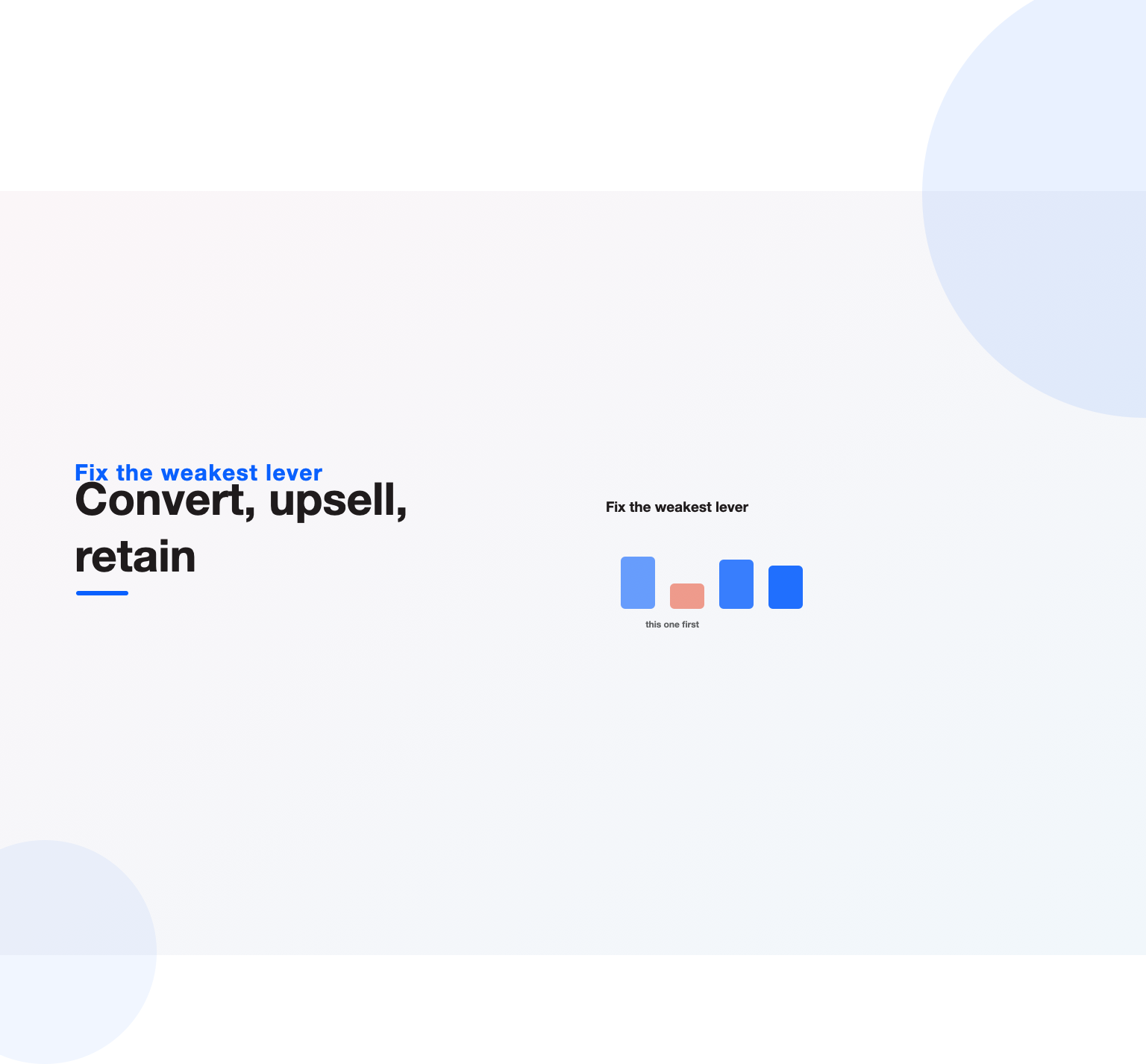
To act on this, resist the urge to do everything and instead diagnose first. Look honestly at your numbers and find the weakest lever: if conversion is low, fix the funnel before buying traffic; if order value is low, test upsells and bundles; if customers rarely return, invest in retention; if follow-up is slow, tighten the process. The biggest, cheapest win is almost always at the weakest point, not the one that feels most exciting to work on.
With the weak point identified, make one focused change, measure its effect on the relevant metric, and keep it if it helps or learn from it if it does not. Then move to the next lever and repeat, building a habit of deliberate, measured improvement rather than scattered activity. Pairing better conversion and retention with a steady supply of qualified leads, and connecting the whole through marketing automation, is what compounds small lifts into meaningful revenue growth. The plan for how to increase sales is not a long to-do list but a simple loop: diagnose, fix the weakest lever, measure, repeat.
How the levers fit together
Seen whole, the levers behind increasing sales are not separate tactics but parts of one revenue engine, and their value comes from how they connect. More qualified leads feed a funnel that conversion turns into customers, whose order value and repeat purchases multiply each sale, all held together by follow-up and measurement. A gap anywhere leaks value: leads with poor conversion waste spend, conversion with no retention forgoes repeat revenue, and everything with slow follow-up loses deals already half-won.
Thinking in these terms turns a scattered effort into a system, where fixing the weakest lever lifts the whole. That is why diagnosis matters more than enthusiasm, and why the businesses that grow steadily are the ones that work the engine deliberately rather than chasing whatever tactic is fashionable. For the demand side that feeds it, our guide to demand generation strategies covers how to create and capture the interest these levers then convert into sales, so the two read naturally together.
Key Takeaways
- Sales grow by working four levers: conversion, average order value, repeat purchase, and qualified lead volume.
- Converting the leads you already have is usually the fastest, cheapest way to increase sales.
- Raising average order value through upsells and bundles lifts revenue with no extra traffic.
- Selling again to existing customers is the cheapest, highest-trust sale a business can make.
- Fast, persistent follow-up recovers deals that would otherwise slip away.
- In India, trust, proof, value-framing, and WhatsApp follow-up shape how the levers are applied.
- Give ready buyers an honest reason to act now, and lower their risk, to convert latent intent into sales.
- Diagnose the weakest lever, fix it, measure the lift, and then move deliberately to the next one.
Frequently asked questions
What is the fastest way to increase sales?
For most businesses the fastest way is to convert more of the interest they already attract, because improving conversion multiplies every lead without spending more to acquire it. Lifting a conversion rate from three percent to four keeps a third more revenue from the same traffic, which is quicker and cheaper than raising traffic by a third. Sharpen the offer, remove friction, add proof, and make the next step obvious. Fixing conversion before buying more traffic is usually the single fastest lever, because a tighter funnel multiplies visitors a leaky one wastes.
How can I increase sales without more traffic?
Several levers raise sales with no extra traffic at all. Convert more of the leads you already have by tightening the funnel; raise the average value of each sale through upsells, cross-sells, and bundles; sell more often to existing customers through retention and repeat purchase; and tighten follow-up so fewer opportunities slip away. Pricing changes, presenting a premium option or a clear good-better-best structure, can also lift revenue directly. Each extracts more value from demand you have already won, which is usually cheaper and faster than paying to win more.
How do I increase average order value?
Raise average order value by helping a buying customer spend more in ways that genuinely help them: upsell a better version, cross-sell a complementary product, bundle items so the package is better value, or present a premium tier alongside the standard one. Because the customer has already decided to buy, the cost of these additions is minimal and most of the extra flows to the bottom line. The key is relevance, additions that fit the customer’s need lift both satisfaction and spend, while irrelevant ones annoy and can cost the sale.
Why are existing customers important for increasing sales?
Existing customers are the cheapest and most reliable source of new sales, because winning a new customer costs far more than keeping one, and customers who already trust you buy more readily, more often, and at higher value. A business that only chases new customers while existing ones drift away is filling a leaky bucket. Investing in retention, loyalty, lifecycle reminders, and genuinely good service turns one sale into many over time, which is why repeat purchase is often the highest-return lever a business can pull to grow revenue.
Does follow-up really affect sales that much?
Yes, more than most businesses realise. A great deal of revenue is lost not to competitors but to slow or absent follow-up, because buyer intent decays fast and a lead contacted days later converts far worse than one reached in minutes. Responding quickly, following up more than once, and ensuring no enquiry falls through a gap recover deals that were already half-won. In markets like India, a fast WhatsApp reply often outperforms a slower email. Tightening follow-up frequently lifts sales with no new marketing spend at all.
How do I know which lever to work on first?
Diagnose before acting. Look honestly at your numbers, conversion rate, average order value, repeat-purchase rate, and qualified-lead volume, and find the weakest one, because that is almost always where the biggest, cheapest win hides. If conversion is low, fix the funnel before buying traffic; if order value is low, test upsells; if customers rarely return, invest in retention; if follow-up is slow, tighten the process. Fix one lever, measure the effect, keep or learn, then move to the next, so growth is deliberate rather than scattered.
Ready to put this into practice?
Talk to the team that runs SEO, AI search and paid growth programs every day.
Book a Strategy Call →