 Skip to content

SEO vs PPC: Which Is Right for Your Business in 2026?
SEO vs PPC in 2026: the real cost math, a decision tree by your runway and margins, the sequencing play that uses PPC to fund SEO, and why AI answers are now a third channel you cannot ignore.
Quick Answer
Neither SEO nor PPC wins outright. PPC buys traffic today but stops the moment you stop paying, while SEO compounds into an asset you own. The right choice is a function of your cash runway, your margins, and how fast you need revenue, and the strongest play is usually to sequence the two.
Neither SEO nor PPC wins outright, because the right choice is a function of your cash runway, your margins, and how fast you need revenue. PPC buys you traffic today but stops the moment you stop paying; SEO compounds into an asset you own but takes three to six months or more to move. And in 2026 there is a third channel most comparisons ignore entirely: answer engine optimization, because AI Overviews now appear on roughly 42 percent of searches and cut clicks by around 38 percent when they do. This guide gives you the honest cost math, a decision tree based on your actual situation rather than a vague it depends, the sequencing play that uses paid search to fund and sharpen your SEO, and how to run all three together so they compound instead of compete.
This SEO vs PPC guide breaks the choice down by cash runway, margins and speed, so the SEO vs PPC decision fits your actual situation.
Key Highlights
- PPC delivers traffic immediately but ends the moment the budget stops; SEO builds a compounding asset you keep.
- The right choice depends on runway, margins, and how fast you need revenue, not on which channel is fashionable.
- Run the real cost math: PPC cost per lead stays flat over time, while SEO cost per lead falls as content matures.
- Use a decision tree, urgent revenue with healthy margins favours PPC first; durable growth favours SEO.
- The sequencing play wins: use PPC to fund and sharpen keyword and conversion data, then invest in SEO.
SEO vs PPC: the short answer
If you need traffic and leads immediately and can afford to pay for every click, start with PPC. If you want durable, compounding visibility that keeps paying after the work is done, invest in SEO. Most businesses that can should do both, because they solve different problems, and increasingly they should add a third: being cited in AI answers, which sit above both the ads and the organic links on a growing share of searches. The wrong question is which one is better in the abstract. The right question is which mix fits your runway, your margins, and your timeline, and that is answerable, which is what the rest of this guide does.
SEO vs PPC: what each one actually is, and the core tradeoff
PPC, or pay-per-click, is paid search advertising: you bid to appear at the top of results and pay each time someone clicks. It is instant, precisely targetable, and fully controllable, and it disappears the moment the budget stops. SEO is the practice of earning organic rankings so your pages appear without paying per click. It is slower to arrive and less controllable, and it keeps delivering long after the work is paid for.
The cleanest way to hold the difference in your head is rented versus owned. PPC rents attention, like leasing a billboard: the day you stop paying, it comes down. SEO builds an asset, like buying property: it takes time and money to acquire, but then it works for you. Neither is universally smarter. Renting is right when you need to be somewhere now; owning is right when you are building for the long term. Most healthy businesses do some of both, for the same reason they might lease some space and own some.
SEO vs PPC: the real cost math
Cost is where the comparison gets concrete, and 2026 has made it sharper. According to WordStream’s 2025 benchmarks, the average Google Ads cost per click is about $5.26, and crucially costs rose in 87 percent of industries year over year, so paid search is getting more expensive, not less. In competitive categories like legal and home services, clicks can run far higher. SEO, by contrast, is typically a fixed retainer, commonly $1,000 to $7,500 a month for small and mid-market businesses, as we break down in our guide to how much SEO costs.
| Dimension | SEO | Paid search (paid search) |
|---|---|---|
| Speed to first traffic | Months (3 to 6+) | Same day |
| What you are buying | An asset you own | Attention you rent |
| Traffic when you stop paying | Continues | Stops instantly |
| Typical US cost | $1,000 to $7,500+ / mo retainer | Avg CPC about $5.26, budget on top |
| Cost trend | Fixed retainer | Rising: CPC up in 87% of industries in 2025 |
| Best at | Compounding, durable demand capture | Immediate, controllable, testable demand |
The trap is comparing them on cost per click alone. Its cost per click is clear and immediate, and it climbs with competition. SEO has a higher upfront cost that produces no clicks for months, then an effectively falling cost per click as the same pages keep earning traffic for free. Over a long enough horizon, owned organic traffic is usually far cheaper per visit than rented clicks, which is exactly why the two suit different time horizons rather than being ranked against each other.
SEO vs PPC: speed versus longevity
The starkest difference is time. It can drive qualified traffic within hours of launching a campaign, which is why it is the honest answer when a business needs revenue this quarter. SEO takes months to build momentum, as we cover in how long SEO takes to work, but its results persist and compound. A PPC campaign delivers a straight line of traffic for as long as you fund it and a cliff the day you stop. SEO delivers a slow curve that starts near zero and, done well, keeps rising and holding. If you plotted both over three years, PPC is a flat line you pay for every month and SEO is a rising line you largely paid for early. That single picture explains why the smartest move is often to use one to cover the other’s weakness.
The SEO vs PPC decision tree: which fits your situation
Instead of a generic it depends, decide against your actual circumstances. Four factors settle it.
Cash runway. If you need leads in the next thirty days to keep the lights on, PPC is where you start, because SEO cannot compress its timeline enough to help. If you have runway to invest ahead of return, SEO earns its place.
Margin per sale. PPC only works long term if the profit on a sale comfortably exceeds the cost to acquire it through paid clicks. Thin margins in a high-CPC category can make PPC unprofitable, which pushes you toward SEO and organic channels. Fat margins can absorb rising click costs and make paid attractive.
Sales cycle. A long, considered purchase favors SEO and content that educates buyers over months. An impulse or urgent purchase, someone searching an emergency plumber, favors PPC at the moment of need.
Existing authority. If you already rank for valuable terms, defend and extend that with SEO and use PPC selectively. If you are starting from zero visibility and cannot wait, PPC buys presence while SEO builds it. Run yourself through these four and the right starting mix is usually obvious.
The sequencing play: use PPC to fund and sharpen SEO
Here is a move that turns the either-or into a system, and that few guides spell out. Use paid search first to generate revenue and, just as importantly, data. Every PPC campaign tells you exactly which keywords convert into customers, not just which get clicks. That is priceless intelligence for SEO, because it tells you which organic rankings are actually worth pursuing before you spend months earning them.
So the sequence looks like this: run PPC to win now and to learn which terms convert, funnel some of that early revenue into SEO, then build organic rankings for the exact terms your paid data proved valuable. As those organic rankings arrive, you can often dial back paid spend on the terms you now own for free, and redeploy it to new tests. The same conversion data should also shape your AI-answer strategy, pointing you at the questions worth being cited for. It is the opposite of choosing one channel and hoping; it is letting the fast channel de-risk the slow one. We manage exactly this kind of blended program, from Google Ads management through to organic SEO.
Tell us your runway, margins, and goals. We will map how much to put into paid for speed, how much into SEO for durability, and where AI-answer visibility fits, with the sequencing that makes them compound.
The third channel most comparisons ignore: AI answers
The whole SEO versus PPC debate assumes the results page still works the way it did five years ago. It does not. AI Overviews now appear on roughly 42 percent of queries, and a field study covered by Search Engine Journal found they cut organic clicks by about 38 percent on affected searches, with zero-click searches rising sharply. Pew Research found that when an AI summary is present, users click a traditional result only about 8 percent of the time versus 15 percent without one. Those clicks are being lost by both organic listings and, in many cases, the ads beneath the AI answer.
This reframes the question. It is no longer only whether to rent clicks or earn them, it is whether your brand is named inside the AI answer that increasingly sits above both. Answer engine optimization is that third channel, and its economics are its own: you are not paying per click or waiting on blue-link rankings, you are earning citations that put you in the answer itself. We treat it as a distinct discipline in our AEO services and generative engine optimization, and we go deeper on whether to move budget toward it in our AEO versus PPC guide. Ignore it and you are optimizing a shrinking surface no matter which side of SEO versus PPC you pick.
How SEO, PPC, and AI answers work together
The best-run programs do not choose, they blend, and the channels reinforce each other. It can defend your branded searches so a competitor does not bid on your name and intercept demand your SEO and AI visibility created. Retargeting can bring back visitors who first found you organically but were not ready to buy. Testing messaging and landing pages is fast on paid, and the winners inform your organic content. And the authority and content that earn AI citations are the same assets that lift organic rankings, so investment in one often pays off in the other.
Attribution has to keep up with this. If you credit only the last click, you will undervalue the organic and AI visibility that started the journey and overvalue the paid click that closed it. Measure the blended funnel, and the case for running all three together, rather than pitting SEO against PPC, becomes clear.
Common SEO vs PPC mistakes when combining them
Running both channels is the right move for many businesses, but a few mistakes waste the advantage. The first is treating them as separate teams that never share data, so the PPC conversion insight that should be guiding SEO targeting stays locked in the ads account. Share it deliberately. The second is abandoning PPC the moment SEO starts working, which surrenders the branded-search defence and the speed PPC gives you for new campaigns and seasonal pushes; the smarter move is to redeploy paid budget rather than cut it. The third is judging both channels on last-click attribution, which systematically credits the paid click that closed a journey and hides the organic or AI visibility that started it, leading you to underfund the very channel building your long-term demand. The fourth is ignoring AI answers entirely while arguing about the SEO-versus-PPC split, when a growing share of clicks are being intercepted above both. Avoid these and the two channels genuinely compound instead of quietly cannibalising each other’s credit.
SEO vs PPC: so which should you choose?
Choose based on where you are. If you need revenue now and can afford the clicks, lead with PPC and build SEO in parallel so you are not renting forever. If you have runway and want durable, compounding demand, prioritise SEO and use PPC surgically for speed and testing. Whatever the split, treat AI-answer visibility as a third pillar rather than an afterthought, because a growing share of your buyers now get their answer before they ever reach a link or an ad. The businesses that win are not the ones that pick the right side of an old debate, they are the ones that fund the right mix for their situation and measure it honestly. See what that looks like in practice in our case studies, and if you are weighing the wider return, our guide on whether SEO is worth it covers the ROI side in depth.
Book a call and we will build the SEO, PPC, and AI-answer mix that fits your runway and margins, with clear roles for each channel and honest expectations for what each will deliver.
SEO vs PPC by industry: where each channel wins
The SEO vs PPC balance shifts a lot by industry, because search intent, deal size and sales-cycle length change what a single click is worth.
In B2B and SaaS, long sales cycles and high deal values reward SEO, because a buyer researches for weeks and reads many pages before booking a demo. Ranking for the problem-aware and solution-aware queries that fill that research window builds trust cheaply and compounds over time. It still earns its place on the bottom-of-funnel terms, competitor comparisons and demo searches, where one closed deal can pay for hundreds of clicks. The usual split is organic for the education layer, paid for the ready-to-buy layer.
In ecommerce, paid carries more of the load, especially Shopping and Performance Max, because purchase intent is immediate and the path from click to checkout is short. SEO matters most for category pages, buying guides and the branded and long-tail product terms that paid campaigns quietly lose margin on. A store that leans only on ads watches its blended margin erode as rivals bid the same keywords up, and organic rankings are what protect the unit economics as the account scales.
In local and home services, the map pack and a complete Google Business Profile often matter more than either classic channel, but between the two, Local Services Ads deliver calls today while local SEO builds the reviews and citations that make you the default choice tomorrow. For an emergency service, paid is close to mandatory; for a considered local purchase, organic trust closes more of the work.
A worked SEO vs PPC budget example over twelve months
Numbers make the SEO vs PPC tradeoff concrete. Take a company with 5,000 dollars a month and a need for leads now.
On the all-paid path, at a 6 dollar cost per click and a 4 percent landing-page conversion rate, 5,000 dollars buys about 833 clicks and roughly 33 leads a month. That figure barely moves: month one and month twelve look the same, because the traffic stops the day the budget stops. Across the year you spend 60,000 dollars, earn about 400 leads, and own nothing at the end of it.
On the split path, you put 3,500 dollars into paid and 1,500 into SEO. Early on the paid side delivers around 23 leads while the content delivers almost none, so you start slower, nearer 25 leads a month. By month six the content begins ranking and adds 10 to 15 organic leads at no marginal click cost, and by month twelve it can match or beat the paid side. The blended cost per lead falls every month as the library matures, and you finish the year holding an asset that keeps producing into year two without the same spend.
The lesson is not that one channel beats the other. The all-paid path has a flat cost curve and the blended path has a falling one, so the right SEO vs PPC mix depends on whether you can absorb a slower start to earn a lower long-run cost.
How AI answers change the SEO vs PPC math in 2026
Both sides of the SEO vs PPC debate are being reshaped by AI answers, and ignoring the shift makes any budget decision wrong. On the organic side, AI Overviews and AI Mode now sit above the classic links and settle a large share of informational queries with no click, which lowers the traffic that top-of-funnel content used to earn. The fix is not to abandon SEO but to aim it at the queries that still drive clicks, commercial and comparison terms, and to structure pages so answer engines quote you by name, which sends qualified visitors and builds authority even when the click never happens.
On the paid side, Google is folding AI into the ad experience too, placing sponsored results inside AI Overviews and pushing more budget through Performance Max, which hands targeting to the machine and leaves you less manual control. That makes clean conversion tracking and strong creative matter more than bid tweaking. So the modern paid-versus-organic decision is really a three-way allocation across paid, organic and AI citations, and the teams that win treat them as one system rather than three competing line items.
The SEO vs PPC metrics that tell you it is working
Each channel signals progress differently, and watching the wrong number leads to quitting a winning strategy early. For paid, the leading indicators are cost per click, click-through rate, landing-page conversion rate and, above all, cost per acquired customer against customer lifetime value; a campaign can look expensive per click yet be cheap per closed deal. For SEO, the early signals are indexing coverage, impression growth and average position on target clusters, well before revenue moves, followed by organic leads and assisted conversions once rankings climb.
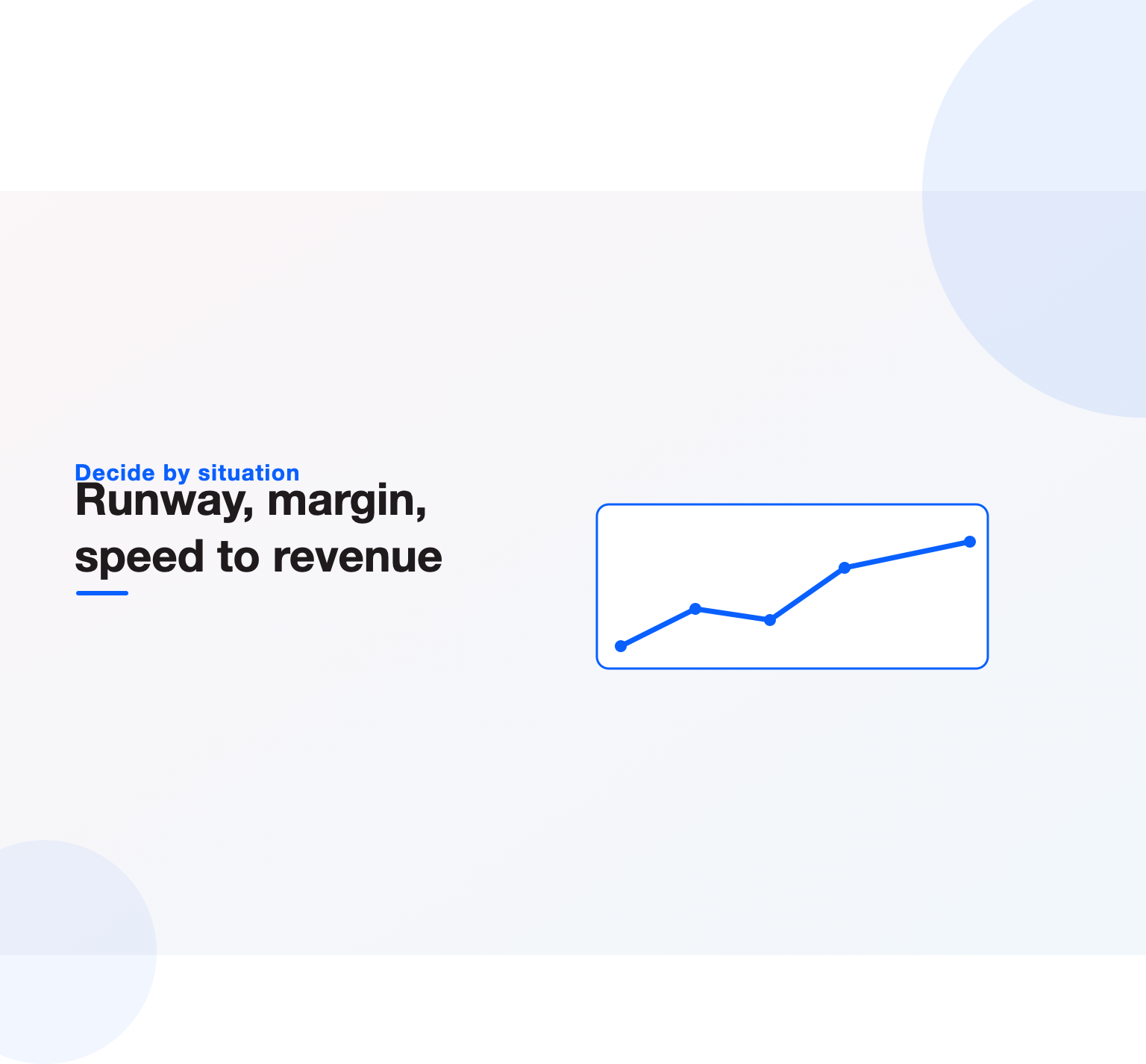
The number that resolves most SEO vs PPC arguments is blended customer acquisition cost tracked over twelve to twenty-four months. Paid holds its acquisition cost roughly flat; organic drives it down as content compounds. Plot both on the same chart and the crossover point, usually somewhere between month six and month twelve, tells you exactly when the SEO investment starts subsidising the paid one, which is the moment to shift more budget toward the asset you own.
When to shift budget from paid search to SEO
Because the two channels have different cost curves, the real skill is knowing when to move money from one to the other, and there are clear signals for it. The first is the crossover in blended acquisition cost: once organic is bringing in leads at a lower cost per lead than paid, and the trend has held for two or three months rather than a single lucky month, it is time to move a slice of budget toward content and links. The second is diminishing returns on paid, when pushing spend higher only lifts the cost per click because you are buying less qualified traffic at the margin; that headroom is better invested in an asset that does not get more expensive as it scales.
The third signal is runway. Shifting toward SEO always means accepting a slower month or two while the content matures, so the move is safest when you have enough paid-driven pipeline to cover the gap. A business still fighting for its first predictable leads should keep more weight on paid; one with a stable base can afford to compound. The mistake we see most often is treating the split as fixed for the year. The healthiest programs re-run the SEO vs PPC math every quarter and let the numbers, not habit, decide the ratio, trimming paid as organic proves it can carry more and leaning back on paid whenever a launch or a seasonal push needs immediate reach.
None of this is a one-time decision. Rankings can slip, ad costs can climb, and a new AI answer format can change the traffic on a query overnight, so the allocation is a dial you keep adjusting rather than a switch you flip once. The teams that get the most from both channels review the split on a schedule, protect a test budget for whichever channel is currently underused, and keep their conversion tracking clean enough that the next reallocation is a matter of reading the data rather than guessing. Done well, that quarterly discipline turns a stressful either-or budget fight into a calm, evidence-led adjustment that keeps both channels earning their keep. Google documents how paid and organic results appear together in its Google Ads Help Center.
Key Takeaways
- Decide the mix by your timeline, margins and goals.
- Use PPC for fast intent capture and testing.
- Use SEO for durable, compounding demand.
- Feed keyword and conversion data between the two.
Frequently asked questions
Is SEO or PPC cheaper?
It depends on the time horizon. With paid search, the cost per click is clear, averaging about $5.26 in 2025 and rising in most industries, that you pay for every visit forever. SEO costs more upfront and delivers no clicks for months, then becomes far cheaper per visit as the same pages keep earning free traffic. Over a long enough period, organic traffic is usually the cheaper source.
Which gives better ROI in SEO vs PPC?
Paid search gives faster, more measurable short-term ROI; SEO gives higher long-term ROI because the traffic compounds and continues after the spend stops. For most businesses the strongest overall return comes from using PPC for immediate results while SEO builds durable demand, then adding AI-answer visibility as a third channel.
How long does SEO take compared to PPC?
Paid search can drive traffic the same day a campaign launches. SEO typically takes three to six months or more to produce meaningful results, with early signals sooner. That speed gap is the main reason many businesses run PPC to cover the wait while SEO matures.
Should a new business start with SEO or Google Ads?
If you need leads immediately and can afford the clicks, start with Google Ads for instant presence, and use the conversion data it produces to guide your SEO. If you have runway and patience, invest in SEO early so you are building an owned asset rather than renting traffic indefinitely. Most do both.
Can I do SEO and PPC at the same time?
Yes, and they work better together. It delivers immediate traffic and reveals which keywords convert most efficiently, which sharpens your SEO targeting; SEO builds durable rankings that let you dial back paid spend on terms you come to own. Running both, plus AI-answer optimization, is how the strongest programs operate.
Does SEO still matter with AI Overviews and ChatGPT?
Yes, but the goal has widened. AI Overviews appear on about 42 percent of queries and reduce clicks, so part of the work is now being cited inside the AI answer, not just ranking below it. SEO and answer engine optimization increasingly go together, which is why ignoring AI answers leaves value on the table.
Is PPC worth it for a small business?
It can be, if the profit on a sale comfortably exceeds the cost to acquire a customer through paid clicks. With CPCs rising in most industries, thin-margin businesses in expensive categories should be cautious and may get better returns from SEO and organic channels. Test with a small budget and measure profit, not just clicks.
How much budget do I need for SEO vs PPC?
SEO is usually a fixed retainer, commonly $1,000 to $7,500 a month for small and mid-market businesses. Paid search needs enough monthly budget to buy meaningful click volume at your industry’s cost per click, which at an average around $5.26 adds up quickly in competitive categories. Size each to your goals and margins rather than splitting a fixed pot evenly.
Ready to put this into practice?
Talk to the team that runs SEO, AI search and paid growth programs every day.
Book a Strategy Call →