 Skip to content

The Benefits of Ecommerce SEO (and the Business Case)
The benefits of ecommerce SEO: lower customer acquisition cost, compounding traffic, higher-intent visitors, resilience against ad-price rises, and revenue-linked results you can measure.
Quick Answer
The benefits of ecommerce SEO are lower customer acquisition cost, traffic that compounds instead of stopping when you stop paying, higher-intent visitors who convert better, resilience against rising ad prices, and a store that is easier to find at every stage of the buying journey. Unlike paid ads, which rent attention, ecommerce SEO builds an asset: rankings that keep delivering qualified shoppers month after month, lowering the blended cost of every sale as the store’s authority grows.
Key Highlights
- Ecommerce SEO lowers blended customer acquisition cost by reducing dependence on paid clicks.
- Rankings compound and keep delivering organic traffic long after the work is done, unlike ads that stop with the budget.
- Search visitors arrive with intent, so they convert better and cost nothing per click.
- It protects margin as ad costs rise and as privacy changes make paid targeting harder.
- It supports the whole funnel, from research queries to buying-intent searches, not just the final click.
- The gains are measurable in organic revenue, not just rankings, which is how the investment should be judged.
Lower cost of customer acquisition
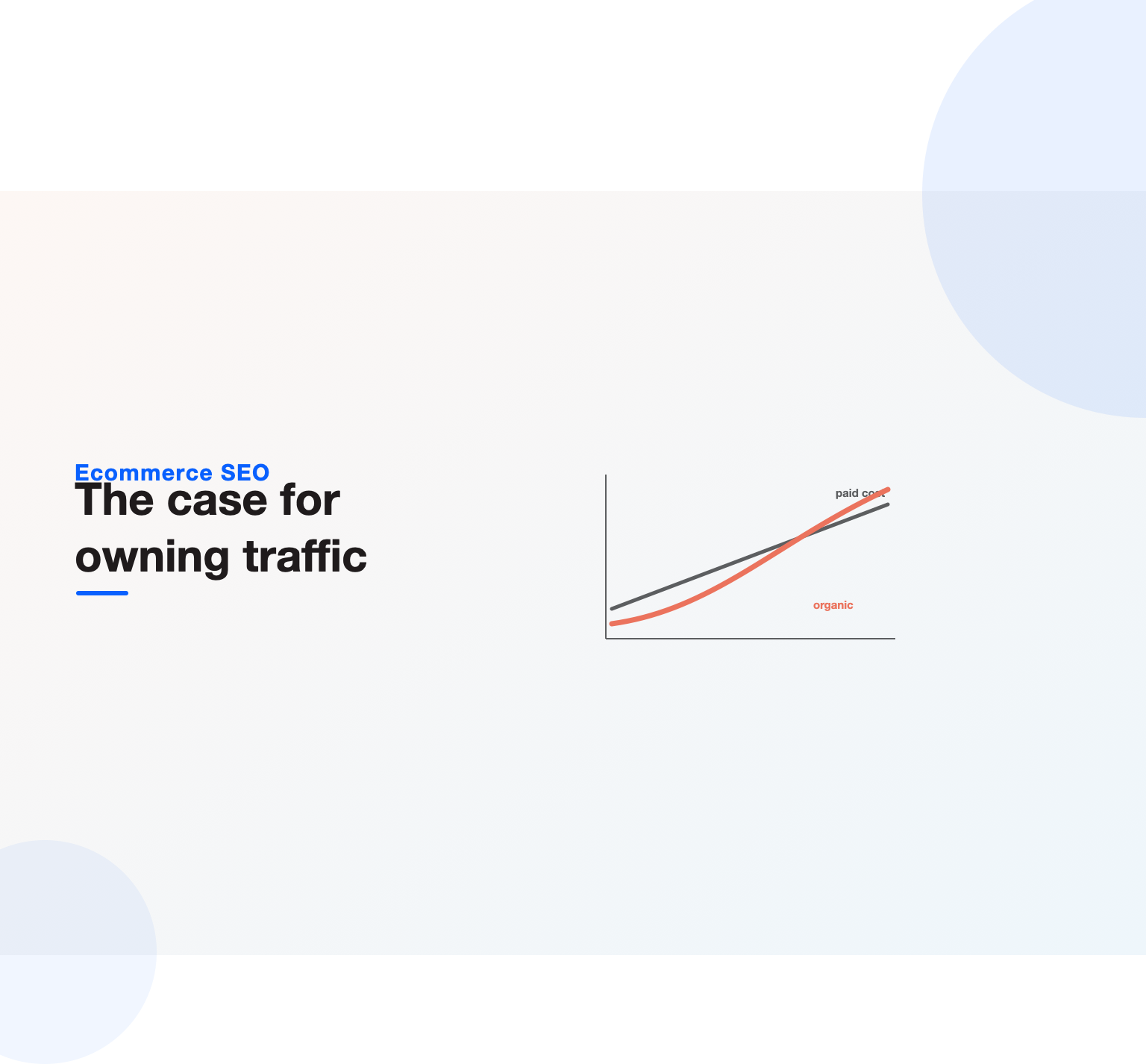
The headline among the benefits of ecommerce SEO is a lower cost of acquiring each customer over time. Advertising charges for every click whether or not it converts, and the price of those clicks only rises as more advertisers compete. Once earned, organic rankings deliver clicks without a per-click charge, so as a store’s share of traffic shifts from paid to organic, the blended cost of acquisition falls.
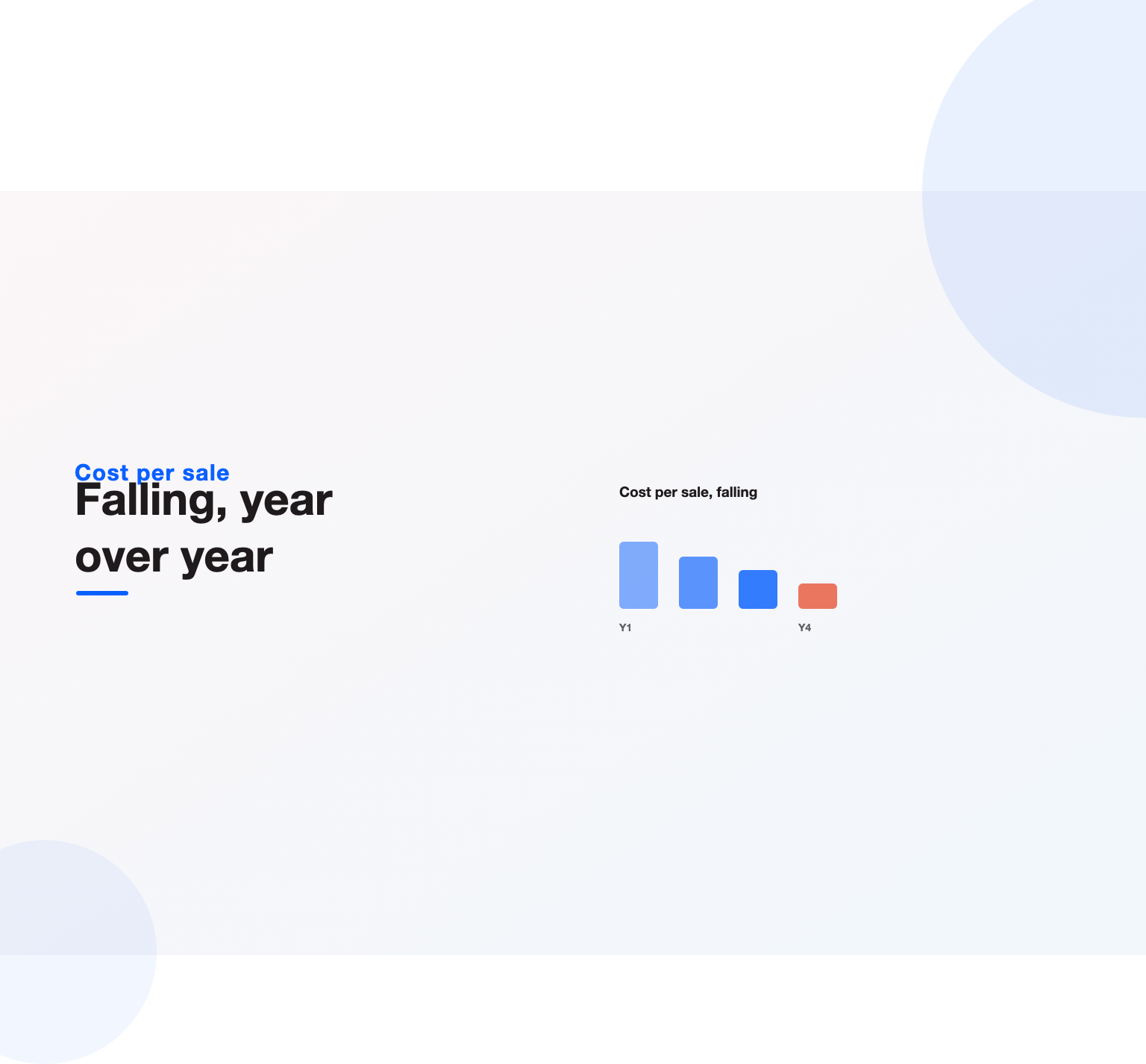
It does not happen overnight, and it is not free, the work and the wait are real, but the direction is what matters. A store relying entirely on ads pays more for the same customer every year; a store building organic visibility pays less per customer as its rankings mature. Over a two or three year horizon, that difference compounds into a materially lower cost base, which is why the benefits show up most clearly not in a single month but in the trend line of what it costs the business to win a sale.
Traffic that compounds instead of stopping
The second of the benefits of ecommerce SEO is durability. A paid campaign delivers traffic only while it is funded; switch it off and the traffic stops the same day. A page ranking organically keeps delivering visitors for months or years with no further spend, and as the store earns more rankings the effect stacks, each new ranking adding to the last rather than replacing it.
Compounding like this is what turns ecommerce SEO from a cost into an asset. The category page you optimise today can still be sending qualified shoppers in two years, and the guide you publish this quarter keeps earning links and traffic long after it is written. In effect, paid media is a tap that runs only while you pay the water bill; organic search, done well, is a well you dig once and draw from repeatedly. For a store thinking beyond the next quarter, that durability is often the single most persuasive benefit.
Higher-intent, better-converting visitors
Not all traffic is equal, and another benefit is the quality of the visitors it brings. Someone searching a specific product or a clear category term is often further along the buying journey than someone who clicked a display ad, so organic search visitors frequently convert at strong rates. The store is meeting demand that already exists rather than trying to manufacture it.
Because ecommerce SEO maps queries to the right pages, category terms to category pages and product terms to product pages, it puts the right offer in front of the right intent at the right moment. Such alignment is why organic often produces not just cheaper traffic but better-converting traffic, and it is why the benefit compounds with conversion work: a store that also optimises the experience visitors land on, the way good conversion rate optimisation does, multiplies the value of every organic visit it earns.
Resilience against rising ad costs and privacy change
A quieter but growing benefit is resilience. Paid advertising has become both more expensive and harder to target as privacy changes limit the data that made ads precise. Stores that depend entirely on paid channels are exposed to both trends at once, watching costs climb while targeting weakens. By contrast, organic visibility is insulated from this: it does not rely on third-party tracking, and it does not get bid up by competitors in an auction.
Building organic strength is, in effect, a hedge. It diversifies the store’s traffic so a single platform’s price rise or policy change cannot threaten the whole business, and it reduces the leverage any one ad network has over the store’s economics. In a market where the cost and reliability of paid acquisition are both moving the wrong way, that independence is one of the most strategically valuable benefits, even though it rarely shows up on a single campaign report.
Support across the whole buying journey
Shoppers do not go straight from need to purchase; they research, compare, and deliberate first. One of the underrated benefits of ecommerce SEO is that it lets a store be present at every one of those stages, not just the final click. Informational content answers the early research questions, comparison and buyer-guide content helps at the consideration stage, and category and product pages capture the buying-intent searches at the end.
By contrast, paid search can only really afford the bottom of that funnel, where intent is highest, because bidding on broad research terms rarely pays back. By contrast, organic search can own the whole journey, building familiarity and trust long before the shopper is ready to buy, so that when they are, the store is already the name they recognise. A full-funnel presence, earned once and working continuously, is a benefit no paid channel can match economically, and it is why mature stores treat ecommerce SEO as the backbone of demand rather than a bolt-on.
Compounding brand authority and trust
Ranking well is itself a trust signal, and this is a subtler benefit of ecommerce SEO worth naming. Shoppers tend to trust the brands that appear organically at the top of results more than the ones that only show up as ads, and a store that consistently ranks for its category becomes, over time, a recognised authority in it. The authority feeds back into everything: higher click-through, better conversion, more direct and branded searches, and easier rankings for new products.
The flywheel is slow to start but powerful once turning. Each piece of useful content and each earned link adds to the store’s topical authority, which makes the next ranking easier, which brings more traffic and trust, which earns more links. No amount of paid spend builds this; it evaporates the moment it stops. The durable brand equity that ecommerce SEO accumulates is an asset on the store’s balance sheet in all but the accounting sense, and it is one of the benefits that best separates stores that endure from stores that simply rent attention.
Measurable, revenue-linked results
A practical benefit of ecommerce SEO is that, done properly, it is measurable against revenue rather than vanity metrics. You can see organic sessions, the queries and pages driving them, the conversion rate of organic traffic, and the revenue it produces, all in tools like Search Console and your analytics. That visibility means the investment can be judged the way any channel should be, on the money it returns, not on a ranking screenshot.
The discipline this enables is what makes the other benefits real. Tie each improvement to a number, an optimised category page to more organic orders, a faster template to better conversion, and you learn which work compounds and can reinvest in it. Google’s own SEO starter guide underlines that sustainable results come from genuinely serving users, and the broader mechanics are summarised in the background on search engine optimization. Measured honestly against revenue, the benefits of ecommerce SEO stop being a matter of faith and become a managed, accountable channel.
A worked example of the economics
The benefits of ecommerce SEO are easiest to see with numbers, so here is a simplified example. A store spends a fixed monthly budget entirely on ads, paying for every click, and its cost per acquisition holds flat or drifts up as competition bids the same keywords higher. It invests a portion of that budget into optimising its top categories and product template. Over the following year, organic sessions climb, and a growing share of orders arrive from search at no per-click cost.
The paid budget can then be trimmed or redirected to the terms only ads can win, while organic carries the demand it now captures for free. The blended cost per order falls, not because any single number dropped overnight, but because the mix shifted from rented to owned traffic. That shift is the financial shape of the benefit, and it is why stores that make the investment early compound a cost advantage their ad-only competitors cannot match. Pairing the earned traffic with sharp conversion optimisation compounds the gain further, since every organic visit is then worth more.
The benefits by store stage
Where a store is shapes how the benefits land. A new store gains most from is establishing an acquisition channel that does not require an ever-growing ad budget just to stay visible, buying independence early. A growing store gets margin: shifting acquisition toward organic protects profitability as it scales, rather than letting rising ad costs eat the growth. An established store gets defensibility, a moat of authority and rankings that newer competitors cannot quickly replicate.
Across all three, the through-line is the same asset accruing at a different point of leverage. A store that pairs organic acquisition with strong retention, through email and marketing automation, compounds the benefit again, because a customer acquired cheaply through search and retained through lifecycle marketing is dramatically more profitable than one bought repeatedly through ads. The benefits of ecommerce SEO rarely sit in isolation; they multiply against the rest of a well-run growth stack.
Comparing the benefits to other channels
Ads are the usual comparison, but it is worth placing the benefits of ecommerce SEO against other channels too. Against email, SEO acquires new demand where email nurtures existing contacts, so the two are complements rather than rivals. Against paid social, SEO captures active intent where social interrupts passive browsing, again a different job. Against marketplaces like a big platform’s own search, owning your organic visibility means you are not renting a spot on someone else’s real estate and paying their fees on every sale.
Seen this way, the distinct benefit of ecommerce SEO is ownership: it is the one acquisition channel where the store builds an asset it controls rather than renting access from a platform that can raise the price or change the rules. That ownership is why, for a store planning to exist in five years, organic search is rarely optional. It also pairs naturally with a measured paid program run through disciplined Google Ads management, so the two channels cover intent the other cannot reach economically.
How the benefits differ from paid ads
It helps to set the benefits of ecommerce SEO directly against paid ads, because the two are so often compared. The comparison is not about which is better in the abstract but about what each is for.
- Cost over time: ads charge per click forever; SEO front-loads effort and then delivers without per-click cost.
- Durability: ad traffic stops with the budget; organic rankings persist and compound.
- Speed: ads deliver instantly; SEO takes months but then keeps giving.
- Trust: organic results carry more credibility than ads with many shoppers.
- Funnel coverage: ads are economical mainly at high intent; SEO can own the whole journey.
The sensible conclusion is not to choose but to sequence: use ads to capture urgent intent and test demand now, and build ecommerce SEO so the store’s long-run economics improve and it is not renting all its traffic. Google’s ecommerce documentation covers the store-specific optimisation that makes the organic side deliver, and pursuing both channels in parallel is how most successful stores actually grow.
Who benefits most
The benefits are broad, but some stores capture them faster than others. Stores in less contested niches see gains soonest, because their category terms are winnable without years of authority building. Stores with wide catalogs benefit from the sheer number of product and category terms they can rank for, each a small stream that adds up. And stores with repeat-purchase products compound the benefit, because organic acquisition of a customer who buys many times over is dramatically cheaper than paying for each of those sales.
Even smaller or newer stores benefit, often faster than they expect, because their categories tend to be less contested and quick wins are plentiful. The stores that benefit least are those treating SEO as a one-off project rather than an ongoing channel, or expecting paid-like speed from an asset that compounds over quarters. Matched to realistic expectations, though, almost every store selling online has real gains available, which is why these benefits are worth understanding before the budget is set rather than after. The stores that get the most from search are simply the ones that decided early it was a channel worth owning, funded it steadily, and let the compounding do its work, rather than the ones that dabbled, saw no overnight result, and quietly moved the money back to ads where the meter never stops running.
How to start capturing the benefits
Realising the benefits of ecommerce SEO starts with the highest-return work, which is concentrated rather than spread thin. Begin with your top category pages by revenue potential, giving each a clear title, genuinely useful unique content, and strong internal links. Fix the product template so every product has unique content and valid structured data. Then sort the technical foundations, indexation, duplicate-URL control, and Core Web Vitals, so the store is fully crawlable and fast at scale.
Work in order of impact against effort, ship the quick wins first, and measure each change against organic revenue so the compounding is visible and fundable. If you would rather have the whole program run for you, our ecommerce SEO services cover strategy through execution, and if you want to understand the work behind the benefits, our guide to the ecommerce SEO audit and the broader question of what ecommerce SEO is both go deeper. For a realistic view of the investment, our note on SEO cost sets expectations.
Why the payoff is hard for rivals to copy
A benefit worth dwelling on is defensibility, because it is what makes the gains durable rather than temporary. When a store buys traffic through ads, a competitor with a bigger budget can simply outbid it tomorrow; nothing about the spend is defensible. By contrast, organic authority is different. It is earned slowly through useful pages, genuine links, and a track record of ranking, none of which a rival can buy overnight. That slowness, often seen as a drawback, is precisely what turns the result into a moat once it is built.
The practical implication is that the earlier a store starts, the wider the gap it opens on competitors who delay. Two years of compounding authority is not something a late entrant closes with money, which is why in many categories the organic leaders are simply the stores that started earnest optimisation first. For a store planning to be around in five years, that head start is one of the most valuable things the channel offers, and it grows more valuable the longer competitors treat search as an afterthought. It also compounds with the store’s own ecommerce SEO foundations, since each improvement makes the next ranking a little easier to win.
Turning the payoff into a real number
To keep the case honest, translate the gains into figures your business actually tracks. Start from what a customer is worth over their lifetime, then look at what you pay to acquire one through ads today. Every order that arrives through organic search instead is that acquisition cost avoided, and across a year of growing organic traffic those avoided costs add up to a real, bankable saving that sits directly in margin. That is the number to put in front of whoever approves the budget.
Layer on the compounding, organic orders next year build on this year’s rankings rather than resetting, and the case usually makes itself. The stores that fund search consistently are the ones whose finance teams can see this math; the ones that stop and start rarely give the compounding time to show up in the numbers. Reading the investment side realistically, as our note on SEO cost lays out, is what keeps expectations and budget aligned so the payoff has the runway it needs to arrive.
How the benefit shows up in the numbers you already watch
One reason this channel is easy to under-fund is that its payoff hides inside metrics finance teams already track, rather than announcing itself. Watch three and the value becomes visible. Organic revenue: the sales attributable to search, which should trend up as rankings mature. Blended cost of acquisition: total marketing spend divided by new customers, which should trend down as organic carries more of the load. And organic conversion rate, which reflects how well the experience turns earned visits into orders, a number that rewards keeping the store fast and usable.
That last point ties the benefit to page experience directly. Google’s Core Web Vitals are both a ranking input and a conversion factor, so a faster store compounds the benefit twice, ranking better and converting more of the traffic it earns. Track these three numbers over quarters, not weeks, and the compounding shows up plainly, which is exactly the evidence that keeps a search program funded through the months before it peaks. A store that reviews them alongside its technical health each quarter rarely loses the thread, because the money and the mechanics stay in view together.
Common misconceptions about the benefits
- The benefits are instant. They compound over months; anyone promising overnight ecommerce SEO results is selling something else.
- SEO is free. It has no per-click cost, but the work and time are a real investment; the benefit is lower cost over time, not zero cost.
- It replaces ads. It complements them; the benefit is a lower blended acquisition cost, not the end of paid media.
- Only rankings matter. The real benefit is organic revenue and lower acquisition cost, which is what you should measure.
- It is only for big stores. Smaller stores often capture the benefits faster because their categories are less contested.
Seeing the benefits clearly, and the misconceptions around them, is what lets a store invest with the right expectations and give the channel the time it needs to compound.
Key Takeaways
- The core benefit of ecommerce SEO is a lower blended cost of customer acquisition as organic replaces paid clicks.
- Traffic compounds and persists, turning SEO from a recurring cost into a durable asset.
- Search visitors arrive with intent, so organic traffic tends to convert better as well as cost less.
- Organic visibility is resilient against rising ad prices and privacy-driven targeting loss.
- SEO supports the whole buying journey and builds brand authority that paid spend never accumulates.
- The benefits are measurable in organic revenue, so judge the investment on money returned, not rankings alone.
- Capture the benefits by starting with top categories and the product template, then measuring and reinvesting in what compounds.
Frequently asked questions
What are the main benefits of ecommerce SEO?
The main benefits are a lower blended cost of customer acquisition, traffic that compounds and persists without per-click charges, higher-intent visitors that convert better, resilience against rising ad costs and privacy changes, presence across the whole buying journey, and durable brand authority. Together they make organic search an asset that keeps delivering qualified shoppers, rather than a cost that stops the moment you stop paying, which is the fundamental difference from paid advertising.
How long before ecommerce SEO benefits show up?
Expect a few months for meaningful movement and longer for the full effect, depending on the store’s starting authority and how competitive its categories are. Quick wins, like adding content to strong category pages or fixing internal links, can appear sooner, while the biggest benefit, a lower cost of acquisition, emerges over a two to three year trend as organic traffic grows. It rewards consistency, so the benefits accrue to stores that treat it as an ongoing channel.
Is ecommerce SEO cheaper than paid ads?
Over time, yes, in blended cost per customer, though not instantly and not for free. Paid ads charge for every click and get more expensive as competition rises; ecommerce SEO front-loads effort and then delivers traffic without per-click cost, so the cost of acquisition falls as rankings mature. The strongest approach uses both, ads for urgent intent now and SEO to lower the long-run cost base, rather than treating them as an either-or choice.
Do small stores get the benefits of ecommerce SEO?
Yes, often faster than large ones, because smaller stores usually compete in less contested categories where quick wins are plentiful and authority is easier to build. The benefits, lower acquisition cost, compounding traffic, and higher-intent visitors, apply at any size. What matters more than size is treating SEO as an ongoing channel with realistic expectations, rather than a one-off project expected to deliver paid-like speed.
How do I measure the benefits of ecommerce SEO?
Measure organic sessions, the conversion rate of organic traffic, and, most importantly, the organic revenue it produces, using Search Console and your analytics. Track category and product rankings for priority terms as leading indicators, but judge the investment on revenue and on the trend in blended acquisition cost. Tying each improvement to a number is what turns the benefits from a matter of faith into a managed, accountable channel you can fund with confidence.
Can ecommerce SEO benefits disappear?
Rankings can slip if a store stops maintaining them, if competitors improve, or after major algorithm updates, so the benefits require ongoing attention rather than a single push. That said, the asset is durable: a well-optimised, authoritative store does not lose its visibility overnight, and consistent maintenance protects the compounding. The risk is neglect, treating SEO as finished, which is why the benefits accrue most to stores that keep investing modestly and consistently over time.
Ready to put this into practice?
Talk to the team that runs SEO, AI search and paid growth programs every day.
Book a Strategy Call →