 Skip to content

Email Marketing Examples That Convert
The email marketing examples that work across the lifecycle: welcome sequences, newsletters, promotions, abandoned-cart, re-engagement, nurture, and transactional emails, and why each converts.
Quick Answer
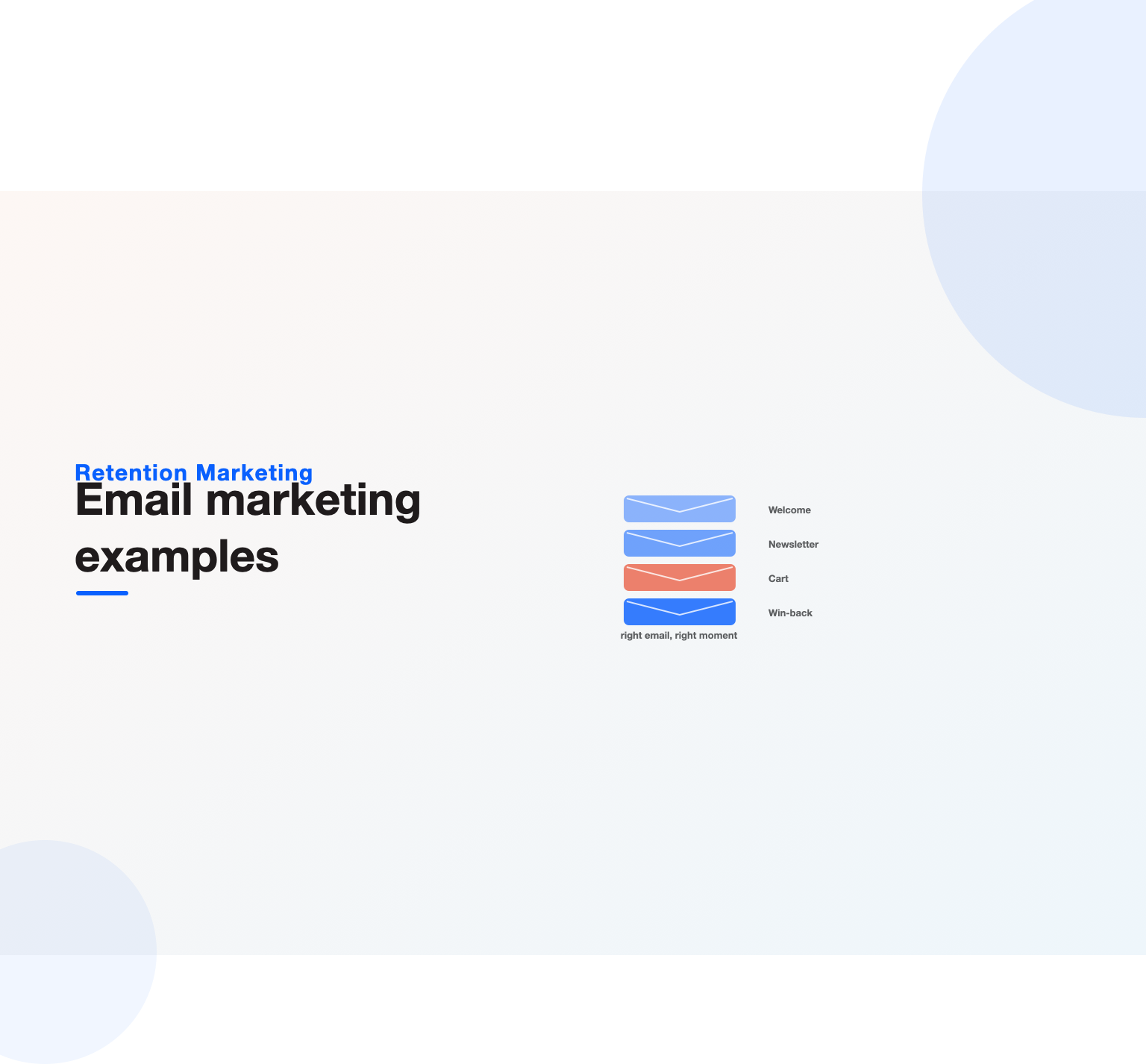
The most useful email marketing examples are the campaign types that reliably move a business forward: a welcome sequence that turns a new subscriber into a customer, a newsletter that keeps an audience engaged, promotional emails that drive sales, abandoned-cart emails that recover lost orders, re-engagement emails that revive dormant contacts, and lifecycle or drip sequences that nurture leads toward a purchase. Each does a specific job at a specific moment in the customer relationship. The best email marketing examples share the same fundamentals, a relevant reason to send, a clear single purpose, and a compelling call to action, which is why studying them teaches not just what to send but why each type works.
Key Highlights
- Strong examples span the whole lifecycle, from welcome to re-engagement.
- Welcome sequences convert new subscribers while interest is highest.
- Abandoned-cart and re-engagement emails recover revenue that would otherwise be lost.
- Newsletters and nurture sequences build the familiarity and trust that later drive sales over time.
- Every effective email has one clear purpose and one obvious next step.
- The type is chosen for the moment in the relationship, not sent at random.
The welcome email and onboarding sequence
Among email marketing examples, the welcome sequence is the highest-leverage of all, because it reaches a new subscriber at the moment their interest is highest. Someone who has just signed up is more engaged than they will likely ever be again, so a warm, useful welcome, and a short sequence that follows, converts that peak interest into a first purchase or a deeper relationship far better than a delayed or absent greeting.
The reason it works is timing and expectation: the subscriber is expecting to hear from you and is primed to engage, so a sequence that delivers on the promise that earned the signup, sets expectations, and gently guides toward the next step capitalises on a window that closes fast. A strong welcome sequence introduces the brand, delivers immediate value, and makes the first desired action easy. The lesson from this example is that the beginning of the relationship is disproportionately valuable, and a business that greets new subscribers with silence or a single dull confirmation wastes the most engaged audience it will ever have.
The newsletter
The newsletter is one of the most durable email marketing examples, because it keeps a brand present in its audience’s mind over months and years on a channel the business owns. A newsletter that consistently delivers genuine value, insight, useful content, news the reader actually wants, builds the familiarity and trust that later convert to sales, and it doubles as the distribution channel for a business’s other content.
What makes a newsletter work is consistency and value rather than frequency or polish: an audience that looks forward to your email is one you can reach reliably without paying for each impression, while one that finds it dull unsubscribes or tunes out. The discipline is to earn the open every time by being useful, not to fill a schedule. As a form of email marketing that plays the long game, a newsletter is less about immediate conversion than about staying trusted and top of mind, so that when the reader is ready to buy, the brand is already familiar. The lesson is that consistent value compounds into an owned audience no algorithm can take away.
Promotional and offer emails
Promotional emails are the email marketing examples most people picture first, and used well they drive direct, measurable sales. A well-crafted offer email, a sale, a new product, a time-bound deal, reaches an audience that has already opted in, which makes it far more efficient than advertising to strangers. Because the recipients know the brand, a relevant offer can convert at rates paid channels rarely match.
The craft is in relevance and restraint. An audience bombarded with constant promotions tunes out or unsubscribes, while one that receives well-timed, genuinely relevant offers stays engaged and buys. Segmenting so the offer fits the recipient, and pacing so promotions do not crowd out value, is what keeps this type working. A clear single offer, a compelling reason to act, and an obvious call to action turn a promotional email into revenue. The lesson from this example is that the opted-in audience is a privilege to be respected, not a list to be blasted, and that relevance is what separates a promotion that sells from one that costs you a subscriber.
Abandoned-cart and browse-abandonment emails
Some of the highest-returning email marketing examples are the automated recovery emails that follow an abandoned cart or an abandoned browse. A shopper who added items and left, or who lingered on a product without buying, has shown strong intent, and a timely, well-judged reminder recovers a meaningful share of those otherwise-lost sales, often for almost no cost because the work is automated.
The reason these convert so well is that they reach a warm buyer at a moment of clear intent, addressing the small hesitation, a doubt, a distraction, that stopped the purchase. A gentle reminder, perhaps with reassurance or a modest incentive, is often all it takes to complete the sale. Run through marketing automation, these emails fire automatically at the right moment, recovering revenue with no ongoing effort. The lesson from this example is that intent already shown is the easiest to convert, and that a business without abandonment emails is leaving recoverable sales on the table every single day.
Re-engagement and win-back emails
Re-engagement emails are the email marketing examples aimed at contacts who have gone quiet, and they serve two purposes at once: reviving dormant interest and cleaning the list of the genuinely disengaged. A short, honest sequence that acknowledges the silence and offers something genuinely useful, or simply asks whether the subscriber still wants to hear from you, recovers a share of dormant contacts and lets the rest be retired cleanly.
These work because a lapsed contact once chose to engage, so a well-timed nudge sometimes lands at a better moment and revives the relationship. Just as importantly, they protect deliverability: continuing to email people who never open drags down sender reputation, so a win-back sequence that either re-engages or suppresses them keeps the active list genuinely active. The discipline is to treat a cold contact as a decision point rather than a permanent fixture. The lesson from this example is that list health is a revenue issue, and that re-engagement emails both recover value and protect the inbox placement of every other email you send.
Nurture and drip sequences
Nurture or drip sequences are the email marketing examples that carry a not-yet-ready lead toward a purchase over time, delivering the right message at the right stage rather than pushing for an immediate sale. A well-designed sequence educates, addresses objections, and builds trust across a series of spaced, relevant emails, keeping the lead warm until their timing is right and moving them steadily toward a decision.
The reason nurture works is that most leads are not ready to buy when first captured, and a sequence that stays useful over the consideration period is what stops that interest from cooling. Behaviour-triggered versions, which respond to what a lead actually does and typically run on marketing automation, convert better than purely time-based ones, because they meet the lead at moments of real intent. This is where email overlaps most with the wider discipline of lead nurturing, explored in our guide to lead nurturing strategies. The lesson from this example is that patient, relevant sequences convert the interest a business has already earned, which is far cheaper than generating fresh leads to replace the ones that quietly cooled.
Transactional and lifecycle emails
Often overlooked among email marketing examples are transactional and lifecycle emails, the order confirmations, shipping updates, receipts, and account notices that customers actually expect and open at very high rates. Because these are anticipated and genuinely useful, they enjoy engagement most marketing emails can only envy, which makes them quietly valuable real estate for a relevant, understated next step.
The opportunity is to make these functional emails work a little harder without undermining their purpose: a shipping confirmation that suggests a complementary product, a receipt that invites a review, an account notice that surfaces a useful feature. The discipline is restraint, since the primary job is to inform, and a heavy-handed pitch on a transactional email annoys and can breach expectations. Handled well, though, these high-open messages extend the relationship at almost no cost. The lesson from this example is that the emails customers already want are an underused channel, and a light, relevant touch on them earns engagement the promotional inbox rarely gets.
Email marketing examples in the Indian market
In India, the effective email marketing examples share the global logic but carry local texture worth planning for. Mobile-first reading means design and length must suit a phone, and concise, scannable emails outperform dense ones. Trust matters heavily, so genuine value and clear sender identity lift engagement, while aggressive or unclear mail is quickly ignored or reported in a market wary of spam.
Channel context matters too. Email coexists here with WhatsApp, which often carries the fast, high-attention follow-up that email handles more slowly in the West, so the strongest programs coordinate the two rather than treating email in isolation. Regional-language subject lines and content widen engagement for many audiences, and a considered social media presence often grows the very list these emails then nurture. The practical implication is to treat email as one thread in a coordinated, mobile-first conversation rather than a standalone channel, since Indian audiences move fluidly between the inbox, messaging apps, and social, and a business that meets them consistently across all three of those channels earns far more engagement over time than one that relies on the inbox alone. Pairing well-judged email with a coordinated demand generation program tuned to these realities is what turns the channel into pipeline in India rather than into unopened mail. The lesson is to adapt the universal examples to how Indian audiences actually read, trust, and respond.
Subject lines and design that earn the open
Before any of these campaigns can work, the email has to be opened and read, which makes the subject line and the design quiet determinants of everything else. A subject line earns the open by being relevant and honest rather than by shouting: it signals genuine value, respects the reader’s time, and avoids the clickbait that erodes trust and trains people to ignore a sender. The best ones read like a useful note from someone the reader knows, not a billboard.
Design matters just as much once the email is open. A single clear message, plenty of space, a prominent and obvious call to action, and a layout that works on a phone are what turn an open into a click. Cluttered emails with competing buttons and dense text bury the one action that mattered, while clean, scannable ones guide the eye straight to it. Because so much email is now read on mobile, designing for the small screen first is no longer optional. Testing these elements, one subject line against another, one layout against another, run through a disciplined email marketing platform, is how a program improves steadily rather than guessing. The lesson is that the finest campaign fails if the subject line is ignored or the design buries the point, so the open and the click deserve as much attention as the offer behind them.
Segmentation and personalisation
The single biggest lift most senders can make is to stop sending everyone the same thing. Segmentation, dividing a list by what you know about each contact, their interests, their stage, their past behaviour, lets each email be relevant to the person receiving it, and relevance is the currency of the inbox. A segmented promotion that fits the recipient converts far better than a generic blast, and it costs nothing extra beyond the discipline of organising the list.
Personalisation goes a step further, tailoring content to the individual rather than just the segment, and done well through automation it lets a small team send mail that feels individually considered. The caution is to personalise on what you genuinely know rather than guessing, since clumsy personalisation reads worse than none. Much of this runs on marketing automation, which triggers the right message to the right segment at the right moment, and it is where a coordinated marketing automation setup earns its place. The lesson is that relevance, achieved through segmentation and honest personalisation, is what separates email people welcome from email they resent, and it lifts every campaign type in this guide.
A worked example of a starter program
An example ties the types together. Picture a small online business with a list but no real program beyond the occasional promotional blast. Rather than sending more blasts, it builds a simple lifecycle. First, a three-email welcome sequence greets every new subscriber, delivers immediate value, and guides them toward a first purchase while their interest is highest, which alone lifts conversion from the same signups.
Next, it turns on an abandoned-cart email to recover the orders shoppers leave behind, and a light monthly newsletter to stay familiar between purchases. A short re-engagement sequence is set to fire when a contact goes quiet, both reviving some and cleaning the list so deliverability stays healthy. Only then does the business layer promotions on top, now sent to a segmented, engaged list rather than blasted to everyone. Within a few months it has a connected program, welcome, cart, newsletter, win-back, promotion, each doing a specific job and handing off to the next, run largely on automation so a tiny team can sustain it. Feeding new subscribers into it through a steady lead generation effort, and coordinating with a broader demand generation program, is what keeps the list growing while the program converts it. The example shows the whole principle: start with the highest-leverage automated emails, then layer broadcasts on a healthy, segmented list.
What the best examples have in common
Across all these types, the email marketing examples that succeed share the same fundamentals, which matter more than any specific format. Each has a genuine reason to land in the inbox, so it feels relevant rather than intrusive; each has one clear purpose rather than trying to do several things at once; and each has one obvious call to action that makes the next step effortless. Emails that muddle these fundamentals underperform however clever the design.
Two more fundamentals separate the best from the rest. Relevance through segmentation, sending the right message to the right person rather than the same message to everyone, lifts engagement sharply, and testing, comparing subject lines or content to see what genuinely performs, turns guesswork into improvement. As a form of A/B testing applied to the inbox, that discipline compounds small wins over time. The lesson is that the format is only the vessel; relevance, a single clear purpose, an obvious next step, segmentation, and testing are the fundamentals that make any of these examples actually work.
Getting into the inbox in the first place
None of these campaigns matter if the email never reaches the inbox, which is why deliverability sits underneath every example in this guide. Mailbox providers decide whether to deliver, filter, or block a sender based largely on reputation, and that reputation is earned by consistently sending mail people want and open. A list full of disengaged or purchased contacts, frequent spam complaints, or a sudden spike in volume all signal a low-quality sender and push even legitimate mail into the spam folder.
Protecting deliverability is therefore a revenue issue, not a technical footnote. The core habits are straightforward: only email people who genuinely opted in, keep the list clean by suppressing contacts who never engage, authenticate your sending domain properly, and maintain a steady, relevant cadence rather than erratic blasts. This is exactly why re-engagement and win-back sequences matter so much, since removing the dead weight of never-openers lifts the inbox placement of every other email you send. A business that buys lists or emails relentlessly may see a short spike, but it erodes the reputation that determines whether tomorrow’s campaign is even seen.
Deliverability also compounds with everything else in the program: a welcome sequence that engages new subscribers early trains the mailbox provider to trust your mail, while a promotional blast to a stale list does the opposite. Running the whole program on a reputable email marketing platform, with the automation that keeps lists clean and messages relevant, is what keeps a sender in good standing over time. Coordinating it with the wider funnel through deliberate revenue operations ensures the data behind segmentation and suppression stays accurate. The lesson is that the inbox is earned, not owed, and that every good habit elsewhere in the program, permission, relevance, list hygiene, is also what keeps your mail landing where it can actually be read.
Common mistakes with email marketing
- Sending everyone the same email. Ignoring segmentation produces generic mail that engagement and deliverability both punish.
- No clear purpose. An email trying to do several things at once dilutes the one action that mattered.
- Emailing too often. Crowding the inbox erodes sender reputation and drives unsubscribes.
- Skipping automation. Not running welcome, cart, and re-engagement emails leaves easy revenue on the table.
- Ignoring list health. Emailing people who never open drags down deliverability for everyone else.
- Never testing. Guessing at subject lines and content forgoes the compounding gains that testing provides.
Each mistake is the inverse of a sound principle, which is why studying strong email marketing examples is also the fastest way to learn what to avoid.
How the examples fit together
Seen whole, these email marketing examples are not a menu to pick one from; they are stages of one relationship, and their value comes from how they connect across the customer’s journey. A welcome sequence begins the relationship, a newsletter and nurture keep it warm, promotional and transactional emails drive and support purchases, abandonment emails recover lost ones, and re-engagement revives it when it fades. A gap anywhere leaks value that another type would have captured.
Thinking in these terms turns a list of formats into a lifecycle program, where each type hands off to the next and the whole keeps a subscriber engaged from first signup to loyal, repeat customer. That is why the types matter less individually than as a connected system, run on a platform that can trigger the right message at the right moment. Building that program deliberately is the work of a disciplined email marketing effort, and for the wider view of how it fits growth, our guide to content marketing strategy covers the content these emails distribute.
Key Takeaways
- Strong email marketing examples span the whole customer lifecycle, from the first welcome to a win-back.
- Welcome sequences convert new subscribers while their interest sits at its natural peak.
- Abandoned-cart and re-engagement emails recover revenue that would otherwise be lost, at almost no cost.
- Newsletters and nurture sequences build the trust that later drives sales.
- Transactional emails enjoy the highest open rates of all and are an underused, low-cost channel for a light next step.
- In India, mobile-first design, sender trust, and tight coordination with WhatsApp and social shape what actually works.
- Every effective email has one purpose and one obvious next step, and improves through segmentation and testing.
Frequently asked questions
What are the best email marketing examples?
The best examples are the lifecycle types that reliably move a business forward: a welcome sequence that converts new subscribers while interest is highest, a newsletter that keeps an audience engaged, promotional emails that drive sales, abandoned-cart emails that recover lost orders, re-engagement emails that revive dormant contacts, and nurture sequences that carry leads toward a purchase. No single type is best in isolation; the strongest programs use several across the customer journey. What makes any of them work is the same set of fundamentals, relevance, one clear purpose, and an obvious next step, rather than the format itself.
Which type of email gets the best results?
It depends on the job, but two types punch above their weight. Welcome sequences convert exceptionally well because they reach subscribers at peak interest, and abandoned-cart emails recover sales cheaply because they reach a warm buyer who has already shown intent. Transactional emails enjoy the highest open rates of all, making them valuable if used with restraint. That said, the best results come from a connected program where each type does its job, rather than from any single email, because they compound: nurture warms the lead that a promotion then converts.
How often should I send marketing emails?
Often enough to stay familiar, rarely enough to stay welcome, with relevance rather than a fixed number setting the cadence. A useful, well-timed email earns its place; a stream of generic ones erodes sender reputation and drives unsubscribes. Automated lifecycle emails, welcome, cart, re-engagement, fire based on behaviour rather than a schedule, which keeps them relevant. For broadcasts like newsletters and promotions, watch engagement and unsubscribe rates and let them guide you, sending less to segments that show fatigue and reserving frequency for those who stay engaged.
Do abandoned-cart emails really work?
Yes, they are among the highest-returning emails a business can send, because they reach a shopper who has already shown strong intent by adding items and leaving. A timely, well-judged reminder, sometimes with reassurance or a modest incentive, recovers a meaningful share of those otherwise-lost sales, and because it is automated it costs almost nothing per recovery. Any business selling online without abandoned-cart emails is leaving recoverable revenue on the table daily. The same logic extends to browse-abandonment emails, which reach a slightly earlier but still warm signal of intent.
How do I improve email open rates?
Open rates improve most from relevance and sender trust rather than clever subject-line tricks. Segment so each email genuinely matters to the person receiving it, maintain a clean list so you are emailing engaged contacts rather than dead ones, and build a sender reputation by consistently sending mail people open. Test subject lines to learn what resonates, keep them honest rather than clickbait, since misleading ones erode trust and hurt long-term engagement, and ensure a recognisable sender name. In short, earn the open by being relevant and trusted, not by gaming the inbox.
What makes an email marketing campaign effective?
An effective campaign rests on fundamentals shared by every strong example: a genuine reason to land in the inbox, one clear purpose rather than several competing ones, and one obvious call to action that makes the next step effortless. Layered on top, segmentation ensures the right message reaches the right person, and testing turns guesswork into steady improvement. Beyond any single send, effectiveness comes from a connected lifecycle program where welcome, nurture, promotional, and re-engagement emails hand off to one another, keeping a subscriber engaged from signup to loyal, repeat customer.
Ready to put this into practice?
Talk to the team that runs SEO, AI search and paid growth programs every day.
Book a Strategy Call →