 Skip to content
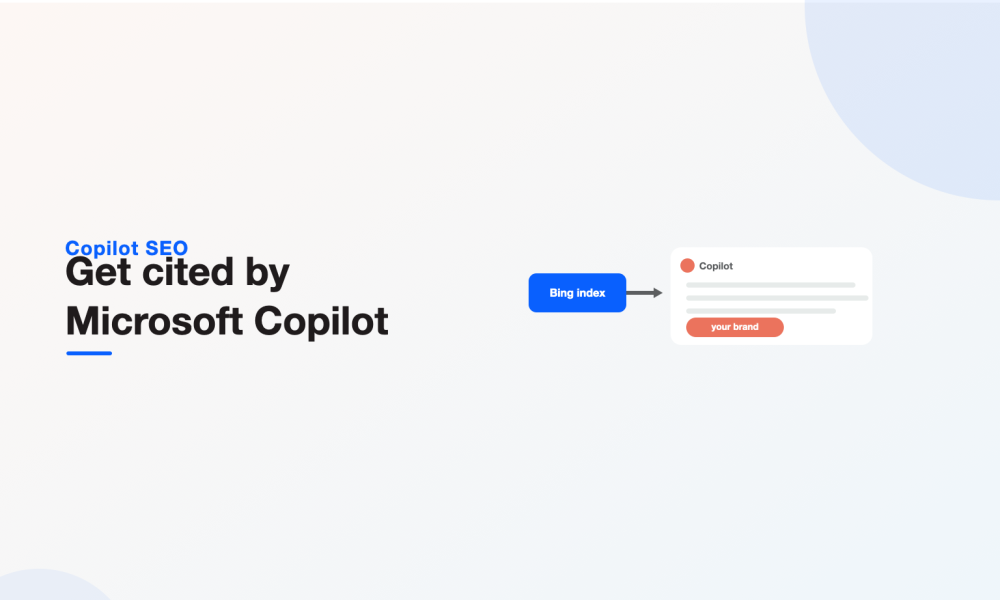
Copilot SEO: Get Cited by Microsoft Copilot
Copilot SEO optimizes your content and brand so Microsoft Copilot surfaces and cites you. Why the Bing index is the direct lever, how to win the Microsoft-ecosystem audience, and how to measure it.
Quick Answer
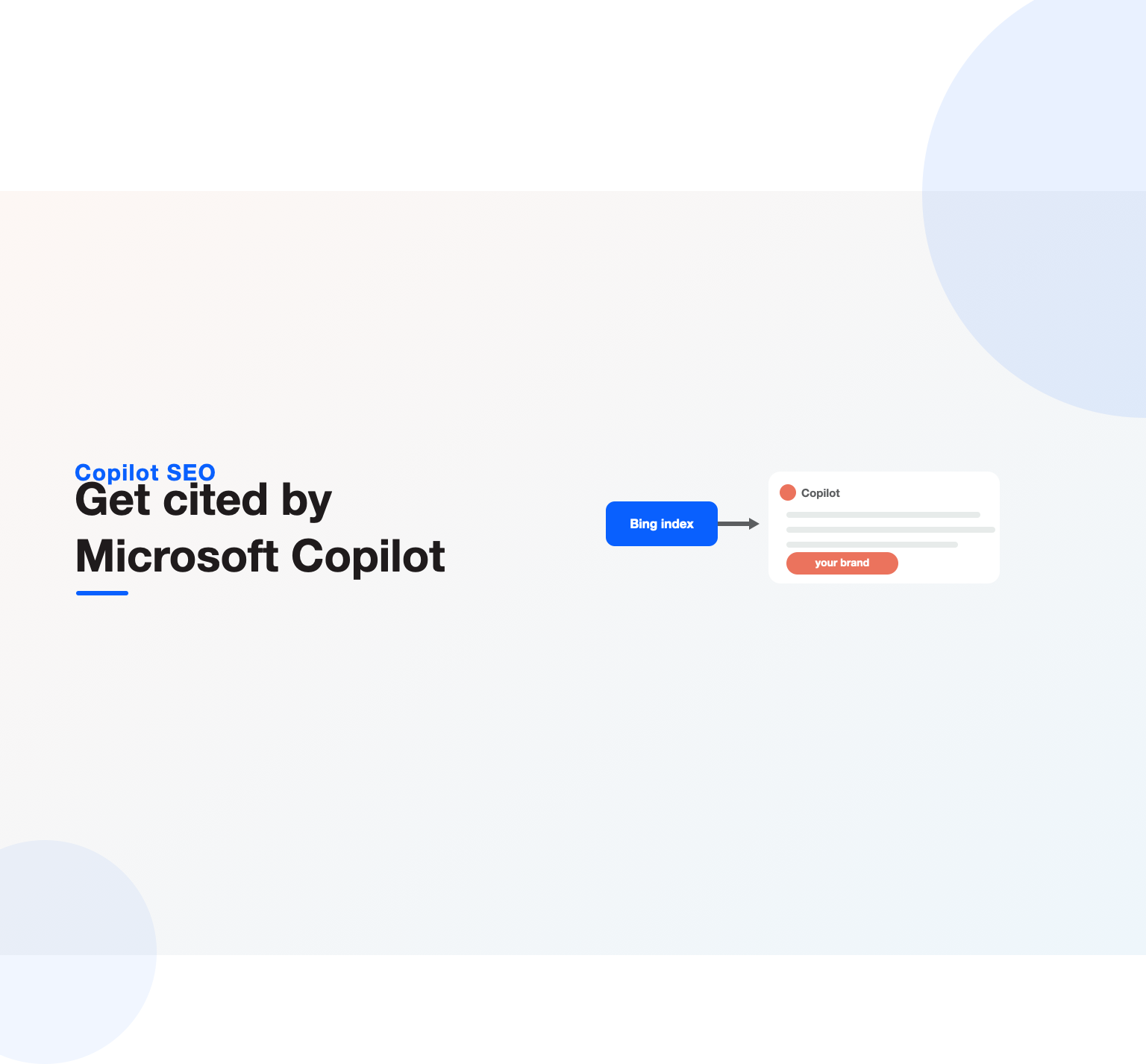
Copilot SEO is the practice of optimizing your content and brand so Microsoft Copilot surfaces, recommends, and cites you when people ask it questions related to what you do. It has a distinctive twist: Copilot is built on Microsoft’s ecosystem and leans heavily on the Bing search index, so being visible in Bing is a direct lever for Copilot visibility in a way that is not true of every assistant. Copilot also reaches people inside Windows, Edge, and Microsoft 365, which skews its audience toward professional and enterprise users. Winning here means strong Bing presence, clear and authoritative content, and technical accessibility, so Copilot can find, trust, and cite you when it answers.
Key Highlights
- Copilot SEO means earning mentions and citations inside Microsoft Copilot’s answers, a surface tied closely to Bing and the Microsoft ecosystem.
- Since Copilot draws heavily on the Bing index, strong Bing visibility is one of the most direct levers you have, unlike some other assistants.
- Its reach spans Windows, Edge, and Microsoft 365, so the audience skews professional and enterprise, which is valuable for B2B brands.
- The content that wins is clear, authoritative, and well-structured, the same quality assistants everywhere reward, backed by a credible reputation.
- Technical accessibility to Bing’s crawler and clean, readable pages are prerequisites, since Copilot can only cite what Bing can index and read.
What Copilot SEO is
At its simplest, Copilot SEO is the discipline of making your brand and content the kind of source Microsoft Copilot draws on when it answers questions, so you are mentioned, recommended, or cited in its responses. It is the Copilot-specific application of optimizing for AI assistants, aimed at Microsoft’s assistant rather than a generic model. Where traditional SEO targets a ranking on a results page, Copilot SEO targets a place inside the answer Copilot generates, whether that is a citation of your content, a recommendation, or a mention as an authority.
What makes Copilot SEO its own topic is the ecosystem it lives in. It combines a large language model with Microsoft’s search and product stack, so it is shaped both by the model’s knowledge and by the Bing index it draws on for current information and citations. It also appears across Microsoft’s products, giving it a particular reach and audience. So while the fundamentals are shared with optimizing for any assistant, Copilot SEO has a specific character, closely tied to Bing and to Microsoft’s professional user base, that makes it worth treating deliberately rather than as an afterthought within a broader AI visibility effort.
How Copilot finds and uses information
Understanding how Copilot works is the foundation of Copilot SEO, and its defining feature is the Bing connection. It uses a large language model for reasoning and language, but when it answers questions that benefit from current information, it draws on the Bing search index and cites web sources much as a search engine surfaces results. That means your presence in Bing, how well Bing crawls, indexes, and ranks your content, directly shapes whether Copilot can find and cite you, which is a more direct lever than exists for assistants that rely mainly on training data.
The model side matters too. Copilot’s underlying model carries knowledge from training, so being well represented across the credible web over time shapes what it knows about your brand and category, just as it does for other assistants. But the practical, controllable lever that distinguishes Copilot SEO is the live Bing pathway: content that Bing indexes well and ranks for relevant queries is content Copilot can readily pull into an answer. Optimizing for Copilot therefore means optimizing for Bing as much as for the model, which is a concrete, familiar kind of work rather than a mysterious one, and it connects to the same fundamentals as how to rank in ChatGPT.
Why optimize for Copilot specifically
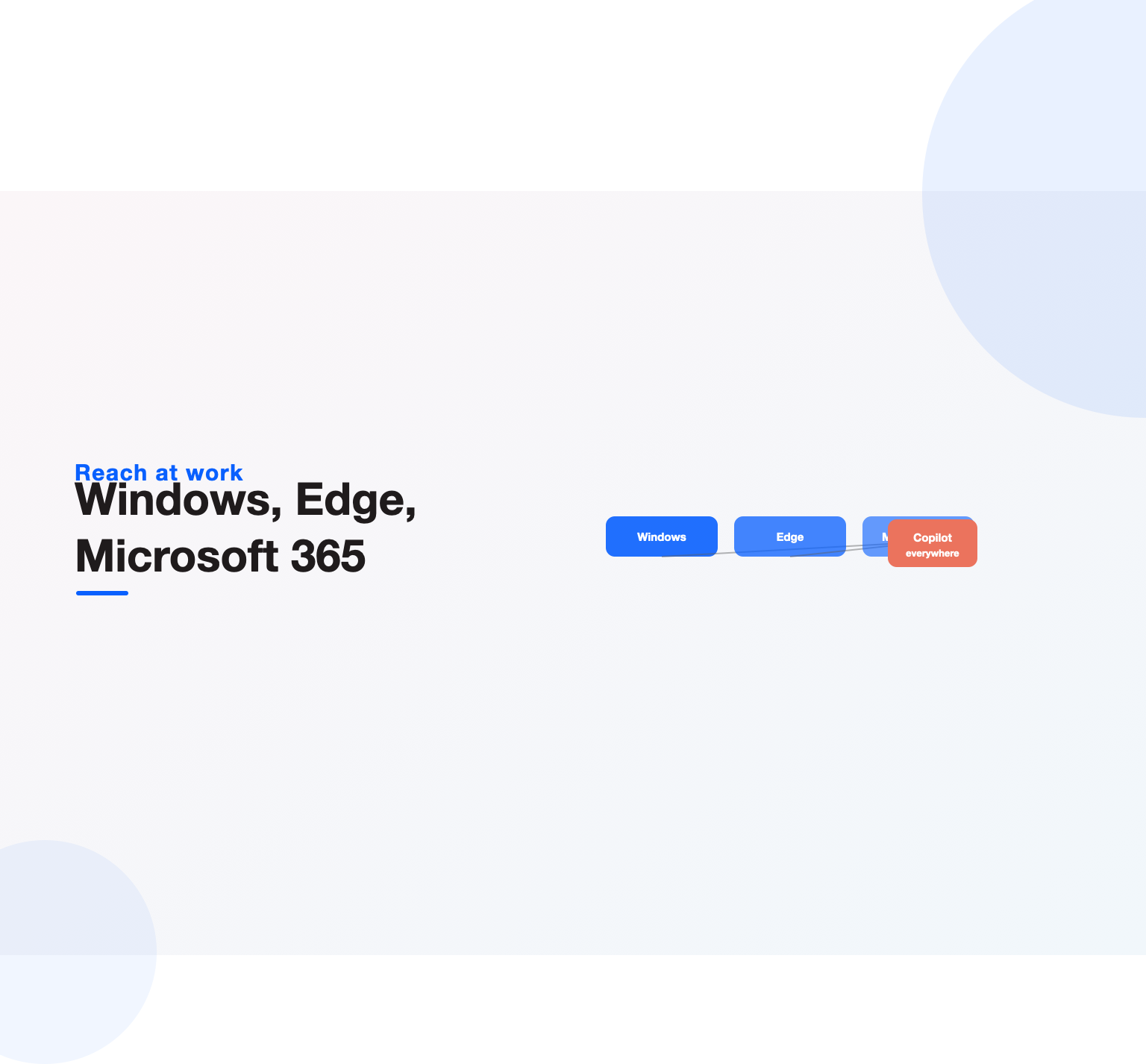
Optimizing for Copilot specifically is worthwhile because of where it lives and who uses it. Microsoft has embedded Copilot in Windows, Edge, and Microsoft 365, the tools a vast number of professionals rely on every single day, so its audience skews heavily toward business and enterprise users, people researching tools, solutions, and providers for work. For B2B and considered-purchase brands, reaching that audience at the moment they ask Copilot for guidance is genuinely valuable, because those users often make or influence purchasing decisions.
There is also a competitive-attention argument. Many brands focus their AI efforts on the most talked-about assistants and overlook Copilot, even though its distribution across Microsoft’s ecosystem gives it enormous reach. That relative inattention means the competition for Copilot visibility can be thinner than for other surfaces, so a brand that takes Copilot SEO seriously now can establish itself while others are not looking. Combined with the concrete, Bing-driven path to visibility, that makes Copilot a practical and often underrated priority within a complete AI-search strategy, especially for brands whose buyers work inside the Microsoft ecosystem.
The Bing connection and why it matters
The single most important practical fact in Copilot SEO is the Bing connection, so it deserves its own focus. Since Copilot draws on the Bing index for current information and citations, improving how Bing crawls, indexes, and ranks your content is one of the most direct ways to improve your Copilot visibility. This is unusual and helpful: rather than optimizing for an opaque model, you can work through Bing, a search engine with its own tools, guidelines, and feedback, which makes the work concrete and measurable in a way that optimizing for a pure black-box model never is.
In practice this means giving Bing attention many brands reserve for Google. Verify your site in Bing Webmaster Tools, submit your sitemap, check that Bing is indexing your important pages, and make sure your content ranks in Bing for the queries you care about, since Copilot is more likely to cite content Bing already surfaces. Much of what helps you in Google helps in Bing too, so this is not a wholly separate effort, but paying deliberate attention to Bing performance is a distinctive and high-leverage part of Copilot SEO that brands focused only on Google tend to neglect.
Do AI-generated answers recommend your competitors instead of you?
Our team reviews your current setup and shows you where the opportunities are. See how our GEO services work.
What content wins Copilot citations
The content that earns Copilot citations is the same genuinely useful, clear, authoritative material that wins across assistants, so Copilot SEO builds on good content rather than requiring a separate kind. Content that directly and accurately answers the questions your audience asks, written clearly and structured so the key information is easy to find and extract, is what Copilot can confidently cite. Answer-first sections, descriptive headings mapped to real questions, and precise, factual content all make your material easy for the assistant to lift and attribute.
Authority and depth matter as they do everywhere. Comprehensive content that genuinely covers a topic gives Copilot more to draw on across many specific questions, and credible, well-regarded content is what it prefers to cite. Given that Copilot leans on Bing, this content also needs to perform in Bing, which rewards the same quality and relevance signals, so writing genuinely excellent, well-structured content serves both the model and the search index it relies on. This dual payoff is why quality-led content is the core of Copilot SEO, the same principle behind any strong content strategy.
Technical accessibility for Copilot and Bing
Technical accessibility is a prerequisite for Copilot SEO, and the Bing connection makes it especially concrete: your content must be crawlable and indexable by Bing, and readable by the systems Copilot uses. That means ensuring Bingbot can access your pages, that important content is present in the served HTML rather than hidden behind client-side JavaScript, and that your site is fast and cleanly structured. Content that only renders client-side can be missed, the same issue our work on JavaScript SEO covers in depth.
The Bing angle gives you a clear way to check this. Bing Webmaster Tools shows how Bing sees and indexes your site, so you can confirm your important pages are indexed and diagnose problems directly, rather than guessing at how an opaque assistant reads you. Make sure robots directives allow the crawlers you want, that your sitemap is submitted and current, and that nothing important is blocked or dependent on rendering. This technical layer is unglamorous but decisive in Copilot SEO, because Copilot can only cite what Bing can crawl, index, and read.
Reputation and authority for Copilot
As with every assistant, reputation and authority shape Copilot SEO, because Copilot favors credible, well-regarded sources both through its model and through Bing’s ranking. Building genuine authority, publishing expert content consistently, earning references and links from reputable places, and maintaining a trustworthy brand presence, makes both Bing and the model more likely to surface you. The links and mentions a strong authority-building approach earns feed both the search index Copilot draws on and the broader record its model learned from.
This authority compounds and is hard to fake, which makes it durable. A brand that steadily becomes a recognized voice in its category earns the kind of standing that Bing ranks well and the model trusts, while brands hoping for a shortcut find none. Because it blends model knowledge with Bing results, investing in genuine authority pays off on both paths at once, so the reputation work that supports your overall SEO and AI visibility also directly supports Copilot SEO. There is no separate reputation to build, only the same genuine authority applied to a surface that rewards it through two channels.
Measuring your Copilot visibility
Copilot SEO needs measurement like any discipline, and the most direct method is to ask Copilot the questions your audience asks and see how you fare. Build a list of the real questions buyers and researchers pose in your category, then put them to Copilot, recording whether your brand is mentioned or cited, how it is described, and which competitors appear instead. Given the Bing connection, it is also worth tracking your Bing rankings and indexation for those topics, since strong Bing performance tends to translate into Copilot citations.
That combined view, Copilot answers plus Bing performance, tells you exactly where to focus. Questions where you should be surfaced but are not become content and Bing-optimization priorities, and watching which competitors Copilot names shows what is winning. Tracking Copilot visibility alongside your presence in other assistants and traditional search gives a complete picture, which is the same measurement discipline described in our approach to AI visibility. Treated as a metric rather than a guess, your standing in Copilot becomes something you can deliberately improve, with the useful advantage that much of it is visible through Bing’s own tools.
Where Copilot SEO fits in a broader strategy
Copilot is one assistant among several, so This work is best run as part of a coordinated strategy for all of them rather than in isolation. The shared fundamentals, clear authoritative content, strong reputation, and technical accessibility, earn visibility in Copilot, ChatGPT, Gemini, and Perplexity alike, so most of the work transfers. Optimizing well for one credible assistant tends to lift your standing across them, because they are all trying to surface genuinely useful, trustworthy sources.
Copilot’s distinctive Bing dependence is the main thing to add to the shared playbook: where other assistants lean more on training or their own retrieval, Copilot gives you a concrete search-engine path to work through, so folding deliberate Bing optimization into your program is the Copilot-specific move. Treating Copilot, alongside Claude, Gemini, and the rest, as surfaces of one strategy is what a coordinated generative engine optimization approach does, connecting to the wider AI search optimization program so every engine, and the Bing index behind Copilot, pulls in the same direction.
Where Copilot lives: Microsoft 365 and the workplace
What sets Copilot apart from other assistants is where its users spend their day. The tool appears inside the applications people use for work, documents, email, spreadsheets, the browser, and the operating system itself, so a large share of its use happens in a professional context. When someone at work asks Copilot to help research a tool, compare options, or understand a topic, being the brand it surfaces reaches a decision-maker or influencer in their working environment, which is exactly the audience B2B marketers most want.
This workplace reach makes Copilot especially relevant for business-to-business brands, and it aligns with how modern B2B SEO already targets high-intent professional research. The practical implication is to prioritize the questions a professional buyer in your category would ask Copilot, the comparisons, the how-to-choose questions, the honest evaluations, and to answer them with the depth a serious audience expects. Content that genuinely helps a working professional make a decision is what earns the citation, and reaching them inside the tools they already work in is a distinctive advantage of taking Copilot seriously.
A practical Copilot SEO plan
A concrete plan makes this manageable. Start by getting your Bing house in order: verify your site in Bing Webmaster Tools, submit your sitemap, confirm your important pages are indexed, and check how you rank in Bing for the queries you care about, since that is the direct path to Copilot. Then audit your Copilot presence by asking it the real questions your audience would pose and recording whether it names you. The gap between where you rank in Bing and where Copilot cites you points to your priorities.
From there, improve the content and authority that both Bing and Copilot reward: clear, answer-first, comprehensive pages on the questions you want to win, backed by genuine reputation, and make sure everything is technically accessible to Bingbot. Re-audit regularly, tracking both Copilot answers and Bing performance, and coordinate the work with your wider assistant and search strategy rather than running it separately, since the fundamentals overlap and a coordinated AI search optimization program is more efficient. Followed consistently, this plan makes you a brand Copilot reliably surfaces for its large professional audience.
Keeping content fresh for Copilot
Since Copilot pulls current information through Bing, keeping content fresh matters for the questions where recency counts. For fast-moving topics, comparisons, pricing, features, best-of-the-moment questions, current, accurate content is more likely to be surfaced than stale material, and because Bing re-crawls updated content, freshness can translate into Copilot visibility relatively quickly compared with training-dependent assistants. Maintaining your key content is therefore part of Optimizing for Copilot, not a separate chore.
This does not mean updating for its own sake, which adds nothing. It means keeping the content that answers time-sensitive questions accurate and revisiting cornerstone pieces so they stay comprehensive and correct as your category evolves, then letting Bing re-index the improvements. Freshness paired with genuine depth is what earns both Bing rankings and Copilot citations, and it connects to the same measure-and-refresh discipline that keeps any content library healthy and competitive over time. A brand that keeps its best content current gives Copilot, through Bing, an accurate, up-to-date source to trust and cite.
Enterprise Copilot and grounded data
Microsoft has pushed Copilot deep into the enterprise, where versions of it can also draw on an organization’s own documents and data alongside the web. For brands selling into those organizations, the public web presence you build still matters, because when employees ask Copilot general questions about tools, vendors, or approaches, it reaches for the same web sources and Bing results that public Copilot uses. Being the credible, well-documented source it surfaces is how you show up in those work conversations.
The takeaway is that Copilot’s enterprise footprint raises the value of being a trusted public source, not lowers it, because so much professional research runs through it. That aligns with the reality that SEO is not dead but evolving toward being genuinely authoritative and accessible wherever people ask questions, and it rests on the same fundamentals of how SEO works. For brands whose buyers live in Microsoft tools, earning Copilot visibility is a direct line into the workplace, which is exactly where many high-value decisions get researched and made. Few channels put your brand in front of a professional at the precise moment they are trying to solve a problem you can help with, and Copilot increasingly does.
Want to be the brand generative AI recommends?
Book a free 30-minute strategy call and leave with a clear next step for your business.
Common Copilot SEO mistakes
Several mistakes hold brands back with Copilot. The first is ignoring Bing entirely, focusing all technical and content effort on Google and missing that Bing is the direct path to Copilot visibility. The second is trying to manipulate rather than deserve the citation, publishing thin content that neither Bing ranks nor the model trusts. The third is neglecting technical accessibility, so Bingbot cannot crawl or read the content Copilot would otherwise cite.
Two further errors are common. Many brands do not measure their Copilot presence or their Bing performance, so they cannot tell whether Copilot surfaces them or improve deliberately. And some overlook Copilot completely, assuming the other assistants are all that matter, and miss its large professional reach across the Microsoft ecosystem, effectively ceding a valuable, lightly-contested surface to whichever competitor notices it first. Avoiding these traps comes down to taking Copilot and Bing seriously, building on genuine content and authority, and using Bing’s own tools to make the work concrete, which is exactly what makes The practice both approachable and effective.
Key Takeaways
- Copilot visibility work is optimizing your content and brand so Microsoft Copilot surfaces and cites you, a distinct surface tied closely to Bing and the Microsoft ecosystem.
- Because Copilot draws heavily on the Bing index, strong Bing crawling, indexing, and ranking is one of the most direct levers you have.
- Copilot reaches professional and enterprise users across Windows, Edge, and Microsoft 365, which is especially valuable for B2B brands.
- Win with clear, authoritative, well-structured content and genuine reputation, and make sure Bingbot can crawl and read your pages.
- Measure both Copilot answers and Bing performance, and run Copilot as part of a coordinated strategy across all the assistants.
Frequently asked questions
What is Copilot SEO?
It is the practice of optimizing your content and brand so Microsoft Copilot mentions, recommends, or cites you when people ask it questions related to what you do. It is the Copilot-specific application of optimizing for AI assistants, aimed at winning a place inside the answers Copilot generates rather than a ranking on a results page. Its defining feature is a close tie to the Bing index and the Microsoft ecosystem, which shapes how you approach it.
How is Copilot SEO different from optimizing for ChatGPT?
The fundamentals overlap, clear authoritative content, reputation, and technical accessibility, but Copilot’s defining difference is its heavy reliance on the Bing index for current information and citations, which gives you a concrete search-engine path to work through. Copilot also reaches a professional audience across Microsoft 365, Windows, and Edge. So optimizing for Copilot adds deliberate Bing optimization to the shared assistant playbook, whereas ChatGPT leans more on its own model and retrieval.
Does Bing SEO help with Copilot?
Yes, directly. Because Copilot draws on the Bing search index to answer many questions and cite sources, content that Bing crawls, indexes, and ranks well is content Copilot can readily surface. That makes Bing optimization, verifying your site in Bing Webmaster Tools, submitting your sitemap, ensuring indexation, and ranking for relevant queries, one of the most direct and measurable levers for improving your Copilot visibility, which is why Bing deserves attention many brands reserve only for Google.
Why should I care about Copilot if I already optimize for other assistants?
Its enormous reach across Windows, Edge, and Microsoft 365 means that, a professional and enterprise audience that often makes or influences purchasing decisions, and because many brands overlook it, so competition for its visibility can be thinner. Its Bing connection also gives you a concrete, measurable path to visibility. For B2B brands especially, being surfaced by Copilot reaches valuable users at work, making it a practical and often underrated priority alongside the other assistants.
How do I make my content accessible to Copilot?
Ensure Bingbot can crawl and index your pages, keep important content in the served HTML rather than behind client-side JavaScript, and make your site fast and cleanly structured. Use Bing Webmaster Tools to confirm your pages are indexed and diagnose issues, submit a current sitemap, and make sure robots directives allow the crawlers you want. Since Copilot can only cite what Bing can crawl and read, this technical accessibility is a prerequisite for Copilot visibility.
How do I measure my visibility in Copilot?
Ask Copilot the real questions your audience would pose and record whether it mentions or cites your brand, how it describes you, and which competitors appear, repeating this across a consistent set of questions over time. Because of the Bing connection, also track your Bing rankings and indexation for those topics, since strong Bing performance tends to translate into Copilot citations. Together these turn Copilot visibility into a metric you can act on rather than guess at.
Does Copilot use live web data?
Yes. Copilot combines a large language model with access to the Bing search index, so it can bring in current information and cite web sources when a question benefits from being up to date, in addition to the knowledge its model carries from training. That is why both long-term authority, which shapes the model, and live Bing performance, which shapes what Copilot can retrieve and cite now, matter for Copilot visibility.
Is Copilot SEO worth it for my business?
If your audience uses Microsoft products at work, then yes, because Copilot reaches them across Windows, Edge, and Microsoft 365, and being surfaced there influences decisions. Even if you are unsure, the work overlaps almost entirely with good SEO and Bing optimization, so investing in clear, authoritative, accessible content improves your visibility across Copilot, Bing, and other engines at once, which makes it low-risk and, given how many brands overlook Copilot, potentially high-reward.
Do I need a separate strategy for Copilot?
Not a wholly separate one. The shared fundamentals of clear, authoritative, accessible content and genuine reputation serve Copilot alongside every other assistant, so most of the work transfers. What Copilot adds is a deliberate focus on Bing, since its answers lean on the Bing index, and an awareness of its professional, Microsoft-ecosystem audience. So you extend your existing assistant and search strategy to cover Copilot and Bing rather than building something entirely new, which keeps the effort efficient and mutually reinforcing.
Is Copilot visibility only for big brands?
No. An assistant surfaces the most relevant, credible source for a specific question, so a focused smaller brand with excellent, well-structured content and genuine authority can be the one Copilot cites for its niche, especially given how many competitors overlook Copilot and Bing entirely. Depth in a well-defined area, backed by solid Bing indexing, is more attainable than competing on breadth, and it is exactly what makes a brand the obvious answer, much as winning any AI visibility rewards genuine quality over size.
Ready to put this into practice?
Talk to the team that runs SEO, AI search and paid growth programs every day.
Book a Strategy Call →