 Skip to content

Facebook Ads Funnel: How to Turn Strangers Into Customers
A Facebook ads funnel moves people from cold prospecting to retargeting, matching message to intent. Learn the stages, how it works with Meta's automation, and the mistakes that break it.
 Facebook ads funnel narrowing from prospecting to retargeting to a customer”/>
Quick Answer
A facebook ads funnel is a deliberate sequence of campaigns that moves a stranger from first awareness to a purchase or lead, matching the message to how ready each person is to act. Instead of asking one ad to do everything, a facebook ads funnel splits the job into stages: cold prospecting introduces the brand to people who have never heard of it, a consideration layer nurtures those who engaged, and retargeting converts the warm audience that visited the site or showed intent. Each stage uses different creative, copy, and offers because a person discovering you needs a very different message than one deciding whether to buy. On modern Meta, where automation handles much of the targeting, the funnel is less about hand-built audiences and more about feeding the system the right creative and objective at each stage, then letting warm audiences build so retargeting has people to convert. Done well, a facebook ads funnel turns cold traffic into customers at a predictable cost and stops the common mistake of pitching hard to people who are not ready. This guide explains the stages, what each one needs, how the funnel works with Meta’s automation, and the mistakes that quietly break it.
Key Highlights
- A facebook ads funnel matches the message to intent across three stages: cold prospecting, consideration, and retargeting.
- Each stage needs different creative, copy, and offers, since a stranger and a ready buyer respond to very different messages.
- Cold prospecting fills the top of the funnel with new people, so warm audiences exist for later stages to convert.
- Retargeting converts the warmest audience cheaply, but it only works if prospecting keeps feeding it fresh visitors.
- On modern Meta the funnel is built with objectives and creative more than hand-built audiences, since automation does the targeting.
- The most common failure is skipping prospecting and over-relying on retargeting until the warm pool runs dry.
Why one ad cannot do everything
The reason a facebook ads funnel exists is that people sit at very different distances from a purchase, and a single ad forced to serve all of them serves none well. Someone who has never heard of your brand is not ready for a hard sell, while someone who added a product to their cart yesterday does not need an introduction, so one message aimed at both feels either premature to the cold audience or patronizing to the warm one. Splitting the journey into stages lets each ad speak to where the person actually is, which is what makes the whole system convert.
This staged thinking mirrors how people really decide, moving from unaware, to interested, to ready, rather than jumping straight to a purchase from a first impression. A funnel respects that progression by introducing the brand, building interest, and only then making the direct offer, so the pitch lands when the person is receptive rather than when they are still strangers. Trying to shortcut it, demanding a sale from a cold audience, wastes budget on people who were never going to convert yet, which is why matching message to readiness is the core idea behind a working facebook ads funnel, and the same awareness-matching that makes individual facebook ad copy land.
Stage one: cold prospecting
The top of a facebook ads funnel is cold prospecting, where you reach people who have never heard of you and introduce the brand, and it is the stage that makes everything below it possible. Because these people do not know you, the goal is not an immediate sale but earning attention and interest, so the creative leads with their problem or a compelling hook rather than a hard pitch. On modern Meta, prospecting works best with broad targeting and strong creative, letting the automation find likely prospects across a wide pool rather than boxing it into narrow interest audiences.
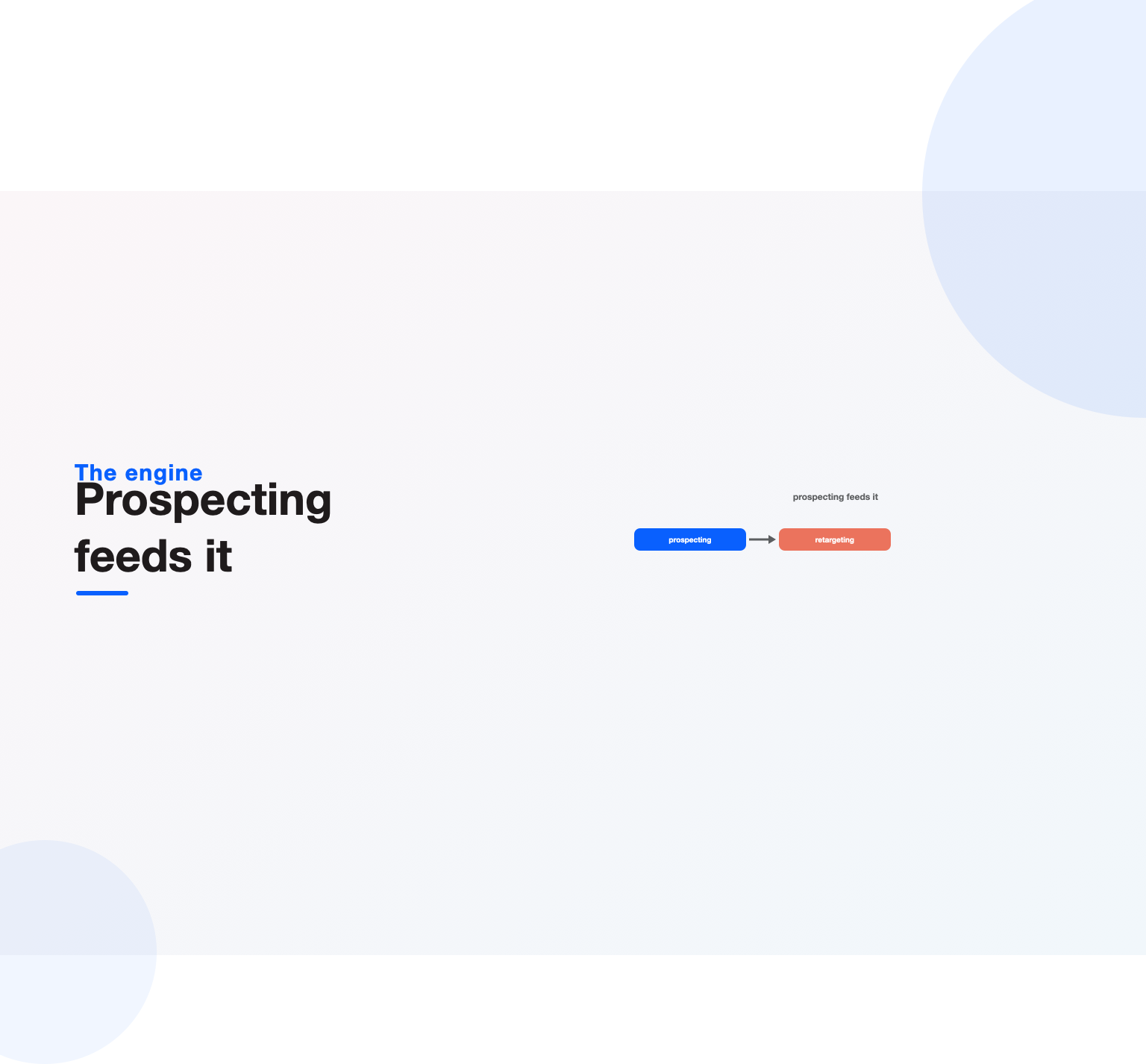
Prospecting is also what fills the warm audiences the rest of the funnel depends on, since every person who sees a prospecting ad and engages, visits the site, or watches a video becomes someone retargeting can convert later. An account that neglects prospecting slowly starves its own funnel, because the warm pool shrinks with no fresh people entering it, and eventually retargeting has no one left to reach. Treating cold prospecting as the engine that feeds the whole system, rather than an expensive afterthought, is what keeps a facebook ads funnel sustainable, and it draws on the same broad-targeting logic that powers effective facebook lookalike audiences.
Stage two: consideration and nurture
The middle of a facebook ads funnel nurtures people who showed some interest but are not ready to buy, deepening their engagement so they move closer to a decision. These are people who watched much of a video, visited a page, or engaged with a prior ad, and they know you exist but need more before acting, so the message shifts from pure introduction to building the case: how the product helps, why it is credible, what makes it worth considering. This stage keeps a brand present in the mind of someone weighing options rather than letting them forget after a single impression.
In practice the consideration layer often overlaps with prospecting and retargeting rather than being a rigid separate campaign, especially on automated Meta where the stages blur. What matters is that people who engaged but did not convert keep hearing a relevant, trust-building message instead of either silence or a premature hard sell. Content that demonstrates value, addresses objections, or shows proof works well here, because the job is to move someone from aware to convinced. Testimonials, short demonstrations, comparisons, and answers to the questions buyers actually ask all fit this stage, since they give a considering person the evidence they need to take the brand seriously. Nurturing the middle of the funnel, so interested people are guided toward a decision rather than dropped, is what connects prospecting to conversion, and it leans on the credibility that strong facebook video ads can build.
Stage three: retargeting and conversion
The bottom of a facebook ads funnel is retargeting, where you convert the warm audience that has already shown intent, and it is usually the most efficient spend in the whole account. People who visited the site, viewed a product, or abandoned a cart are close to buying, so the message here is direct: make the offer, address the last objection, and give a clear reason to act now. Because these people are already interested, retargeting typically converts at a far lower cost than cold prospecting, which is why it looks so attractive in reporting.
That efficiency is also a trap if it is read in isolation, since retargeting only works when prospecting keeps feeding it fresh warm audiences, and its low cost partly reflects demand that prospecting created. An account that pours budget into retargeting while starving prospecting sees great numbers briefly, then watches results collapse as the warm pool empties, which is one of the most common funnel failures. Treating retargeting as the conversion layer of a full funnel, not a standalone strategy, is what keeps it working, and reading its economics honestly against prospecting is essential, a discipline central to effective facebook retargeting.
How the funnel works with Meta’s automation
Building a facebook ads funnel on modern Meta looks different than it did in the era of hand-crafted audiences, because the automation now handles much of the targeting that advertisers once controlled manually. Rather than constructing detailed audience segments for every stage, the effective approach guides the system with objectives, creative, and simple structure, letting it find the right people while you control the message each stage sends. The funnel logic still holds, cold, consideration, warm, but it is expressed more through what you optimize for and the creative you supply than through granular audience building.
This shift means the highest-leverage funnel work is now creative and structure rather than audience micromanagement. Giving prospecting campaigns broad targeting and strong top-of-funnel creative, letting warm audiences build naturally from that reach, and setting clear conversion objectives for retargeting is how the funnel comes together with the automation rather than against it. Fighting the system with over-segmented manual audiences usually underperforms feeding it well, so a modern facebook ads funnel is built by orchestrating objectives and creative across stages, which is exactly the kind of structure disciplined Meta Ads management is designed to run.
Match creative and offer to each stage
The creative and offer at each point in a facebook ads funnel should change with the audience’s readiness, because the same ad rarely fits a stranger and a ready buyer. Top-of-funnel creative earns attention and introduces the brand, so it leads with the problem, a hook, or an engaging story rather than a discount. Middle-of-funnel creative builds the case with proof, demonstrations, and answers to objections. Bottom-of-funnel creative makes the direct offer, adds urgency where honest, and removes the last friction to buying, since the person is ready and just needs a clear push.
Getting this progression right is often the difference between a funnel that flows and one that stalls, because a mismatched message stops people at the stage where it does not fit. A hard offer shown to a cold audience feels premature, while a soft brand video shown to a cart abandoner wastes their readiness to buy, and both leak potential customers. Planning creative and offers as a sequence tuned to each stage, rather than reusing one asset everywhere, is what lets people move smoothly toward conversion, and it depends on the same craft that produces strong facebook ad creative at every level.
Measure the funnel as a whole
A facebook ads funnel has to be judged as a connected system, not as isolated campaigns, because the stages depend on each other and reading any one alone misleads. Retargeting will always look cheaper than prospecting, but crediting it for conversions while ignoring the prospecting that created the demand leads to defunding the very stage that feeds the machine. The honest measure is the blended result across the whole funnel, total spend against total customers, which shows whether the system as a whole acquires customers profitably.
Reading the funnel this way changes decisions, since it protects prospecting from being cut for looking expensive and keeps retargeting from taking undue credit. Watching how efficiently the whole funnel turns cold traffic into customers, and how each stage contributes to that, keeps investment balanced rather than chasing the flattering numbers of the bottom stage. Measuring the funnel as one system, with a skeptical eye on attribution, is what keeps a facebook ads funnel healthy over time, and it is the same whole-account discipline that sound facebook ads reporting is built to provide.
Where the funnel really starts: the offer
Before any campaign is built, the strength of a funnel depends on the offer at the end of it, because no amount of clever staging rescues a product or promise people do not want. The offer is the reason the whole funnel exists, and a compelling one, a product with real demand, a clear value, an incentive that tips the decision, makes every stage easier by giving people something worth moving toward. A weak offer, by contrast, means even a perfectly structured funnel pushes people toward something they do not care about, and the money leaks at the final step.
Getting the offer right also shapes what each stage should say, since the funnel exists to build toward that specific promise. When the offer is strong and clear, prospecting can hint at it, the middle can build the case for it, and retargeting can present it directly, all reinforcing one coherent reason to buy. Treating the offer as the foundation of the funnel, rather than an afterthought bolted onto the last stage, is what gives the whole sequence something to work toward, and it is the same clarity of promise that makes any single piece of persuasive writing convert. A funnel is only ever as good as what it is selling.
Give the funnel enough audience to work
A full funnel needs a large enough top to sustain the stages below it, because retargeting and consideration can only convert as many people as prospecting brings in. When the prospecting audience is too small or underfunded, the warm pool never grows enough to make retargeting meaningful, and the funnel behaves like a trickle rather than a system. Feeding the top with broad reach and adequate budget is what gives the lower stages a population to work with, and it is why starving prospecting quietly caps the whole account.
Audience size also affects how quickly the funnel can learn and scale, since the automation needs volume to optimize each stage. A prospecting effort that reaches enough new people generates the engagement and site visits that build retargeting audiences fast, which in turn lets the conversion stage run at meaningful scale. Keeping the top of the funnel wide and well funded, so there is always a healthy flow of new people entering, is what lets a facebook ads funnel grow rather than stall, and it pairs naturally with the broad-targeting approach behind modern prospecting on Meta.
How long a funnel takes to work
Patience is part of running a full funnel, because a full funnel does not produce its best results on day one, and judging it too early leads to abandoning something that was about to work. Cold audiences take time to become warm, retargeting audiences take time to build to a useful size, and the automation takes time to learn each stage, so the first days of a new funnel underrepresent what it will do once the stages are populated. Expecting immediate conversions from cold traffic, and killing the funnel when they do not appear, is a common and costly mistake.
Reading the funnel over a sensible window, rather than reacting to early noise, is what lets it prove out. Once prospecting has run long enough to fill the warm audiences and the automation has settled, the lower stages have people to convert and the blended economics become clear, which is the point at which the funnel should be judged. Giving a new funnel time to populate its stages and stabilize, then reading the whole-system result, is how you tell a genuinely underperforming funnel from one that simply had not warmed up yet, the same patience that steady facebook ads optimization depends on.
Scaling a funnel without breaking it
Scaling a funnel means growing the top so the whole system grows, rather than simply pushing more budget into the efficient-looking bottom. Because retargeting is capped by how many warm people exist, real growth comes from expanding prospecting so more people enter the funnel, which then flows through to larger consideration and retargeting audiences. Trying to scale by inflating retargeting budget just spreads the same warm pool thinner and drives up its cost, while scaling prospecting genuinely enlarges the machine.
Doing this well means raising prospecting budgets steadily and widening creative so the automation can keep finding new people without exhausting a narrow set of winners. As the top grows, the lower stages naturally have more to work with, and the funnel scales as a whole rather than straining at one point. Accepting that efficiency may soften slightly as you reach colder, broader audiences is part of realistic scaling, since the goal is profitable growth rather than holding a small-budget cost forever. Growing the funnel by expanding its top, with patient budget increases and fresh creative, is how the whole system scales sustainably, the same discipline that keeps facebook ads cost predictable as volume rises.
Align the funnel with the landing experience
A funnel does not end when someone clicks, because the landing page and post-click experience decide whether the intent the funnel built turns into a conversion. When the page a person lands on matches the message and stage of the ad that sent them, the momentum carries through to the action, but when it clashes or asks too much, the funnel leaks its hardest-won traffic at the final step. Aligning each stage’s ads with a fitting landing experience is what lets the funnel actually close.
This alignment matters most at the bottom, where a retargeting ad promising a specific product or offer should send the person straight to exactly that, with a fast, frictionless path to buy. Higher up, a prospecting ad might lead to content or a broader page suited to someone still learning about the brand, matching the lighter intent of that stage. Thinking of the funnel as extending through the click into the on-site experience, rather than stopping at the ad, is what keeps conversions from leaking, and it is why the strongest accounts treat ads and landing pages as one connected journey, exactly as thorough Meta Ads management does.
Common funnel mistakes
Most broken facebook ads funnels fail for a few recurring reasons, and naming them makes the fixes clear. Skipping prospecting and over-relying on retargeting tops the list, because it drains the warm pool until results collapse, yet it is tempting since retargeting looks so efficient in isolation. Pitching hard to cold audiences is the opposite error, demanding a sale from people who do not yet know the brand and wasting budget on the unready. Reusing one message across all stages is another, since an ad that fits no particular stage connects with no one fully.
The remaining mistakes are about measurement and patience. Judging stages in isolation, and defunding prospecting for looking expensive next to retargeting, quietly starves the funnel, while expecting cold traffic to convert immediately misreads how the system works. Neglecting the middle so interested people are dropped rather than nurtured leaks potential customers who were close. Avoiding these, by funding prospecting, matching message to stage, nurturing the middle, and measuring the whole funnel together, is most of what separates a funnel that compounds from one that stalls, and it applies across every objective, including ecommerce accounts running facebook ads for ecommerce.
Key Takeaways
- Build a facebook ads funnel as three connected stages, cold prospecting, consideration, and retargeting, each with its own message.
- Fund prospecting properly, since it fills the warm audiences every later stage depends on to convert.
- Use retargeting as the efficient conversion layer, but never as a standalone strategy that starves the top of the funnel.
- On modern Meta, build the funnel with objectives and creative more than hand-built audiences, working with the automation.
- Match creative and offers to each stage, from problem-led at the top to direct offers at the bottom.
- Measure the funnel as one system with a skeptical eye on attribution, not as isolated campaigns.
Frequently asked questions
What are the stages of a Facebook ads funnel?
The three core stages are cold prospecting at the top, consideration or nurture in the middle, and retargeting or conversion at the bottom. Prospecting reaches people who have never heard of you and introduces the brand, the middle nurtures those who engaged but are not ready to buy, and retargeting converts the warm audience that has shown clear intent by visiting the site or viewing products. Each stage uses different creative, copy, and offers because a stranger and a ready buyer respond to very different messages, and the stages feed each other in sequence. In an ecommerce account the same three stages apply, with prospecting introducing products, the middle reinforcing them, and catalog-based retargeting closing the sale, which is a core part of running profitable facebook ads for ecommerce. The labels matter less than the discipline of matching message to readiness at each step.
Do I still need a funnel now that Meta’s automation does the targeting?
Yes, but you build it differently. The automation handles much of the audience targeting that advertisers once did by hand, so the funnel is now expressed through objectives, creative, and structure more than through granular audience segments. The underlying logic, matching message to how ready each person is, still holds: you give prospecting broad targeting and top-of-funnel creative, let warm audiences build, and set conversion objectives for retargeting. The stages may blur on automated Meta, but the discipline of sending the right message to the right readiness level remains essential. In practice this means investing most of your effort in the creative each stage shows and the objective each campaign optimizes for, then letting the automation handle who sees what, which is exactly how modern facebook ads optimization treats the funnel as a creative-and-objective problem rather than an audience-building one.
Why is retargeting not enough on its own?
Retargeting converts people who already showed intent, so it looks extremely efficient, but it can only reach the warm audience that prospecting created. If you pour budget into retargeting while starving prospecting, the warm pool shrinks as no fresh people enter it, and results collapse once you have reached everyone available. Retargeting’s low cost partly reflects demand that earlier stages generated, so reading it in isolation and defunding prospecting is one of the most common funnel failures. It works only as the conversion layer of a full funnel that keeps feeding it. The practical rule is to judge retargeting alongside prospecting rather than on its own flattering numbers, a habit that honest facebook ads reporting is built to enforce so no stage is defunded for the wrong reason.
How much budget should go to each funnel stage?
There is no fixed split, because it depends on your goals, margins, and how quickly you need to grow, but the principle is to keep prospecting funded enough to feed the funnel rather than pouring everything into cheap-looking retargeting. Many accounts weight spend toward prospecting precisely because it creates the demand the rest of the funnel converts, then let retargeting efficiently capture that demand. Judge the split by the blended result, whether the whole funnel acquires customers profitably, and adjust so no stage is starved, especially the prospecting that everything downstream depends on. A useful starting point for many accounts is to weight the majority of budget to prospecting and let retargeting run on a smaller, efficient budget, since the warm audience it serves is naturally limited. As the funnel proves out, the split can shift with the data, but protecting the top is the constant, the same balance that seasoned Meta Ads management holds as spend grows.
How long does it take for a Facebook ads funnel to work?
A full funnel rarely produces its best results immediately, because cold audiences take time to warm up, retargeting audiences take time to build to a useful size, and the automation needs time to learn each stage. The first days of a new funnel underrepresent what it will do once the stages are populated, so judging it too early, and killing it when cold traffic does not convert right away, is a common and costly mistake. Give prospecting long enough to fill the warm audiences and let the system stabilize, then read the blended, whole-funnel result over a sensible window. That is the point at which the funnel’s true economics become clear and it can be judged fairly rather than on early noise.
How do I measure a Facebook ads funnel?
Measure it as one connected system rather than as isolated campaigns, since the stages depend on each other. The honest number is the blended result, total spend across the whole funnel against total customers acquired, which shows whether the system as a whole is profitable. Reading stages in isolation misleads, because retargeting always looks cheaper than prospecting even though prospecting created the demand it converts. Keep a skeptical eye on attribution, protect prospecting from being cut for looking expensive, and judge success by how efficiently the entire funnel turns cold traffic into customers. It also helps to look at movement between stages, how many prospected people become warm, and how many warm people convert, since a leak between stages points to where the creative or offer needs work. Reading the funnel as a flow, not a set of separate campaigns, is what turns measurement into better decisions rather than a scoreboard, and it pairs with the stage-matched craft behind strong facebook ad creative.
Ready to put this into practice?
Talk to the team that runs SEO, AI search and paid growth programs every day.
Book a Strategy Call →