 Skip to content

Facebook Retargeting: Re-Engage Warm Audiences That Convert
Facebook retargeting re-engages people who already interacted with you, recovering conversions at low cost. Learn custom audiences, segmentation, frequency, dynamic ads and privacy.
 retargeting ad and returning to convert”/>
Quick Answer
Facebook retargeting is showing ads to people who have already interacted with your business, visited your website, engaged with your Facebook or Instagram content, watched your videos, or are on your customer list, so you reach warm audiences who already know you rather than cold strangers. It works by building custom audiences of those people, through the Meta pixel on your site or from engagement and customer data, and then showing them relevant ads across Facebook and Instagram to bring them back. Because these people have already shown interest, retargeting converts at far higher rates and lower cost than cold prospecting, which makes it one of the most efficient parts of any Meta advertising account, especially since most people do not buy on their first visit. Done well, with sensible audience segments, frequency control and relevant creative, facebook retargeting recovers conversions you would otherwise lose. Done carelessly, it annoys people with the same ad forever or wastes budget on those who already bought. This guide explains how facebook retargeting works, the audiences to build, how to segment and sequence them, and how to keep it effective rather than intrusive.
Key Highlights
- Facebook retargeting shows ads to people who already engaged with you, reaching warm audiences that convert at higher rates and lower cost.
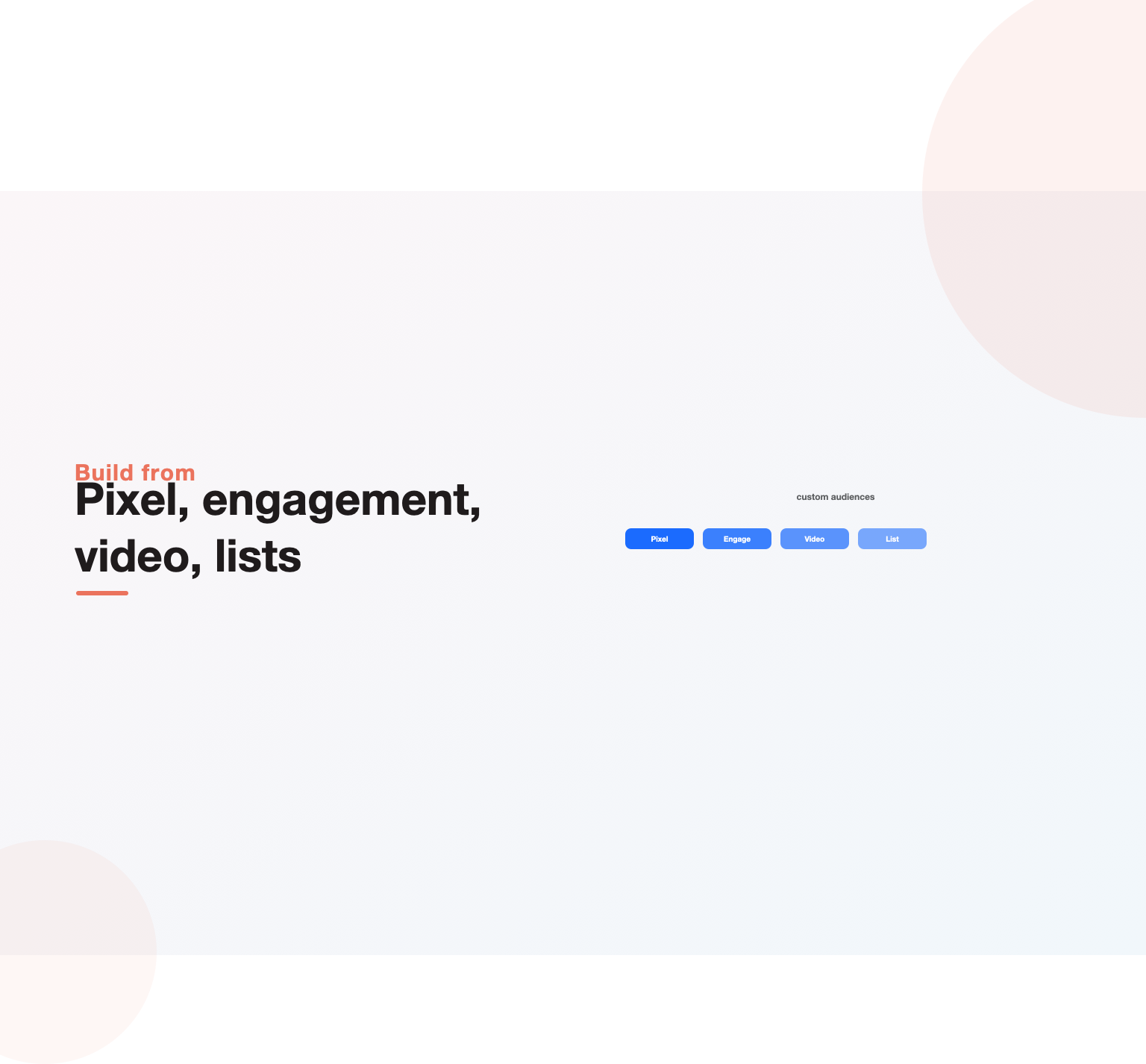
- Custom audiences are built from website visitors via the pixel, from Facebook and Instagram engagement, video views, or customer lists.
- Most people do not convert on their first visit, so retargeting recovers interest that would otherwise be lost.
- Segmenting audiences by behavior, cart abandoners, product viewers, past buyers, lets you tailor message and spend to intent.
- Frequency control and fresh creative keep retargeting effective rather than an annoyance.
- Excluding people who already converted and respecting privacy are essential to doing retargeting well.
Why retargeting works so well
The power of facebook retargeting comes down to a simple truth: most people who encounter your business do not act the first time, and reaching them only once wastes the majority of the interest you paid to create. People get distracted, compare options, or are not ready, and the large share who leave without converting represent real interest that retargeting can recover by bringing them back at the moment they are finally ready to act. Rather than constantly paying to find new cold audiences, retargeting makes the most of the warm ones you already earned, squeezing more results from the same top-of-funnel spend and lowering the blended cost of every customer the account wins.
The efficiency gap is what makes it so valuable. Someone who already visited your site or engaged with your content already knows who you are and what you offer, so ads shown to them convert at far higher rates and lower cost per result than ads shown to strangers, which means retargeting budget typically works harder than almost any other spend in a Meta account. This is why retargeting is a standard part of any serious account rather than an optional extra, and why it sits at the core of effective Meta Ads management: it captures value the rest of your advertising created but did not close, at a cost the numbers rarely argue against.
How facebook retargeting works
The mechanism starts with building custom audiences of people who have interacted with you, and the most important source is the Meta pixel, a piece of tracking on your website that records visitors so you can show them ads afterward. Once the pixel is capturing your traffic, you can build audiences of everyone who visited, or of people who took specific actions, viewed a product, added to cart, started checkout, so the audiences reflect meaningful intent rather than one undifferentiated pool. The pixel quietly builds these audiences in the background as traffic flows to your site.
Beyond website visitors, Meta lets you build custom audiences from other interactions: people who engaged with your Facebook page or Instagram profile, watched a certain amount of your videos, opened a lead form, or are on a customer list you upload. This means facebook retargeting can reach people across every way they have touched your business, not just site visitors, which is especially useful for building warm audiences before you even have much website traffic to work with. Getting the pixel and these audiences set up correctly is the foundation, and it depends on the same measurement hygiene that keeps facebook ads cost readable, since accurate tracking underpins both.
Segmenting your audiences
The difference between facebook retargeting that performs and retargeting that wastes money is usually segmentation, because not everyone who interacted with you is equally close to buying or deserves the same message. Treating all past visitors as one audience misses the chance to tailor, whereas segmenting by behavior lets you reach each group appropriately: someone who abandoned a cart is close to purchase and worth a strong, specific nudge, while someone who merely watched a video is earlier in their journey and needs gentler nurturing. Matching the message to where each person is dramatically improves results.
Good segments follow the intent behind the behavior. Cart and checkout abandoners are usually the highest-value audience, since they were closest to converting, and deserve the most attention and often the strongest offer; product viewers show clear interest; general page or video engagers are cooler and broader. Building these segments and setting different messages and budgets for each turns facebook retargeting from a blunt instrument into a precise one, spending more to recover a near-purchase and less to nurture a casual engager, a calibration that matters as much for a high-ticket real estate lead as for a low-cost impulse buy. This segmentation discipline pays off across every vertical, from ecommerce to services, including specialized ones like Meta ads for ecommerce brands and professional ones like Meta ads for lawyers.
Dynamic retargeting for ecommerce
For online stores, dynamic retargeting takes the idea further by showing people the specific products they viewed rather than a generic ad, which is dramatically more relevant and effective. Using your product catalog and the pixel data on what people looked at, dynamic ads automatically feature the exact items a person browsed, or related products, so someone who viewed a particular item sees it again in their feed, and often at a lower price or with free shipping highlighted, a far stronger prompt than a general brand ad that hopes they remember what caught their eye. This relevance is why dynamic retargeting typically outperforms static retargeting for ecommerce by a wide and consistent margin.
The prerequisites are a well-structured product catalog and the pixel events that capture product views and add-to-carts, the same catalog and tracking discipline that underpins strong ecommerce performance generally. When the catalog is clean and the events fire correctly, dynamic retargeting can show each person their most relevant products automatically, doing at scale what would be impossible to set up by hand. For a serious online store, dynamic facebook retargeting is one of the highest-return tactics available, recovering abandoned interest with pinpoint relevance, which is why it is central to strong Meta ads for D2C brands. Pairing it with sensible frequency and segmentation keeps it powerful without becoming intrusive.
Frequency and creative fatigue
The fastest way to turn facebook retargeting from helpful into annoying is to show the same people the same ad too many times, so managing frequency and creative fatigue is essential. Because retargeting audiences are relatively small and see your ads repeatedly, they tire of stale creative quickly, and an ad shown too often stops working and starts irritating, harming both performance and how people feel about your brand. Watching frequency and how performance decays as an audience sees an ad repeatedly tells you when fatigue is setting in.
The remedy is fresh creative and sensible limits. Rotating in new ads before the old ones fatigue, varying the message and format, and not bombarding a small audience with relentless repetition keeps facebook retargeting feeling like a helpful reminder rather than a pursuit. Setting how long people stay in a retargeting audience to match your sales cycle also matters, keeping people in while they are still deciding and letting them age out once they have moved on, so you never keep paying to chase someone whose interest has long since faded. Managing frequency and refreshing creative is unglamorous but decisive, since even a perfectly targeted audience stops responding to an ad it has seen too many times, a discipline experienced management builds into ongoing optimization across accounts like Meta ads for real estate.
Excluding people who already converted
One of the most important and most overlooked parts of good facebook retargeting is deciding who to stop showing ads to, because continuing to pay to reach someone who already bought is pure waste. Building exclusion audiences of people who have converted, and removing them from the campaigns aimed at winning that conversion, ensures your budget goes to prospects who still need persuading rather than customers who are already yours. Without exclusions, a retargeting campaign can spend a meaningful share of its budget advertising to people who completed the exact action it was trying to drive.
Exclusions also enable smarter sequencing. Once someone converts, you can move them out of the acquisition retargeting and, where it fits, into a different audience for cross-sell, loyalty or repeat-purchase messaging, so the relationship keeps developing rather than repeating a pitch they have outgrown. Setting up conversion-based exclusions and thinking about what should happen after someone buys turns facebook retargeting from a blunt loop into a considered journey, and it depends on the same clean pixel and conversion data that makes the whole account measurable. Advertisers who exclude converters and sequence thoughtfully get far more from their retargeting budget than those who let it recycle the same audience indefinitely.
Building warm audiences before you need them
A subtle but important point is that retargeting only works if you have warm audiences to retarget, so building them is worth starting early, before you plan any retargeting campaign. Installing the pixel from day one means it quietly accumulates website visitors, and running even modest awareness or engagement campaigns fills your custom audiences with people who have seen or interacted with you, so that when you are ready to retarget there is a real audience waiting rather than an empty one. Advertisers who wait until they want to retarget to start building audiences discover the audiences are too small to work with.
Video is a particularly efficient way to build warm audiences at scale, since people who watch a portion of your video can be added to a custom audience cheaply, giving you a large pool of mildly warm prospects to retarget with stronger offers later. Engagement with your Facebook and Instagram profiles does the same. Treating audience-building as an ongoing background activity, always filling the top of your retargeting funnel, means retargeting always has fuel, which is how the most effective accounts keep their warm-audience layer full and their retargeting productive, whatever the vertical, including service businesses like Meta ads for gyms and fitness studios.
Retargeting within the full funnel
Facebook retargeting works best not as an isolated campaign but as the closing stage of a funnel the rest of your advertising feeds. Prospecting campaigns bring new people in, many of whom engage but do not convert on that first touch, and retargeting is what catches them and brings them back, so its performance is tied to how much qualified interest the prospecting layer generates. An advertiser who thinks of retargeting as the recovery layer of a whole system, rather than a standalone tactic, sizes and manages it in proportion to the interest flowing in.
Seen this way, the value of building warm audiences reaches beyond direct retargeting. The same custom audiences inform lookalike targeting that finds new prospects resembling your best visitors, and the insight into which segments convert best sharpens the targeting and creative of the whole account, so investing in clean, well-segmented audiences pays off in more places than one, feeding not just retargeting but the prospecting that fills it, as our approach to Meta ads for home services shows. Coordinating retargeting with prospecting, and reading the whole funnel together, is what turns a set of campaigns into a coherent machine, an approach that guides strong accounts in every sector, including Meta ads for SaaS where the consideration cycle is long.
Privacy, the pixel and first-party data
Facebook retargeting depends on tracking who interacted with you, and that tracking now operates in a stricter privacy environment, so building and using audiences responsibly matters both legally and practically. Privacy regulations and platform changes have reduced the signals the pixel can capture, which has made retargeting audiences smaller and less complete than they once were, so setting up tracking in line with the consent your visitors give and using the conversions setup to recover data are now part of doing retargeting well rather than optional refinements.
The same shifts that constrain tracking make first-party data more valuable, which raises the importance of customer lists and consented audiences you own. As third-party and browser signals weaken, the audiences you build from your own customers and engaged users, with proper consent, become a more durable foundation for facebook retargeting than they used to be, so investing in clean first-party audiences pays off. Handling consent and the pixel properly, and leaning on the data you own, keeps retargeting both effective and sustainable as the rules keep evolving, an area where experienced management keeps an account compliant and performing at once, whatever the vertical, including Meta ads for home services.
Retargeting across Facebook and Instagram placements
One advantage of retargeting on Meta is that a single warm audience can be reached across a range of placements, the Facebook feed, Instagram feed and stories, Reels, and more, so your reminder meets people wherever they spend their time rather than in one spot. Letting the system show your retargeting ads across placements usually lowers cost, because it can find each person in the cheapest available moment, while tailoring creative to suit different placements, a vertical video for Reels and stories, a cleaner image for the feed, keeps the ads feeling native rather than pasted in.
The point is to meet warm prospects naturally across the surfaces they use, not to force one format everywhere. A person who ignored a feed ad might respond to the same offer in a story, so spreading a retargeting audience across placements with format-appropriate creative gives more chances to re-engage at lower cost. Thinking about placements as part of the retargeting plan, rather than an afterthought, is a small refinement that adds up, and it pays off across every kind of account, including visual, high-consideration ones like Meta ads for coaches and course creators.
Measuring true incremental value
Because warm audiences convert well by nature, retargeting reports almost always look impressive, and that is exactly the trap: a campaign shown to people who were likely to return anyway can take credit for conversions that would have happened without it. The honest question is not how many conversions the campaign reports but how many incremental ones it genuinely drove, which means watching whether total account conversions rose after adding it rather than admiring its own glowing numbers. A campaign that merely intercepts buyers on their way back is not adding much, however good its cost per result looks.
Reading it this way changes decisions. Testing the campaign against a holdout, or watching total conversions as you scale it up and down, reveals its true contribution and stops you over-investing in a tactic that flatters itself. The advertisers who measure incrementality rather than raw reported conversions make far better decisions about how much to spend on retargeting, and they avoid pouring budget into a campaign whose impressive numbers were mostly borrowed from conversions the account would have won anyway, the same scrutiny that a clear view of facebook ads cost and honest marketing attribution bring to the whole account.
Common retargeting mistakes
Several recurring errors keep advertisers from getting the value facebook retargeting offers. The most common is treating all past visitors as one undifferentiated audience, wasting the chance to tailor spend and message to intent and spending the same on a casual video viewer as on a cart abandoner. Close behind is neglecting frequency, so a small audience sees the same stale ad far too often and retargeting becomes an irritation that harms the brand. Failing to exclude people who already converted, so budget keeps chasing existing customers, is another frequent and costly mistake.
Other common errors include running static ads where dynamic retargeting would be far more relevant, never refreshing creative so ads fatigue, setting audience durations that ignore the sales cycle, and ignoring the privacy and consent requirements that now govern audience building. The thread through these mistakes is treating retargeting as a simple set-and-forget tactic rather than a segmented, managed, respectful re-engagement strategy. Advertisers who segment thoughtfully, control frequency, use dynamic ads where relevant, exclude converters and respect privacy get the efficient conversion recovery facebook retargeting promises, while those who neglect these fundamentals waste budget or annoy the very prospects they are trying to win back.
When to get help with retargeting
Setting up basic facebook retargeting is achievable for a capable marketer, and for a smaller account, installing the pixel, building a few sensible custom audiences, and running relevant ads with frequency control is a realistic, high-return task. The core ideas, reach warm audiences, segment by intent, control frequency, exclude converters, are more about thoughtful judgment than technical difficulty, and doing it yourself keeps you close to how prospects re-engage with your business.
Expert help earns its keep as retargeting grows more sophisticated, when dynamic product ads and catalogs come into play, when many segments each need tailored creative and budgets, when funnel coordination and lookalike strategy tie retargeting into the wider account, or when privacy and measurement get complex. An experienced practitioner builds well-segmented audiences, sets up dynamic retargeting cleanly, manages frequency and creative, and keeps everything compliant, so folding retargeting into ongoing Meta Ads services, whether for a store or a SaaS product, often recovers far more conversions than a basic setup while avoiding the annoyance and waste of a careless one. Whichever route you take, the essentials of facebook retargeting stay the same: build clean audiences, segment by intent, control frequency, exclude converters, and respect privacy.
The through-line of everything here is that retargeting rewards respect for the person on the other end of the ad. Reaching someone who already showed interest is a privilege a careless advertiser squanders by segmenting badly, showing the same tired ad relentlessly, or chasing people who already bought, while a thoughtful one earns trust by being relevant, timely and restrained. Get that balance right and facebook retargeting quietly becomes one of the most profitable lines in the account, recovering conversions the rest of your advertising worked to create, which is why it belongs in every serious Meta account rather than being treated as an afterthought bolted on at the end.
Key Takeaways
- Facebook retargeting re-engages people who already interacted with you, reaching warm audiences that convert at higher rates and lower cost.
- Build custom audiences from the pixel, page and profile engagement, video views and customer lists, then segment them by intent.
- Cart abandoners and high-intent viewers deserve stronger spend and messages than casual engagers, so segment and tailor accordingly.
- Use dynamic retargeting with a clean catalog for ecommerce, showing people the exact products they viewed.
- Control frequency, refresh creative, and exclude people who already converted so retargeting helps rather than annoys or wastes.
- Respect privacy and lean on first-party data, applying the discipline that keeps facebook ads cost efficient.
Frequently asked questions
What is Facebook retargeting?
Facebook retargeting is showing ads to people who have already interacted with your business, such as visiting your website, engaging with your Facebook or Instagram content, watching your videos, or being on your customer list, so you reach warm audiences who already know you rather than cold strangers. It works by building custom audiences of those people, through the Meta pixel on your site or from engagement and customer data, and then showing them relevant ads across Facebook and Instagram to bring them back. Because these people have already shown interest, retargeting converts at far higher rates and lower cost than cold prospecting, which makes it one of the most efficient parts of any Meta advertising account.
How does Facebook retargeting work?
It starts with building custom audiences of people who interacted with you. The main source is the Meta pixel, tracking on your website that records visitors so you can show them ads afterward, and you can build audiences of everyone who visited or of people who took specific actions like viewing a product or starting checkout. You can also build audiences from Facebook and Instagram engagement, video views, lead-form opens, or a customer list you upload. Once the audiences exist, you show them relevant ads across Facebook and Instagram, tailoring message and budget to each segment. A working pixel, well-defined audiences, and accurate conversion tracking are the foundation of effective retargeting.
Is Facebook retargeting worth it?
For almost every business, yes. Most people do not convert on their first interaction, so reaching them only once wastes the majority of the interest you paid to create. Retargeting recovers that interest by re-engaging warm audiences who already know you, and because those audiences convert at far higher rates and lower cost than cold ones, retargeting budget typically works harder than almost any other spend in a Meta account. The main caveats are to segment thoughtfully, control frequency so you do not annoy people, and exclude those who already converted. Done with that care, facebook retargeting is one of the most reliably efficient tactics available.
What is dynamic retargeting on Facebook?
Dynamic retargeting shows people the specific products they viewed on your site rather than a generic ad, making it far more relevant and effective, especially for ecommerce. Using your product catalog and the pixel data on what people looked at, dynamic ads automatically feature the exact items a person browsed or related products, so someone who viewed a particular item sees it again in their feed. This pinpoint relevance typically makes dynamic retargeting outperform static retargeting by a wide margin for online stores. The prerequisites are a clean, well-structured product catalog and pixel events that capture product views and add-to-carts, the same catalog and tracking discipline that underpins strong ecommerce performance generally.
How often should retargeting ads show?
Often enough to stay present, but not so often that you fatigue and annoy a small audience, which is why frequency control matters especially in retargeting. Because retargeting audiences are relatively small and see your ads repeatedly, they tire of stale creative quickly, so watch frequency and how performance decays as an audience sees an ad repeatedly, and rotate in fresh creative before the old ads fatigue and start working against you. There is no single right number, since it depends on your audience and creative, but the goal is a helpful reminder rather than a relentless pursuit. Matching how long people stay in the retargeting audience to your sales cycle also helps keep the frequency sensible.
Does Facebook retargeting still work with privacy changes?
Yes, but it must be done in a privacy-compliant way, and the landscape has shifted. Privacy regulations and platform changes have reduced the signals the pixel can capture, making retargeting audiences smaller and less complete than before, so setting up tracking in line with the consent your visitors give and using the conversions setup to recover data are now part of doing retargeting well. At the same time, these shifts make first-party data more valuable, so the audiences you build from your own customers and engaged users with proper consent become a more durable foundation than third-party signals. Handling consent and the pixel properly keeps retargeting effective and sustainable.
Ready to put this into practice?
Talk to the team that runs SEO, AI search and paid growth programs every day.
Book a Strategy Call →