 Skip to content

Facebook Lookalike Audiences: Find More of Your Best Customers
Facebook lookalike audiences find new people who resemble your best customers. Learn how the source defines quality, match sizes, value-based lookalikes, and prospecting use.
Quick Answer
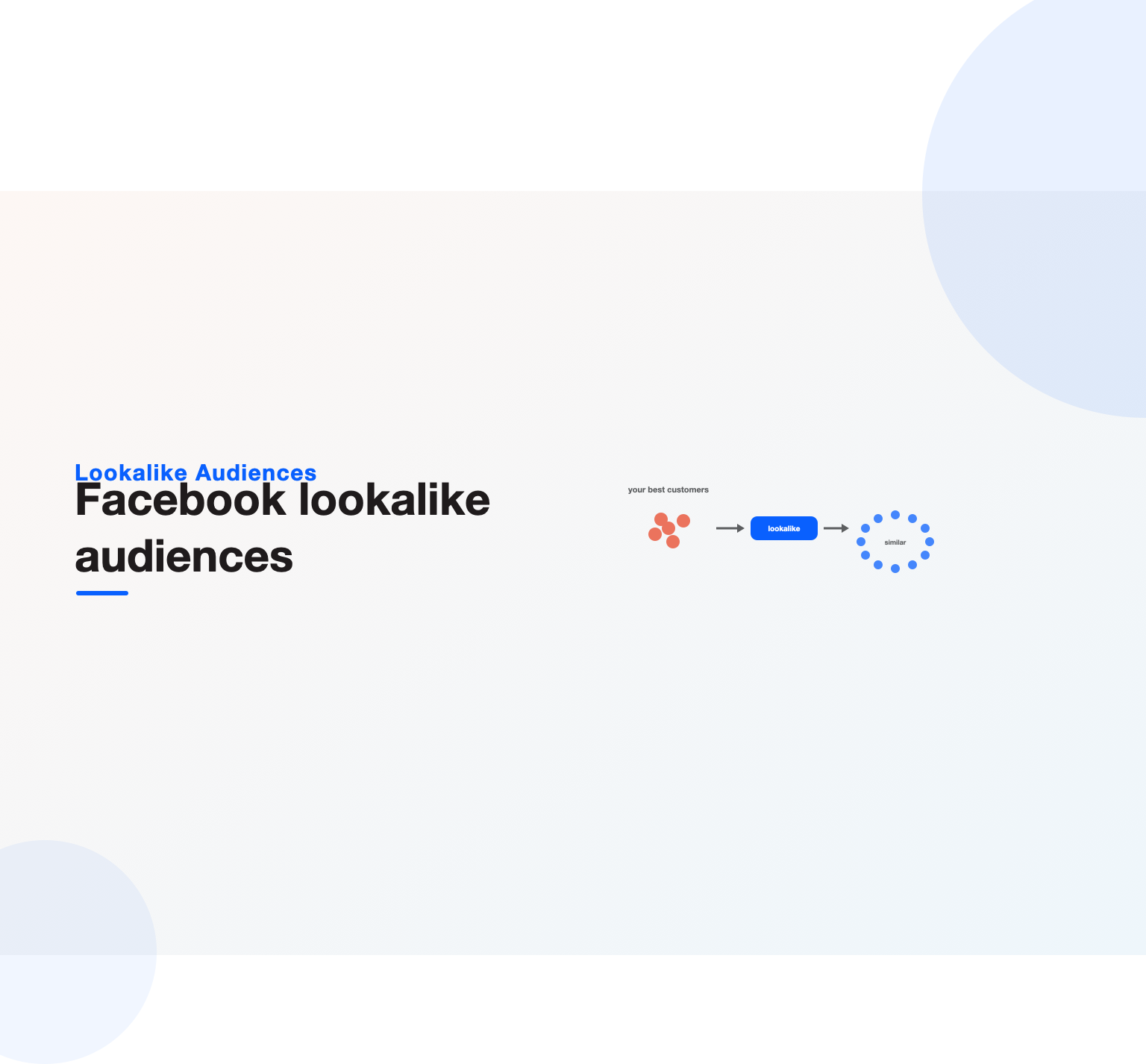
Lookalike audiences are a Meta targeting tool that finds new people who resemble a source group you already value, your customers, your leads, your website visitors, so you can reach cold prospects who share the characteristics of the people who already convert. You give Meta a source audience, and its system analyzes what those people have in common and finds others across Facebook and Instagram who look similar, letting you prospect for new customers far more efficiently than broad guessing or manual interest targeting. The quality of lookalike audiences depends heavily on the source: a lookalike built from your best customers or highest-value leads tends to find better prospects than one built from all visitors, because the source defines what the system looks for. You also choose how broad the lookalike is, from a tight one to five percent match to a wider one, trading precision for reach. Increasingly, Meta’s automation finds similar people on its own with less manual lookalike setup, but understanding lookalike audiences and, above all, feeding the system a high-quality source remains central to effective prospecting. This guide explains how lookalike audiences work, which sources make the best seeds, and how to use them well as part of a full prospecting strategy.
Key Highlights
- Lookalike audiences find new people who resemble a source group you value, letting you prospect for customers who look like your best ones.
- The source defines quality, so a lookalike built from your best customers beats one from all visitors.
- You choose the match size, from a tight one percent to a wider ten, trading precision for reach.
- Value-based sources, weighted by customer worth, help find higher-value prospects, not just similar ones.
- Meta’s automation increasingly finds similar people itself, but a high-quality source still matters most.
- Lookalikes are for prospecting cold audiences, complementing retargeting rather than replacing it entirely.
How lookalike audiences work
The mechanism behind lookalike audiences is straightforward in concept: you provide a source audience of people you value, and Meta’s system analyzes the traits and behaviors those people share, then finds others across its platforms who resemble them. Rather than you guessing which interests or demographics define your buyers, the system infers the pattern from real people who already converted and finds more like them, which is usually far more accurate than manual targeting because it draws on signals no advertiser could specify by hand. This is why lookalike audiences have long been one of the most effective prospecting tools on Meta, and why they remain a benchmark against which other targeting approaches are measured. The insight that you can find more people like your best customers, at scale, without knowing in advance what those people have in common, was genuinely transformative when it arrived and still underpins how prospecting works today.
The source can be any custom audience: your customer list, people who purchased, leads, website visitors, engaged users, or app users. Meta studies that group and builds an audience of similar people at the size you choose, ready to target with prospecting campaigns. Because the system does the pattern-finding, your job is to give it a good source and let it work, which is the same feed-the-automation logic that governs modern Meta advertising generally and sits at the heart of effective Meta Ads management. The better the source you provide, the better the people the system finds, which makes source quality the first and most important decision, long before any setting.
The source defines quality
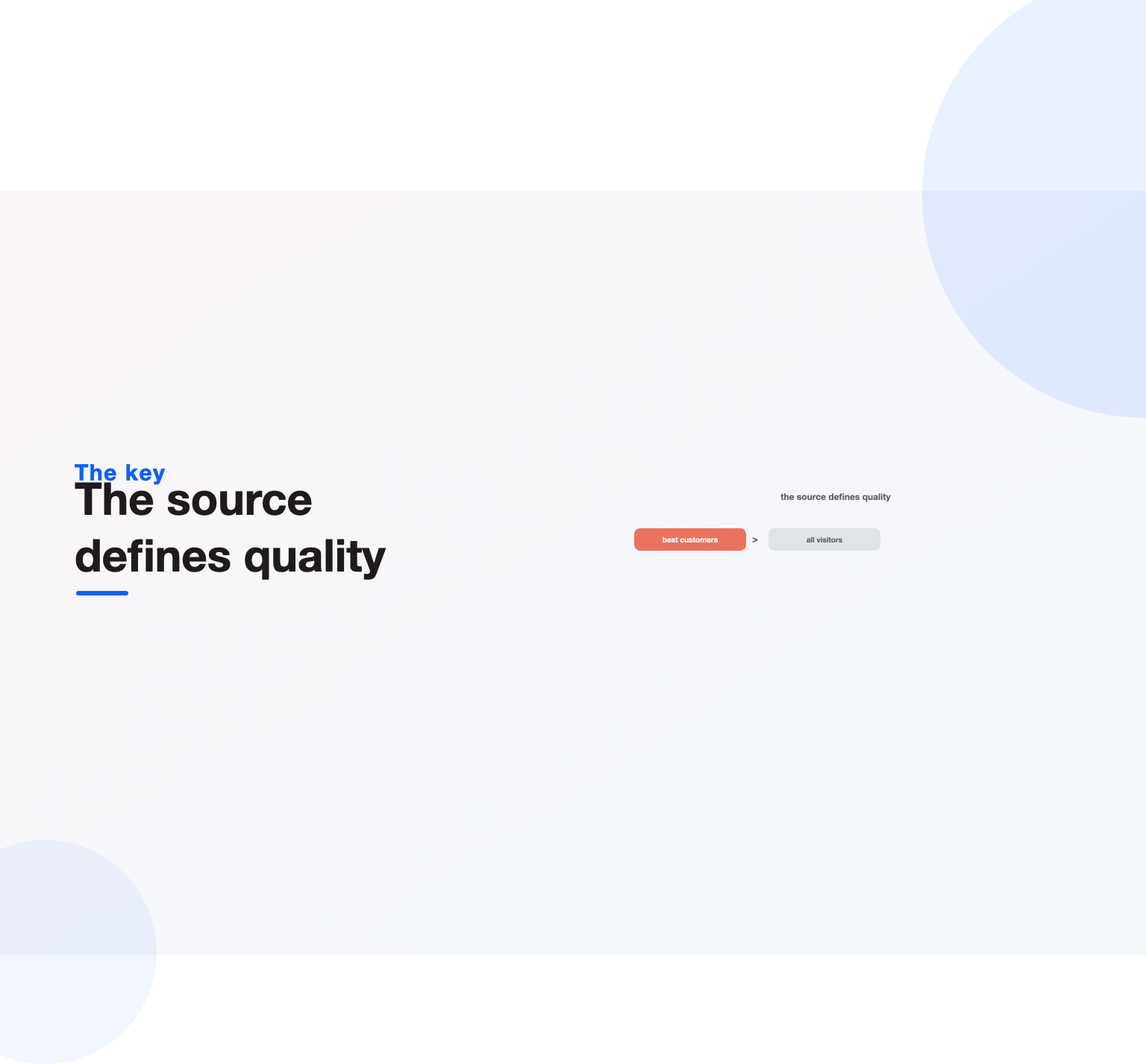
The single most important factor in the quality of lookalike audiences is the source you build them from, because the system finds people who resemble whoever you provide, so a better source produces a better audience. A lookalike built from your highest-value customers finds prospects who resemble your best buyers, while one built from all website visitors, including many who never buy, finds a vaguer, lower-quality match. Choosing a source that represents the people you actually want more of is the highest-leverage decision in setting up lookalike audiences.
This means investing in good source audiences pays off directly. A list of your best customers, a segment of high-value purchasers, or qualified leads makes a far stronger source than a broad, undifferentiated pool, so the effort of building clean, high-quality source audiences is what makes lookalikes work. Advertisers who feed the system a precise, valuable source get precise, valuable lookalikes, while those who use a broad, low-intent source get a broad, low-intent audience, which is why source quality, not lookalike settings, is where the real work lies. This upstream discipline connects to the same data hygiene that keeps facebook ads cost efficient, and it matters across every vertical, including Meta ads for ecommerce brands.
Choosing the match size
When you create lookalike audiences, you choose how closely the new audience matches the source, expressed as a percentage of a country’s population, from a tight one percent, the people most similar to your source, to a wider ten percent, a larger but looser match. A one percent lookalike is smaller but resembles your source most closely, so it tends to be higher quality but limited in reach, while a wider percentage reaches many more people at the cost of a looser resemblance. This is the core trade-off in sizing a lookalike, and there is no universally right answer to it.
In practice, the right size depends on your goals and budget. A tight lookalike suits precision and smaller budgets where quality matters most, while a wider one gives the reach a larger budget or a scaling campaign needs, accepting a looser match. Many advertisers test different sizes to find the balance that delivers the best cost per result for their case, and some scale from tighter to wider lookalikes as they exhaust the closest matches. Choosing and testing the match size deliberately, rather than defaulting, is part of using lookalike audiences well, and it pairs with the broad-plus-strong-creative approach that also drives strong Meta ads for D2C brands.
Value-based lookalikes
A powerful refinement is the value-based lookalike, where the source is weighted by how much each customer is worth rather than treating every source member equally, so the system finds people who resemble your most valuable customers specifically. Instead of a lookalike of anyone who bought, a value-based lookalike leans toward the traits of your high-spending, high-value buyers, which tends to find prospects more likely to be valuable themselves. For businesses where customer value varies a lot, this is a meaningful upgrade over a plain lookalike, because it points the system at profit rather than mere activity and can noticeably lift the value of the customers it brings in.
The prerequisite is passing customer value data to Meta, which depends on good conversion tracking with values attached, so the same measurement that lets the automation optimize toward profit also enables value-based lookalike audiences. When you can tell the system which customers are worth the most, it can find more people like them rather than more people like your average or low-value buyers, which is a real and often underused lever on the quality of the prospects you reach. Using value-based lookalikes where your data supports them is a mark of a sophisticated account, and it connects to the same value-optimization discipline behind Advantage Plus, especially in considered-purchase sectors like Meta ads for SaaS.
Lookalikes and Meta’s automation
Meta’s move toward automation has changed how much manual lookalike work is needed, since the system increasingly finds similar high-value people on its own when you provide audience signals and let broad targeting plus automation run. Where advertisers once built and layered many lookalike audiences by hand, the automation now often does much of that finding for you, using your source audiences as signals rather than requiring you to construct precise lookalikes for every campaign. This is part of the broader shift from manual audience-building toward simply feeding the system good inputs and trusting it to do the rest.
This does not make lookalikes irrelevant, but it changes emphasis: the value of a high-quality source audience is greater than ever, whether you use it to build an explicit lookalike or feed it as a signal to the automation. Providing the system with clean, valuable source audiences, your best customers and qualified leads, helps it find similar people whether through a formal lookalike or its own targeting, so the upstream work of building good sources remains central even as manual lookalike construction fades. Understanding how lookalikes and automation now work together, rather than treating them as separate, is part of modern facebook ads optimization, and it applies across accounts, including Meta ads for real estate.
Lookalikes are for prospecting
It is important to understand that lookalike audiences are a prospecting tool, aimed at finding new cold people who resemble your customers, which is a different job from retargeting warm people who already engaged with you. Lookalikes sit at the top of the funnel, bringing in fresh prospects, while retargeting sits lower, re-engaging people who already know you, so the two complement each other rather than competing for the same job. Confusing their roles, or using one where the other fits, leads to disappointment, since a prospecting lookalike will not convert like a warm retargeting audience and should never be held to the same standard. Judging a cold lookalike by retargeting conversion rates is one of the quickest ways to wrongly conclude that lookalikes do not work, when in fact they are simply doing a different, harder job.
Because lookalike prospects are cold, the creative and offer have to do the work of introducing you and earning interest, which they would not need to do for a warm audience, so strong creative matters especially here, arguably more than anywhere else in the account. A lookalike reaches people who fit your customer profile but do not yet know you, so the ad has to stop the scroll and make a compelling first impression, the job of good facebook ad creative. Using lookalikes for prospecting and coordinating them with retargeting for the warm audiences they generate is how they fit into a full funnel, an approach that pays off across sectors, including Meta ads for home services.
Keeping source audiences fresh
Because lookalike audiences are built from a source, keeping that source current and clean is part of using them well, since a stale or degraded source produces a weaker lookalike over time. As your customer base grows and changes, refreshing the source audiences, adding recent high-value customers, keeping lists current, ensures the lookalike reflects who your best buyers are now rather than who they were a year ago. A source that has not been updated gradually drifts from your actual best customers, dulling the lookalike’s edge without anyone noticing until performance quietly slips.
Maintaining sources also means keeping them clean and well-defined rather than letting them blur into broad, undifferentiated pools. A precise, current source of your best customers stays a strong signal, while a source that has grown vague or outdated weakens the system’s ability to find good matches. Building a habit of refreshing and curating your source audiences, so they always represent the people you most want more of, keeps lookalike audiences performing over time rather than decaying, the same ongoing data discipline that keeps a whole Meta account healthy and its costs down, whatever the vertical, including Meta ads for coaches and course creators.
Which source audiences work best
Since the source is everything, it is worth thinking carefully about which of your audiences make the strongest seed. A list of paying customers is usually the best starting point, because it represents people who actually bought, and a segment of your highest-value or repeat customers is stronger still, since it points the system at your most desirable buyers rather than your average one. Qualified leads make a good source where you have them, and even a rich engagement or video-view audience can seed a broad top-of-funnel lookalike when purchase data is thin.
The general rule is that the closer a source is to real revenue, the better the lookalike it produces, so a purchase-based source beats a visitor-based one, and a high-value-customer source beats a plain purchaser one every time. It also helps for the source to be large enough to give the system a clear pattern to learn from, since a very small source can produce an unstable match. Balancing source quality against source size, choosing the most revenue-relevant audience that is still big enough to work, is the practical art of seeding good lookalikes, and it rewards the same customer understanding that guides strong prospecting across sectors, including Meta ads for ecommerce brands.
Layering and excluding audiences
Lookalike audiences work better when you think about how they overlap with your other audiences, because a prospecting lookalike should reach new people, not the ones you already have. Excluding your existing customers and warm audiences from a lookalike campaign ensures the budget goes to genuinely new prospects rather than people already in your funnel, which keeps the prospecting honest and stops it from quietly retargeting people it was never meant to reach. Setting these exclusions is a small, easily forgotten step that meaningfully improves the incrementality of lookalike prospecting and stops you paying twice for the same people.
Some advertisers also layer lookalikes with light additional signals or test several lookalikes from different sources against each other, though the modern trend is to keep things simple and let the automation do more of the finding. Whatever the structure, the principle is to make sure a lookalike is reaching fresh people and to compare sources honestly to see which seeds the best prospects. Thinking about overlap and exclusions, so lookalikes prospect rather than accidentally retarget, is part of using them well and coordinating them with retargeting, a coordination that matters across verticals, including Meta ads for lawyers.
Measuring lookalike performance
Like any prospecting, lookalike audiences should be judged by cost per result and the return they produce, not by cheap clicks or the size of the audience they reach. A lookalike that reaches millions of people cheaply but converts almost none of them is worthless, while one that reaches a tighter, more expensive audience that buys efficiently is doing exactly its job, so the audience size and the click cost are means to an end, not the measure of success. Reading lookalike campaigns through cost per result keeps the focus squarely on finding customers, not just accumulating reach.
Because lookalikes are cold prospecting, they should be judged against a prospecting benchmark, not the higher conversion rates of warm retargeting, and their real contribution is bringing in new customers the account would not otherwise have won. Measuring that incremental new-customer value, rather than comparing a cold lookalike unfairly to a warm audience, keeps expectations honest and the strategy sound, the same result-focused discipline that a clear view of facebook ads cost brings to every part of the account.
Common lookalike mistakes
Several recurring errors keep advertisers from getting the most from lookalike audiences. The most damaging is using a poor source, building a lookalike from all visitors or a broad, low-intent pool rather than your best customers, which produces a vague, low-quality audience no settings can fix. Close behind is ignoring value-based lookalikes where the data supports them, settling for a lookalike of average buyers when you could target the traits of your most valuable ones. Choosing a match size by default rather than testing, and never refreshing the source, both leave performance on the table.
Other common mistakes include treating lookalikes as warm audiences and expecting retargeting-level conversion from cold prospects, neglecting the strong creative that cold lookalike audiences need, and clinging to elaborate manual lookalike structures when the automation would find similar people from a good source signal. The thread through these errors is either feeding the system a weak source or misunderstanding what lookalikes are for. Advertisers who build lookalikes from high-quality, current sources, use value weighting where they can, test match sizes, and pair lookalikes with strong prospecting creative get the efficient new-customer reach lookalike audiences deliver, while those who feed a weak source get a weak audience, a difference a careful account review reliably reveals in the first few minutes.
When to get help with lookalikes
Setting up lookalike audiences is achievable for a capable advertiser, and for a smaller account, building a lookalike from a good customer source and using it to prospect with strong creative is a realistic, high-return approach. The core ideas, use your best customers as the source, weight by value where you can, test the match size, treat lookalikes as cold prospecting, are more about disciplined thinking than technical difficulty, and doing it yourself keeps you close to who your best customers actually are.
Expert help pays off as prospecting scales and the source and measurement work grows, when building and maintaining value-based sources, coordinating lookalikes with the automation, and pairing them with a full-funnel creative and retargeting strategy become substantial work. An experienced practitioner builds high-quality sources, uses value weighting, tests sizes, and integrates lookalikes with the automation and the rest of the funnel, so folding prospecting into ongoing Meta Ads services often finds better customers more efficiently than a basic setup. Whichever route you take, the essentials of lookalike audiences stay the same: feed a high-quality, current source, weight by value where possible, test the match size, and use lookalikes to prospect with strong creative.
The enduring lesson of lookalike audiences, even as the mechanics get more automated, is that the machine can only find more of what you show it, so the quality of your customer data is the quality of your prospecting. An advertiser who knows exactly who their best customers are, keeps that list clean and current, and hands it to Meta as a clear, valuable signal will out-prospect one who feeds the system a vague, undifferentiated pool, whether they build a formal lookalike or let the automation do the finding. That is genuinely empowering, because it means the biggest lever on your prospecting is not a hidden setting but something you own and control: knowing and defining your best customers. Investing in that understanding, and in the data that captures it, pays off across every campaign that reaches for new people, and it is the foundation the whole prospecting side of a Meta account is built on.
Approached this way, lookalikes stop being a checkbox to tick and become an expression of how well you understand your own business. The advertiser who can say precisely who their most valuable customers are, and prove it in their data, holds the key to finding thousands more like them, which is exactly what the tool was built to do, whatever the vertical, from ecommerce to a local practice like Meta ads for home services.
Key Takeaways
- Lookalike audiences find new people who resemble a source you value, making them a core prospecting tool for reaching customers like your best ones.
- The source defines quality, so build lookalikes from your best customers or highest-value leads, not all visitors.
- Choose and test the match size, trading precision for reach from a tight one percent to a wider ten.
- Use value-based lookalikes where your data supports them to find prospects who resemble your most valuable customers.
- A high-quality source matters even more as Meta’s automation finds similar people from your signals.
- Treat lookalikes as cold prospecting that needs strong creative, and coordinate them with retargeting.
Frequently asked questions
What are Facebook lookalike audiences?
Lookalike audiences are a Meta targeting tool that finds new people who resemble a source group you already value, such as your customers, leads or website visitors, so you can reach cold prospects who share the characteristics of the people who already convert. You give Meta a source audience, and its system analyzes what those people have in common and finds others across Facebook and Instagram who look similar, letting you prospect for new customers far more efficiently than broad guessing or manual interest targeting. The quality of a lookalike depends heavily on the source: one built from your best customers finds better prospects than one from all visitors. They are a prospecting tool for cold audiences, complementing retargeting rather than replacing it.
How do I create a good lookalike audience?
Start with a high-quality source, since the source defines the audience’s quality. Use your best customers, high-value purchasers, or qualified leads rather than a broad, low-intent pool like all website visitors, because the system finds people who resemble whoever you provide. Where your data supports it, use a value-based source weighted by customer worth so the system finds prospects who resemble your most valuable buyers, not just average ones. Choose a match size that fits your goals, tighter for precision, wider for reach, and test different sizes. Keep the source current as your customer base changes, and pair the lookalike with strong creative, since these are cold prospects who need a compelling introduction.
What size lookalike audience should I use?
It depends on your goals and budget. Lookalike size is expressed as a percentage of a country’s population, from a tight one percent, the people most similar to your source, to a wider ten percent, a larger but looser match. A one percent lookalike is smaller but resembles your source most closely, so it tends to be higher quality but limited in reach, suiting precision and smaller budgets. A wider percentage reaches many more people at the cost of a looser resemblance, suiting larger budgets and scaling. Many advertisers test different sizes to find the best cost per result, and some scale from tighter to wider lookalikes as they exhaust the closest matches. Test rather than defaulting.
What is a value-based lookalike audience?
A value-based lookalike weights the source by how much each customer is worth rather than treating everyone equally, so the system finds people who resemble your most valuable customers specifically rather than your average buyer. Instead of a lookalike of anyone who purchased, it leans toward the traits of your high-value, high-spending customers, which tends to find prospects more likely to be valuable themselves. This is a meaningful upgrade for businesses where customer value varies a lot. The prerequisite is passing customer value data to Meta through good conversion tracking with values attached, so the same measurement that lets the automation optimize toward profit also enables value-based lookalikes. Where your data supports it, value-based lookalikes are worth using.
Are lookalike audiences still worth using?
Yes, though their use has evolved with Meta’s automation. The system increasingly finds similar high-value people on its own when you provide audience signals and let broad targeting plus automation run, so advertisers build fewer manual lookalikes than before. But this makes a high-quality source audience more valuable than ever, whether you use it to build an explicit lookalike or feed it as a signal to the automation. Providing clean, valuable sources, your best customers and qualified leads, helps the system find similar people either way. So the upstream work of building good sources remains central, even as manual lookalike construction fades, which means the underlying idea is very much still worth using.
What is the difference between lookalike and retargeting audiences?
They do opposite jobs in the funnel. Lookalike audiences are a prospecting tool that finds new cold people who resemble your customers, sitting at the top of the funnel to bring in fresh prospects who do not yet know you. Retargeting re-engages warm people who already interacted with you, sitting lower in the funnel to bring back those who already showed interest. Because lookalike prospects are cold, they convert less readily than warm retargeting audiences and need strong creative to introduce you and earn interest, whereas retargeting can be more direct. The two complement each other: lookalikes bring in new people, some of whom become the warm audiences that retargeting then converts, so a full funnel uses both.
Ready to put this into practice?
Talk to the team that runs SEO, AI search and paid growth programs every day.
Book a Strategy Call →