 Skip to content

Internal Linking: A Strategy Guide for SEO
Internal linking helps search engines crawl your site, passes authority to priority pages, and guides users to convert. The topic cluster model, anchor text, orphans, and how to audit it at scale.
Quick Answer
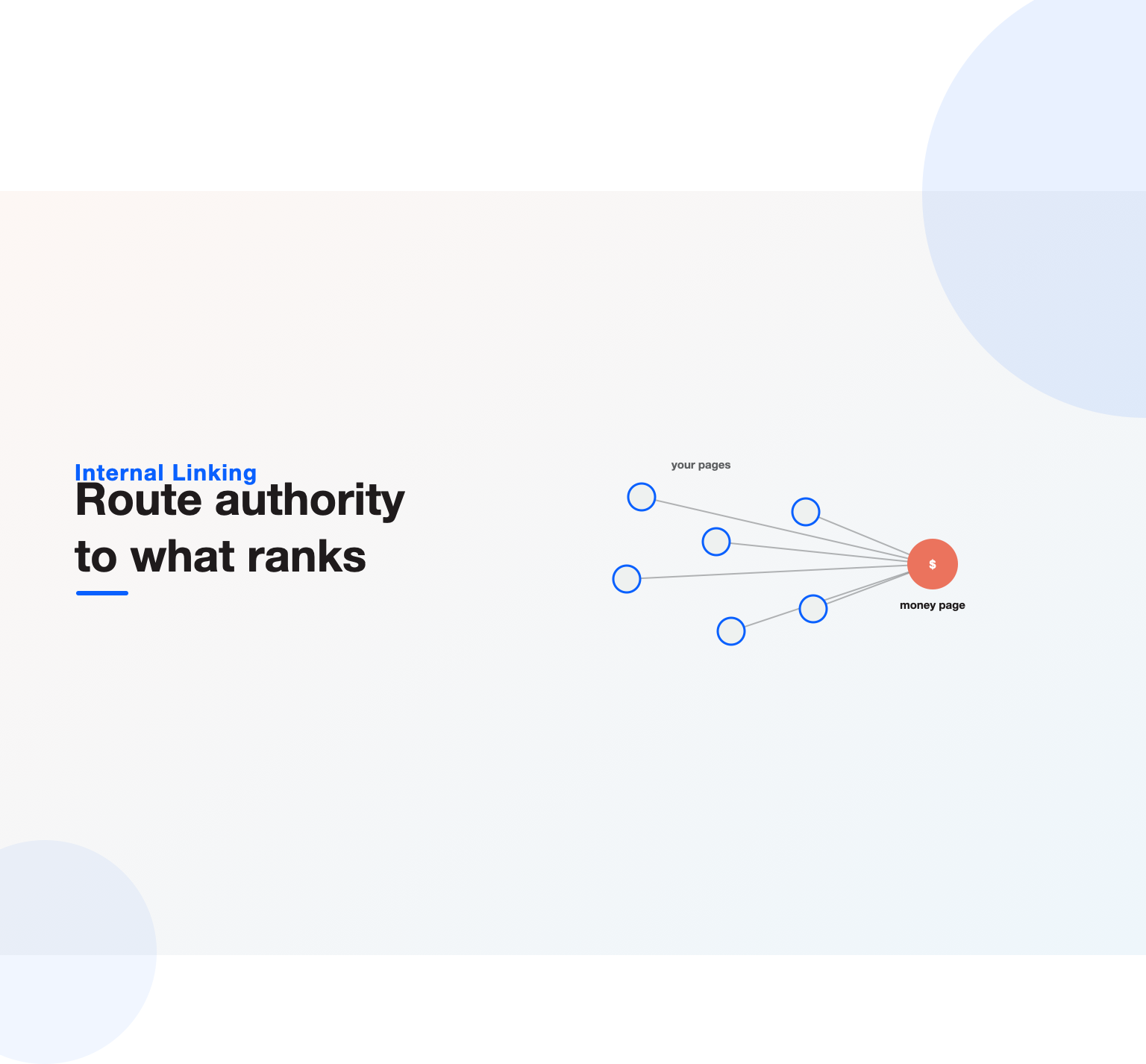
Internal linking is the practice of connecting the pages of your own site with links, so search engines can discover and understand your content and authority flows to the pages that matter most. It does three jobs at once: it helps crawlers find every page and grasp how topics relate, it passes ranking signals from strong pages to the ones you want to rank, and it guides visitors to the next useful step. Unlike backlinks, internal links are entirely within your control, which makes internal linking one of the highest-leverage and most underused levers in SEO, especially on larger sites where a deliberate structure decides whether pages get found, understood, and ranked at all.
Key Highlights
- Internal links do three jobs: aid crawling and discovery, pass authority between pages, and give both search engines and users a map of how your topics connect.
- A deliberate structure, topic clusters linked to a central pillar and up to a money page, concentrates relevance and authority far better than scattered, ad-hoc links.
- Descriptive, varied anchor text tells search engines what the target page is about, while repetitive exact-match anchors across the site look manipulative and help less.
- Orphan pages, those with no internal links pointing to them, are hard for search engines to find and rank, so eliminating them is often the quickest win.
- Because you control every internal link, internal linking is one of the few ranking levers you can pull directly, without waiting on anyone else.
What internal linking is and why it matters
Internal linking means linking from one page on your domain to another, through the navigation, the body content, and contextual links woven into your copy. Every one of those links does something for search engines and for users. For crawlers, links are the paths they follow to discover pages, so a page with no internal links pointing to it may never be found. For understanding, the pattern of links and the words used to link tell search engines what each page is about and which pages you treat as most important. For people, links offer the next relevant step, keeping them engaged and moving toward a conversion.
The reason internal linking matters so much for SEO is that it is the mechanism by which a site’s authority gets distributed. When a page earns backlinks, that authority does not stay locked on that one page; internal links spread it through the site to the pages they point to. So a well-linked site takes the authority it has earned anywhere and channels it to the commercial pages that need to rank, while a poorly-linked site lets that authority pool uselessly on a few pages and strands the rest. This is why internal linking is foundational to how ranking works, and why our overview of how SEO works treats site structure as a first-order concern rather than a detail.
How internal links pass authority
Search engines evaluate authority partly through links, and internal links participate in that flow just as external ones do. When a strong page links to another page on your site, it passes along a share of its ranking value, which is why a link from your most authoritative pages is worth more than a link from an obscure one. The practical implication is that you should route links from your strongest pages, your homepage, popular guides, and heavily-linked posts, toward the pages you most want to rank, rather than leaving those target pages dependent on their own thin authority.
It helps to think of authority as something that moves along links and gets divided among them, so a page that links out to a hundred places passes a smaller share through each link than one that links to a handful. This does not mean hoarding links, since natural, useful linking is what search engines reward, but it does mean being intentional about which important pages receive links from your strongest content. The old idea of aggressively sculpting this flow with technical tricks is outdated and unnecessary; what works now is simply a sensible structure that connects strong pages to priority pages through relevant, contextual links, so authority reaches where it converts instead of leaking into dead ends.
The topic cluster model: structure that ranks
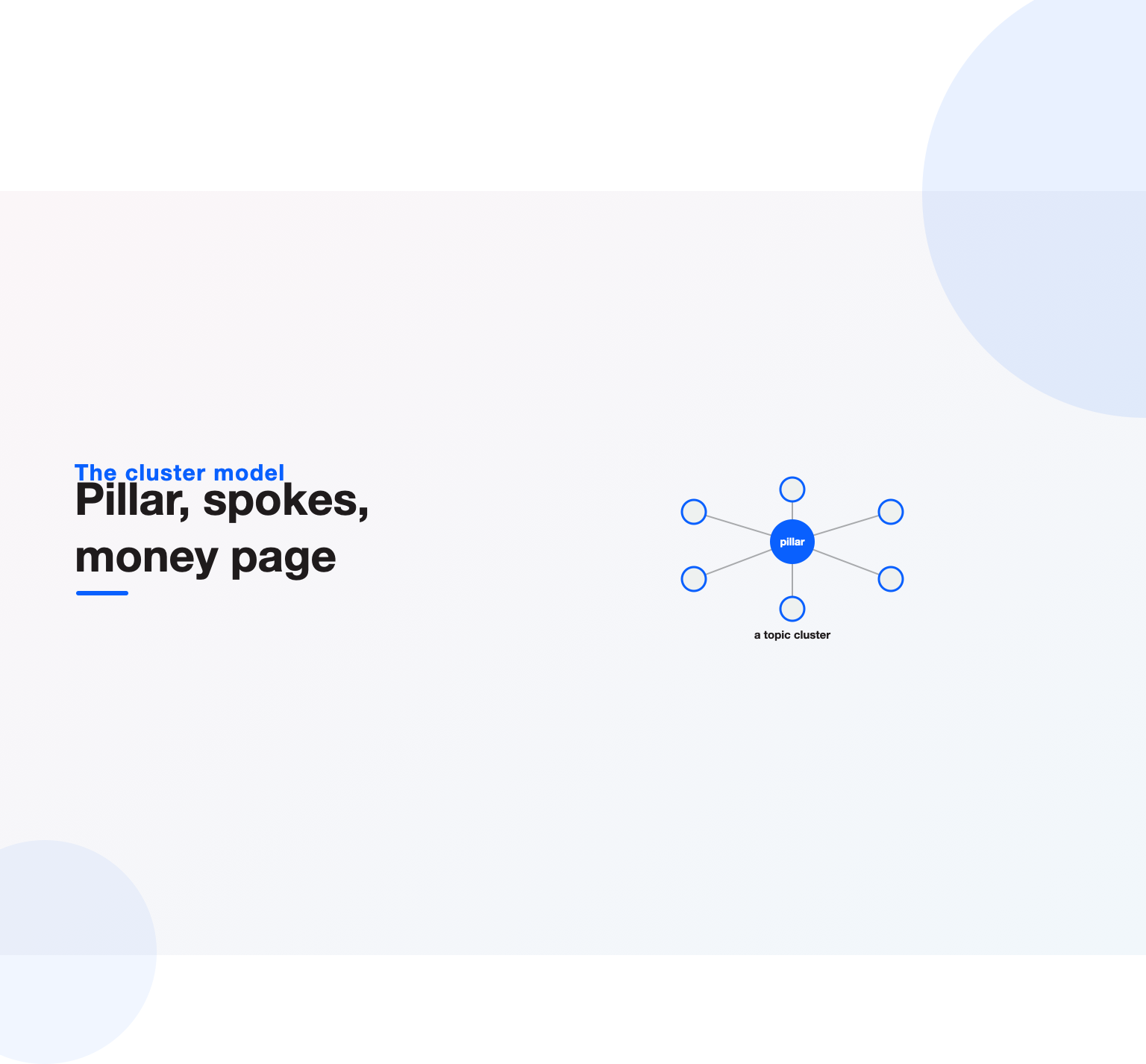
The most effective way to organize internal linking is the topic cluster, sometimes called hub and spoke. A central pillar page covers a broad topic comprehensively, and a set of related pages each cover a specific subtopic in depth, with every subtopic page linking up to the pillar and the pillar linking down to each of them. This structure concentrates topical relevance, signaling to search engines that your site has genuine depth and authority on the subject, and it channels the authority of the whole cluster toward the pillar, which typically targets the most valuable term.
This model works because it mirrors how search engines think about topics and expertise rather than isolated keywords. A cluster of interlinked pages on one subject is far stronger than the same pages sitting unconnected, because the links make the relationships explicit and let authority compound across the group. For a business, the pattern usually runs from supporting blog content, up to a pillar guide, and across to the money page that sells the related service, so editorial content feeds commercial pages through a deliberate chain. Building this cluster structure is the single highest-return internal linking move for most sites, and it turns a pile of pages into a coherent, rankable topical authority.
Anchor text for internal links
Anchor text, the visible words you link with, is a strong relevance signal for internal links, because it tells search engines what the destination page is about. Descriptive, natural anchors that include or relate to the target page’s topic are ideal, so linking with the words “technical SEO checklist” tells search engines far more than linking with “click here” or “read more.” Good anchor text helps the target page rank for the terms it deserves and makes the link genuinely useful to readers deciding whether to click.
The discipline is variation and naturalness. Unlike external links, you control every internal anchor, which means you could stuff the same exact-match phrase across hundreds of links, and that is exactly what looks manipulative and helps less than it should. Vary the anchors naturally, using different relevant phrasings that fit the sentence, and let them read like something a human wrote rather than a keyword inserted on purpose. The same restraint that governs healthy link building applies internally: relevance and natural variety beat repetition, and an anchor that fits its sentence and describes its destination is doing its job, the same principle that runs through solid on-page SEO.
Not sure why your pages are not ranking or bringing enquiries?
Our team reviews your current setup and shows you where the opportunities are. See how our SEO services work.
Which pages to link, and eliminating orphans
Deciding what to link to and from is where strategy meets maintenance. Your priority pages, the commercial pages and pillars you most want to rank, should receive plenty of contextual internal links from relevant content, because inbound internal links are a signal of importance. Meanwhile every page worth ranking needs at least a few internal links pointing to it, or search engines struggle to find and value it. The pages that break this rule are orphans: pages with no internal links at all, which are effectively invisible to crawlers that discover pages by following links.
Finding and fixing orphan pages is often the fastest internal linking win available, because it takes pages that were earning nothing and connects them into the site so they can finally be crawled and ranked. Beyond orphans, look for important pages that are under-linked relative to their value, and add relevant contextual links to them from strong, topically-related content. The goal is not to link everything to everything, which dilutes the signal, but to make sure every valuable page is reachable and that your most important pages are genuinely well-supported by links from the content that relates to them.
Internal linking at scale
On a small site you can manage internal linking by hand, but past a few hundred pages it becomes a systematic problem that hand-crafting cannot keep up with. Large sites need a defined structure, clear rules for how page types link to each other, so that new pages are wired in correctly as they are published rather than shipping as orphans. Category and hub pages should link to their children, related items should link to each other, and templates should generate the structural links automatically so the architecture holds as the site grows.
This is exactly the challenge that makes internal linking so important for large stores and generated-page sites. A catalog or a set of programmatic pages lives or dies on whether the internal linking connects it into the site and routes authority through it, which is why the discipline shows up as a core concern in both ecommerce SEO and programmatic SEO. At scale the goal is a hybrid: structural links generated reliably by templates, plus genuinely contextual links added in editorial content, so the site has both a dependable skeleton and the relevant, in-body connections that carry the most weight.
Navigation, breadcrumbs, and structural links
Not every internal link is the same kind, and understanding the types helps you use each well. Navigation links, in the header, footer, and menus, appear site-wide and define the primary structure, so they are how you signal your most important sections and give crawlers a dependable route to key pages. Breadcrumbs reinforce hierarchy, showing where a page sits in the site and passing that structure to search engines, which is why they are worth implementing with the appropriate structured data on any site with real depth.
These structural links are essential plumbing, but they are not where the strongest ranking signal lives. Since navigation and footer links repeat on every page, search engines discount them somewhat relative to links embedded in unique content, so they should carry the skeleton of the site without being expected to do the heavy lifting for individual pages. One practical caution: navigation and links must be real, crawlable anchor tags rather than script-driven menus, since links a crawler cannot follow, which Google spells out in its guidance on crawlable links, do nothing for discovery, which is one of the places internal linking overlaps directly with JavaScript SEO. Build the structural layer properly, then let contextual links do the targeted work.
Contextual links versus site-wide links
The most valuable internal links are contextual: links embedded within the body of relevant content, pointing to related pages. They carry more weight than repeated site-wide links because they sit inside unique, topical content and because their surrounding text and anchor give search engines rich signals about what the destination is about. A link to your product page from within a genuinely relevant paragraph of a guide tells search engines far more than the same product appearing in the footer of every page.
This is why a strategy that relies only on navigation and a related-posts widget leaves most of the value on the table. The pages you want to rank should earn contextual links from within your best, most relevant content, placed where they genuinely help the reader, because that placement is what search engines weight most heavily and what actually moves rankings. The discipline is to write content that naturally references your priority pages and to link them in-body with descriptive anchors, so the strongest form of internal linking is happening inside your content rather than only around it.
Using internal links to push striking-distance pages
One of the most practical uses of internal linking is accelerating pages that are close to ranking well. When a page sits just off the first page for a valuable term, adding a few strong contextual internal links to it, from authoritative, topically-related pages, can be enough to push it up, because it increases both the authority flowing to the page and the relevance signals around it. This is a fast, controllable lever precisely because you do not have to earn anything externally to pull it.
The method is to identify pages with real potential, those already earning impressions and sitting in striking distance, then find your strongest relevant pages and add natural contextual links pointing to them with descriptive anchors. Since it draws on authority you already have, this often produces movement within weeks rather than months, and it pairs naturally with keyword work, since knowing which terms a page is close on tells you exactly what anchors and supporting content to add, the same demand-mapping logic behind good keyword research. Done regularly, this turns internal links into an ongoing optimization loop rather than a one-time setup.
Common internal linking mistakes
A handful of errors undermine otherwise good sites. Leaving important pages orphaned or badly under-linked is the most damaging, because no amount of on-page work saves a page search engines cannot find. Burying links in navigation and footers while neglecting contextual in-body links wastes the most valuable kind, since links within relevant content carry more weight than boilerplate repeated site-wide. Using identical exact-match anchors everywhere trades natural relevance for a pattern that looks manipulative. And linking indiscriminately, so every page links to every other, spreads authority so thin that no signal of importance survives.
The subtler mistakes are about neglect over time. Sites accumulate broken internal links as pages move or are deleted, and each one wastes the authority it was meant to pass and sends users to dead ends, so resolving links to live pages is part of the job. Teams also forget to link new content into the existing structure, so fresh pages sit disconnected. Avoiding these traps is mostly a matter of treating this practice as an ongoing discipline rather than a one-time task, and folding a link check into the same routine as a broader technical SEO review so problems are caught before they compound.
Internal linking and crawl depth
Internal links also determine how deep in the site a page sits, measured as the number of clicks from the homepage, and that depth affects how readily search engines crawl and value a page. Pages buried many clicks down are crawled less often, a real constraint Google describes in its guidance on managing crawl budget, and treated as less important, while pages reachable in a click or two from strong, frequently-crawled pages get more attention. A good structure keeps priority pages shallow, close to the homepage in click terms, so they inherit crawl frequency and authority rather than languishing at the bottom of a deep hierarchy.
This is why auditing click depth is worth doing alongside the link count: a page can have a few inbound links yet still sit five clicks deep behind slow-to-crawl pages, which quietly caps its potential. Flattening the path to important pages, by linking them from high-level hubs and strong content, is one of the clearest ways to improve how a large site is crawled and ranked. The principle scales: the bigger the site, the more click depth decides which pages get seen, which is why it is a central concern in enterprise SEO and any serious internal linking audit.
How internal linking supports conversions
Rankings are only half the value; internal links also guide people toward the actions that make you money. A visitor who lands on a blog post is one relevant link away from the guide, comparison, or service page that moves them closer to buying, and thoughtful contextual links turn a single-page visit into a journey. This is the same funnel logic that runs through good content strategy: informational pages capture attention, and internal links carry that attention toward commercial pages when the reader is ready.
The practical move is to link every piece of content to the logical next step for its reader, a related guide for someone still learning, a service or product page for someone closer to a decision, so the path forward is always visible. Done well, this lifts engagement and conversions at the same time as it distributes authority, which is why internal linking sits at the intersection of SEO and conversion rather than belonging to either alone. The links that help a page rank are frequently the same links that help a visitor convert, which is a big part of what makes SEO worth the investment.
Want a team to run this SEO work for you?
Book a free 30-minute strategy call and leave with a clear next step for your business.
Internal linking and AI search
Linking your own pages helps with AI-driven search for the same reason it helps traditional search: it makes the relationships between your pages and topics explicit. When AI systems crawl and interpret a site, a clear internal structure helps them understand which pages are authoritative on a topic and how your content connects, which supports being surfaced and cited accurately. A well-linked topic cluster reads to a machine as coherent expertise on a subject rather than a scatter of unrelated pages, and that coherence is exactly what answer engines reward.
The through-line is that the internal link graph builds topical authority that serves every kind of search at once. The same cluster structure that concentrates relevance for Google also helps AI systems understand and trust your coverage of a subject, so the work compounds across surfaces rather than needing to be redone for each, on the same patient curve as the rest of SEO. When we build this for clients through our SEO services, the internal architecture is designed to make topical authority legible to both search engines and AI answer engines from the first crawl, because a structure a machine can follow is a structure a machine can trust, and for larger or more technical sites our SEO consulting maps the whole link graph so authority flows to the pages that drive the business.
How to audit your internal linking
A good audit turns this discipline from guesswork into a managed system. Start by crawling your site with a tool like Screaming Frog that maps internal links, which surfaces orphan pages, pages with very few internal links, and broken links that need fixing. Layer in your analytics and search data to see which pages have the authority and traffic worth distributing, so you can route links from your strongest pages toward your priorities. The output is a clear picture of where authority is pooling, where it is leaking, and which important pages are under-supported.
From there the work is deliberate: connect orphans into relevant clusters, add contextual links from strong pages to under-linked priority pages while keeping anchors natural and varied, fix broken internal links so no authority is wasted, and confirm your topic clusters are fully interlinked around their pillars. Since sites change constantly, the strongest teams repeat this audit on a schedule rather than once, so new pages get wired in and decay gets caught early. Treated as an ongoing habit, site structure quietly becomes one of the most reliable and controllable sources of ranking improvement a site has.
Key Takeaways
- Internal links does three jobs at once: it helps search engines crawl and understand your site, passes authority to priority pages, and guides users toward conversion.
- The topic cluster model, subtopics linked to a pillar and up to a money page, concentrates relevance and authority far better than scattered, ad-hoc links.
- Use descriptive, naturally varied anchor text, and avoid repeating the same exact-match phrase across the site, which looks manipulative and helps less.
- Eliminate orphan pages and strengthen under-linked priority pages, since inbound internal links are a signal of importance that you fully control.
- At scale, combine template-generated structural links with contextual editorial links, and audit the link graph on a schedule so it keeps routing authority to the pages that matter.
Frequently asked questions
What is internal linking?
This practice is the practice of linking from one page on your website to another, through navigation, body content, and contextual links in your copy. It helps search engines discover and understand your pages, passes ranking authority between them, and guides visitors to the next relevant step. Because you control every internal link, it is one of the few ranking levers you can pull directly without earning anything from another site.
Why is internal linking important for SEO?
It matters because internal links shape how search engines crawl your site, how they understand which pages are important and how your topics relate, and how ranking authority moves between pages. A deliberate internal structure channels the authority your site has earned toward the commercial pages that need to rank, while a poor one strands that authority and leaves valuable pages hard to find. It is high-leverage precisely because it is fully within your control.
What is the topic cluster model?
The topic cluster, or hub and spoke, model organizes content so a central pillar page covers a broad topic and several related pages each cover a subtopic in depth, with every subtopic linking to the pillar and the pillar linking back to them. This concentrates topical relevance, signals genuine depth on the subject, and channels the cluster’s combined authority toward the pillar, which usually targets the most valuable term.
How many internal links should a page have?
There is no fixed number; the right amount is however many are genuinely relevant and useful for that page’s content and length. The principles matter more than a count: every valuable page should have at least a few internal links pointing to it so it can be found, priority pages should be well-supported by contextual links from related content, and you should avoid linking so indiscriminately that no page stands out as important.
What is an orphan page?
An orphan page is a page with no internal links pointing to it, which makes it very hard for search engines to discover, since crawlers find pages by following links. Orphan pages usually earn little or no organic traffic no matter how good they are. Finding and connecting orphans into relevant parts of your site is often the fastest linking your own pages win, because it turns invisible pages into ones search engines can crawl and rank.
Does anchor text matter for internal links?
Yes. Anchor text, the words you link with, is a relevance signal that tells search engines what the destination page is about, so descriptive anchors related to the target topic help far more than generic ones like “click here.” The key discipline is natural variation: because you control internal anchors, it is tempting to repeat the same exact-match phrase everywhere, but that looks manipulative, so vary the wording so it fits each sentence and reads naturally.
How do I find internal linking problems?
Crawl your site with a tool that maps internal links to surface orphan pages, pages with very few inbound internal links, and broken links, then combine that with analytics and search data to see which pages have authority worth distributing. That gives you a picture of where authority pools, where it leaks, and which priority pages are under-supported, which is the basis for connecting orphans, strengthening key pages, and fixing broken links.
Is internal linking still relevant with AI search?
Yes, and for the same reasons it helps traditional search. A clear internal structure makes the relationships between your pages and topics explicit, which helps AI systems understand which pages are authoritative and how your content connects, supporting accurate surfacing and citation. A well-linked topic cluster reads to a machine as coherent expertise rather than scattered pages, so the the internal link graph work compounds across both traditional and AI search.
Ready to put this into practice?
Talk to the team that runs SEO, AI search and paid growth programs every day.
Book a Strategy Call →