 Skip to content

Meta Advantage Plus: How to Use Meta’s Automation Well
Meta Advantage Plus hands targeting and optimization to automation. Learn how the shopping campaigns and audiences work, when to use them, and how to feed and steer them.
Quick Answer
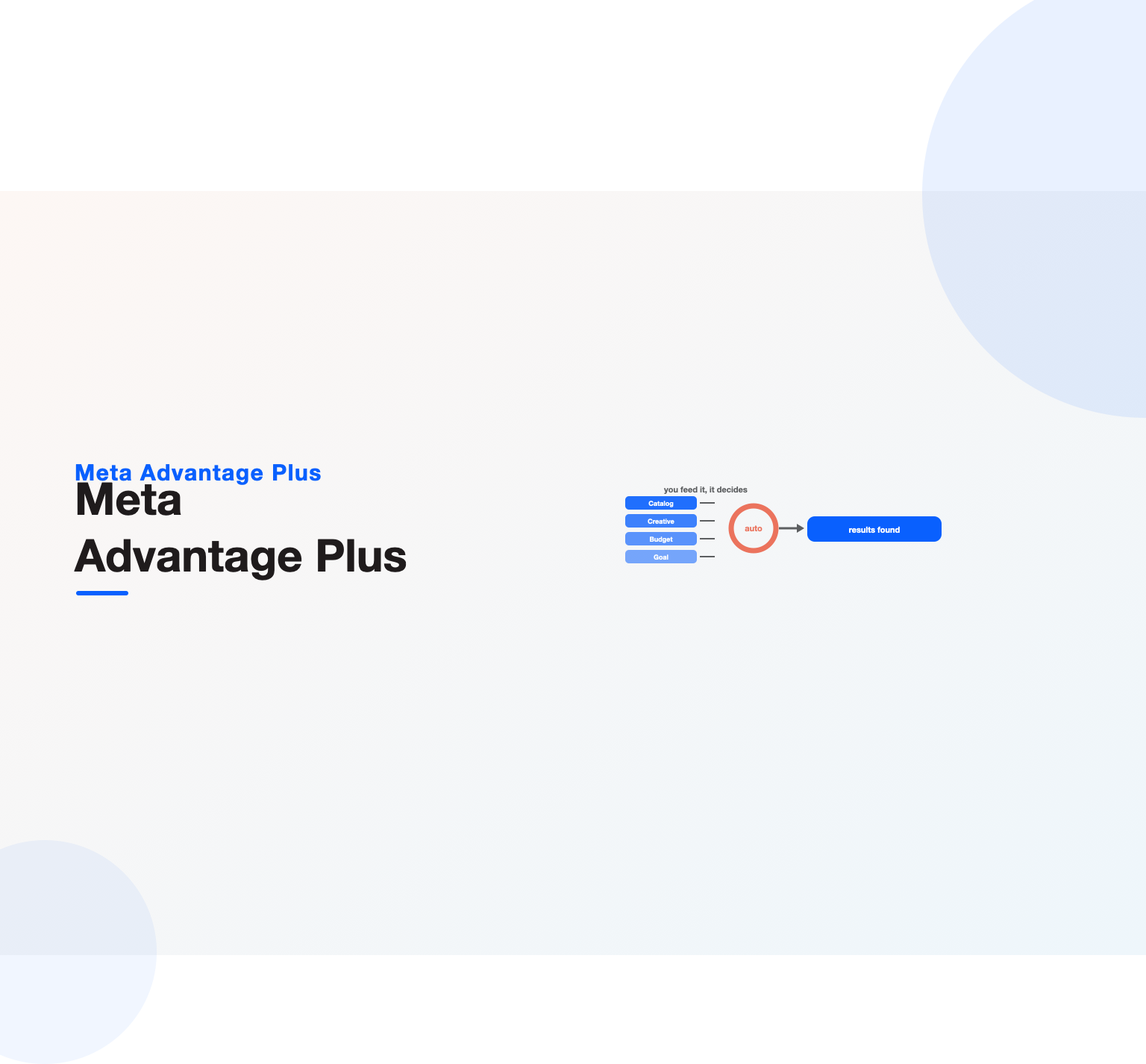
Advantage Plus is Meta’s suite of automated advertising tools, most notably Advantage Plus shopping campaigns for ecommerce and Advantage Plus audiences, that hand much of the targeting, placement and optimization to Meta’s automation instead of setting it all manually. Rather than building tightly controlled audiences and placements yourself, you supply your objective, budget, catalog and creative, and the system decides who to show ads to, where, and how to optimize toward your goal, using its vast data to find buyers you might never have targeted by hand. The suite works well when it has strong creative, clean conversion tracking and enough data to learn from, and for many advertisers, especially ecommerce brands, it delivers a lower cost per result than manual campaigns by letting the automation do what it does best. But it trades control and transparency for that automation, so it rewards good inputs and guardrails rather than micromanagement. This guide explains what the suite is, how the main products work, when to use them, and how to get the most from Meta’s automation without losing the control that keeps spend efficient.
Key Highlights
- Advantage Plus is Meta’s automation suite, including Advantage Plus shopping campaigns and Advantage Plus audiences, that hands targeting and optimization to Meta.
- You supply the objective, budget, catalog and creative, and the automation decides who to reach, where, and how to optimize.
- It works best with strong creative, clean conversion tracking and enough data for the system to learn from.
- For many ecommerce advertisers it lowers cost per result by finding buyers manual targeting would miss.
- It trades control and transparency for automation, so it rewards good inputs and guardrails over micromanagement.
- Creative quality becomes the main lever, since the automation handles targeting and delivery.
What the suite includes
Advantage Plus represents Meta’s broad move from advertiser-controlled targeting toward automation, packaging several tools that let the system make decisions people used to make by hand. The headline products are Advantage Plus shopping campaigns, an automated campaign type for ecommerce that spans placements and audiences with minimal manual setup, and Advantage Plus audiences, which broadens or replaces manual audience targeting by letting the system find the people most likely to convert. There are also smaller Advantage Plus enhancements that automate individual settings like placements and creative tweaks, so the label spans everything from a full automated campaign type down to single settings you can switch on inside an otherwise manual campaign, which is worth knowing so you can adopt as much or as little automation as suits you.
The common thread is that the automation shifts your role from configuring the machine to feeding it well. Instead of building detailed audiences and placement rules, you provide the objective, budget, product catalog and creative, and let the automation optimize, which is a genuinely different way of running Meta ads than the manual approach many advertisers learned. Understanding that shift is the key to using it well, because the advertiser’s leverage moves from targeting decisions to the quality of the inputs and the guardrails around the automation, a principle at the center of modern Meta Ads management. Those who treat it like a manual campaign, expecting the same controls, tend to be frustrated by it.
How the automation works
At the heart of the suite is machine learning that decides, in real time, who to show your ads to, which placements to use, and how to bid and optimize toward your objective, drawing on Meta’s data about user behavior and intent. Rather than you defining a narrow audience, the system explores a broad pool and concentrates delivery on the people most likely to convert, learning from the conversions it drives to sharpen its targeting over time. This lets the system find buyers you might never have thought to target, which is much of its value.
The trade-off is control and visibility. Because the automation makes the targeting and placement decisions, you cannot dictate exactly who sees your ads or see the same granular breakdowns a manual campaign offers, and that opacity is the most common complaint advertisers raise about it. The way to work with the automation rather than against it is to accept that you influence the automation through the quality of your creative, the accuracy of your conversion data, and the signals and guardrails you provide, not through direct control, the same indirect-influence mindset that governs other automated systems and connects to reading your facebook ads cost by result rather than by fine-grained control.
Shopping campaigns explained
For ecommerce, the shopping campaigns are the flagship product, an automated campaign type that aims to drive sales with minimal manual structure by letting the system handle audiences, placements and optimization across Meta’s surfaces. You provide your product catalog, creative and budget, set the objective, and the automation works to find buyers and drive purchases, often consolidating what used to be many separate campaigns into one streamlined setup. For many online stores, this delivers strong results with far less manual management than the old approach of building and maintaining dozens of separate campaigns by hand.
Success depends on the inputs, especially the catalog and creative. A clean, complete product catalog gives the automation good material to sell, and strong, varied creative gives it the range to engage different buyers, so the same catalog and creative discipline that underpins ecommerce advertising generally is what makes these shopping campaigns perform rather than any setting hidden inside the automation. Accurate conversion tracking is equally essential, since the system optimizes toward the purchases it can measure. For a serious online store, these campaigns can be highly efficient, which is why they are central to strong Meta ads for ecommerce brands, provided the inputs and guardrails are right.
How automated audiences work
Advantage Plus audiences change how targeting works by letting the system find your best audience rather than confining delivery to a manual definition you set. You can provide an audience suggestion, existing customers, people who resemble your buyers, interest signals, and the automation uses it as a starting point to find similar high-value people, then expands beyond it as it learns who actually converts, so your suggestion guides the automation rather than caging it. This often outperforms tight manual targeting, because the system can discover pockets of buyers a human would never have selected.
The shift for advertisers is from defining audiences to guiding them. Rather than building narrow interest stacks, you give the automation good signals, your customer data and sensible suggestions, and let it find the willing buyers, which paired with strong creative frequently lowers cost per result, in the same way a well-run Meta ads for coaches and course creators account benefits, compared with manual targeting that can box the system in. This is part of the broader move toward broad targeting plus strong creative that has reshaped Meta advertising, and it changes where effort should go, from audience micromanagement to creative and signal quality, an approach that pays off across verticals from ecommerce to services like Meta ads for SaaS.
Why creative becomes the main lever
When automation handles targeting, placement and bidding, the advertiser’s biggest remaining lever is creative, so the automation makes creative quality more important than ever rather than less. The system can only work with the ads you give it, so strong, varied, engaging creative gives it the material to reach and convert different people, while thin or weak creative caps what even the best automation can achieve. This is a fundamental shift in where the work goes: far less time on audience configuration, and far more on producing and testing creative that gives the automation something worth delivering.
Feeding the automation plenty of varied creative also helps it optimize, since it can test different ads against different people and concentrate on what works, so providing a steady stream of fresh, diverse creative is how you get the most from Advantage Plus. Those who embrace this, pouring effort into creative volume and quality rather than targeting minutiae, tend to get far more from Meta’s automation than those who supply a couple of tired ads and expect the system to compensate. Because creative is now the primary driver, disciplined creative testing, of the kind that underpins strong facebook video ads, becomes central to performance rather than a side task.
Conversion tracking and signals
The automation optimizes toward the conversions you can measure, so accurate conversion tracking through the Meta pixel and the conversions setup is a hard prerequisite, not an optional refinement. If your tracking is broken or measuring the wrong actions, the automation will confidently optimize toward the wrong outcome, spending efficiently in pursuit of a goal that does not reflect real value, which is the most common single reason automated campaigns fail. Verifying that conversions are measured accurately, ideally with values, is the first step before trusting the automation.
Privacy changes have made this harder and more important at once, as the signals the pixel can capture have weakened, which is why the server-side conversions setup has become important for keeping the automation well fed with data. Because Advantage Plus leans so heavily on conversion signals to learn and optimize, protecting and strengthening those signals directly improves its performance, so measurement is not a technical afterthought but the foundation the whole automation rests on. Getting it right is the same discipline that keeps any Meta account measurable and its costs readable, and it matters across every vertical running automation, including Meta ads for D2C brands.
Keeping control with guardrails
Handing decisions to automation does not mean giving up control entirely, and the advertisers who get the most from It set sensible guardrails around it rather than trusting it blindly. Exclusions matter: making sure the automation is not simply capturing people who would have bought anyway, or spending on audiences you do not want, keeps its results honest, much as brand exclusions do for automated campaigns generally, so the system is rewarded for real gains rather than borrowed ones. Watching that the system is finding genuinely incremental customers rather than taking credit for existing demand is part of managing it well.
Guardrails also mean monitoring and intervening when the automation drifts, without micromanaging every decision. Setting appropriate budgets, providing good creative and signals, applying sensible exclusions, and then watching performance and stepping in when something genuinely goes wrong, rather than at every fluctuation, is the balance that works. Set up well and then steered, it gives the benefit of the automation without surrendering the account to it, while those who either fight it for control it will not give or trust it with no guardrails at all tend to be disappointed, a balance experienced management strikes routinely across accounts like Meta ads for real estate.
Where the automation fits best
The suite is not equally suited to every advertiser, so knowing where it shines prevents disappointment. It performs best for advertisers with a clear conversion goal, enough conversion volume for the system to learn, and, for the shopping products, a healthy product catalog, which is why ecommerce brands are the classic strong fit. When there is real data, a good catalog and strong creative, the automation has what it needs to find buyers efficiently and often beats hand-built targeting. The more your success depends on reaching a large pool of potential buyers the system can sift, the better it tends to work.
It is a weaker fit where volume is thin, where the audience is genuinely narrow and specific, or where tight control over exactly who sees a message matters more than reach, cases in which a manual campaign may serve better. Recognizing whether your goals, data and audience suit automation, rather than adopting it because it is heavily promoted, is the first decision, and it applies across verticals, so a high-volume store and a niche service like Meta ads for home services may reach different sensible answers about how much to lean on it.
Measuring true incremental value
Because the automation is good at finding people likely to convert, its reported results almost always look strong, which creates a familiar trap: a campaign that reaches people who would have bought anyway can take credit for conversions that were coming regardless. The honest question is not how many conversions it reports but how many incremental ones it genuinely drove, which means watching whether total account conversions rose after leaning on it rather than admiring its own glowing numbers. A campaign that mostly harvests existing demand is not adding as much as its dashboard suggests.
Measuring incrementality changes how much you trust and scale the automation. Testing against a holdout, watching total conversions as you shift budget into it, and applying exclusions to strip out easy existing demand all reveal its real contribution, keeping investment grounded in genuine lift rather than flattering reported numbers. Those who read incrementality rather than raw reported results make far better decisions about the automation, the same scrutiny that a clear view of facebook ads cost and honest measurement bring to the whole account, whatever the vertical, including Meta ads for D2C brands.
Running it alongside manual campaigns
The system works best as part of a considered account rather than a total replacement for manual campaigns, and deciding how it fits with your other campaigns is a strategic choice. Many advertisers run Advantage Plus for broad, automated performance while keeping some manual campaigns for specific control, a particular audience, a controlled test, a message that must reach exactly the right people, so they get the automation’s scale where it helps and manual precision where it matters. This blended approach gives you both the automation’s scale and manual precision rather than forcing an all-or-nothing choice between them.
Coordination keeps them working together. Understanding what each is responsible for, watching for overlap where Meta’s automation and manual campaigns compete for the same people, and measuring their combined incremental effect keeps the account coherent rather than letting the two undermine each other. For many advertisers, especially ecommerce brands with strong catalogs and creative, leaning heavily on Advantage Plus while retaining targeted manual campaigns for specific needs delivers the best of both, and building that balance well is part of professional account management, coordinated with retargeting and the wider funnel rather than run in isolation.
Common automation mistakes
Several recurring errors keep advertisers from getting the best from It. The most damaging error is running it on inaccurate or thin conversion data, which leaves the automation optimizing toward the wrong goal or starved of the signal it needs to learn. Close behind is feeding it weak or thin creative and expecting the automation to compensate, when creative is now the main lever and thin creative caps performance. Fighting the automation for the granular control it does not give, or conversely trusting it with no guardrails or exclusions, are opposite mistakes that both disappoint.
Other common errors include judging the automation by the same fine-grained control metrics as a manual campaign rather than by cost per result and incremental value, neglecting to verify that its results are genuinely incremental rather than captured existing demand, and treating it as a set-and-forget button rather than something to feed and steer. The thread through these mistakes is either giving the automation poor inputs or misunderstanding how to work with it. Advertisers who supply strong creative and clean data, set sensible guardrails, and judge The automation by real results get the efficient automation it promises, while those who neglect the inputs or fight the system waste its potential.
Feeding the automation enough creative
If creative is the main lever, then producing enough of it becomes the practical bottleneck, and this is where many advertisers underinvest. The automation performs best with a steady supply of varied creative to test and rotate, because it can match different ads to different people and lean on what works, so a campaign fed only a couple of ads gives the system little to optimize with. Building a creative pipeline, a regular flow of new concepts, formats and angles, is what keeps the automation supplied and performance climbing rather than plateauing on a handful of tired ads.
This reframes the whole job of running these campaigns. Where a manual advertiser once spent their time in audience settings, the automated advertiser spends it producing and testing creative, treating creative as the engine of performance rather than a finishing touch. Video especially rewards this, since fresh, native video gives the automation strong material to work with, which is why a creative habit like the one behind effective facebook video ads pairs so naturally with Meta automation. Advertisers who build that creative capacity get steadily more from the system, while those who starve it of fresh material watch performance fade no matter how good the automation is, a pattern that holds across every vertical, including Meta ads for real estate.
When to get help with the automation
A capable advertiser can run it by understanding that its leverage is creative and signals rather than targeting, and for a smaller ecommerce account with a clean catalog and decent creative, letting the automation drive while feeding it well is a realistic and often rewarding approach. The core ideas, feed it strong creative and clean data, set guardrails, judge by cost per result, are more about mindset than technical difficulty, and doing it yourself builds understanding of how Meta’s automation behaves.
Expert help pays off as the stakes rise and the creative and measurement demands grow, when producing enough strong creative to feed the automation is substantial work, when catalog, signals and server-side tracking need careful setup, or when coordinating It with manual campaigns and measuring incrementality gets complex. An experienced practitioner feeds the automation well, sets the right guardrails, and reads its true contribution rather than its flattering reported numbers, so folding Advantage Plus into ongoing Meta Ads services often gets more from the automation than a hands-off setup. Whichever route you take, the essentials of The system stay the same: feed it strong creative and clean data, set sensible guardrails, and judge it by cost per result and incremental value.
The bigger picture is that Meta advertising has been steadily moving from manual control toward automation for years, and this suite is the clearest expression of that shift. Fighting the trend by clinging to hand-built targeting increasingly means working against how the platform wants to deliver ads, while embracing it means changing where you spend your effort, less on audience configuration, far more on creative, signals and measurement. The advertisers who thrive are the ones who make that shift deliberately, feeding the automation well and steering it with guardrails rather than either surrendering to it or resisting it, and who judge it honestly on incremental results. Learning to work with Meta’s automation rather than around it is, increasingly, simply learning to advertise on Meta, whatever the vertical, from a national store to a local practice like Meta ads for lawyers.
Key Takeaways
- Advantage Plus is Meta’s automation suite that hands targeting, placement and optimization to the system, so you feed inputs rather than configure controls.
- Advantage Plus shopping campaigns and audiences can lower cost per result, especially for ecommerce, by finding buyers manual targeting misses.
- Creative becomes the main lever, so pour effort into varied, strong creative rather than audience micromanagement.
- Accurate conversion tracking and signals are a hard prerequisite, because the automation optimizes toward what it can measure.
- Set guardrails and exclusions and check for genuine incrementality rather than trusting the automation blindly.
- Run it alongside manual campaigns where control matters, judging it by cost per result the way strong Meta ads for ecommerce brands do.

Frequently asked questions
What is Meta Advantage Plus?
Advantage Plus is Meta’s suite of automated advertising tools, most notably Meta’s automation shopping campaigns for ecommerce and Advantage Plus audiences, that hand much of the targeting, placement and optimization to Meta’s automation instead of you setting it all manually. Rather than building tightly controlled audiences and placements, you supply your objective, budget, catalog and creative, and the system decides who to show ads to, where, and how to optimize toward your goal, using its data to find buyers you might not have targeted by hand. It works well with strong creative, clean conversion tracking and enough data to learn from, and for many advertisers, especially ecommerce brands, it delivers a lower cost per result than manual campaigns.
How do Advantage Plus shopping campaigns work?
It shopping campaigns are an automated campaign type for ecommerce that drives sales with minimal manual structure by letting Meta handle audiences, placements and optimization across its surfaces. You provide your product catalog, creative and budget, set the objective, and the automation works to find buyers and drive purchases, often consolidating many separate campaigns into one streamlined setup. Success depends on the inputs: a clean, complete product catalog, strong and varied creative, and accurate conversion tracking so the system optimizes toward real purchases. For many online stores this delivers strong results with far less manual management than the traditional approach, which is why it has become central to ecommerce advertising on Meta.
Is Advantage Plus better than manual campaigns?
For many advertisers, especially ecommerce brands with good catalogs and creative, it often performs as well or better while requiring far less manual management, because the automation can find buyers manual targeting would miss. However, it depends on strong inputs and is not universally superior. Manual campaigns still offer control that matters for specific audiences, controlled tests, or messages that must reach exactly the right people. The most effective approach is usually to run both, leaning on Advantage Plus for broad automated performance while keeping targeted manual campaigns where control is needed. Judge The automation by cost per result and incremental value rather than by the granular control it deliberately gives up.
What are Advantage Plus audiences?
Advantage Plus audiences let Meta’s system find your best audience rather than confining delivery to a manual definition you set. You can provide a suggestion, such as existing customers, people who resemble your buyers, or interest signals, and the automation uses it as a starting point to find similar high-value people, then expands beyond it as it learns who actually converts. This often outperforms tight manual targeting because the system can discover pockets of buyers a human would never select. The shift for advertisers is from defining audiences to guiding them with good signals and customer data, then letting the automation find the willing buyers, which paired with strong creative frequently lowers cost per result.
Do I need good conversion tracking for Advantage Plus?
Yes, it is a hard prerequisite. It optimizes toward the conversions it can measure, so if your tracking is broken or measuring the wrong actions, the automation will confidently optimize toward the wrong outcome and waste budget. Accurate tracking through the Meta pixel and the conversions setup, ideally with values attached, is the foundation the whole automation rests on, and verifying it is the first step before trusting the system. Privacy changes have weakened the signals the pixel can capture, which is why server-side conversions have become important for keeping the automation well fed with data. Because Advantage Plus leans so heavily on signals, protecting and strengthening them directly improves its performance.
How do I keep control with Advantage Plus?
Handing decisions to automation does not mean giving up control entirely. The advertisers who get the most from The system set guardrails rather than trusting it blindly: applying sensible exclusions so it does not simply capture people who would have bought anyway, providing strong creative and clean signals, setting appropriate budgets, and watching that it finds genuinely incremental customers rather than taking credit for existing demand. Then they monitor performance and intervene when the automation genuinely drifts, without micromanaging every decision. This balance, good inputs and guardrails plus attentive but not obsessive oversight, lets you benefit from the automation without surrendering the account to it, which is how experienced advertisers run it well.
Ready to put this into practice?
Talk to the team that runs SEO, AI search and paid growth programs every day.
Book a Strategy Call →