 Skip to content

Facebook Conversions API: What It Is and Why It Matters
The Facebook Conversions API sends conversion events server-side to recover signal the pixel loses. Learn how it works with the pixel, event matching, values, setup and common mistakes.
Quick Answer
The Facebook Conversions API is a server-side connection that sends customer actions, purchases, leads, sign-ups, directly from your server or platform to Meta, rather than relying only on the browser-based pixel. It exists because privacy changes, browser restrictions, ad blockers, and cookie limits have eroded how much the pixel alone can see, and the Conversions API restores those lost signals by reporting events from a source the browser cannot block. Sending the same events through both the pixel and the facebook conversions api, with proper deduplication so each action is counted once, gives Meta a more complete and reliable picture of what happened, which is exactly what the automation needs to find buyers and optimize toward real results. For any account that depends on accurate conversion data, and that now means almost every serious advertiser, the Conversions API has shifted from a nice-to-have to a foundational part of tracking. It improves optimization, sharpens attribution, and protects measurement against the ongoing decay of browser signals. This guide explains what the Conversions API is, why it matters, how it works alongside the pixel, what a solid setup involves, and the mistakes that quietly undermine it.
Key Highlights
- The facebook conversions api sends conversion events server-side, restoring signal that browser restrictions and ad blockers strip from the pixel.
- It works alongside the pixel, not instead of it, with deduplication so shared events are counted once.
- Better, more complete data lets Meta’s automation optimize more effectively and lowers cost per result over time.
- Accurate event matching, using hashed customer information, is what makes server-side events useful for attribution.
- Passing values with events, especially purchases, lets the system optimize toward revenue instead of raw counts.
- Common failures are missing deduplication, poor event matching and incomplete parameters, all of which waste the effort.
Why the Conversions API became necessary
For years the Meta pixel was enough on its own, a snippet of browser code that watched what people did on a site and reported it back, but that model has steadily broken down. Browser makers now restrict third-party cookies and cross-site tracking, privacy features limit what scripts can see, ad blockers stop the pixel from firing at all for some users, and operating-system prompts let people opt out of tracking entirely. Each of these chips away at what the pixel captures, so an account relying on the pixel alone increasingly optimizes on a partial, shrinking view of reality. The facebook conversions api is Meta’s answer to that decay.
Because the Conversions API reports from your server rather than the visitor’s browser, it is not subject to the same blocking and restriction, so it recovers events the pixel misses. This matters far more than it did a few years ago, since the gap between what actually happened and what the pixel saw has widened to the point where it distorts optimization and attribution. Feeding the automation incomplete data yields worse targeting, weaker optimization, and misleading reports, all of which cost money quietly. Restoring the missing signal is why server-side tracking has moved from an advanced option to a baseline requirement, and it underpins the measurement that keeps facebook ads optimization honest.
How the Conversions API works with the pixel
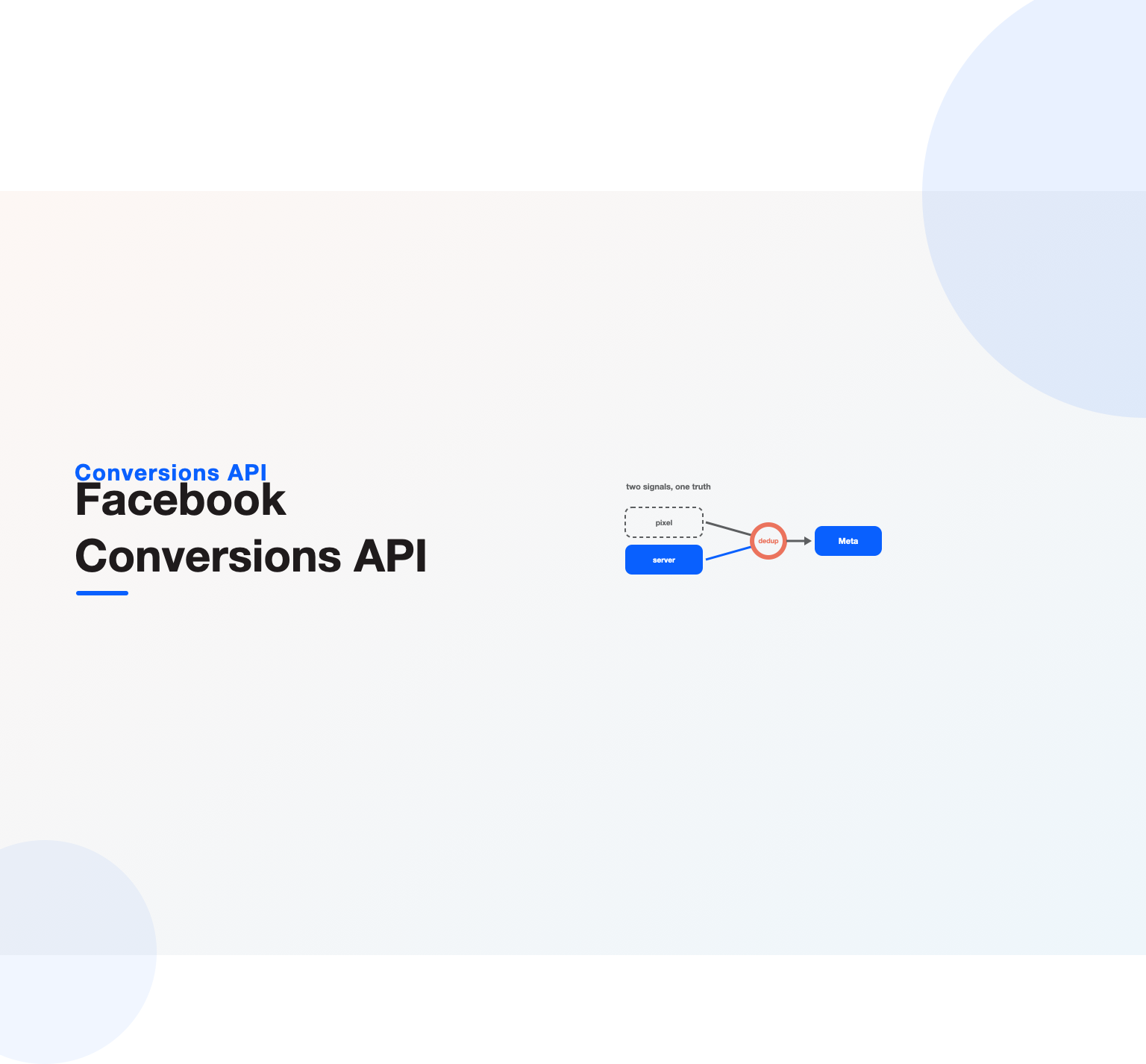
A frequent misunderstanding is that the facebook conversions api replaces the pixel, when the two are designed to work together as a redundant, complementary pair. The pixel continues to capture browser-side events with rich context, while the Conversions API sends the same and additional events from the server, and together they give Meta a fuller record than either could alone, which is what keeps facebook retargeting audiences accurate even as browser tracking degrades. Where the pixel is blocked or limited, the server-side events fill the gap; where the browser adds context the server lacks, the pixel contributes it. The combination is deliberately overlapping, because redundancy is what keeps the data complete as browser signals decay.
Deduplication is the mechanism that makes this overlap work without double-counting. Since the same purchase might be reported by both the pixel and the server, each event carries an identifier, an event ID and name, that lets Meta recognize the two reports as the same action and count it once. Setting this up correctly is essential, because without deduplication an account inflates its conversions and corrupts its own reporting, turning a tool meant to improve accuracy into a source of error. Getting the pixel and the facebook conversions api to cooperate cleanly, with reliable deduplication, is the core of a sound setup, and it protects the integrity of every downstream number, including the facebook ads cost you read in reports.
What better data does for performance
The reason the facebook conversions api is worth the effort is that Meta’s automation is only as good as the data it receives, so more complete conversion signal directly improves what the system can do. When the automation sees more of the real conversions an account generates, it learns faster which people and placements produce results, and it optimizes toward them more effectively. Accounts that feed the system a fuller picture typically find buyers more efficiently and lower cost per result over time, while starving the automation on pixel-only data leaves performance on the table without realizing it.
Attribution improves alongside optimization, because a more complete record of conversions means the reporting reflects more of what advertising actually drove. The pixel-only view undercounts conversions that browsers blocked, making campaigns look worse than they are and hiding results that server-side events would credit. Recovering those events gives a truer read of performance and prevents good campaigns from being cut on incomplete data. This is why the Conversions API is not just a technical checkbox but a lever on results: better data means better optimization and better decisions, which compounds across everything the account does, from prospecting to facebook retargeting.
Event matching is what makes it work
Server-side events are only useful if Meta can match them to real people and to the browser-side records, which is why event matching quality determines how much value the facebook conversions api actually delivers. Matching relies on customer information parameters, an email, a phone number, a name, an external ID, sent in hashed form so the data is protected, that let Meta connect a server event to a person and to the corresponding pixel event. The more accurate, matchable parameters you send, the better the matching, and the more the server-side events strengthen optimization and attribution.
Poor event matching is where many setups quietly fail, sending server events with too little information for Meta to connect them to anyone, so the events add little despite the effort of implementing them. Hashing customer data correctly, sending as many reliable parameters as privacy allows, and verifying that match quality is strong are the tasks that turn a technically working setup into a genuinely useful one. Meta reports an event match quality score that shows how well this is going, and treating that score as something to improve, not ignore, is part of running server-side tracking well. Strong matching is the difference between server-side tracking that meaningfully lifts performance and a setup that merely exists, and Meta’s own Conversions API documentation details which parameters matter most.
Send values, not just events
For accounts where conversions have different worth, and that includes nearly all ecommerce and much lead generation, the facebook conversions api should send the value of each event, not just the fact that it happened. A purchase event carrying its actual order value lets the automation optimize toward revenue and high-value customers rather than treating every conversion as equal, which is a decisive advantage for any business whose orders vary in size. Passing purchases without values leaves the most important optimization lever unused and tells the system that a small order and a large one are the same.
Value-based optimization changes what the account can achieve, because it lets Meta bid for return on ad spend and chase profitable customers instead of cheap conversions. Passing accurate values through server-side events, and keeping them consistent with what actually happens in the business, is what makes this possible, and it is especially powerful when combined with a clean product catalog. This is a core reason the Conversions API matters so much for stores, since it feeds the revenue signal that value optimization depends on, and it directly supports profitable facebook ads for ecommerce where order values and margins vary widely.
How a solid setup comes together
Implementing the facebook conversions api well means choosing the right method for your situation and then verifying it actually works, rather than assuming a switch flipped once is enough. Many businesses set it up through a platform integration, an ecommerce platform, a tag manager, or a partner connection, that handles the server-side sending without custom code, which is the simplest path for most. Others build a direct integration on their own server for full control, which offers the most flexibility and the most responsibility. The right choice depends on your platform, your resources, and how much control you need.
Whatever the method, verification is the step that separates a working setup from a broken one that looks fine. Meta’s testing tools show whether events are arriving, whether deduplication is functioning, and how strong event matching is, and checking these after setup, and periodically afterward, catches the silent failures that otherwise waste budget. A setup is not done when events start flowing; it is done when you have confirmed they are complete, deduplicated, well matched, and carrying the right parameters and values. Treating the facebook conversions api as something to verify and maintain, not install and forget, is what keeps it delivering, and it is a standard that professional Meta Ads management builds in as routine.
Privacy, consent and doing it responsibly
Because the facebook conversions api sends customer information to Meta, doing it responsibly means respecting privacy law and user consent rather than treating server-side tracking as a way around them. The data you send should be handled in line with the consent people gave and the regulations that apply to your market, and the hashing that protects customer information is part of that responsibility, not a formality. Handing over data you should not, or ignoring consent, trades a short-term data gain for real legal and reputational risk.
Responsible implementation also means sending only what you are entitled to and being transparent about it in your privacy policy and consent flows. The goal is complete, accurate measurement within the bounds of consent, not the maximum data by any means, and a setup built that way is both compliant and durable as regulation tightens. Treating privacy as a design constraint from the start, rather than an afterthought, keeps the facebook conversions api sustainable, and it protects the business as much as the data protects performance. This is the same principled approach that should govern all tracking, whatever the objective or vertical.
Which events to send and how to prioritize them
Deciding which events to send through the Conversions API matters, because sending everything indiscriminately is less useful than sending the events that map to real business value with care. The events closest to money, purchases and leads, deserve the most attention and the richest parameters, since these are what the automation should optimize toward and what reporting ultimately judges. Upper-funnel events like page views and content views still have a place for building audiences and understanding the path, but they should not crowd out the quality of the events that actually represent results.
Consistency between the events you send server-side and the ones the pixel captures is what keeps the whole picture coherent. When the two sources report the same standard events with the same names and parameters, deduplication works cleanly and the data lines up; when they drift apart, sending different events or naming them inconsistently, the record fragments and match quality suffers. Mapping your key actions to standard events, sending them from both sources consistently, and reserving the most complete parameters for the conversions that matter most is how a setup stays both accurate and useful. This event discipline is quiet work, but it is what lets the automation behind everything from prospecting to lead generation act on data it can trust.
How server-side tracking changes reporting
Adding the Conversions API often changes the numbers a report shows, and understanding why prevents a healthy improvement from looking like a problem. Because server-side events recover conversions the pixel missed, reported conversion counts usually rise after a solid setup, which is the tool working as intended rather than an error. Reading that increase as recovered signal, not inflated numbers, is important, and it is exactly the kind of context that belongs in a report so nobody misinterprets a jump in conversions as double-counting when deduplication is working correctly.
The deeper effect is that reporting becomes more trustworthy, because the account is now measuring more of what actually happened. Attribution reflects more real conversions, optimization decisions rest on fuller data, and the gap between platform-reported results and the business backend narrows, though it never closes entirely. Keeping the same skeptical habits, comparing against a CRM or ecommerce backend and watching blended results, still applies, but the foundation underneath is stronger. This is why a strong Conversions API setup and disciplined facebook ads reporting reinforce each other, since better data makes every report more honest and every decision better grounded.
Maintaining the setup over time
A Conversions API implementation is not a one-time project but a system that needs occasional attention, because the things it depends on change. Platform updates, site changes, new pages or checkout flows, and shifts in how consent is captured can all quietly break or degrade server-side tracking, so a setup verified once can drift out of shape months later without anyone noticing. Building a habit of periodic checks, confirming events still arrive, deduplication still functions, and match quality holds, catches these silent regressions before they cost real budget.
Maintenance also means responding to Meta’s own changes and to evolving privacy requirements, since both move over time. New parameters, updated recommendations, and tightening regulation all shift what a good setup looks like, and an implementation left untouched for a year is often behind. Treating server-side tracking as living infrastructure, monitored and updated like any other important system, is what keeps it delivering value rather than slowly decaying into a setup that technically runs but no longer helps. This ongoing care is a large part of what thorough Meta Ads management provides, and it protects the measurement foundation the whole account relies on.
Common Conversions API mistakes
Most problems with the facebook conversions api come from a short list of recurring mistakes, and knowing them helps you avoid the wasted effort of a setup that runs but does not help. Missing or broken deduplication tops the list, because it inflates conversions and corrupts reporting, turning an accuracy tool into a source of error. Weak event matching is next, sending server events with too little customer information for Meta to connect them, so the events add little value. Incomplete parameters and missing values follow, leaving the automation with less to work with than the setup could provide.
Other mistakes are about maintenance and assumption. Setting the Conversions API up once and never verifying it lets silent failures persist unnoticed, while assuming a platform integration is complete without checking event quality often hides gaps. Sending inconsistent data between the pixel and the server, or values that do not match reality, undermines both optimization and trust in the numbers. Avoiding these, by verifying deduplication, strengthening event matching, sending complete parameters and accurate values, and checking the setup regularly, is what turns the facebook conversions api from a box ticked into a genuine advantage, and it is exactly the diligence that keeps an account’s whole measurement foundation sound.
Does a smaller advertiser really need it
A fair question for a smaller business is whether the Conversions API is worth the effort at modest spend, and the honest answer is that the case for it has grown strong enough that most serious advertisers should have it regardless of size. The signal decay that makes server-side tracking necessary affects small accounts as much as large ones, since the same browser restrictions and ad blockers apply to every visitor, so a small account on pixel-only data is optimizing on the same shrinking view. The barrier used to be implementation difficulty, but platform integrations have lowered it enough that the effort is now modest for most.
The practical judgment is about proportion rather than whether to bother at all. A small store or lead-gen business can usually enable a supported integration quickly, get its key conversion flowing cleanly, and gain most of the benefit without a heavy project, which is a good trade at almost any spend level. Building a fully custom, richly instrumented setup may not be worth it for a small advertiser, but the basic server-side connection for the one conversion that matters almost always is. Getting that foundation in place early means the account optimizes on better data from the start, which pays off as spend grows and compounds with every other improvement, including disciplined facebook ads reporting.
Getting started without overcomplicating it
For a business new to server-side tracking, the practical path is to start with the simplest reliable method and build from there rather than reaching for a complex custom integration on day one. Most ecommerce and marketing platforms now offer a supported way to enable the Conversions API, often a built-in integration or a partner connection, that handles the heavy lifting and gets clean events flowing quickly. Beginning there, confirming events arrive and deduplicate correctly, and only moving to a custom build if you genuinely need more control keeps the project manageable and avoids the failure mode of an over-engineered setup nobody can maintain.
The first milestone is simply getting your most important conversion, the purchase or the lead, flowing from both the pixel and the server with working deduplication and decent match quality. Once that core event is solid and verified, adding more events and richer parameters is incremental improvement rather than a fresh project. Prioritizing the one event that represents real business value, getting it right, and expanding from a working base is far more effective than trying to instrument everything at once. This staged approach is how careful teams roll out the Conversions API without stalling, and it fits naturally alongside the broader work of running profitable facebook ads for ecommerce.
Where the Conversions API fits in the bigger picture
It helps to see the facebook conversions api not as an isolated technical task but as one part of the measurement foundation every Meta account now needs. Accurate conversion tracking sits beneath optimization, reporting, and scaling, because the automation optimizes toward whatever it can measure, the reports reflect whatever the data captures, and scaling depends on trusting both. Server-side tracking strengthens that foundation by keeping the conversion signal complete as browser data decays, which makes everything built on top of it more reliable.
Viewed this way, investing in a strong Conversions API setup is really investing in the accuracy of every decision the account makes. Accounts with complete, well-matched, value-carrying conversion data optimize better, reports more honestly, and scales more confidently than one guessing on partial pixel data, and that advantage compounds over time. The facebook conversions api is not glamorous work, but it is foundational, and the accounts that treat it seriously give themselves an edge that shows up in lower costs and better results across prospecting, retargeting, and every other part of the machine, including well-run Meta ads for D2C brands.
Key Takeaways
- Use the facebook conversions api to recover conversion signal that browser restrictions and ad blockers strip from the pixel.
- Run it alongside the pixel with proper deduplication, so shared events are counted once and reporting stays accurate.
- Send strong customer parameters in hashed form to maximize event match quality, which is what makes server-side events useful.
- Pass accurate values with events so the automation can optimize toward revenue, not just conversion counts.
- Choose a platform integration or a direct build, then verify deduplication, matching, and parameters rather than assuming it works.
- Respect consent and privacy law, and treat the setup as something to maintain, not install once and forget.

Frequently asked questions
Does the Conversions API replace the Meta pixel?
No, the two are designed to work together rather than one replacing the other. The pixel captures browser-side events with useful context, while the Conversions API sends events server-side where browsers cannot block them, and running both gives Meta a more complete record than either alone. The overlap is intentional, with deduplication ensuring shared events are counted once. Removing the pixel and relying only on server-side events loses the browser context the pixel provides, so the recommended setup keeps both and lets them complement each other. Keeping both also protects your measurement as browser signals keep decaying, which is part of what keeps facebook ads optimization working on data the automation can actually trust.
Is the Facebook Conversions API hard to set up?
It depends on your platform and how you implement it. Many businesses set it up through a platform integration, an ecommerce platform, a tag manager, or a partner connection, that handles the server-side sending without custom code, which is straightforward. A direct integration built on your own server gives more control but takes development work. The harder part is usually not the initial connection but doing it well, ensuring deduplication works, event matching is strong, and the right parameters and values are sent, then verifying all of that with Meta’s testing tools.
What is event match quality and why does it matter?
Event match quality is a score Meta reports that reflects how well your server-side events can be matched to real people and to the corresponding pixel events, based on the customer information parameters you send. It matters because a server event Meta cannot match adds little value, so low match quality means the effort of implementing the Conversions API is largely wasted. Improving it means sending more reliable parameters, an email, phone, name, or external ID, in correctly hashed form, which strengthens both optimization and attribution. Meta shows this score in its Events Manager, so treating a low score as something to improve, rather than a number to ignore, is one of the highest-leverage things you can do after the initial setup.
Do I need to send purchase values through the Conversions API?
For any account where conversions differ in worth, yes, because sending the value of each event lets the automation optimize toward revenue and high-value customers rather than treating every conversion as equal. This is especially important for ecommerce, where order values vary and value-based optimization lets the system bid for return on ad spend. Passing purchases without values leaves a major optimization lever unused, so passing accurate, consistent values with events is strongly recommended wherever conversions are not all equally valuable. The payoff shows up most clearly in stores, where value-based optimization lets the automation chase profitable orders rather than cheap ones, which is a core part of running effective facebook ads for ecommerce at scale.
Is the Conversions API compliant with privacy laws?
It can be, but compliance depends on how you use it rather than the tool itself. Because you are sending customer information to Meta, you must handle that data in line with the consent people gave and the regulations in your market, send only what you are entitled to, and use the hashing that protects customer information. Implemented responsibly, with proper consent and transparency in your privacy policy, the Conversions API is compliant; used to bypass consent or send data you should not, it creates real legal and reputational risk. The safe default is to send only what consent covers, be transparent about it, and treat responsible measurement as part of running professional Meta Ads management rather than an obstacle to it.
Ready to put this into practice?
Talk to the team that runs SEO, AI search and paid growth programs every day.
Book a Strategy Call →