 Skip to content
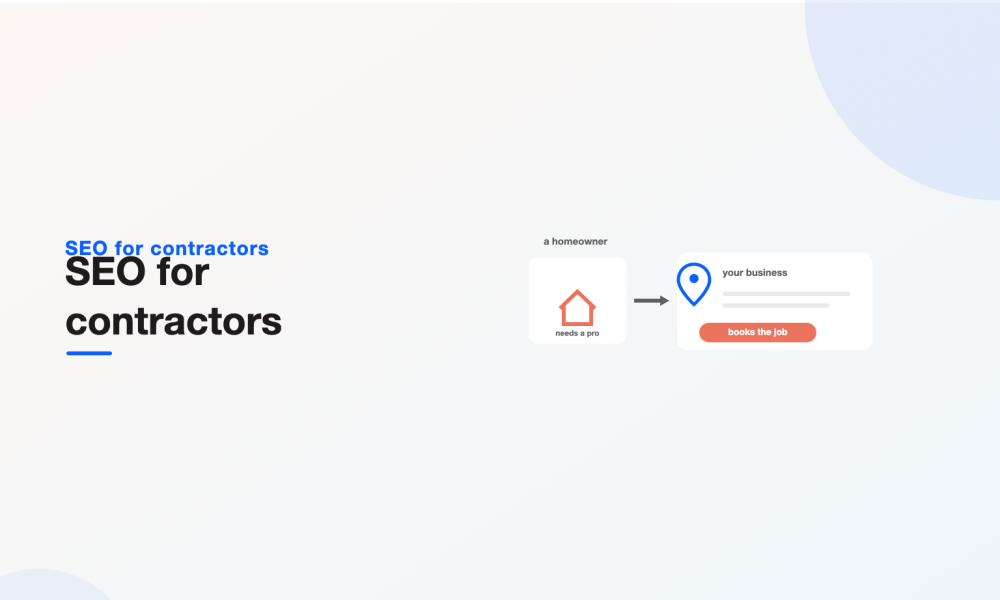
SEO for Contractors: Win Local Jobs
SEO for contractors explained: how home-service and construction businesses win local, urgent searches with the map profile, genuine reviews, service and location pages, and real project photos.
Quick Answer
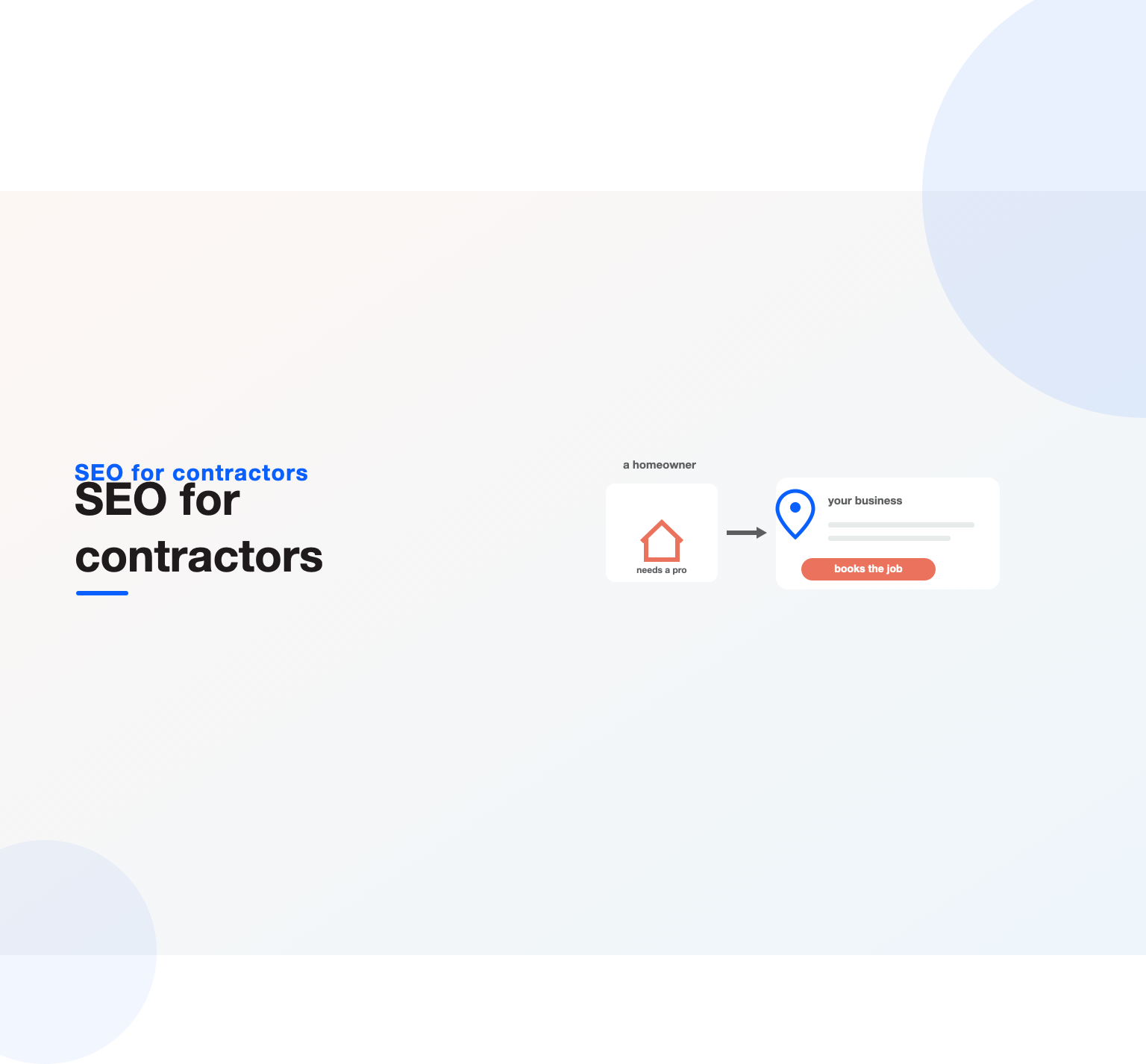
SEO for contractors is the work of helping home-service and construction businesses, remodelers, roofers, plumbers, electricians, HVAC and general contractors, appear when local homeowners search for the work they need done. Since these searches are overwhelmingly local and often urgent, the priorities are winning the map results for your services and areas, building a strong profile and a steady flow of genuine reviews, and creating clear pages for each service and location you serve. Photos of real projects, honest pricing guidance and fast response all turn a searcher into a booked job. Done well, SEO for contractors becomes a dependable source of qualified leads that costs less over time than buying them from ad platforms or lead brokers.
Key Highlights
- Contractor searches are overwhelmingly local and often urgent, so map visibility drives the most jobs.
- A complete profile and a steady flow of genuine reviews are the biggest ranking and trust levers.
- Dedicated pages for each service and each area you serve capture specific, high-intent searches.
- Real project photos and clear, honest content turn searchers into booked jobs.
- Owned search leads cost less over time than lead brokers or continuous ad spend.
Why contractors need a local search focus
When a homeowner needs a contractor, they almost always search for someone nearby, and often they need the work soon, a leaking roof, a broken furnace, a failed water heater rarely wait. That combination of strong local intent and frequent urgency makes search one of the most valuable channels a contractor can win, because the person searching is a ready buyer looking for a local provider to call. Appearing prominently at that moment, in the map results and the local listings, is the difference between getting the call and watching it go to a competitor who showed up first.
This local, high-intent character shapes the whole approach to SEO for contractors. Unlike a national business chasing broad terms, a contractor competes within a defined service area, so the goal is to dominate the local results for the specific services offered in the specific places served. That focus is an advantage, since local markets are far more winnable than national ones, and a contractor that does the local fundamentals well can outrank larger, less attentive competitors in its own territory. The prize is not abstract visibility but a steady stream of nearby homeowners ready to hire.
The economics reinforce the case. Many contractors rely on lead brokers or continuous ad spend to fill their pipeline, paying for every lead again and again, and those costs never stop. Building an owned search presence, a strong profile, real reviews, useful service pages, creates an asset that generates leads at a steadily falling cost, reducing dependence on bought leads and improving the profitability of every job. For a contractor tired of paying a premium for each lead, that shift from renting leads to owning a channel is exactly what makes SEO for contractors worth the effort, a logic our overview of local SEO applies across service businesses.
The profile that wins the map
The most important asset in SEO for contractors is the business profile that populates the map results, because that is where most local, high-intent searches are decided. Claiming, verifying and fully completing it is the highest-leverage move a contractor can make, and it starts with accuracy: the correct business name, the right primary and additional service categories, a defined service area, precise hours, and clear contact details. A contractor that gets these fundamentals right often jumps into the map results ahead of competitors who left their profile thin or unclaimed.
Beyond the basics, the profile rewards ongoing attention that many contractors neglect. Photos of real completed projects make a listing far more compelling, since homeowners want to see the quality of your work before they call, and a listing rich with genuine project images consistently outperforms a bare one. Keeping the services list complete and specific, posting updates, and answering the questions homeowners ask all signal an active, trustworthy business. Choosing the most accurate service categories matters especially, since a mismatch here quietly limits which searches you appear for no matter how much else you do.
Since so many contractor searches carry emergency intent, responsiveness shown through the profile matters too. A homeowner with an urgent problem often calls the first credible business that appears and answers, so clear contact options, accurate hours and prompt response turn map visibility into booked work. The profile is not a set-and-forget listing but a living asset that, tended well, becomes the single biggest driver of calls for a local contractor, which is why it sits at the heart of the whole effort.
Reviews: the contractor’s strongest trust signal
Homeowners hiring a contractor are making a high-trust, often high-cost decision about work on their home, so reviews carry enormous weight, both for ranking in the local results and for winning the homeowner’s confidence. A contractor with many recent, positive, detailed reviews ranks better in the map and converts far more of the searchers who see it, because a homeowner comparing two businesses almost always chooses the one others clearly trust. Reviews are simultaneously a ranking lever and a closing tool, which is why a deliberate approach to earning them is central to SEO for contractors.
Earning them consistently requires a simple habit rather than a campaign: asking every satisfied customer at the end of a job, making it effortless with a direct link, and doing so steadily so fresh reviews keep arriving. A steady stream signals an active, reliable contractor, while a listing that gathered a few reviews years ago looks stale beside a competitor collecting them every week. For contractors, whose work is visible and personal, genuinely delighted customers are usually willing to leave a review when simply asked, so the main barrier is remembering to ask every time.
Responding to reviews completes the picture. Thanking customers for positive reviews reinforces goodwill, and responding calmly and constructively to any critical one shows prospective homeowners that you stand behind your work and handle problems professionally, which can turn a negative into a trust signal. Since a contractor’s reputation is so central to being hired, engaging with every review demonstrates the reliability homeowners are looking for, making reviews one of the most persuasive assets a contractor can build through SEO for contractors, and tying directly into the broader local SEO reputation work that wins nearby jobs.
Service and location pages that capture demand
Beyond the profile and reviews, a contractor’s own website anchors the organic side of local visibility, and the highest-value pages are those for specific services and specific areas. A homeowner rarely searches for a contractor in the abstract; they search for a particular job in a particular place, so dedicated pages that clearly describe each service you offer, and each area you serve, capture those specific, high-intent searches far better than a single generic page trying to cover everything at once.
These pages work best when they are genuinely useful rather than thin and templated. A strong service page explains the work, what it involves, what a homeowner can expect, common questions and honest guidance on cost, in clear language that reassures someone unfamiliar with the trade. A location page speaks specifically to the community served, not by repeating a place name mechanically, but by addressing the real needs and context of homeowners there. For contractors serving several areas, each location deserves its own genuinely useful page rather than a near-duplicate, since thin, copied pages perform poorly and can look manipulative to engines.
Project and educational content extends this further. Pages and posts showing real completed projects, with before-and-after photos and honest descriptions, both demonstrate quality and capture searches from homeowners researching similar work, while helpful content answering common questions, how to know when a roof needs replacing, what a repair typically costs, how to prepare for an installation, reaches homeowners earlier in their decision. This content builds the topical authority that lifts all of a contractor’s pages, and planning it against genuine local demand, as our guide on SEO cost advises, keeps the effort focused on the work that brings jobs.
Losing local customers to competitors on Google Maps?
Our team reviews your current setup and shows you where the opportunities are. See how our local SEO services work.
Common mistakes contractors make with SEO
Several avoidable mistakes keep contractors from winning local jobs even when they invest effort. The most common is leaving the business profile unclaimed or half-finished, with a missing category, no project photos or an outdated address, which is the single biggest reason a capable contractor fails to appear in the map results. A close second is a passive approach to reviews, gathering a few early and then never asking again, so the listing looks stale beside competitors collecting fresh reviews every week. Both are simple to fix, and fixing them alone lifts many contractors out of obscurity.
Another frequent error is relying entirely on bought leads while neglecting the owned channel, paying a broker for the same leads month after month instead of building an asset that lowers cost over time. Contractors who treat SEO for contractors as optional often end up permanently dependent on the most expensive form of lead generation. A related mistake is a thin website, a single generic page that names every service and area at once, rather than dedicated, useful pages that capture specific searches. Avoiding these errors is less about clever tactics than about doing the local fundamentals thoroughly, the same discipline our guide on SEO for business stresses for durable results.
The subtlest mistake is flying blind, running the business without tracking which searches and pages bring calls, so there is no way to know what is working or where to invest next. Since local search is so measurable, this gap is needless, and closing it turns guesswork into a program that compounds. Contractors who track calls and booked jobs against their profile, reviews and pages quickly see which services and areas deserve more attention, making every subsequent effort in SEO for contractors more effective than the last.
Seasonality, emergencies and demand patterns
Contractor demand rarely arrives evenly through the year, and a smart approach to SEO for contractors accounts for the patterns specific to each trade. Roofing spikes after storms, heating work climbs as winter approaches, cooling in summer, and remodeling often follows seasonal cycles, so aligning content and attention with these rhythms captures demand when it peaks. Preparing seasonal service pages and content ahead of each surge, rather than scrambling once it arrives, means a contractor is already visible when homeowners begin searching, since search authority takes time to build and cannot be switched on overnight.
Emergency demand deserves particular attention because it is both urgent and valuable. Homeowners facing a burst pipe, a failed furnace or storm damage search with immediate intent and usually hire the first credible, responsive business they find, so being visible and reachable for emergency searches is a direct route to high-value jobs. Dedicated pages for emergency services, clear indications of availability, and a profile that makes calling effortless all help a contractor capture this demand. Handling both the seasonal rhythms and the emergency spikes well turns SEO for contractors from a steady baseline into a channel that flexes with the real patterns of the trade, and pairing it with a strong local SEO foundation ensures the visibility holds across every area served.
Getting found in near-me and AI answers
The way homeowners find contractors is broadening beyond the classic map results, and SEO for contractors increasingly has to account for near-me searches and AI answers. A great many contractor searches already carry the near-me pattern or an implied location, and the same strong local presence that wins the map, a complete profile, consistent information, genuine reviews, is what wins these searches too, so the fundamentals serve both at once. A contractor that has done the local work well is usually already the answer to nearby queries without any extra effort.
Increasingly, homeowners also ask AI assistants to recommend a local pro, and those assistants draw on the same underlying signals that power the map: a well-regarded, clearly described, consistent business presence. This means the reputation and information a contractor builds for classic local search also position it to be named when someone asks an assistant for a recommendation, connecting SEO for contractors to the emerging discipline of AI search optimization and the citation-focused work an answer engine optimization program handles. For a contractor, the practical lesson is reassuring: doing the local fundamentals thoroughly prepares the business for how homeowners search now and how they will search next, without a separate project for each surface.
Measuring what actually matters
A contractor should judge SEO by the jobs it brings, not by abstract numbers, and the good news is that local search is unusually measurable. The metrics that matter tie directly to the business: calls generated from the profile and website, direction requests, form submissions and booked jobs, alongside the map and local rankings for the services and areas that matter most. A contractor watching calls and job requests grow as its profile, reviews and pages strengthen has clear evidence the investment is paying off.
Because so much contractor search is local, the profile itself reports much of this, showing how homeowners found the business and what they did, and pairing that with website analytics and simple call tracking gives a complete view of which services and areas are driving work. Measuring this way, over time and against real jobs won, keeps SEO for contractors honest and focused on the outcome that matters, a fuller pipeline of qualified local leads, rather than on rankings or traffic that never turn into booked work.
Doing it yourself versus hiring help
A contractor can begin this work alone, and the early steps deliver real results: claiming and completing the profile, adding real project photos, asking every happy customer for a review, and creating clear pages for the main services and areas served. For a contractor in a less competitive market, disciplined attention to these fundamentals may be enough to win a strong share of local jobs, and doing them personally builds a useful understanding of how the channel brings work.
The case for help grows with competition and with the ongoing nature of the work, since maintaining reviews, keeping the profile active, building out service and location pages, and measuring results is a continuous job that competes with actually running the business and doing the jobs. In a competitive market, the gap between an average and an expert effort is often the difference between appearing in the map results or beneath them, and a partner experienced with contractors can win that visibility faster while the owner focuses on the work. Weighing that against the value of the jobs it brings, and the cost of the bought leads it replaces, a question our guide on SEO for business helps frame, is the right way to decide. Whichever route a contractor takes, the fundamentals hold, and increasingly the same strong local presence also feeds the answers homeowners get from AI assistants, connecting this work to the emerging discipline of AI search optimization as more people ask an assistant to find a nearby pro.
Building a repeatable lead engine
The real prize in SEO for contractors is not a one-time bump in calls but a repeatable engine that keeps producing qualified local leads. That engine has a few moving parts working together: a fully optimized profile that wins the map, a steady habit of earning reviews after every job, a website of genuinely useful service and location pages, and simple measurement that shows which of these bring the work. When these run consistently rather than in fits and starts, they compound, and the cost of each new lead falls as the owned channel carries more of the pipeline that bought leads once dominated.
Turning this into a habit is what separates contractors who benefit lastingly from those who see a brief lift and then stall. Building a review request into the close of every job, refreshing the profile with new project photos as work is completed, and adding a service or area page whenever the business expands all keep the engine running with modest ongoing effort. Because the work compounds, small consistent actions add up to a durable advantage that competitors relying on bought leads struggle to match, and judging the whole effort against the value of the jobs it wins, as our guide on SEO cost frames it, usually makes the case clearly.
It also helps to see this lead engine as part of a connected marketing picture rather than a standalone task. The project photos and useful content that support SEO for contractors also fuel social posts and sales conversations, the reviews that win rankings also reassure every prospect who visits the site, and the strong local presence that wins the map increasingly feeds the answers homeowners get from assistants. A contractor building this engine well is strengthening every way a homeowner might find and choose the business at once, which is why the effort returns more than rankings, and why pairing it with the broader local SEO and search services that surround it gives the channel room to grow as the business does.
Want your business to show up first in local search?
Book a free 30-minute strategy call and leave with a clear next step for your business.
Book a Strategy Call →When to get expert help
For many contractors, the fundamentals are achievable in-house, and starting there is worthwhile both for the early results and for the understanding it builds. But there comes a point where expert help pays for itself, typically when the local market is competitive enough that doing the fundamentals is no longer sufficient to reach the map results, when the business serves enough services and areas that maintaining quality pages and consistent information becomes a job in itself, or when the owner simply has no time to run the channel alongside the actual work. A partner experienced with contractors brings the pattern knowledge to win visibility faster and to avoid the missteps that waste effort.
Choosing that partner well matters, since the work becomes the contractor’s reputation online. The right partner is transparent about what it does, focuses on the local fundamentals that actually bring jobs rather than vanity metrics, and reports results in terms of calls and booked work. Weighing the cost of that help against the value of the jobs it wins and the bought leads it replaces, a question our guide on SEO for business helps frame, is the right way to decide, and the same honest, results-focused standard applies whether the work is done in-house or outsourced. Either way, the goal is the same: a dependable engine of qualified local leads that a contractor owns rather than rents.
For a contractor deciding where to start, the highest-leverage sequence is clear: claim and fully complete the profile with real project photos, build the habit of asking every customer for a review, add genuinely useful pages for the main services and areas served, and track calls and booked jobs so you can see what works. From that foundation the channel compounds, and it can grow into the broader local SEO and search effort that carries a rising share of the pipeline, with what our guide on SEO cost lays out helping set a realistic budget.
Key Takeaways
- SEO for contractors wins the local, often urgent searches homeowners make for the work they need done.
- The profile that populates the map results is the single biggest driver of calls, so complete it fully and keep it active.
- Genuine, recent reviews are both a ranking lever and a closing tool for high-trust hiring decisions.
- Dedicated, genuinely useful service and location pages, plus real project photos, capture specific high-intent demand.
- Measure by calls and booked jobs, and treat owned search as a cheaper, durable alternative to bought leads.

Frequently asked questions
Direct answers to the questions contractors ask most about SEO.
What is SEO for contractors?
It is the work of helping home-service and construction businesses appear when local homeowners search for the work they need done. Because these searches are overwhelmingly local and often urgent, it focuses on winning the map results for your services and areas, building a strong profile and steady genuine reviews, and creating clear pages for each service and location you serve. Done well, it becomes a dependable source of qualified local leads that costs less over time than buying them from ad platforms or lead brokers.
Why is local search so important for contractors?
Because homeowners almost always search for a contractor nearby, and often need the work soon, so the person searching is a ready buyer looking for a local provider to call. That strong local intent and frequent urgency make appearing in the map results and local listings the difference between getting the call and losing it to a competitor. Contractors compete within a defined service area, and local markets are far more winnable than national ones, so doing the local fundamentals well brings a steady stream of nearby jobs.
How important are reviews for contractor SEO?
Very important, because hiring a contractor is a high-trust decision about work on someone’s home, so reviews strongly influence both local rankings and whether a homeowner chooses you. A business with many recent, positive, detailed reviews ranks better in the map and converts more of the searchers who see it. Earn them by asking every satisfied customer at the end of a job, making it effortless with a direct link, and doing so consistently, then respond to each one to show you stand behind your work.
Do contractors need a website, or just a profile?
Both help, and they do different jobs. The business profile drives the map results where most local searches are decided, so it is essential. But a website with dedicated service and location pages captures specific, high-intent searches, showcases real projects, and builds the topical authority that supports your rankings. A profile alone can win some visibility, but pairing it with genuinely useful service and location pages captures far more of the demand and gives homeowners the detail they need to choose you.
Should I make a page for every service and area I serve?
Yes, provided each page is genuinely useful rather than thin and templated. A homeowner searches for a specific job in a specific place, so dedicated pages for each service and each area capture those high-intent searches far better than one generic page. But each must carry real, specific content that helps the reader, since near-duplicate pages that only swap a place name perform poorly and can look manipulative. Quality per page matters more than simply having many pages.
Is SEO cheaper than buying leads for contractors?
Over time, usually yes. Lead brokers and continuous ad spend charge for every lead again and again, and those costs never stop. Building an owned search presence takes upfront effort but creates an asset that generates leads at a steadily falling cost, reducing dependence on bought leads and improving the profit on every job. Many contractors use paid leads for immediate work while building search as the durable, lower-cost channel that gradually carries more of the pipeline.
How long does contractor SEO take to work?
Some gains come quickly: fully optimizing a neglected profile can lift map visibility within weeks. The compounding results, from accumulating reviews, building service and location pages, and earning local authority, typically build over a few months. Competitive markets take longer than quiet ones, but because local search is so measurable, you can usually see steady, attributable progress in calls and job requests well before the full effect arrives, which makes the effort easy to justify.
Can I do contractor SEO myself?
Yes, at least to start. Claiming and completing your profile, adding real project photos, asking every happy customer for a review, and creating clear service and area pages are all achievable and deliver real early gains. The case for help grows with competition and the ongoing nature of the work, since maintaining reviews, pages and measurement competes with actually running jobs. Many contractors begin themselves and bring in a partner once the fundamentals are in place and they want to win a more competitive market.
Contractors: search across every surface
Win contractors across classic search, local, and the AI answers, each is its own discipline, and they reinforce each other.
Ready to put this into practice?
Talk to the team that runs SEO, AI search and paid growth programs every day.
Book a Strategy Call →