 Skip to content
SEO for Startups: Build a Compounding Channel
SEO for startups explained: how young companies build a compounding, cost-lowering acquisition channel with focus on winnable keywords, problem-led content, a sound technical base, and acquisition-focused measurement.
Quick Answer
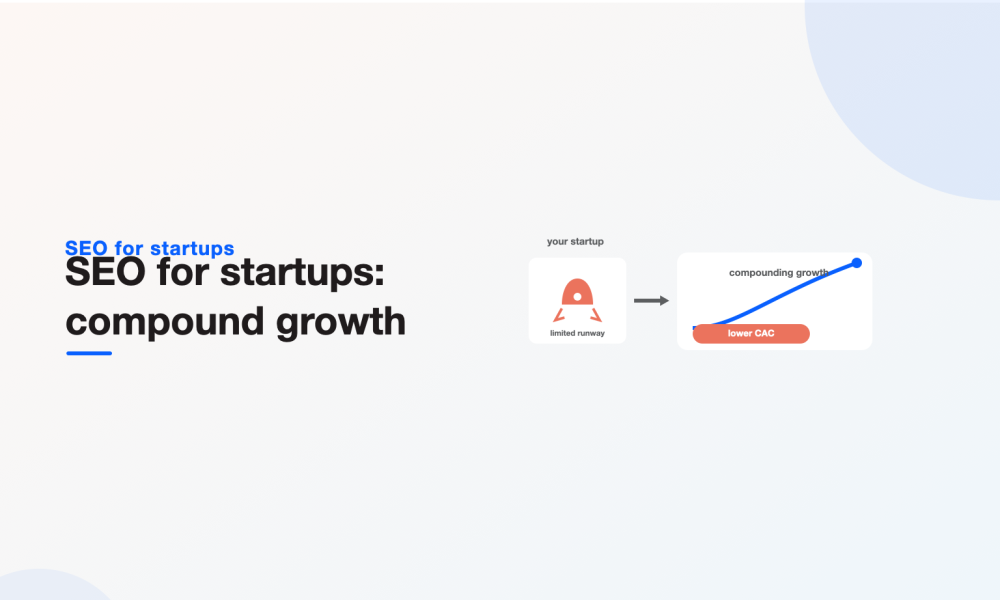
SEO for startups is search optimization adapted to the realities of a young company: limited budget, small teams, urgent growth targets, and often a product or category the market is only beginning to understand. Unlike an established business defending rankings, a startup uses SEO to build a durable, compounding acquisition channel that lowers customer acquisition cost over time, reducing dependence on paid ads that stop the moment funding does. The winning approach is focused rather than broad: pick the few keywords and topics where you can realistically win, build genuinely useful content around the problems your product solves, get the technical foundation right early, and let the channel compound as the company grows. Done well, SEO becomes one of the highest-return investments a startup can make.
Key Highlights
- SEO for startups builds a compounding acquisition channel that lowers customer acquisition cost over time.
- Focus beats breadth: win the few achievable keywords rather than chasing competitive head terms early.
- Content around the problems your product solves attracts the right users, not just traffic.
- Getting the technical foundation right early avoids expensive rework as the site scales.
- SEO complements paid acquisition, reducing reliance on spend that stops when it stops.
Why startups approach SEO differently
A startup faces a different set of constraints from an established company, and those constraints should shape its entire approach to search. Budgets are tight, teams are small, and the pressure to show growth is immediate, which means a startup cannot simply outspend competitors on content and links or wait patiently for years with no return. At the same time, many startups are building in new or emerging categories where the exact demand is still forming, so the keyword landscape is less settled than in a mature market. These realities call for a sharper, more strategic approach than a generic playbook provides.
The strategic case for search in a startup rests on economics. Paid acquisition delivers immediate users but stops the moment the budget does, and in competitive markets the cost per acquisition can climb faster than a young company can sustain. Search optimization, by contrast, builds an asset: it takes time to mature, but once it does, it delivers users at a steadily falling cost, reducing dependence on paid channels and improving unit economics as the company scales. For a startup trying to reach sustainable growth before its runway runs out, that compounding, cost-lowering quality is exactly what makes the channel worth the patience it demands.
This does not mean a startup should abandon paid acquisition, which remains valuable for immediate traction and testing. Rather, it means treating search as the long-term foundation that paid channels buy time for, so the two work together: paid delivers users now while SEO builds the durable channel that will carry growth later. Framing the effort this way, as building an asset rather than renting attention, is the mindset that separates startups that get real value from search from those that dabble and give up, a distinction our overview of SEO services keeps in focus.
Focus: winning the achievable keywords
The single most important principle in SEO for startups is focus. A young site has little authority, so competing head-on for the biggest, most contested keywords is usually futile early, the incumbents with years of authority will win those. The productive move is to identify the specific, achievable keywords where a new site can realistically rank, typically more specific, lower-competition terms with genuine intent, and concentrate effort there rather than spreading it thin across ambitious terms that will not pay off for years.
These achievable terms are often closer to the point of purchase than broad head terms, which is an advantage rather than a compromise. A specific query that describes the exact problem your product solves attracts a user who is far more likely to convert than someone typing a broad, generic phrase, so winning these terms delivers not just traffic but the right traffic. For a startup that needs users who actually adopt the product, this alignment between achievable keywords and high intent is precisely what makes a focused strategy so efficient with limited resources.
Choosing those terms well requires honest research rather than wishful thinking. The goal is to find the intersection of real demand, achievable difficulty and genuine relevance to your product, then prioritize ruthlessly, since a startup cannot pursue everything at once. Starting with a small set of winnable, high-intent terms, earning rankings for them, and expanding outward as authority grows is the pattern that works, building momentum rather than stalling against terms the site is not yet ready to win. Planning that effort against genuine demand and realistic difficulty, much as our guide on SEO cost frames the wider question, keeps the strategy grounded.
Content built around the problems you solve
Content is how a startup earns rankings and attracts the right users, and the most effective content is built around the problems your product solves rather than around the product itself. Prospective customers search for their problems, their questions and their goals long before they search for a solution like yours, so content that genuinely helps them understand and address those problems reaches them early, builds trust, and positions your product as the natural answer. This problem-led approach attracts users who have the need your product serves, which is far more valuable than traffic that never converts.
For startups in emerging categories, content also does the work of creating and shaping demand. When the market does not yet fully understand a new kind of product, content that explains the problem, frames the solution and educates prospective users effectively builds the category as it builds the company’s authority within it. This is a powerful position for an early mover, since the startup that becomes the trusted educator on a topic often becomes the default choice as demand forms, earning both rankings and mind-share from the same effort.
Quality and focus matter more than volume for a resource-constrained startup. Rather than publishing large amounts of thin content, a startup does better to produce a smaller number of genuinely excellent, useful pieces on the topics that matter most to its users, since depth and usefulness are what earn rankings, links and trust. Each strong piece becomes a durable asset that keeps attracting users, so the disciplined approach of doing fewer things well suits both the startup’s limited resources and the way search actually rewards quality, a discipline our guide on SEO for business reinforces.
Not sure why your pages are not ranking or bringing enquiries?
Our team reviews your current setup and shows you where the opportunities are. See how our SEO services work.
The technical foundation
Startups often build on modern web frameworks and move fast, which makes getting the technical foundation right early especially important, because technical problems are far cheaper to prevent than to fix once a site has grown. A site that engines can crawl, render and understand reliably is the precondition for any content to rank, and modern JavaScript-heavy sites can inadvertently make content hard for engines to access if built without search in mind. Addressing this early, ensuring pages are crawlable, fast and properly structured, avoids the painful and expensive rework of retrofitting search-friendliness onto a site that was not designed for it.
Speed and mobile-friendliness matter as much for a startup as for anyone, since users and engines both favor fast, smooth experiences, and a young company cannot afford to lose hard-won visitors to a sluggish site. A clean, sensible site structure that will scale as the company adds pages and content also pays off, since decisions made early about how the site is organized become difficult to change later. Investing modestly in these foundations at the outset is one of the highest-return technical choices a startup can make, precisely because it prevents problems that would otherwise compound as the site grows.
Common mistakes startups make with SEO
Several recurring mistakes undermine SEO for startups, and most stem from ignoring the constraints that make a startup different. The most common is trying to compete too broadly too early, chasing the biggest head terms a young site has no chance of winning, and spreading thin effort across ambitious keywords instead of concentrating on the achievable ones. This scatters limited resources and produces no rankings anywhere, when the same effort focused on winnable terms would have built real momentum. Focus is the antidote, and its absence is the single most frequent failure.
A second mistake is treating SEO for startups as a quick fix and abandoning it too soon. Because search takes months to mature, a team that expects results in weeks often gives up just as the channel begins to work, wasting the investment already made. Related to this is measuring the wrong things, celebrating traffic or rankings that never convert to signups, rather than tracking the qualified acquisition that matters. A third error is neglecting the technical foundation on a fast-moving modern site, letting crawlability or speed problems quietly cap everything, then facing expensive rework later. Avoiding these mistakes is less about tactics than about patience, focus and honest measurement, the same discipline our guide on SEO for business stresses.
The subtlest mistake is producing content about the company rather than the customer’s problems. A startup eager to talk about its product often publishes feature-focused content that no one is searching for, when problem-led content that meets prospective users where they are would attract the right audience. Reorienting content around the problems the product solves, rather than the product itself, is one of the highest-leverage corrections a startup can make, and it aligns the whole effort of SEO for startups with how customers actually search.
SEO for startups versus enterprise SEO
It helps to understand how SEO for startups differs from the enterprise version, because applying the wrong playbook wastes scarce resources. A large enterprise has authority, budget and teams to pursue thousands of keywords, extensive content operations and broad technical projects across a huge site. A startup has none of that, so importing an enterprise approach, broad keyword targeting, high-volume content, sprawling technical audits, simply overwhelms a small team and burns runway without results. The startup’s advantage is not scale but focus and agility.
Those advantages should shape the strategy. Where an enterprise moves slowly across a vast surface, a startup can move fast on a narrow front, winning specific high-intent terms, shipping excellent content quickly, and adapting as it learns. SEO for startups therefore concentrates resources where they can win rather than diffusing them, and it treats speed and learning as strengths that large competitors lack. Recognizing that the startup game is different, and playing to its strengths rather than imitating the incumbents, is what lets a small company earn real search visibility despite its disadvantages in authority and budget, a distinction our overview of SEO services keeps in view.
This difference also affects when and how to bring in help. A startup does not need an enterprise-scale team; it needs focused expertise that understands its constraints and can prioritize ruthlessly. The right partner for SEO for startups is one that has worked with young companies and knows how to build a compounding channel on a limited budget, not one that applies a heavyweight process designed for a very different situation. Matching the help to the stage is as important as the strategy itself.
Building SEO into a startup from day one
The startups that get the most from search are usually those that build it in early rather than bolting it on later, and doing so costs little when the site is young. From day one, choosing a sound technical foundation, a crawlable, fast, sensibly structured site, prevents the expensive rework that catches startups which ignore search until they have scaled. Making these choices while the site is small is far easier than retrofitting them onto a grown, JavaScript-heavy application, so early attention pays outsized dividends.
Building in SEO for startups from the start also means shaping content and site structure around the problems and keywords that matter as the company defines its market. Even a small early investment, a handful of excellent problem-led pieces on winnable terms, begins compounding immediately and teaches the team how the channel behaves before the stakes are high. Founders who understand search early make better decisions about content, product messaging and even positioning, since the language customers use in search reveals how they think about the problem. This is why treating SEO for startups as a foundational discipline, rather than a later marketing task, tends to produce a stronger channel and lower acquisition costs as the company grows, planning it against genuine demand as our guide on SEO cost advises.
Scaling SEO as the startup grows
As a startup gains traction and authority, its search strategy should evolve, and SEO for startups at scale looks different from the earliest phase. With growing authority, the company can begin competing for the broader, more competitive terms that were out of reach at the start, expanding outward from the winnable niche it first claimed. The focused foundation built early becomes the platform from which to reach for more ambitious keywords, so the initial discipline pays off precisely because it earns the authority that later expansion requires.
Scaling also means deepening content and building authority more deliberately. A growing startup can invest in more comprehensive topical coverage, in earning credible links and mentions, and in the ongoing measurement that keeps the channel efficient, all of which compound the asset built earlier. The key is to scale without losing the focus and quality that made the early effort work, resisting the temptation to suddenly pursue everything at once. Managed well, SEO for startups matures from a narrow, high-intent channel into a broad, durable acquisition engine that carries a growing share of demand at a falling cost, complementing paid channels and the emerging AI search optimization work that increasingly shapes how customers discover products.
Measuring what matters
A startup should measure SEO by its contribution to the outcomes that determine survival and growth, not by vanity metrics. Rankings and traffic matter only insofar as they turn into signups, trials, demos or customers, so the metrics worth watching are the ones that connect search to real acquisition: qualified traffic from your target terms, the conversions it produces, and ultimately its effect on customer acquisition cost. A startup that watches search deliver users who actually adopt the product, at a falling cost over time, has clear evidence the channel is working.
Because search is a long game while startups live quarter to quarter, it helps to track leading indicators alongside the ultimate outcomes. Early signs, improving rankings for target terms, growing organic traffic to key pages, initial conversions from that traffic, show the channel is developing before it reaches full scale, which matters for a team that must justify continued investment. Judging the effort by this chain, from rankings to qualified traffic to conversions to acquisition cost, keeps it honest and focused on the growth that actually matters, rather than on numbers that look impressive but do not move the business.
Getting started and getting help
A startup can begin SEO itself, and there is real value in founders understanding the channel early. The starting moves are accessible: research a small set of winnable, high-intent keywords tied to the problems your product solves, produce a few genuinely excellent pieces of content around them, and ensure the technical foundation is sound from the start. Doing this early, even at a small scale, begins building the compounding asset and teaches the team how the channel behaves, which makes any later investment more effective.
The case for help grows as the company scales and the stakes rise, since expert guidance can prevent costly mistakes and accelerate results at the moments they matter most. A partner experienced with startups understands the constraints, limited budget, the need for focus, the pressure for measurable results, and can prioritize the work that will move the business rather than applying a generic enterprise playbook. Weighing that against the value of the durable, cost-lowering channel it builds, a question our guide on SEO for business helps frame, is the right way to decide. Whichever route a startup takes, the principles hold: focus on winnable, high-intent terms, build genuinely useful content around real problems, get the technical foundation right early, and measure by acquisition rather than vanity, and search becomes one of the most valuable growth assets a young company can own, complementing the paid channels and the emerging AI search optimization work that increasingly shape how customers discover new products.
Want a team to run this SEO work for you?
Book a free 30-minute strategy call and leave with a clear next step for your business.
Where SEO fits in a startup’s growth stack
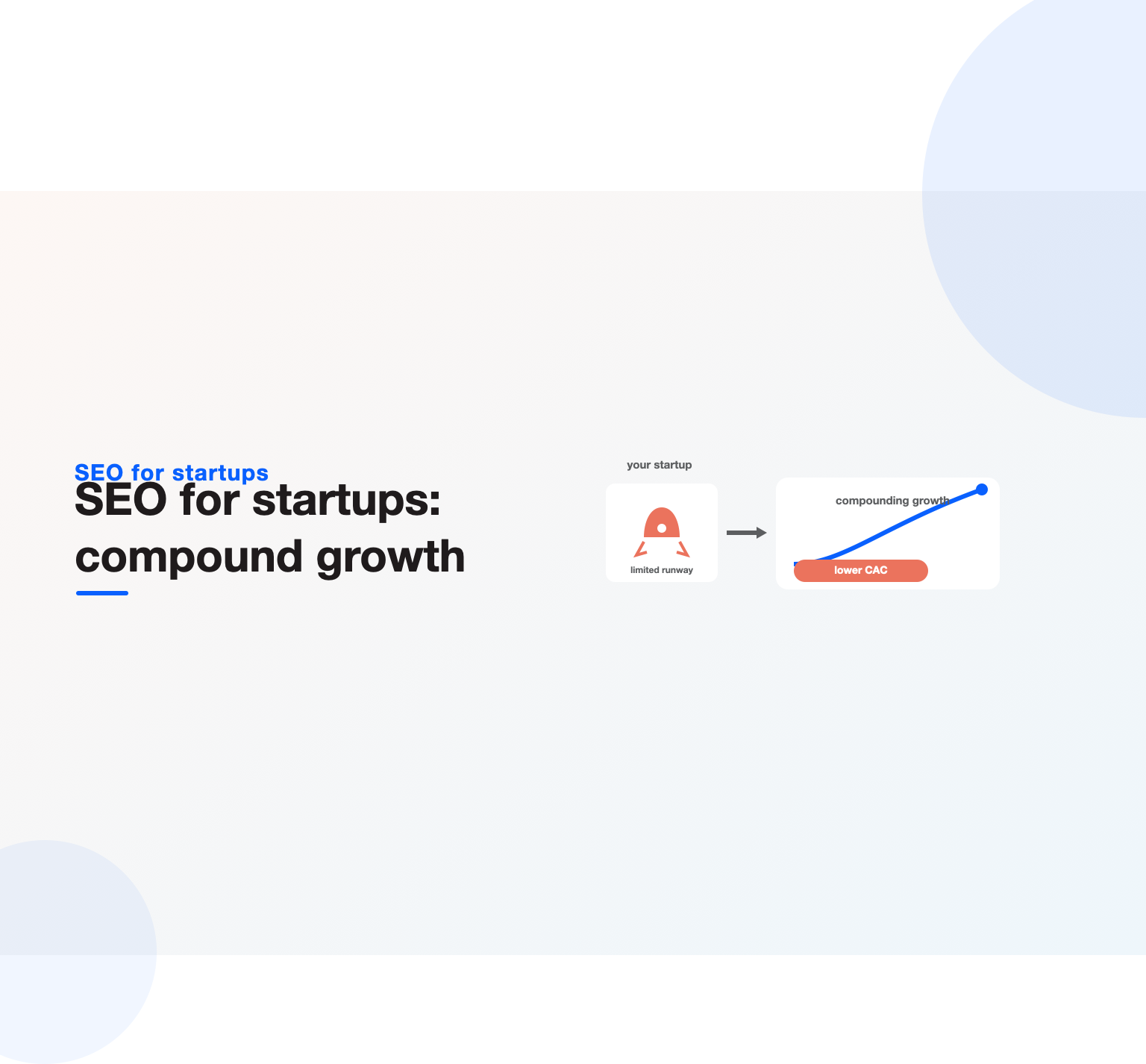
Search rarely works in isolation, and the startups that get the most from it treat it as one connected part of a wider growth stack. The problem-led content that earns rankings also fuels social, email and sales enablement, since a genuinely useful piece can be shared, sent to prospects and repurposed far beyond the search channel. The keyword and conversion data from paid campaigns, meanwhile, reveals exactly which terms are worth targeting organically, so paid and search sharpen each other rather than competing. Seen this way, investment in search optimization multiplies the return on the rest of a startup’s marketing rather than sitting apart from it.
The connection extends into the newer surfaces where customers increasingly discover products. The same authoritative, problem-led content and clean technical foundation that win classic rankings are what modern answer systems draw on, so a startup building search well is also building visibility in AI answers through the emerging disciplines of AI search optimization and the citation-focused work an answer engine optimization program handles. For a young company in an emerging category, being the trusted source an assistant names can matter as much as ranking, and both flow from the same disciplined effort, which is why treating search as foundational pays off across more channels every year.
For founders deciding how to prioritize, the practical guidance is to start where the leverage is highest and the cost is lowest: a sound technical base, a focused set of winnable, high-intent keywords, and a few excellent problem-led pieces of content, measured by qualified acquisition rather than vanity metrics. From that foundation the channel compounds, and the company can expand into broader terms and deeper content as authority grows. Judging the whole effort against the durable, cost-lowering acquisition it builds, a lens our guide on SEO for business encourages, and understanding what the fuller scope costs, which our guide on SEO cost lays out, lets a startup invest in search with clear eyes and realistic expectations rather than treating it as either a magic bullet or an afterthought.
One final point worth internalizing is that the discipline of SEO for startups, focus, patience, problem-led thinking and honest measurement, tends to make a company better at growth generally, not just at search. The habit of understanding customer problems deeply enough to write genuinely useful content sharpens product messaging and positioning; the discipline of measuring by qualified acquisition rather than vanity carries into every channel; and the patience to build a compounding asset rather than chase quick wins is exactly the mindset durable companies need. In that sense the effort a founder puts into search returns more than rankings, and for startups serving local markets it dovetails naturally with a strong local SEO foundation, while the broader SEO services that surround it give the channel room to scale steadily as the company grows into new markets, categories and customer segments over time.
Key Takeaways
- SEO for startups builds a compounding, cost-lowering acquisition channel that complements paid growth.
- Focus on the few winnable, high-intent keywords rather than contested head terms a young site cannot win.
- Build genuinely useful content around the problems your product solves to attract users who convert.
- Get the technical foundation right early to avoid expensive rework as the site scales.
- Measure by qualified traffic, conversions and acquisition cost, not by vanity rankings or raw traffic.
Frequently asked questions
Direct answers to the questions founders ask most about SEO for startups.
What is SEO for startups?
It is search optimization adapted to a young company’s realities: limited budget, small teams, urgent growth targets and often an emerging category. Rather than defending existing rankings, a startup uses SEO to build a durable, compounding acquisition channel that lowers customer acquisition cost over time and reduces dependence on paid ads. The approach is deliberately focused, winning the few achievable, high-intent keywords, building useful content around the problems the product solves, and getting the technical foundation right early.
Is SEO worth it for an early-stage startup?
Often yes, if approached patiently and with focus. SEO takes time to mature, so it is not a quick fix, but it builds an asset that delivers users at a falling cost as it grows, improving unit economics in a way paid acquisition never does. For a startup trying to reach sustainable growth before its runway runs out, that compounding channel is valuable, provided the company also uses paid channels for immediate traction while search develops in the background.
Should a startup choose SEO or paid ads?
Both, used together. Paid ads deliver immediate users and let you test messages and demand, but stop when the budget does. SEO builds the durable, cost-lowering channel that carries growth later. The productive framing is that paid buys time while SEO builds the foundation, so a startup runs paid for immediate traction while investing in search as the long-term asset. Choosing one exclusively usually means either burning cash or waiting too long for results.
What keywords should a startup target?
The achievable ones: specific, lower-competition terms with genuine intent and real relevance to your product, rather than the biggest head terms that established competitors will win. These specific terms are often closer to the point of purchase, so they attract users more likely to convert, delivering the right traffic rather than just volume. Start with a small set of winnable, high-intent terms, earn rankings for them, and expand outward as your site’s authority grows.
How should a startup approach content for SEO?
Build content around the problems your product solves rather than around the product itself, since prospective customers search their problems and questions before searching for a solution. This attracts the right users early and positions your product as the natural answer. For emerging categories, content also creates and shapes demand. Favor a smaller number of genuinely excellent, useful pieces over large volumes of thin content, since depth and usefulness are what earn rankings, links and trust.
How long does SEO take to work for a startup?
It is a long game, typically months before meaningful results, and competitive terms take longer, which is why focus on achievable keywords matters so much for showing progress. Leading indicators like improving rankings and growing organic traffic appear before full results, letting a team see the channel developing. Because it compounds, starting early is valuable even when the payoff is not immediate, and pairing it with paid channels covers the immediate need while search matures.
Why is the technical foundation important for startups?
Because startups often build on modern JavaScript frameworks that can inadvertently make content hard for engines to access, and because technical problems are far cheaper to prevent than to fix after a site grows. Ensuring pages are crawlable, fast, mobile-friendly and sensibly structured from the start is the precondition for content to rank and avoids expensive retrofitting later. Modest early investment in these foundations is one of the highest-return technical choices a young company can make.
Can a startup do SEO without hiring help?
Yes, at least to begin, and there is real value in founders understanding the channel. Researching a small set of winnable keywords, producing a few excellent pieces of content and getting the technical basics right are all achievable in-house and start building the compounding asset. The case for expert help grows as the company scales and mistakes get costlier, since a partner experienced with startups can prioritize what moves the business and avoid the generic enterprise playbook that wastes limited resources.
Ready to put this into practice?
Talk to the team that runs SEO, AI search and paid growth programs every day.
Book a Strategy Call →