 Skip to content

Marketing Automation Best Practices That Actually Work
The marketing automation best practices that separate results from waste: clean data, start small, lifecycle mapping, segmentation, CRM integration, revenue measurement, and a human touch.
Quick Answer
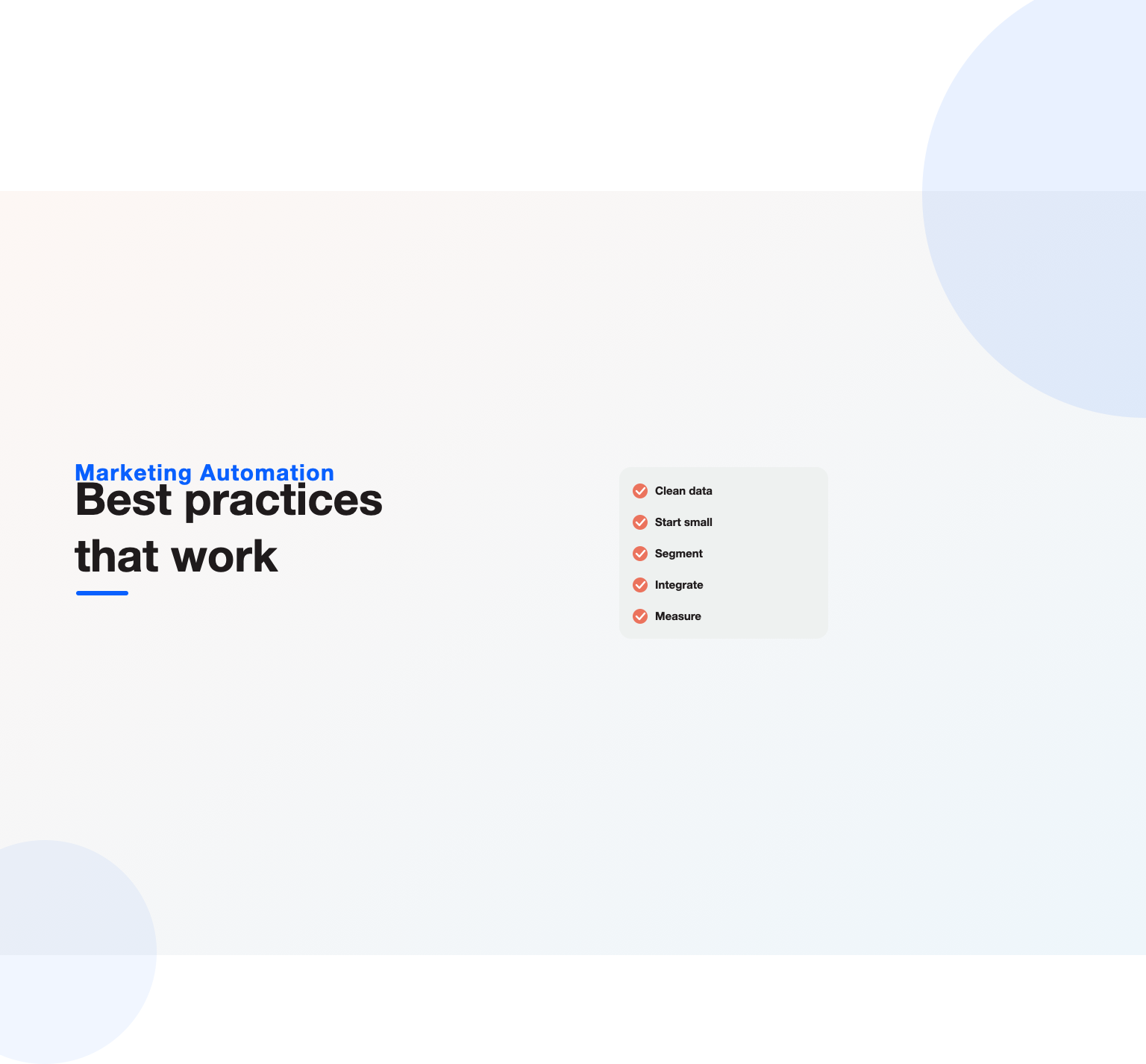
The core marketing automation best practices are: build on clean, consent-based data; start with one or two high-value flows rather than automating everything at once; map messages to the customer lifecycle; segment and personalise instead of blasting; integrate the platform with your CRM so data stays in sync; test and measure against revenue, not vanity metrics; and keep a human touch so automation feels helpful, not robotic. Follow these and automation becomes a compounding asset; ignore them and it amplifies mistakes at scale.
Key Highlights
- Clean, consent-based data is the foundation; automation built on bad data amplifies the problem.
- Start with one or two high-return flows, not a full lifecycle program on day one.
- Map every message to a lifecycle stage so nothing is a random broadcast.
- Segment and personalise; relevance is what keeps engagement high and unsubscribes low.
- Integrate with the CRM so marketing and sales act on one shared record.
- Measure against pipeline and revenue, test continuously, and keep the experience human.
Build on clean, consent-based data
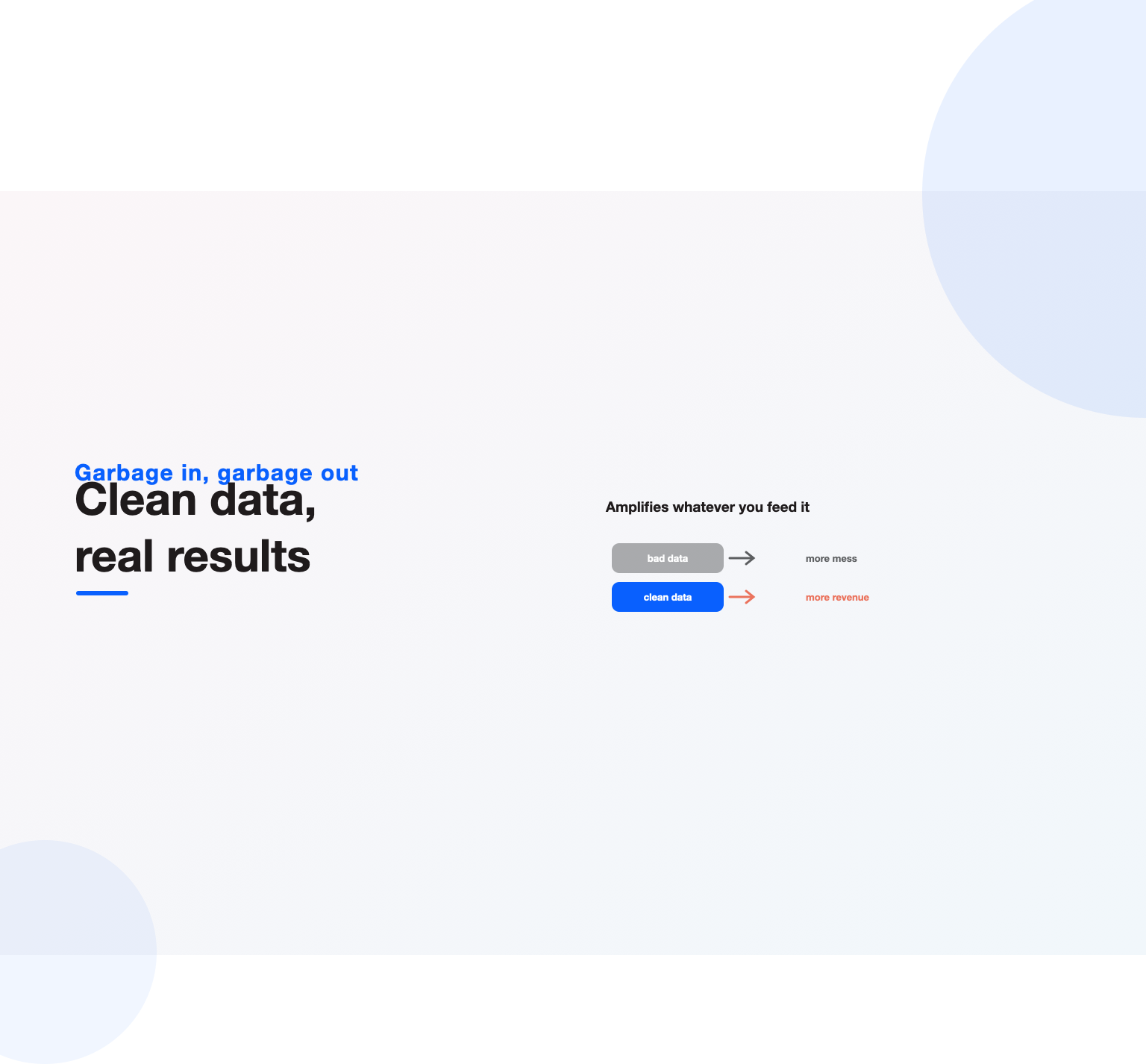
The first of the marketing automation best practices underpins all the others: your data must be clean and consent-based. Automation acts on data, so if that data is inaccurate, duplicated, or gathered without permission, the software simply makes those problems worse, faster, and at scale. A flow built on a dirty list sends the wrong message to the wrong person, and a bought or non-consented list damages deliverability and, in many markets, breaches the law.
In practice this means capturing explicit consent, keeping records accurate and de-duplicated, and maintaining one clean version of each contact. It also means respecting privacy obligations, which vary by market but increasingly require genuine consent and easy opt-out. Among all marketing automation best practices, this is the least glamorous and the most important, because every downstream benefit, scoring, personalisation, reporting, depends on the quality of the underlying data. Get the data right and everything else has a chance; get it wrong and no amount of clever automation will save the program. This is why experienced teams spend real time on data hygiene before building a single flow, and why a program that feels slow to start because of it usually outperforms one that launched fast on a foundation that later has to be rebuilt.
Start small, then expand
A recurring theme in these practices is to start small. The temptation on buying a powerful platform is to automate everything at once, a full lifecycle program across every channel on day one. That almost always stalls, because building many flows simultaneously overwhelms the team and none gets the attention it needs. The teams that succeed pick one or two high-return flows, build them well, prove the value, and expand from there.
The right first flows are the ones with obvious payoff: abandoned-cart recovery for ecommerce, lead nurture for B2B, or a welcome and onboarding sequence for almost any business. A single flow that recovers real revenue or warms leads sales were losing proves the program and funds the next step. This start-small discipline is one of the marketing automation best practices that most reliably separates programs that compound from platforms that sit half-configured while the subscription runs, and it applies whether you are a two-person team or a large marketing function.
Map messages to the customer lifecycle
Central to the discipline is mapping every message to a stage in the customer lifecycle, so each send has a reason and a trigger rather than going out on a blanket schedule. A lifecycle map assigns messages to moments: a welcome on signup, nurture during consideration, cart recovery at purchase intent, onboarding after purchase, and re-engagement when a customer goes quiet.
This mapping is what turns scattered sends into a coherent program. It ensures the right message reaches the right person at the right moment, which is the entire promise of automation, and it prevents the common failure of blasting the whole list the same thing regardless of where each contact is. Building the map before building the flows is one of the marketing automation best practices that saves the most rework, because it gives the whole program a structure to fill in rather than a pile of disconnected campaigns to somehow tie together later.
Segment and personalise, do not blast
Perhaps the most visible practice is to segment and personalise rather than blast everyone the same message. Automation makes personalisation at scale possible, tailoring content, offers, and timing to each contact based on their behaviour and stage, and relevance is what keeps engagement high and unsubscribes low. The larger and more varied your audience, the more this matters.
Effective segmentation uses the data you already have: past purchases, engagement, lifecycle stage, industry, or geography. Even a handful of segments beats one giant list, because each gets a message that fits. Personalisation goes beyond a first name to genuinely relevant content, a returning customer sees different messaging than a first-timer. The opposite, spraying identical messages to everyone, trains people to ignore or unsubscribe, and it is the single behaviour these marketing automation best practices most consistently warn against, because it wastes the one-to-one capability that makes automation valuable in the first place.
Integrate with your CRM and stack
A foundational practice is integration: the platform must connect cleanly with your CRM and the rest of your stack, or its value fragments. Marketing automation and the CRM share the same contacts, so if they do not sync, you end up with two databases that disagree, and the scoring, personalisation, and reporting that depend on a single accurate record all become unreliable.
Done well, the CRM holds the definitive record and automation syncs to it, with engagement data flowing back so sales sees the full picture. Connecting the platform to your store, product, or booking system makes behavioural triggers fire accurately, and connecting it to your other channels keeps the customer experience coherent. The background on marketing automation and the CRM it connects to both stress this shared-data foundation, and in practice integration is where many of the marketing automation best practices either come together or fall apart. A powerful platform run as an island delivers a fraction of its potential.
Test, measure, and optimise continuously
Among the habits that keep a program improving, continuous testing and measurement stand out. Automation gives you clean data on what works, delivered, read, clicked, converted, so use it: test subject lines, timing, offers, and flow structure, keep what performs, and cut what does not. A flow is never finished; it is a starting point to improve, and the teams that treat it that way keep pulling ahead of those that build once and walk away.
Crucially, measure against business outcomes, pipeline and revenue, not vanity metrics like opens alone. A flow with a high open rate that produces no revenue is not succeeding, and only revenue-linked measurement reveals that. Tie each flow to the outcome it should drive, review regularly, and reinvest in what compounds. This test-and-measure habit is one of the marketing automation best practices that separates a program that grows more valuable each quarter from one that is set up once and left to decay, and it is why measurement should be built in from the start rather than bolted on later.
Keep the human touch
An easily overlooked practice is to keep automation feeling human. The goal of automation is to handle the predictable at scale, not to strip the humanity out of your marketing. Over-automated communication, robotic, impersonal, relentless, does more harm than good, because customers can tell when they are being processed rather than served.
In practice this means writing automated messages in a real brand voice, building in easy ways for a customer to reach a person, and not automating interactions that genuinely need a human. It also means respecting frequency, over-messaging because you can is a fast route to unsubscribes and complaints. The best programs use automation to make their communication more timely and relevant, not more mechanical, and this balance is one of the practices that protects the customer relationship the whole program depends on. Automation should feel like good service that happens to be timely, not like being run through a machine.
Avoid over-automation and set-and-forget
A pair of failures the discipline specifically guards against are over-automation and the set-and-forget mentality. Over-automation happens when a team automates interactions that need human judgement, or messages so relentlessly that the automation becomes a nuisance. The fix is discipline about what should and should not be automated, guided by whether automation genuinely serves the customer at that point.
Set-and-forget is the opposite failure: building flows once and never revisiting them, so they slowly drift out of date as products, offers, and audiences change. A flow that was excellent a year ago may now send outdated content or miss new segments. The best practice is periodic review, treating the automation program as a living system that is maintained and improved, not a machine switched on and ignored. Both failures come from treating automation as a substitute for thought rather than a tool for it, which is the mindset all marketing automation best practices ultimately push against.
A worked example: applying the practices
An example shows how the practices combine. A D2C brand adopts automation. Following the first practice, it cleans its list and confirms consent before importing anything. Following the second, it builds just two flows to start: a welcome sequence and cart recovery, rather than a full lifecycle at once. It maps each message to a stage, segments new subscribers from repeat buyers, and connects the platform to its store so the triggers fire accurately.
It measures both flows against recovered revenue, not opens, tests two versions of the cart message, and keeps the winner. Because the messages are written in the brand voice and capped in frequency, they feel like helpful nudges rather than spam. Within a quarter the brand has two flows demonstrably producing revenue, and it expands to post-purchase and re-engagement on that proof. Nothing here is advanced; it is simply the practices applied in order, which is exactly why it works where a rushed, everything-at-once launch would have stalled. Running it on a proper automation platform connected to the store is what makes the triggers reliable.
Getting the setup phase right
Much of a program’s eventual success is decided in setup, before a single flow goes live. The practices here are unglamorous but decisive: choose a platform matched to your real needs rather than the longest feature list, invest properly in onboarding so the tool is configured correctly, and get the CRM integration right from the start rather than bolting it on later. A rushed setup creates data and integration problems that undermine every flow built on top of it.
It also pays to define, in setup, what success looks like and how you will measure it, so the reporting is in place before you need it. Teams that treat setup as a box to tick, rushing to launch flows, spend the following months fighting problems a careful setup would have prevented. Choosing well at this stage is covered in our guide to choosing marketing automation software, and getting the CRM relationship right is covered in CRM vs marketing automation. The effort spent getting setup right is repaid many times over in flows that work rather than flows that fight the foundation.
The practices differ by business model
While the principles are universal, how they apply shifts with the business. For an ecommerce store, the highest-value flows are behavioural, cart recovery, order and post-purchase sequences, reorder prompts, so segmentation on purchase behaviour and tight store integration matter most. For a B2B business, lead nurture and scoring dominate, so the CRM integration and the marketing-sales handoff are the practices to get right first.
The lifecycle map, the segments, and the metrics all follow from the model, which is why copying another company’s flows rarely works: their lifecycle is not yours. Applying the practices means adapting them to how your business actually makes money and how your customers actually buy, not importing a generic template. A store obsessing over lead scoring, or a B2B firm building cart flows it does not need, has misapplied otherwise-sound practices. Matching the flows to the model, and pairing them with the right channels such as email and, in messaging-heavy markets, WhatsApp, is what makes the practices produce results rather than activity.
The metric that ties it together
If the practices had a single unifying aim, it would be to make the program measurable and improvable against revenue. That depends on one thing above all: a unified view of the customer, so every interaction across channels lands on one record and the reporting reflects reality. The mature form of this is a customer data platform, and the background on the customer data platform concept explains why unifying data is treated as a strategic goal.
With that unified view, you can trace a flow to the revenue it produced and improve on evidence; without it, you are guessing. This is why the data and integration practices are foundational rather than optional, they are what make measurement honest, and honest measurement is what lets every other practice compound. A team that gets the unified customer view right finds the rest of the practices reinforce one another; a team that skips it finds even good flows impossible to judge, and a program you cannot judge is a program you cannot improve.
Common mistakes these best practices prevent
- Automating on bad data. The fastest way to amplify errors and damage deliverability at scale.
- Boiling the ocean. Trying to automate everything at once, so nothing is done well.
- Blasting everyone. Ignoring segmentation and personalisation, training people to unsubscribe.
- Running it as an island. Not integrating with the CRM, so data drifts and scoring breaks.
- Measuring opens, not revenue. Optimising vanity metrics while pipeline stalls.
- Set and forget. Building flows once and letting them decay as the business changes.
Each mistake is the inverse of a best practice, which is why internalising the practices is also the surest way to avoid the failures that waste most automation investments.
How to put the best practices into action
Turning marketing automation best practices into a working program follows a sensible order. Start by getting your data clean and consent-based, because nothing else works without it. Agree what you want the program to achieve and map the customer lifecycle so you know which flows matter. Build one or two high-value flows first, integrated with your CRM, and set up measurement against revenue from the start.
Then expand deliberately, adding flows and segments as the first ones prove out, testing and refining as you go, and reviewing the whole program periodically so it stays current. If you would rather have the program built and run to these standards for you, our marketing automation services cover setup through ongoing optimisation, and choosing the right platform first is covered in our guide to how to choose marketing automation software. The wider payoff these practices unlock is laid out in our guide to marketing automation benefits, and how the platform sits alongside your CRM is covered in CRM vs marketing automation.
Protecting deliverability
A practice that quietly decides whether any of the others matter is protecting email deliverability, because a message that lands in spam is a message that never worked at all. Deliverability rests on the same foundations as the rest of the program: a clean, consented list, sensible sending frequency, genuinely relevant content that people engage with, and prompt removal of hard bounces and unsubscribes. Every one of those is a best practice in its own right, and together they keep the sender reputation that gets your mail into the inbox.
The failures that wreck deliverability are the same ones the practices warn against: blasting a large, cold, or bought list; ignoring engagement so you keep mailing people who never open; and messaging so often that recipients mark you as spam. Because automation sends at scale, a deliverability problem compounds fast, which is why the data and frequency practices are not niceties but protections. A program that guards deliverability keeps the channel working; one that abuses it watches its open rates quietly collapse, and pairing the discipline with strong email marketing fundamentals is the surest way to keep the inbox open.
How the practices scale with your team
The way these practices apply shifts with the size and maturity of the team running the program. A solo marketer or a two-person team should lean hard on the start-small practice, running a handful of high-value flows exceptionally well rather than attempting a sprawling program they cannot maintain. Their advantage is focus; their risk is over-reaching, so simplicity and ruthless prioritisation are the practices that matter most.
A larger marketing function can run more flows and more segments, but faces a different risk: complexity outrunning governance, with flows nobody owns, overlapping messages, and a stack that has grown into a tangle. For them the integration, review, and measurement practices, plus disciplined revenue operations and periodic martech consolidation, matter most, because scale without governance produces the messy, half-used programs the practices are designed to prevent. The practices are the same; the emphasis moves with the team, and reading your own situation honestly is what tells you which to weight now. In both cases, pairing the program with sharp conversion optimisation ensures the traffic the flows drive actually converts.
A 90-day plan for the practices
To turn the practices into action, a realistic first quarter looks like this. Month one is foundations: clean and consent-check your data, pick the platform if you have not, integrate it with your CRM, and map the customer lifecycle so you know which flows matter. This is deliberately not a launch month; it is the groundwork that every later flow depends on, and rushing it is the most common source of problems down the line.
Month two is the first flows: build one or two high-value sequences, a welcome and a cart-recovery or nurture flow, segmented and personalised, with measurement against revenue wired in from the start. Month three is proof and expansion: read the results, run a test or two, keep what works, and add the next flow on the evidence. Review the whole program at the end of the quarter to confirm it still reflects the business. Followed in this order, the practices produce a program that is earning within ninety days and set up to compound, rather than a powerful platform sitting half-configured. If you would rather have it built to this standard for you, a specialist automation team follows the same sequence faster, but the discipline is identical either way, and it is the discipline, not the tool, that determines the result.
Key Takeaways
- Clean, consent-based data is the foundation of every other marketing automation best practice.
- Start with one or two high-value flows and expand on proof, rather than automating everything at once.
- Map messages to the customer lifecycle so each send has a reason and a trigger.
- Segment and personalise instead of blasting; relevance is what keeps engagement high.
- Integrate with the CRM and stack so data stays in sync and scoring works.
- Test and measure against revenue, not vanity metrics, and improve flows continuously.
- Keep automation human and avoid the set-and-forget trap; treat it as a living system.
Frequently asked questions
What are the most important marketing automation best practices?
The most important are building on clean, consent-based data; starting with one or two high-value flows rather than automating everything at once; mapping messages to the customer lifecycle; segmenting and personalising instead of blasting; integrating the platform with your CRM; measuring against revenue rather than vanity metrics; and keeping the experience human. Data quality is the foundation because automation acts on data, and every other benefit, scoring, personalisation, reporting, depends on it being accurate and permission-based.
Why is clean data so important in marketing automation?
Because automation acts on data at scale, so any problem in that data is amplified rather than contained. A flow built on inaccurate, duplicated, or non-consented contacts sends the wrong messages to the wrong people, damages deliverability, and in many markets breaches privacy law. Scoring, personalisation, and reporting all draw from the same records, so if those records are wrong, every downstream feature is unreliable. Clean, consent-based data is therefore the precondition that makes all the other best practices actually work.
Should I automate everything at once?
No. Trying to automate everything at once is one of the most common ways programs fail, because building many flows simultaneously overwhelms the team and none gets done well. The best practice is to start with one or two high-return flows, such as cart recovery or lead nurture, build them properly, prove the value, and expand from there. Starting small also lets you learn the platform and protect deliverability before you scale, so the program grows on evidence rather than ambition.
How do I measure marketing automation properly?
Measure against business outcomes, pipeline and revenue, rather than vanity metrics like open rates alone. Tie each flow to the outcome it should drive, how many carts a recovery flow recovers, how many leads a nurture track converts, and track that through to revenue. Leading indicators like delivered, read, and clicked help you diagnose, but the honest measure is revenue influenced. Building revenue-linked measurement in from the start is what lets you tell which flows to double down on and which to cut.
How often should I review my automation flows?
Regularly, because flows decay as products, offers, and audiences change; a set-and-forget program slowly drifts out of date. A light monthly check on performance and a deeper quarterly review of whether flows still reflect the business is a reasonable rhythm. The point is to treat automation as a living system that is maintained and improved, not a machine switched on and ignored. Regular review is also where you catch flows sending outdated content or missing new segments before they cost you.
How do I keep automated marketing from feeling robotic?
Write automated messages in a genuine brand voice, personalise them with relevant detail rather than just a first name, build in easy ways for a customer to reach a real person, and respect frequency so you are not messaging relentlessly. Do not automate interactions that genuinely need human judgement. The goal is to use automation to make communication more timely and relevant, not more mechanical, so it feels like good service that happens to be well-timed rather than like being processed by a machine.
Ready to put this into practice?
Talk to the team that runs SEO, AI search and paid growth programs every day.
Book a Strategy Call →