 Skip to content

Google Ads Remarketing: Re-Engage Warm Visitors That Convert
Google Ads remarketing re-engages people who already visited you, recovering conversions at low cost. Learn audiences, segmentation, frequency, dynamic remarketing and privacy.
Quick Answer
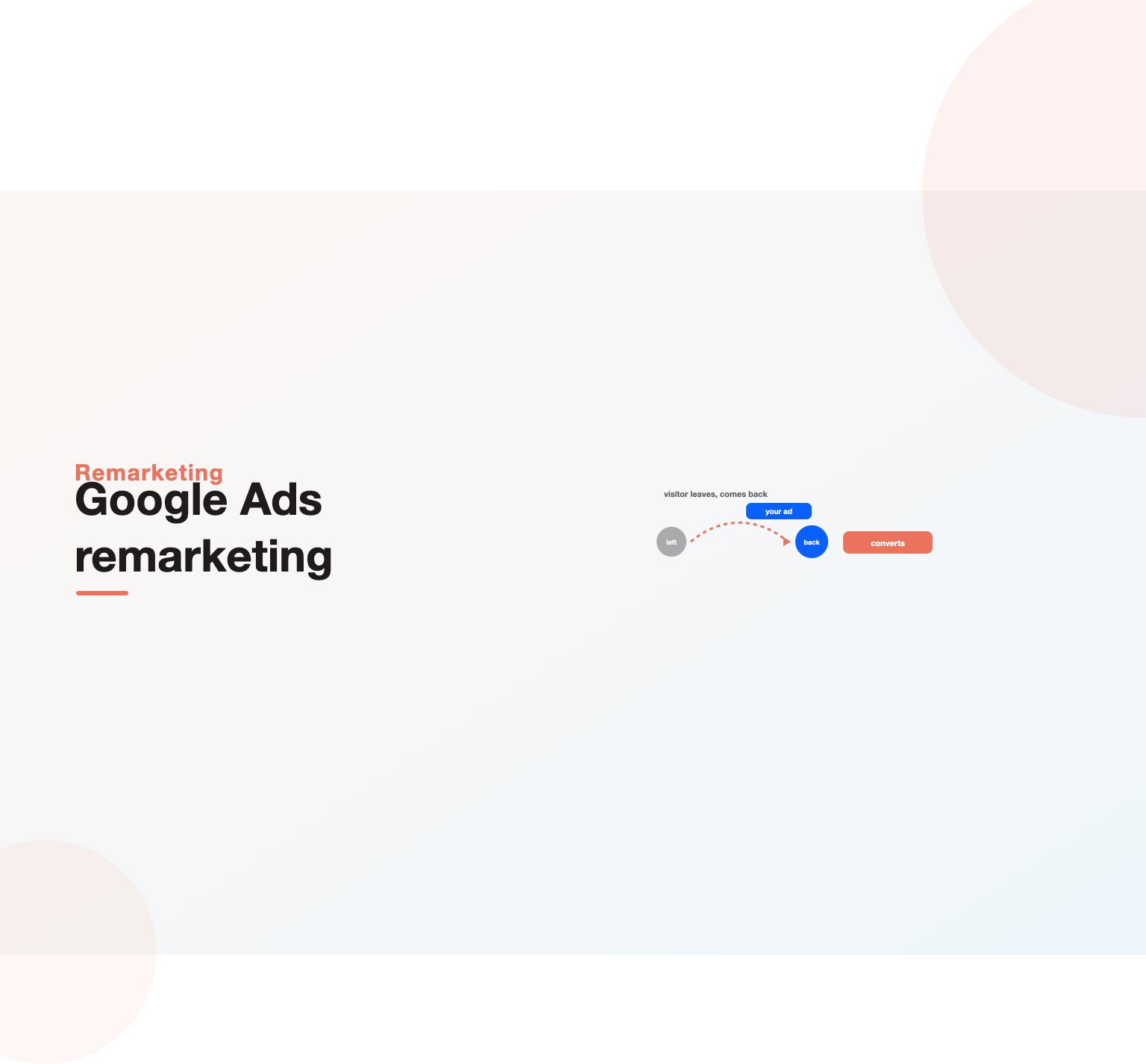
Remarketing in Google Ads is showing ads to people who have already interacted with your business, visited your site, used your app, watched your videos, so you reach warm prospects who know you rather than cold strangers. It works by building audiences of past visitors, through a tag on your site or your customer lists, and then targeting those audiences with ads across Search, Display, YouTube and other Google surfaces as they continue browsing. The tactic is one of the most efficient things you can do in Google Ads, because the people you reach have already shown interest, so they convert at far higher rates and lower cost than cold audiences, and it lets you re-engage the large majority of visitors who leave without converting on their first visit. Done well, with sensible audience segments, frequency limits, and relevant messaging, remarketing quietly recovers conversions you would otherwise lose. Done carelessly, it wastes budget chasing people who will never return or annoys them with the same ad forever. This guide explains how re-engagement works, the types available, how to segment and target well, and how to avoid the mistakes that turn it from an asset into a nuisance.
Key Highlights
- Remarketing shows ads to people who already interacted with your business, reaching warm prospects who convert at higher rates and lower cost.
- Audiences are built from site visitors via a tag, from app users, video viewers, or your own customer lists.
- It re-engages the majority of visitors who leave without converting, recovering conversions that would otherwise be lost.
- Segmenting audiences by behavior, cart abandoners, product viewers, past buyers, lets you tailor messaging and bids to intent.
- Frequency limits and fresh creative keep remarketing effective rather than annoying, avoiding the same ad forever.
- It works across Search, Display and YouTube, and pairs with automated bidding once the audiences have enough data.
Why remarketing works
The economics of remarketing are compelling because of one simple fact: most people do not convert on their first visit. They research, compare, get distracted, or simply are not ready, and the large majority leave without buying or enquiring, so an advertiser who only ever reaches people once loses most of the interest they paid to generate. This approach solves that by letting you come back to those warm visitors, keeping your brand in front of them and drawing them back when they are ready, which recovers conversions that would otherwise evaporate.
The performance gap between warm and cold audiences is what makes it so efficient. Someone who has already visited your site knows who you are and has shown intent, so ads shown to them convert at far higher rates and lower cost per conversion than ads shown to strangers, which means remarketing budget typically works harder than almost any other spend in an account. That efficiency is why warm-audience targeting is a standard part of any mature account and a priority in professional Google Ads management, not an optional extra: it captures value the rest of the account created but did not close, at a cost the numbers rarely argue against.
How remarketing works
The mechanism starts with building audiences of people who have interacted with you, most commonly through a tag placed on your website that adds visitors to a remarketing list as they browse. Once someone is on that list, you can show them ads as they continue around the web and Google’s surfaces, and you can define lists by what people did, everyone who visited, people who saw a specific product, people who started but abandoned a purchase, so the audiences reflect meaningful behavior rather than a single undifferentiated pool. The tag quietly builds these audiences in the background as traffic flows to your site, so once it is in place the lists grow on their own, and the sooner it is installed the sooner you have an audience large enough to advertise to, which is why setting up the tag early is worthwhile even before you plan to run a single re-engagement campaign.
Beyond the site tag, audiences can come from other sources. Customer lists let you upload your own contacts to reach known customers or prospects, app activity builds audiences from people who used your app, and video engagement builds them from people who watched your YouTube content, so it extends across every way people interact with your business. Getting the tag and audiences set up correctly is the foundation, and it depends on the same measurement hygiene as everything else, which is why sound Google Ads conversion tracking and audience setup go hand in hand, much as they do for a retailer running ecommerce PPC management. With the audiences built, the rest is deciding who to target, with what message, and where.
Segmenting your audiences
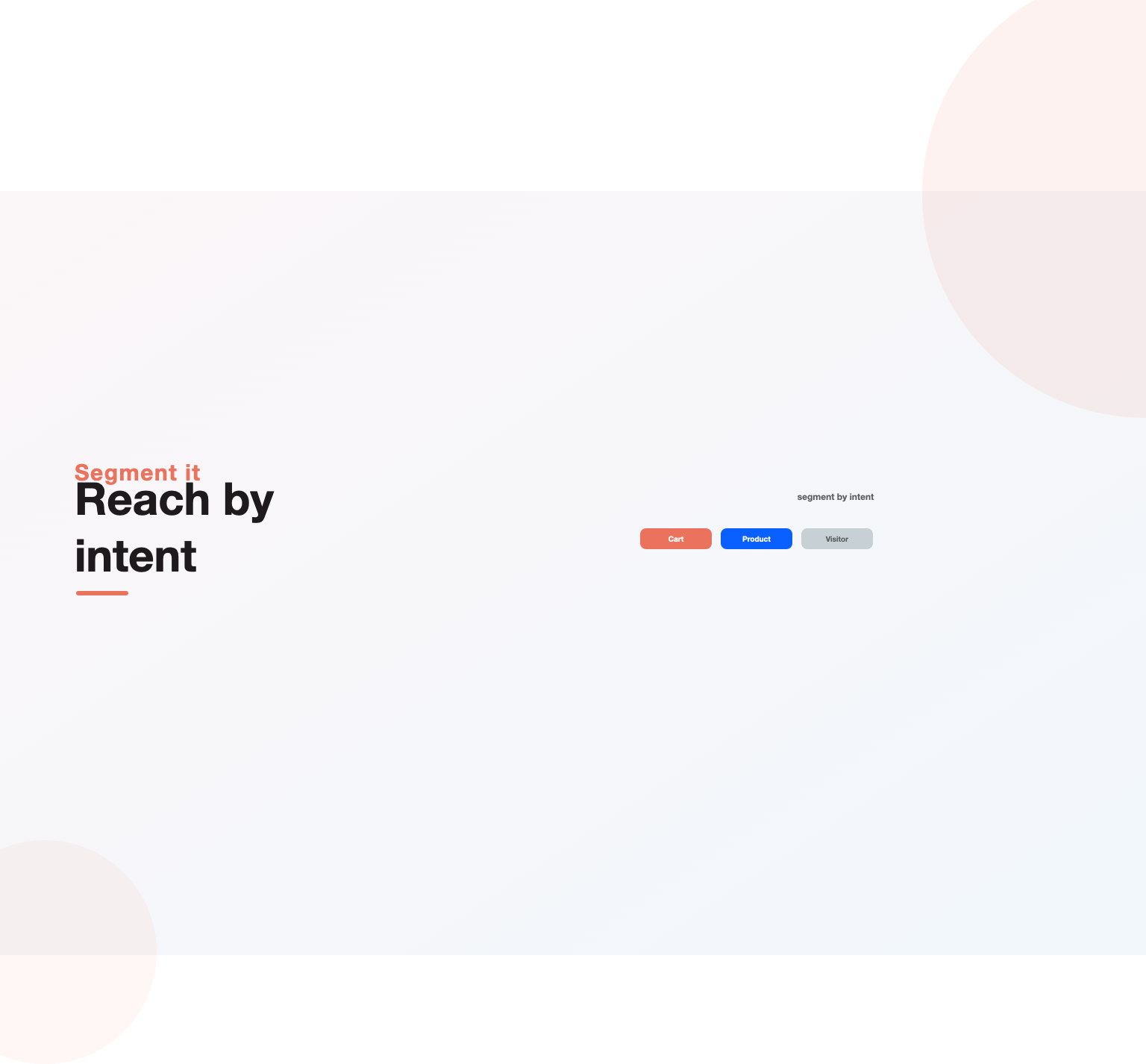
The difference between remarketing that performs and one that wastes money is usually segmentation, because not everyone who visited your site is equally worth reaching or deserves the same message. Treating all past visitors as one audience misses the chance to tailor, whereas segmenting by behavior lets you reach each group with the right approach: someone who abandoned a cart is close to buying and worth an aggressive, specific nudge; someone who read a blog post is earlier in their journey and needs gentler awareness; a past customer might be worth a cross-sell rather than a first-purchase pitch.
Good segments follow the value and intent of the behavior. Cart and checkout abandoners are usually the highest-value segment, since they were closest to converting, and deserve the most attention and often the strongest offers; product or pricing-page viewers show strong interest; general visitors are a broader, cooler pool. Segmenting this way lets you set different bids and messages for each, spending more to recover a near-conversion and less to nurture a casual visitor, which is what turns remarketing from a blunt instrument into a precise one. Building these segments deliberately, matched to how people actually move toward a purchase, is the core skill, and it pays off across verticals from retail to Google Ads for SaaS.
Where it runs: Search, Display and YouTube
The tactic is not a single format; it works across Google’s surfaces, and each offers a different way to re-engage warm audiences. Display remarketing, the most familiar, shows visual ads to past visitors as they browse the web, keeping your brand in front of them and drawing them back, and it is efficient precisely because it targets people who already know you rather than a cold audience. Its visual, ever-present nature makes it the workhorse of most re-engagement, ideal for staying top of mind through a longer consideration period.
Search and video remarketing add other angles. Remarketing lists for search ads let you adjust your bids or targeting for past visitors when they search again, bidding more aggressively for someone who has already shown interest, which combines the intent of search with the warmth of a known audience. Video remarketing reaches past visitors on YouTube with the richer engagement of video, useful for re-explaining or persuading a prospect who needs more than a banner to be convinced. Using warm-audience targeting across these surfaces, rather than only on Display, lets you meet warm prospects wherever they are, and coordinating it with your other campaign types is what builds a coherent full-funnel strategy rather than a set of disconnected campaigns.
Frequency, timing and creative
The fastest way to turn remarketing from helpful into annoying is to show the same people the same ad too often for too long, so managing frequency, timing and creative is essential to keeping it effective. Frequency capping limits how many times a person sees your ads in a period, which prevents the fatigue and irritation that come from bombarding someone with the same message, protecting both your brand and your budget from diminishing returns. Without a sensible cap, it can quietly become a source of annoyance that harms more than it helps.
Timing and freshness matter alongside frequency. Membership duration, how long someone stays on a remarketing list after their visit, should match your sales cycle, short for an impulse purchase, longer for a considered one, so you keep reaching people while they are still deciding and stop once they have moved on. Refreshing creative prevents the same ad from going stale, and tailoring the message to the segment, a specific product for a cart abandoner, keeps it relevant. Getting these controls right is what makes it feel like a helpful reminder rather than a stalker, and it is a detail that careful management attends to as part of ongoing Google Ads optimization.
Dynamic remarketing for ecommerce
For retailers, dynamic remarketing takes the idea further by showing people the specific products they viewed rather than a generic ad, which is dramatically more relevant and effective. Using your product feed, dynamic the tactic assembles ads featuring the exact items a person looked at, or related products, so someone who viewed a particular pair of shoes sees those shoes again as they browse, a far stronger nudge than a general brand ad. This relevance is why dynamic remarketing typically outperforms static re-engagement for ecommerce by a wide margin.
The prerequisite is a well-structured product feed and the tagging that captures which products people viewed, the same feed discipline that underpins Shopping and Performance Max. When the feed is clean and the tracking captures product views, dynamic remarketing can automatically show each person the most relevant items, doing at scale what would be impossible to set up manually. For a serious online store, dynamic this approach is one of the highest-return tactics available, recovering abandoned interest with pinpoint relevance, which is why it is a centerpiece of strong ecommerce PPC management. Pairing it with sensible frequency and segmentation keeps it powerful without becoming intrusive.
Remarketing and automated bidding
Like the rest of Google Ads, remarketing increasingly pairs with automated bidding, which can optimize how much you pay to reach different warm audiences based on their likelihood of converting. Once your warm-audience targeting audiences have enough conversion data, smart bidding can bid more for the segments and individuals most likely to return and buy and less for those less likely, sharpening the efficiency of remarketing spend beyond what manual bid adjustments achieve. This makes accurate conversion tracking as important for it as for any other part of the account.
The interaction with broader targeting is worth understanding too. Audience signals from your remarketing lists can also inform automated campaigns like Performance Max, helping them find new customers who resemble your warm audiences, so the value of well-built it audiences extends beyond direct remarketing into the account’s wider automation. Feeding these audience signals into the system, and letting automated bidding optimize the tactic spend where the data supports it, is how modern accounts get the most from their warm audiences, and it connects to the account’s overall bidding strategies rather than sitting apart from them.
Privacy, consent and list building
Remarketing depends on tracking who visited your site, and that tracking now operates in a stricter privacy environment, so building and using audiences responsibly matters both legally and practically. Privacy regulations and browser changes have made consent and compliant tracking essential, so re-engagement must be set up in line with the consent your visitors have given and the rules that apply to your market, which affects how audiences are built and who can be included. Getting this right is not optional; it protects the business and keeps the remarketing sustainable.
The same privacy shifts that constrain tracking also make first-party data more valuable, which raises the importance of customer lists and consented audiences you own. As third-party signals weaken, the audiences you build from your own visitors and customers, with proper consent, become a more durable foundation for this approach than they once were, so investing in clean, compliant first-party audiences pays off. Handling consent and privacy properly, rather than treating remarketing as a set-and-forget tag, is part of doing it well now, and it is an area where experienced management keeps an account both effective and compliant as the rules keep evolving.
Excluding people who already converted
One of the most important and most overlooked pieces of good re-engagement is deciding who to stop showing ads to, because continuing to pay to reach someone who already bought is pure waste. Building exclusion audiences of people who have converted, and removing them from the campaigns aimed at winning that conversion, ensures your budget goes to prospects who still need persuading rather than customers who are already yours. Without exclusions, a campaign can spend a meaningful share of its budget advertising to people who completed the exact action it was trying to drive.
Exclusions also enable smarter sequencing. Once someone converts, you can move them out of the acquisition campaign and, where it fits, into a different audience for cross-sell, loyalty or repeat-purchase messaging, so the relationship keeps developing rather than repeating a pitch they have outgrown. Setting up conversion-based exclusions and thinking about what should happen to a customer after they buy turns re-engagement from a blunt loop into a considered journey, and it depends on the same clean conversion data that a thorough Google Ads audit insists on, since the system can only exclude converters it can reliably identify.
Combining remarketing with the rest of the funnel
Warm-audience targeting works best not as an isolated campaign but as the closing stage of a funnel the rest of the account feeds. Awareness and demand-capture campaigns bring new people in, many of whom do not convert on that first touch, and re-engagement is what catches them on the way out and brings them back, so its performance is tied to how much qualified traffic the rest of the account generates. An advertiser who thinks of it as the recovery layer of a whole system, rather than a standalone tactic, sizes and manages it in proportion to the demand flowing in.
Seen this way, the value of building warm audiences reaches beyond direct re-engagement. The same lists inform automated campaigns hunting for new customers who resemble your best visitors, and the insight into which segments convert sharpens the targeting of the whole account, so investing in clean, well-segmented audiences pays off in more places than one. Coordinating re-engagement with acquisition, and planning it within a realistic Google Ads budget, is what turns a collection of campaigns into a coherent machine, whatever the vertical, from a large store to a local Google Ads for contractors account.
Common remarketing mistakes
Several recurring errors keep advertisers from getting the value warm-audience targeting offers. The most common is treating all past visitors as one undifferentiated audience, which wastes the chance to tailor bids and messages to intent and spends the same on a casual reader as on a cart abandoner. Close behind is neglecting frequency capping, so the same people see the same ad far too often and remarketing becomes an irritation that harms the brand. Setting membership durations that ignore the sales cycle, too short to catch considered buyers or too long so you chase people who have moved on, is another frequent misstep.
Other common mistakes include running static ads where dynamic it would be far more relevant, never refreshing creative so ads go stale, ignoring the privacy and consent requirements that now govern audience building, and failing to exclude people who already converted so you keep paying to reach existing customers. The thread through these errors is treating remarketing as a simple tag-and-forget tactic rather than a segmented, managed, respectful re-engagement strategy. Advertisers who segment thoughtfully, cap frequency, use dynamic ads where relevant, and respect privacy get the efficient conversion recovery it promises, while those who neglect these fundamentals waste budget or annoy prospects, a pattern our Google Ads audit reliably surfaces.
Measuring whether it is really adding value
Because warm audiences convert well by nature, re-engagement reports almost always look impressive, and that is exactly the trap: a campaign shown to people who were likely to return anyway can take credit for conversions that would have happened without it. The honest question is not how many conversions the campaign reports but how many incremental ones it genuinely drove, which means watching whether total account conversions rose after adding it, not just admiring its own glowing numbers. A campaign that merely intercepts buyers on their way back is not adding much, however good its cost per conversion looks.
Reading it this way changes decisions. Testing the campaign against a holdback, or watching total conversions as you scale it up and down, reveals its true contribution, and pairing that with honest marketing attribution keeps you from over-crediting a tactic that flatters itself. The advertisers who measure incrementality rather than raw reported conversions make far better decisions about how much to invest in re-engagement, and they avoid the common mistake of pouring budget into a campaign whose impressive numbers were mostly borrowed from conversions the account would have won anyway, a scrutiny that applies as much to a large store as to a niche Google Ads for real estate agents account.
When to get help with remarketing
Setting up basic remarketing is achievable for a capable marketer, and for a smaller account, building a site tag, creating a few sensible audience segments, and running relevant ads with a frequency cap is a realistic, high-return task. The core ideas, reach warm visitors, segment by intent, cap frequency, keep creative fresh, are more about thoughtful judgment than technical difficulty, and doing it yourself keeps you close to how prospects re-engage with your business, which is valuable understanding.
Expert help earns its keep as the tactic grows more sophisticated, when dynamic remarketing and product feeds come into play, when many segments each need tailored bids and messages, when automated bidding and audience signals feed the wider account, or when privacy and consent management get complex. An experienced practitioner builds well-segmented audiences, sets up dynamic re-engagement cleanly, manages frequency and creative, and keeps everything compliant, so folding remarketing into ongoing Google Ads services often recovers far more conversions than a basic setup while avoiding the annoyance and waste of a careless one. Whichever route you take, the essentials of this approach stay the same: build clean audiences, segment by intent, cap frequency, use dynamic ads where they fit, and respect privacy.
The through-line of everything above is that re-engagement rewards respect for the person on the other end of the ad. Reaching someone who already showed interest is a privilege that a careless advertiser squanders by segmenting badly, showing the same tired ad relentlessly, or chasing people who already bought, while a thoughtful one earns trust by being relevant, timely and restrained. Get that balance right, and warm-audience targeting quietly becomes one of the most profitable lines in the account, recovering conversions the rest of the funnel worked to create, which is exactly why it belongs in every serious account rather than being treated as an afterthought, and why it earns close attention in any disciplined Google Ads optimization routine.
Key Takeaways
- By re-engaging people who already interacted with you, remarketing reaches warm prospects who convert at higher rates and lower cost.
- Build audiences from site visitors, app users, video viewers and customer lists, then segment them by behavior and intent.
- Cart abandoners and high-intent viewers deserve stronger bids and messages than casual visitors, so segment and tailor accordingly.
- Cap frequency, match list duration to your sales cycle, and refresh creative so remarketing helps rather than annoys.
- Use dynamic remarketing with a clean product feed for ecommerce, showing people the exact items they viewed.
- Respect privacy and consent, and pair remarketing with automated bidding, applying the discipline a Google Ads optimization routine demands.
Frequently asked questions
What is remarketing in Google Ads?
Remarketing in Google Ads is showing ads to people who have already interacted with your business, such as visiting your website, using your app, or watching your videos, so you reach warm prospects rather than cold strangers. It works by building audiences of those past visitors, usually through a tag on your site or from your own customer lists, and then targeting them with ads across Search, Display, YouTube and other Google surfaces as they continue browsing. Because these people already know you and showed interest, they convert at far higher rates and lower cost than cold audiences, which makes warm-audience targeting one of the most efficient tactics available and a way to recover the many visitors who leave without converting the first time.
How does Google Ads remarketing work?
It starts with building audiences of people who interacted with you, most commonly through a tag placed on your website that adds visitors to a remarketing list as they browse. You can define lists by behavior, all visitors, people who viewed a specific product, people who abandoned a purchase, so audiences reflect meaningful intent. Audiences can also come from customer lists you upload, app activity, or video engagement. Once the audiences exist, you show them ads across Google’s surfaces, tailoring bids and messages to each segment. A clean tag, well-defined audiences, and accurate conversion tracking are the foundation, after which the work is deciding who to target, with what message, and how often.
Is remarketing worth it?
For almost every business, yes. Most people do not convert on their first visit, so an advertiser who only reaches people once loses the large majority of the interest they paid to generate. It recovers that interest by re-engaging warm visitors who already know you, and because those audiences convert at far higher rates and lower cost than cold ones, remarketing budget typically works harder than almost any other spend in an account. The main caveats are to segment thoughtfully, cap frequency so you do not annoy people, and exclude those who already converted. Done with that care, it is one of the most reliably efficient tactics in Google Ads.
What is dynamic remarketing?
Dynamic remarketing shows people the specific products or services they viewed on your site, rather than a generic ad, making it far more relevant and effective, especially for ecommerce. Using your product feed and tracking that captures which items people looked at, it automatically assembles ads featuring the exact products a person viewed or related ones, so someone who looked at a particular item sees it again as they browse. This pinpoint relevance typically makes dynamic the tactic outperform static remarketing by a wide margin for retailers. The prerequisites are a clean, well-structured product feed and correct tagging of product views, the same feed discipline that underpins Shopping and Performance Max campaigns.
How often should remarketing ads show?
Often enough to stay top of mind, but not so often that you annoy people, which is why frequency capping matters. A frequency cap limits how many times a person sees your ads in a given period, preventing the fatigue and irritation that come from showing the same message too often, which protects both your brand and your budget from diminishing returns. There is no single right number, since it depends on your audience and creative, but the goal is a helpful reminder rather than a barrage. Alongside frequency, match how long people stay on your re-engagement list to your sales cycle, and refresh creative so the ads do not go stale.
Does remarketing still work with privacy changes?
Yes, but it must be done in a privacy-compliant way, and the landscape has shifted. Privacy regulations and browser changes have made consent and compliant tracking essential, so remarketing has to be set up in line with the consent your visitors give and the rules that apply to your market, which affects how audiences are built and who can be included. At the same time, these shifts make first-party data more valuable, so the audiences you build from your own visitors and customers with proper consent become a more durable foundation than third-party signals. Handling consent properly keeps this approach both effective and sustainable, rather than treating the tracking as a set-and-forget tag.
Ready to put this into practice?
Talk to the team that runs SEO, AI search and paid growth programs every day.
Book a Strategy Call →