 Skip to content

Google Ads Conversion Tracking: Set It Up the Right Way
Google Ads conversion tracking makes every dollar accountable. Learn how to define conversions, assign values, avoid double-counting, use enhanced conversions and verify the data.
Quick Answer
Google Ads conversion tracking is the system that tells you which clicks, keywords and campaigns actually produce the outcomes you care about, purchases, leads, calls or sign-ups, so you can spend on what works and stop paying for what does not. Without it, you are flying blind, judging campaigns by clicks and impressions that have no proven link to revenue, and letting automated bidding optimize toward nothing. With it working correctly, every dollar becomes accountable: you see the true cost per conversion, feed clean data to smart bidding, and make decisions based on business results rather than vanity metrics. Setting up Google Ads conversion tracking well means defining the right conversion actions, choosing a reliable tracking method, assigning sensible values, avoiding the double-counting and attribution traps that quietly corrupt data, and verifying that everything fires exactly once when it should. This guide explains how conversion tracking works, how to set it up properly, the common mistakes that ruin it, and how to make the data trustworthy enough to run your entire account on, because every other optimization you make depends on getting this one thing right first.
Key Highlights
- Google Ads conversion tracking connects clicks and keywords to real business outcomes, turning vanity metrics into accountable cost-per-conversion data.
- It is the foundation every other optimization rests on, because automated bidding and every spending decision depend on accurate conversion data.
- Setting it up means defining the right conversion actions, picking a reliable method, and assigning values so the account optimizes toward profit.
- Double-counting, tracking low-value actions, and attribution confusion are the common traps that quietly corrupt the data.
- Enhanced conversions and server-side approaches improve accuracy as browser tracking erodes under privacy changes.
- Verifying that conversions fire once, correctly, and reconcile with real sales is what makes the data trustworthy enough to run an account on.
Why conversion tracking is the foundation
Everything meaningful in a paid-search account depends on knowing what actually converts, which is why conversion tracking is not one feature among many but the foundation the whole account stands on. A paid-search account without it can only be judged by clicks, impressions and click-through rate, none of which prove that a single dollar turned into a customer, so decisions become guesswork dressed up as data. The moment conversion tracking is in place and accurate, the entire account changes character: you can see which keywords, ads and campaigns produce results, calculate a real cost per conversion, and cut or scale based on evidence rather than instinct.
The stakes rise further with automated bidding. Smart bidding strategies optimize relentlessly toward the conversions you tell them to value, so their performance, whether in retail or Google Ads for contractors, is only ever as good as the data feeding them, and pointing them at broken or missing tracking guarantees they optimize toward the wrong thing with full confidence. This is why any serious account treats conversion tracking as the first thing to get right, before touching bids, budgets or creative, and why a thorough Google Ads audit always verifies tracking before anything else. Build on accurate conversion data and every later decision is sound; build on faulty data and the whole account is quietly wrong, spending real money against numbers that do not mean what they appear to mean.
What counts as a conversion
Before setting anything up, you have to decide what a conversion actually is for your business, because tracking the wrong action is as damaging as tracking nothing. A conversion is any completed action that has real value to you, and the right set depends on your model: for an ecommerce store it is a purchase, ideally with its revenue value; for a lead-generation business it might be a form submission, a phone call, or a booked meeting; for others it could be a sign-up, a download or a subscription. Choosing actions that genuinely represent business value, a habit reinforced by every Google Ads budget decision, rather than easy-to-track but meaningless ones, is the first and most important decision.
The temptation to track shallow actions is where many accounts go wrong. Counting newsletter sign-ups or page views as conversions inflates the numbers and teaches the account, and any automated bidding, to chase volume that does not pay, so the reporting looks healthy while the business sees little return. The discipline is to track the actions closest to revenue, and where you must track softer actions, to value them accordingly so they do not overwhelm the real ones. Getting the definition right up front makes Google Ads conversion tracking a true measure of performance rather than a flattering illusion, and it keeps the whole account pointed at outcomes that matter, a principle that runs through effective Google Ads management.
How conversion tracking works
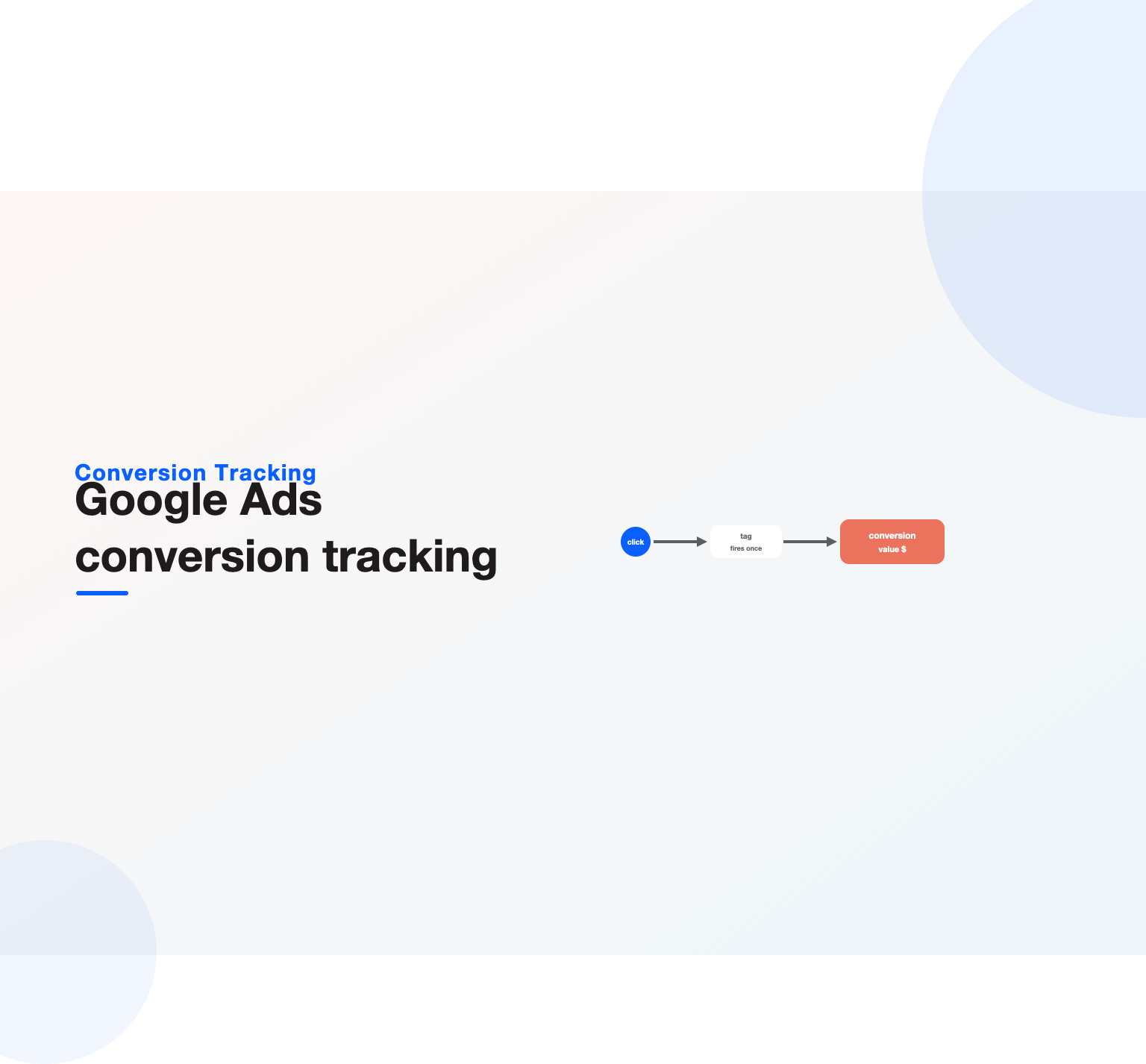
The mechanism connects a click on your ad to a later action on your site or through a call, and understanding it helps you set it up and diagnose it. In the classic setup, a conversion action is created in the account, and a piece of tracking, a tag placed on your site through the global site tag or a tag manager, fires when someone completes the action, reporting it back and crediting the click that brought them. That link between the ad click and the eventual action is what lets the account attribute a purchase or lead to the specific keyword, ad and campaign responsible.
There are several ways to implement the tracking, and the right one depends on your setup. Many advertisers use a tag manager to deploy and manage tags cleanly, others integrate conversions directly through their platform or import them from analytics, and phone conversions are tracked through forwarding numbers or on-site call tracking. Whatever the method, the goal is the same: a reliable signal that fires exactly once when a genuine conversion happens, tied back to the click that earned it. Getting the implementation clean and consistent is what makes Google Ads conversion tracking dependable, and it is worth doing carefully because errors here propagate into every report and every bidding decision downstream.
Assigning values to conversions
Counting conversions is useful, but assigning values to them is what unlocks the account’s full potential, because not all conversions are worth the same. A single ecommerce purchase of a large order is worth far more than a small one, and a lead that reliably becomes a high-value customer is worth more than one that rarely closes, so treating every conversion as equal hides the differences that should drive spending. Feeding real values into the tracking, actual revenue for ecommerce, or sensible estimated values for leads weighted by how they typically convert and what they are worth, lets the account optimize toward profit rather than mere count.
Value-based data transforms what automated bidding can do. A value-based strategy can chase the most profitable conversions rather than simply the most numerous, concentrating spend where returns are highest, which is a meaningful lever, and one a careful ad spend audit often surfaces, that count-only tracking leaves on the table. For lead generation, where revenue is not immediate, estimating lead values from historical close rates and customer value, and refining them over time, gives the system enough signal to optimize toward quality. Building value into the tracking from the start, rather than counting conversions blindly, is what separates accounts that optimize for revenue from those that merely optimize for volume, and it connects directly to sound marketing attribution across the whole funnel.
Avoiding double-counting and inflated data
The most common way conversion data goes wrong is counting the same action more than once, which quietly inflates results and misleads every decision that follows. Double-counting happens when a tag fires multiple times on a page, when both a platform integration and a manual tag record the same purchase, or when a conversion counts every time someone reloads a confirmation page, and the effect is an account that looks more successful than it is, with a cost per conversion that seems better than reality. Because the inflated numbers flatter performance, the problem often goes unnoticed until someone reconciles the data against actual sales.
Preventing this requires deliberate setup and verification. Choosing whether to count every conversion or only one per click appropriately, making sure a given action is tracked by only one method rather than two overlapping ones, and configuring tags so they fire once per genuine completion all guard against inflation. Regularly comparing what conversion tracking reports against the real number of sales or leads in your own records is the check that catches double-counting before it corrupts months of decisions. When conversion numbers do not reconcile with reality is being optimized toward a fiction, which is exactly the kind of leak a disciplined ad spend audit exists to catch.
Enhanced conversions and privacy changes
Tracking has grown harder as privacy changes erode the browser signals it once relied on, so modern conversion tracking increasingly uses methods that restore accuracy. Enhanced conversions improve measurement by using hashed first-party data that a customer provided, matched securely, to recover conversions that browser-based tracking would miss, which matters more every year as cookies and cross-site signals weaken. Enabling enhanced conversions is one of the most effective ways to keep tracking accurate as the underlying environment becomes less forgiving.
Server-side tracking goes further for advertisers who need it. Rather than relying solely on tags firing in the user’s browser, sending conversion data from your own server improves reliability and resilience against browser restrictions and ad blockers, at the cost of more technical setup. Not every account needs server-side tracking, but larger advertisers and those seeing gaps between reported and actual conversions often benefit from it. The broader point is that keeping conversion tracking accurate is now an active effort rather than a one-time setup, and staying current with enhanced conversions and, where warranted, server-side methods is part of protecting the data the whole account depends on, work that experienced management builds into its routine.
Verifying that tracking actually works
A conversion setup you have not verified is a setup you cannot trust, so testing that everything fires correctly is an essential step, not an optional one. After implementing tracking, the checks that matter are confirming each conversion action fires when the action is genuinely completed and only then, that it records once rather than multiple times, that values pass through correctly where used, and that the numbers reconcile with what your own business records show. Tools that let you preview and debug tags, and the account’s own reporting on recent conversions, make this verification straightforward if you take the time to do it.
Ongoing verification matters as much as the initial check, because tracking breaks silently. A site redesign, a changed confirmation page, an updated tag manager, or a platform migration can quietly disable or duplicate a conversion action, and because nothing visibly fails, the broken tracking can run for weeks before anyone notices the data has gone wrong. Building periodic verification of Google Ads conversion tracking into account maintenance, and always re-checking after any site change, is what keeps the data reliable over time. Advertisers who set up tracking once and never re-verify are the ones who discover, months later, that a key conversion stopped recording and every decision since was made on bad data, a failure a routine Google Ads optimization cadence is meant to prevent.
Understanding attribution and the conversion window
How credit for a conversion is assigned, and over what time frame, shapes what your tracking tells you, so understanding attribution is part of using conversion data well. Because customers rarely convert on their first click, often researching over days or weeks and touching several ads or channels before buying, the attribution model decides how much credit each interaction receives, and different models can make the same campaign look very different. Knowing which model your account uses, and choosing one that reflects how your customers actually buy, keeps the conversion data meaningful rather than misleading.
The conversion window matters alongside the model. It defines how long after a click a conversion can still be credited, which for a long, considered purchase needs to be generous enough to capture buyers who take weeks to decide, and for an impulse purchase can be shorter. Setting the window to match your real sales cycle ensures Google Ads conversion tracking captures the conversions your campaigns genuinely drove rather than cutting them off prematurely or crediting them too loosely. These settings are easy to leave at default and forget, but for accounts with longer or unusual buying cycles, tuning attribution and the conversion window to reality is what makes the reported numbers trustworthy, especially in considered-purchase accounts like Google Ads for B2B companies.
Using conversion data to run the account
Accurate conversion data is only valuable if you act on it, and the payoff of good tracking is that it turns every part of account management into an evidence-based exercise. With reliable data, you can see which keywords produce conversions at an acceptable cost and which spend without returning, which ads and landing pages convert best, and where budget is working hardest, then reallocate spend accordingly. This is where Google Ads conversion tracking stops being a setup task, in the same way disciplined paid and organic measurement does, and becomes the daily instrument panel that guides bids, budgets, keywords and creative toward better returns.
The data also disciplines expansion and cuts. Scaling a campaign is safe when conversion data proves it is profitable and budget-limited, and cutting one is justified when the data shows it spends without converting, so the tracking removes much of the guesswork from both growth and pruning. Feeding this clean data into automated bidding lets the system optimize far better than manual management could, provided the underlying conversions are accurate and valued. Run on trustworthy conversion data, an account steadily improves, while one run on clicks and hope drifts, which is why getting the tracking right is the highest-leverage work in the account and a constant focus for specialized programs such as Google Ads for SaaS.
Tracking phone calls and offline conversions
Many businesses win customers through channels that a simple website tag never sees, so capturing calls and offline conversions is essential for a true picture of what paid search delivers. For service businesses especially, a phone call is often the most valuable action, and tracking it, through forwarding numbers that record calls driven by ads or on-site call tracking that ties a call back to the click, closes a gap that would otherwise hide much of the account’s real value. Ignoring calls means judging campaigns on only the conversions that happen to complete on the website, which understates performance and misallocates budget away from campaigns that actually drive the phone to ring.
Offline conversions extend the idea further for businesses whose sales close after the click, in a showroom, over the phone, or through a sales team. Importing those later outcomes back into the account, tying a closed deal to the original click, lets the system optimize toward conversions that become real revenue rather than stopping at the lead. This matters most where lead quality varies widely, because it teaches automated bidding to value the clicks that produce customers, not just the ones that produce form-fills. Businesses with long or offline sales cycles that connect their real outcomes back to the account, the way strong Google Ads for real estate agents campaigns do, optimize on truth rather than a partial picture.
Connecting tracking to analytics
Conversion data does not live in isolation, and connecting the account to your wider analytics gives context that in-platform numbers alone cannot. Linking Google Ads with your analytics platform lets you see the full behavior of paid visitors, how they move through the site, where they drop off, and how paid search interacts with other channels, which enriches the raw conversion count with understanding of why it is what it is. That context helps diagnose why a campaign converts poorly even when it drives traffic, pointing to landing-page or funnel problems the conversion tag alone would never reveal.
The relationship also guards against a narrow view of credit. Because paid search rarely acts alone in a customer’s journey, seeing conversions alongside the other channels that touched the same buyer prevents over- or under-crediting paid search, and keeps budget decisions grounded in the whole picture rather than a single platform’s self-reported numbers. Pairing accurate in-account tracking with analytics and honest attribution is what turns conversion data from a scorecard into a diagnostic tool, and it is a core part of the disciplined measurement that separates accounts run on evidence from those run on assumption, whatever the vertical, including demanding ones like ecommerce PPC management.
Common conversion tracking mistakes
Several recurring errors undermine conversion tracking even in otherwise capable accounts. The most damaging is tracking the wrong actions, counting shallow events that do not represent real value, which teaches the account to chase the wrong outcomes. Close behind is double-counting from overlapping tags or reloaded confirmation pages, which inflates results and flatters cost per conversion until someone reconciles against real sales. Failing to assign values, so the account optimizes for count rather than profit, leaves a major lever unused, and setting an attribution window that does not match the sales cycle distorts which campaigns get credit.
Other frequent mistakes include never verifying that tracking fires correctly, letting it break silently after a site change, ignoring enhanced conversions as privacy changes erode accuracy, and treating setup as a one-time task rather than something to maintain. The thread running through these errors is treating conversion tracking as a box to tick rather than the foundation of the account, and the cost is decisions made on data that quietly does not reflect reality. Advertisers who define the right actions, assign values, guard against double-counting, and verify regularly get data they can genuinely run an account on, while those who cut corners here undermine every other effort they make, which is why our Google Ads audit guide treats tracking accuracy as the first checkpoint.
When to get expert help with tracking
Basic Google Ads conversion tracking is within reach of a capable marketer, and for a straightforward site with a clear conversion action, following the setup and verification steps in this guide produces reliable data. Many small accounts run perfectly well on tracking the owner set up and checks periodically, and doing it yourself builds valuable understanding of where the numbers come from. The core discipline, define the right actions, avoid double-counting, verify regularly, is more about care than technical wizardry.
Expert help becomes worthwhile when the setup grows complex, when values need careful modeling, when enhanced or server-side conversions are needed to close accuracy gaps, or when a business cannot afford the risk of tracking quietly breaking. An experienced practitioner implements robust tracking, catches the subtle double-counting and attribution issues a generalist misses, and maintains it through site changes, so ongoing managed SaaS paid search and other Google Ads services that include tracking maintenance often pay for themselves by preventing the expensive mistake of running an account on bad data. Whichever route you take, the priority is the same: make the conversion data accurate and trustworthy first, because everything else in the account depends on it.
Key Takeaways
- Google Ads conversion tracking is the foundation of the account, turning clicks into accountable cost-per-conversion data every other decision relies on.
- Track actions that represent real business value, not shallow events, so the account optimizes toward outcomes that actually pay.
- Assign values to conversions so bidding can chase profit, not just count, especially with value-based strategies.
- Guard against double-counting and reconcile reported conversions against real sales to keep the data honest.
- Use enhanced and, where warranted, server-side conversions to maintain accuracy as privacy changes erode browser tracking.
- Verify tracking fires correctly at setup and after every site change, applying the same rigor a Google Ads audit demands.
Frequently asked questions
What is Google Ads conversion tracking?
Google Ads conversion tracking is a system that connects clicks on your ads to the valuable actions people take afterward, such as purchases, leads, calls or sign-ups, so you can see which keywords, ads and campaigns actually produce results. It works by recording when someone completes a defined conversion action and crediting the click that brought them, letting you calculate a true cost per conversion instead of judging campaigns by clicks alone. It is the foundation of an accountable account, because automated bidding and every spending decision depend on accurate conversion data. Set up well, it turns paid search from guesswork into an evidence-based channel.
How do I set up conversion tracking in Google Ads?
Start by deciding which actions genuinely represent business value, such as purchases or qualified leads, rather than shallow events. Create a conversion action in the account, then implement the tracking, usually a tag deployed through the global site tag or a tag manager, that fires when the action is completed and reports it back. Assign values where possible so the account can optimize toward profit, enable enhanced conversions to improve accuracy, and set an attribution model and conversion window that match how your customers actually buy. Finally, verify that each conversion fires once and only when the action truly happens, and reconcile the numbers against your real sales.
Why is my Google Ads conversion tracking not working?
Common causes include a tag that was never placed or fires on the wrong page, a site change that quietly broke or removed the tag, or a confirmation page that changed so the conversion no longer records. Sometimes the opposite happens and conversions double-count because two methods track the same action or a page reload re-fires the tag. Privacy changes and ad blockers can also suppress browser-based tracking, causing reported conversions to fall short of reality. The fix is to use preview and debug tools to confirm the tag fires once when the action completes, reconcile reported numbers against actual sales, and enable enhanced conversions to recover lost accuracy.
What is a good conversion action to track?
The best conversion actions are the ones closest to revenue for your business. For an ecommerce store that is a purchase, ideally tracked with its actual value; for a lead-generation business it is a qualified form submission, a phone call, or a booked meeting; for a subscription business it is a sign-up or trial start. The guiding principle is to track actions that genuinely represent value rather than shallow ones like page views or newsletter sign-ups, which inflate the numbers and teach the account to chase volume that does not pay. Where you do track softer actions, assign them lower values so they do not overwhelm the conversions that matter.
Should I assign values to my conversions?
Yes, whenever you reasonably can, because values unlock far better optimization. Assigning real revenue to ecommerce purchases, or sensible estimated values to leads based on how often they close and what a customer is worth, lets the account optimize toward profit rather than merely counting conversions. Value-based bidding can then concentrate spend on the most profitable conversions instead of the most numerous, which is a meaningful lever that count-only tracking leaves unused. For lead generation, estimating values from historical close rates and refining them over time gives the system enough signal to chase quality, not just volume. Value-based data is what separates optimizing for revenue from optimizing for count.
What are enhanced conversions?
Enhanced conversions are a way to improve tracking accuracy by using hashed first-party data that a customer provided, such as an email at checkout, matched securely to recover conversions that ordinary browser-based tracking would miss. They matter because privacy changes, cookie restrictions and ad blockers increasingly erode the signals traditional tracking relies on, causing reported conversions to undercount reality. Enabling enhanced conversions restores much of that lost accuracy, giving both your reporting and automated bidding better data to work from. For advertisers seeing gaps between reported and actual conversions, they are one of the most effective steps available, and larger accounts may add server-side tracking for further resilience.
Ready to put this into practice?
Talk to the team that runs SEO, AI search and paid growth programs every day.
Book a Strategy Call →