 Skip to content

What Is Demand Generation? A Full-Funnel Guide
What is demand generation? A plain guide to the full-funnel discipline of creating and capturing interest into pipeline and revenue, how it differs from lead generation, and how to start.
Quick Answer
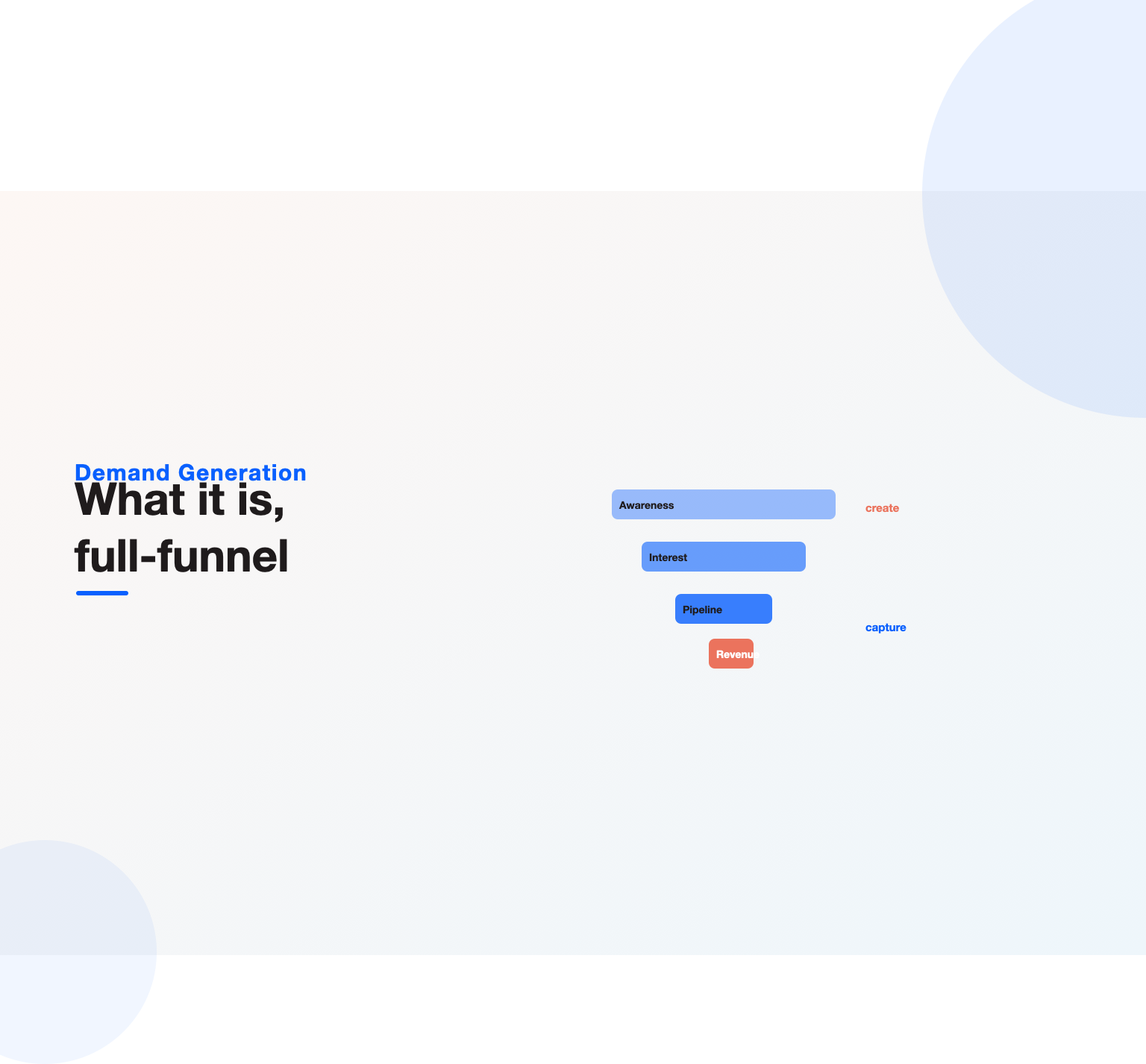
Demand generation is the full-funnel marketing discipline of creating awareness and interest in a company’s product, then capturing and nurturing that interest into qualified pipeline and revenue. It spans the whole journey, from making people who have never heard of you aware of the problem you solve, through educating and building trust, to capturing and nurturing the leads who are ready. Unlike lead generation, which focuses on capturing contacts, demand generation is about creating the demand in the first place and then converting it, measured on pipeline and revenue rather than raw lead counts.
Key Highlights
- Demand generation creates and captures interest across the whole funnel, not just the point of capture.
- It is broader than lead generation, which is really one stage within demand generation.
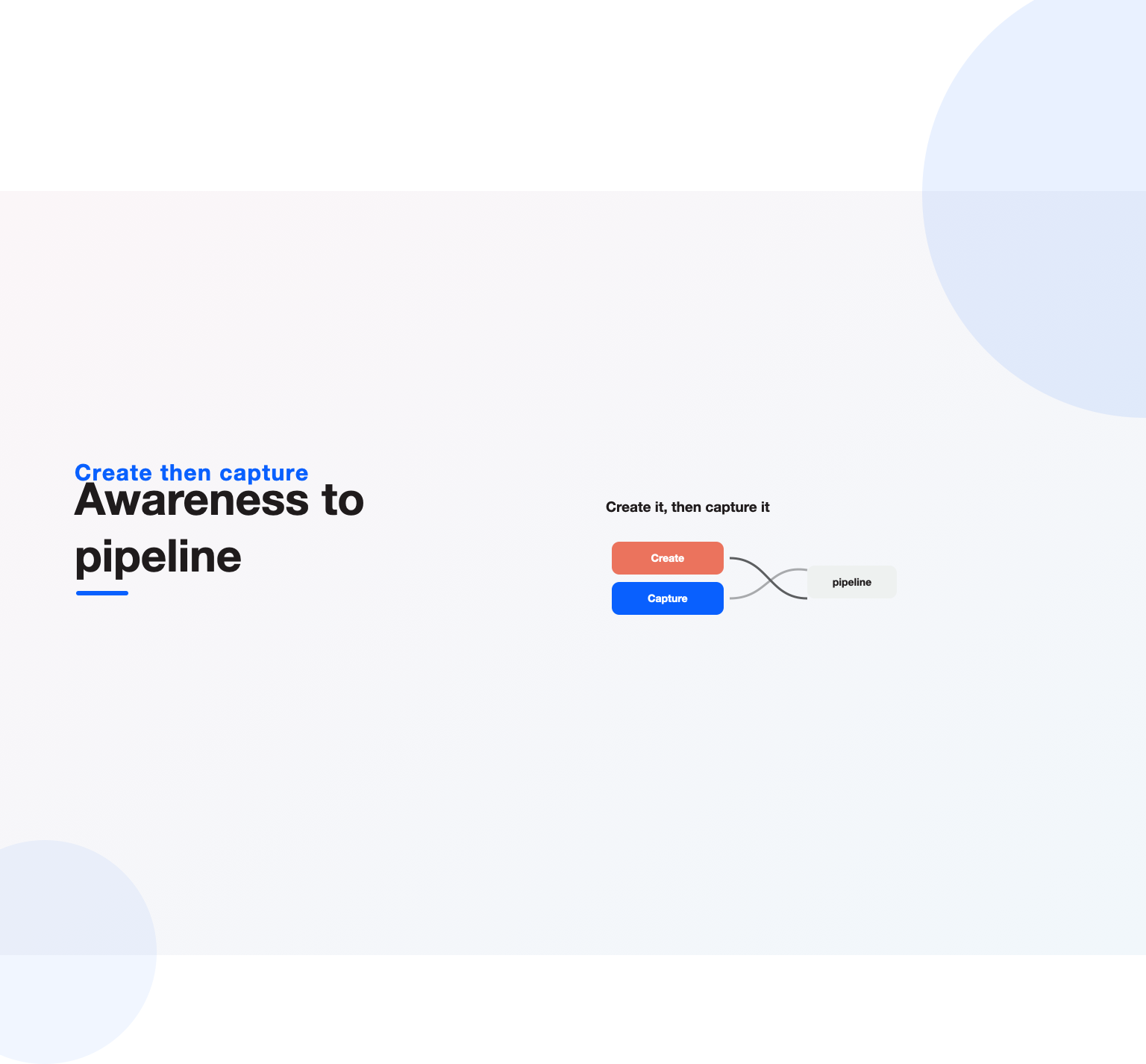
- It combines demand creation (awareness, education, trust) with demand capture (converting ready buyers).
- It is measured on pipeline and revenue, not vanity metrics like raw lead volume.
- It aligns marketing and sales around one definition of a qualified opportunity.
- It is a long-game, compounding discipline, not a short-term lead-buying tactic.
What demand generation actually means
At its core, demand generation is the work of making a market want what you sell and then turning that want into revenue. It is not a single tactic but a discipline that spans the entire buyer journey: creating awareness among people who do not yet know you, educating them about the problem and the solution, building enough trust that you are the name they think of, and then capturing and nurturing the ones who are ready to act. The background on demand generation frames it as the focus of programs that drive awareness and interest in a company’s products and services.
So the honest answer to what is demand generation is that it is full-funnel: it owns both the creation of demand and its capture, rather than just the moment a contact fills in a form. That breadth is what distinguishes it. A company doing real demand generation is shaping how a market perceives a problem long before a buyer is ready, so that when they are ready, the company is already the trusted option. It is marketing as a system for manufacturing and harvesting demand, not a series of disconnected campaigns. That systems view is the single most useful shift in understanding the discipline: once you see the funnel as one connected engine rather than a set of separate tactics, the priorities, and the mistakes to avoid, become much clearer.
Creating demand versus capturing it
The clearest way to understand what is demand generation is to split it into two halves that work together: demand creation and demand capture. On one side, demand creation is the top-of-funnel work of making people aware of a problem and interested in solving it, through content, thought leadership, social presence, events, and PR. Most of this audience is not ready to buy yet, and that is the point: you are planting interest that will mature into pipeline over the months that follow, so that when a need finally surfaces you are already the name that comes to mind rather than a stranger competing at the last minute.
On the other, demand capture is the bottom-of-funnel work of converting the interest that already exists into pipeline, through search, retargeting, and clear conversion paths for people actively looking. Both matter, and the common mistake is doing only capture, competing for the small pool of in-market buyers while ignoring the much larger pool you could be warming for the future. Research consistently suggests that only a small fraction of any market is actively buying at a given moment, which means a program that captures demand but never creates it is fighting over a sliver of the opportunity while the majority, the buyers who will be ready next quarter or next year, never hear of you until a competitor has already earned their trust. A mature answer to what is demand generation balances the two: create demand to grow the future pipeline, capture demand to convert the present one. Skew too far to capture and you plateau; skew too far to creation and you starve short-term revenue.
Demand generation versus lead generation
The term most often confused with demand generation is lead generation, so pinning down what is demand generation against it clarifies a lot. Lead generation is about capturing contact details, getting someone to fill in a form, download a guide, or request a demo. It is a real and useful activity, but it is narrow: it captures interest that already exists and measures success in lead volume, which is why a business can hit its lead target every month and still see revenue stall.
By contrast, demand generation is broader and contains lead generation within it. Where lead generation asks how to capture more contacts, demand generation asks how to create more interest to capture in the first place, and how to convert it into revenue rather than just leads. The background on lead generation shows it as the initiation of consumer interest, which is one stage of the wider journey demand generation owns. The practical difference is that a lead-generation mindset optimises for the number of forms filled, while a demand-generation mindset optimises for pipeline and revenue, and will happily accept fewer, better leads if they close more.
The components of demand generation
Once the definition is clear, what is demand generation becomes a set of components that work as a system. No single one is demand generation on its own; the discipline is in combining them across the funnel.
Content and thought leadership. The engine of demand creation: genuinely useful content that educates the market, builds trust, and makes the company a recognised authority on the problem it solves.
Multi-channel distribution. Getting that content and message in front of the right audience through search, social, email, events, and partnerships, so the demand creation actually reaches people.
Capture and conversion. Clear paths for interested buyers to raise their hand, well-designed landing pages, search presence for high-intent queries, and offers that match the buyer’s stage.
Lead nurture and scoring. Keeping the not-yet-ready warm with relevant follow-up and scoring engagement so sales focuses on the leads most likely to convert, which is where marketing automation does much of the work.
Measurement. Tracking the whole funnel to pipeline and revenue, so the program is judged on business outcomes rather than activity, which is the discipline that keeps demand generation honest.
Why it is a full-funnel discipline
The reason what is demand generation cannot be reduced to a single tactic is that the funnel is a whole. Awareness without capture wastes the interest you create; capture without awareness competes for a shrinking pool and eventually stalls. The discipline works because it owns the connection between the two: the content that creates awareness feeds the nurture that warms leads, which feeds the capture that produces pipeline, which sales converts to revenue.
This full-funnel view is also what makes demand generation a long game. The demand you create today may not convert for months, and the payoff compounds, this quarter’s awareness work becomes next quarter’s pipeline while you keep creating more. That is why programs judged only on this month’s lead count misunderstand the discipline; the real measure is whether the whole engine is producing more qualified pipeline over time. The sales process it feeds is the eventual proof, but the marketing that fills it works quarters ahead.
Why sales alignment is essential
A defining feature of what is demand generation is that it lives or dies on alignment between marketing and sales. Because the discipline is measured on pipeline and revenue, not leads, marketing and sales must agree on what a qualified opportunity actually is, how leads are scored and handed over, and who owns each stage. Without that agreement, marketing celebrates leads sales considers worthless, and the finger-pointing that plagues so many companies begins.
Getting this right means a shared definition of a qualified lead, a clear handoff process, and a feedback loop where sales tells marketing which leads converted so the targeting improves. Done well, it is as much an operating agreement between two teams as it is a set of marketing activities. This is why it sits close to revenue operations and why the strongest demand-generation programs are run with sales in the room, not thrown over a wall. When marketing and sales share one funnel and one definition of success, the whole engine works; when they do not, even good campaigns leak value at the handoff.
Putting it into practice
In practice, what is demand generation looks like a coordinated program rather than a campaign. A company identifies its ideal customer and the problem it solves, then builds content and a point of view that educates that market, distributed across the channels its buyers use. It captures the interest that matures through search and clear conversion paths, nurtures the not-yet-ready through automated, relevant follow-up, and scores engagement so sales engages the warmest leads.
Throughout, it measures the whole funnel to pipeline and revenue, and feeds what it learns back into the targeting and content. For an Indian B2B company, this often means combining strong organic and search presence for demand capture with LinkedIn and content-led demand creation, tuned to a market where buyers research thoroughly and relationships matter. The specifics vary by business, but the shape is constant: create interest, capture it, nurture it, convert it, measure it, and improve. Running that as a coherent engine is exactly what a demand generation program is built to do.
A worked example: a B2B SaaS funnel
An example makes the discipline concrete. A B2B software company sells to marketing teams. At the top of the funnel it publishes genuinely useful content and a clear point of view on the problem it solves, distributed through search, LinkedIn, and a newsletter, reaching marketers who are not yet shopping for a tool. That is demand creation: it builds awareness and trust months before a purchase.
As some of those marketers develop a need, they search for a solution, and the company’s search presence and clear conversion paths capture them; that is demand capture. Contacts who are interested but not ready enter a nurture sequence and are scored on engagement, so sales is alerted only when a lead is genuinely warm. Sales works those leads, closes deals, and reports back which converted, sharpening the targeting. Across the quarter the company can trace revenue back through pipeline, to captured leads, to the awareness work that started it, which is the full loop the discipline is built to run. It leans heavily on marketing automation for the nurture and scoring in the middle.
The channels demand generation uses
No single channel is demand generation; the discipline coordinates several across the funnel. For demand creation, the workhorses are content and organic search, social platforms such as LinkedIn for B2B, email newsletters, events, webinars, and PR, all aimed at building awareness and authority. For demand capture, the workhorses are high-intent search, retargeting, and well-designed landing pages that convert the interest already in motion.
The art is using each channel for the job it does best and connecting them, so a reader of your content can later be retargeted, a webinar attendee can be nurtured, and a searcher with intent lands on a page built to convert. Strong organic and SEO presence underpins both halves, because it earns awareness and captures intent at once, and paid channels such as LinkedIn ads accelerate reach where organic alone is too slow. The point is orchestration: a coordinated set of channels beats a louder single one.
In the Indian B2B market
In the Indian B2B market, the discipline has some local texture worth naming. Buyers research thoroughly and rely heavily on trust and relationships, which rewards patient demand creation, content and authority-building, over aggressive short-term capture. Search and LinkedIn are strong channels, and increasingly WhatsApp plays a role in nurture and fast follow-up, given how Indian buyers prefer to communicate. Sales cycles can be long and involve multiple stakeholders, so nurturing the not-yet-ready is especially valuable.
The practical implication is that an Indian B2B company skewing entirely to lead capture, buying lists or chasing form-fills, tends to underperform one that invests in genuine demand creation and disciplined nurture, because the market rewards trust built over time. Pairing content-led demand creation with a proper demand generation program and connecting it to sales through clear revenue operations is what turns scattered activity into a predictable pipeline in this market.
How to measure demand generation honestly
Measurement is where the discipline stays honest, so it deserves its own attention. Track the funnel end to end: awareness signals such as reach and engagement, captured leads and their quality, nurtured leads converting to sales-accepted opportunities, and finally pipeline and closed revenue. The north-star metrics are pipeline created and revenue influenced, because those are what the business actually cares about; lead volume alone is a vanity number that can rise while revenue does not.
Tie each stage to the next so you can see where the funnel leaks and fix it, and attribute revenue back to the demand-creation work that seeded it, even when that work happened months earlier. This is also where alignment with sales pays off, because only sales can confirm which leads became real opportunities. Programs measured this way improve steadily, the same test-and-learn habit behind good marketing automation, while programs measured on activity plateau because nobody can see what actually drives revenue.
The role of content and SEO
Because demand creation runs largely on content, it is worth being clear about content’s role in the discipline. Useful, authoritative content is what earns awareness and trust at the top of the funnel: it educates the market on the problem, positions the company as a credible guide, and gives people a reason to engage long before they are ready to buy. Over time it also builds the organic search presence that quietly does both jobs at once, earning awareness and capturing intent.
That dual role is why organic search sits at the heart of most strong programs. A well-optimised body of content ranks for the informational questions buyers ask early (demand creation) and the commercial questions they ask later (demand capture), so a single investment serves the whole funnel. Building that presence deliberately, the way a disciplined SEO program does, compounds in exactly the way the discipline rewards, and it pairs with conversion work so the traffic it earns actually turns into pipeline, much as good conversion rate optimisation ensures.
Building the demand generation engine step by step
Assembling the pieces into an engine follows a sensible order. First, define the ideal customer and the problem sharply, because every later choice targets them. Second, agree with sales on what a qualified opportunity is and how the handoff works, so marketing builds toward a shared goal rather than a lead count. Third, stand up demand capture, search presence and clear conversion paths, because it produces the near-term pipeline that funds patience for the rest.
Fourth, invest in demand creation, content and a point of view distributed where your buyers are, knowing it compounds over quarters. Fifth, connect the two with nurture and scoring through marketing automation, so no interest is wasted between creation and capture. Sixth, measure the whole funnel to pipeline and revenue, and feed the learning back. Built in this order, the engine produces near-term results while the compounding parts mature, which is what keeps a program funded long enough to work. If you would rather have it built and run for you, a specialist demand generation team assembles the same engine faster, but the sequence is the same either way.
Common misconceptions about demand generation
- It is just lead generation. Lead generation is one stage; demand generation owns the whole funnel from awareness to revenue.
- It is only top-of-funnel branding. It includes capture and conversion; awareness without capture is wasted.
- Success is lead volume. The measure is qualified pipeline and revenue, not raw leads, some of which never convert.
- It delivers instant results. Creation-side work compounds over months; expecting overnight pipeline misreads the discipline.
- Marketing owns it alone. It depends on marketing-sales alignment and a shared definition of a qualified opportunity.
Each misconception leads to the same failure, optimising the wrong thing, which is why understanding what is demand generation properly is the first step to running it well.
How to start with demand generation
Turning an understanding of what is demand generation into action starts with fundamentals, not tactics. Define your ideal customer and the problem you solve sharply, because everything else targets them. Agree with sales on what a qualified opportunity is and how the handoff works, so you are building toward a shared goal. Then build the demand-capture foundation first, search presence and clear conversion paths for the buyers already looking, because that produces near-term pipeline while the slower demand-creation work matures.
From there, invest in demand creation, content and a point of view that educates your market, and in the nurture and scoring that connect the two, typically through marketing automation. Measure the whole funnel to pipeline from the start, so you can see what works and reinvest. Start focused rather than trying to run every channel at once, and let results guide expansion. If you would rather have the engine built and run for you, that is what a specialist demand-generation team does, but a disciplined marketer can begin with the fundamentals above and grow the program on proof.
Signs your demand generation needs work
A few signals reveal a program that is not yet functioning as demand generation, only as lead capture. Your pipeline is entirely dependent on paid ads, so it stops the moment spend does. Sales complains that marketing leads are low quality, a symptom of chasing volume over readiness. You have no content or point of view that a stranger to your brand would find valuable, so there is no demand creation happening at all. You measure marketing on lead counts rather than pipeline, so nobody can say whether the activity produces revenue. And there is no nurture, so leads that are not instantly ready simply go cold.
Any of these means the engine is missing pieces. The encouraging part is that each gap points to a specific fix, usually starting with sales alignment and a demand-capture foundation, then adding creation and nurture. A company that recognises itself here does not need more leads; it needs to build the parts of the funnel it is skipping, so the leads it does get are better and the pipeline stops depending entirely on paid spend. Connecting the funnel to sales through disciplined revenue operations is often the step that turns scattered activity into a predictable, measurable engine, because it forces the shared definitions the discipline depends on. Fix the missing pieces in order, and the program shifts from renting leads to generating durable demand.
Key Takeaways
- Demand generation is the full-funnel discipline of creating interest and converting it into qualified pipeline and revenue.
- It is broader than lead generation, which is really just the capture stage within it.
- It balances demand creation (awareness, education, trust) with demand capture (converting ready buyers).
- It is measured on pipeline and revenue, not raw lead volume, and it compounds over months.
- It depends on marketing-sales alignment and a shared definition of a qualified opportunity.
- In practice it is a coordinated engine: create, capture, nurture, score, convert, measure, improve.
- Start with your ideal customer, sales alignment, and demand capture, then build demand creation and nurture.
Frequently asked questions
What is demand generation in simple terms?
It is the marketing discipline of creating interest in what you sell and then converting that interest into qualified pipeline and revenue. It spans the whole buyer journey: making people aware of the problem you solve, educating and building trust, and capturing and nurturing the ones who are ready to buy. Unlike tactics that only capture existing interest, demand generation also creates the demand in the first place, and it measures success in pipeline and revenue rather than raw lead counts.
What is the difference between demand generation and lead generation?
Lead generation is about capturing contact details from people whose interest already exists, and it measures success in lead volume. Demand generation is broader and contains lead generation within it: it creates the interest in the first place, captures it, nurtures it, and converts it into pipeline and revenue. In short, lead generation asks how to capture more contacts, while demand generation asks how to create more demand worth capturing and how to turn it into revenue rather than just leads.
Is demand generation only for B2B?
It is most associated with B2B, where considered purchases and long sales cycles make creating and nurturing demand especially valuable, but the underlying idea applies anywhere a business must build awareness and interest before capturing it. B2C brands do demand generation too, though they often call it brand and performance marketing. The full-funnel logic, create interest, capture it, convert it, measure to revenue, holds across contexts; the channels and cycle lengths differ.
How is demand generation measured?
It is measured on business outcomes across the whole funnel, primarily qualified pipeline and revenue, rather than on activity metrics like raw lead volume. Good programs track how demand-creation work translates into interest, how much of that interest is captured, how nurtured leads convert, and ultimately how much revenue the engine produces. Leading indicators like engagement and lead quality matter, but the honest measure is whether the program produces more qualified pipeline and revenue over time, which is why marketing-sales alignment on definitions is essential.
How long does demand generation take to work?
The capture side can produce near-term pipeline quickly, because it converts interest that already exists, but demand creation compounds over months as awareness and trust build. That is why demand generation is a long game: this quarter’s content and thought leadership become next quarter’s pipeline. Businesses that judge it only on this month’s lead count misread the discipline. A sensible approach builds demand capture first for near-term results while investing in demand creation for the compounding payoff that follows.
Do I need marketing automation for demand generation?
You can start without it, but you will want it quickly, because nurture and lead scoring, core parts of demand generation, are hard to run at scale by hand. Marketing automation keeps not-yet-ready leads warm with relevant follow-up and scores engagement so sales focuses on the warmest ones, connecting demand creation to capture. Most serious demand-generation programs run on an automation platform integrated with the CRM, so the whole funnel is tracked and the handoff between marketing and sales works cleanly.
Ready to put this into practice?
Talk to the team that runs SEO, AI search and paid growth programs every day.
Book a Strategy Call →