 Skip to content

What Is Inbound Marketing? A Plain Guide
What is inbound marketing? It attracts customers with useful content rather than interrupting them with ads, following an attract, engage, delight cycle across content, search, social, and email.
Quick Answer
What is inbound marketing? Inbound marketing is a strategy that attracts customers by creating genuinely useful content and experiences tailored to them, so people come to you when they have a need, rather than interrupting them with ads to chase attention they did not offer. Instead of pushing a message out to a cold audience, this approach earns attention by publishing helpful content that ranks in search and gets shared, engaging people on their own terms, and building trust that turns strangers into customers and customers into advocates. In short, inbound marketing pulls interested people toward a business by being genuinely worth finding, which is why it tends to produce higher-quality, lower-cost, and more durable growth than interruption alone.
Key Highlights
- Inbound marketing attracts customers with useful content rather than interrupting them with ads.
- It follows an attract, engage, and delight cycle across the whole customer journey.
- Its core channels are content, search, social, and email, and they compound over time.
- It differs from outbound, which pushes a message out to a cold audience.
- The payoff is higher-quality leads, lower long-term cost, and more durable growth.
- It suits businesses whose buyers research online before they buy, which is most of them now.
What inbound marketing actually is
At its core, inbound is about earning attention rather than buying or interrupting it. The idea is to create content and experiences so useful that people actively seek them out, find your business in the process, and come to trust it enough to buy. A prospective customer searching for an answer finds your guide, learns something genuinely valuable, and begins a relationship on their own terms, which is a fundamentally different dynamic from being chased by an ad they never asked for.
The approach rests on a simple observation about modern buying: people research before they purchase, they trust useful content more than advertising, and they resent interruption. As a discipline, inbound marketing aligns a business with that behaviour by being present and helpful at the moment of need rather than intrusive at a moment of the marketer’s choosing. Rather than shouting louder than competitors, it earns a place in the buyer’s research by being the most useful voice they encounter, which is why the attention it wins tends to be higher-quality and longer-lasting than attention that was bought.
How inbound differs from outbound
The approach is easiest to grasp by contrast with outbound, the traditional model it grew up against. Outbound marketing pushes a message out to a broad, often cold audience: television and print ads, cold calls, unsolicited email, display advertising. It interrupts whatever the audience was doing in the hope of catching the few who happen to be interested, and it stops working the moment you stop paying for it.
This approach reverses the direction. Rather than pushing a message out, it pulls interested people in by being genuinely useful, so the audience comes to the business when they have a need. The difference matters because inbound tends to produce higher-quality leads, people who chose to engage, at a lower long-term cost, because the content keeps working after it is published. Yet it still has its place for reaching people who would never search, but for businesses whose buyers research online first, the pull of inbound usually beats the push of outbound on both quality and durability, which is why the balance has shifted so far toward it.
The attract, engage, delight methodology
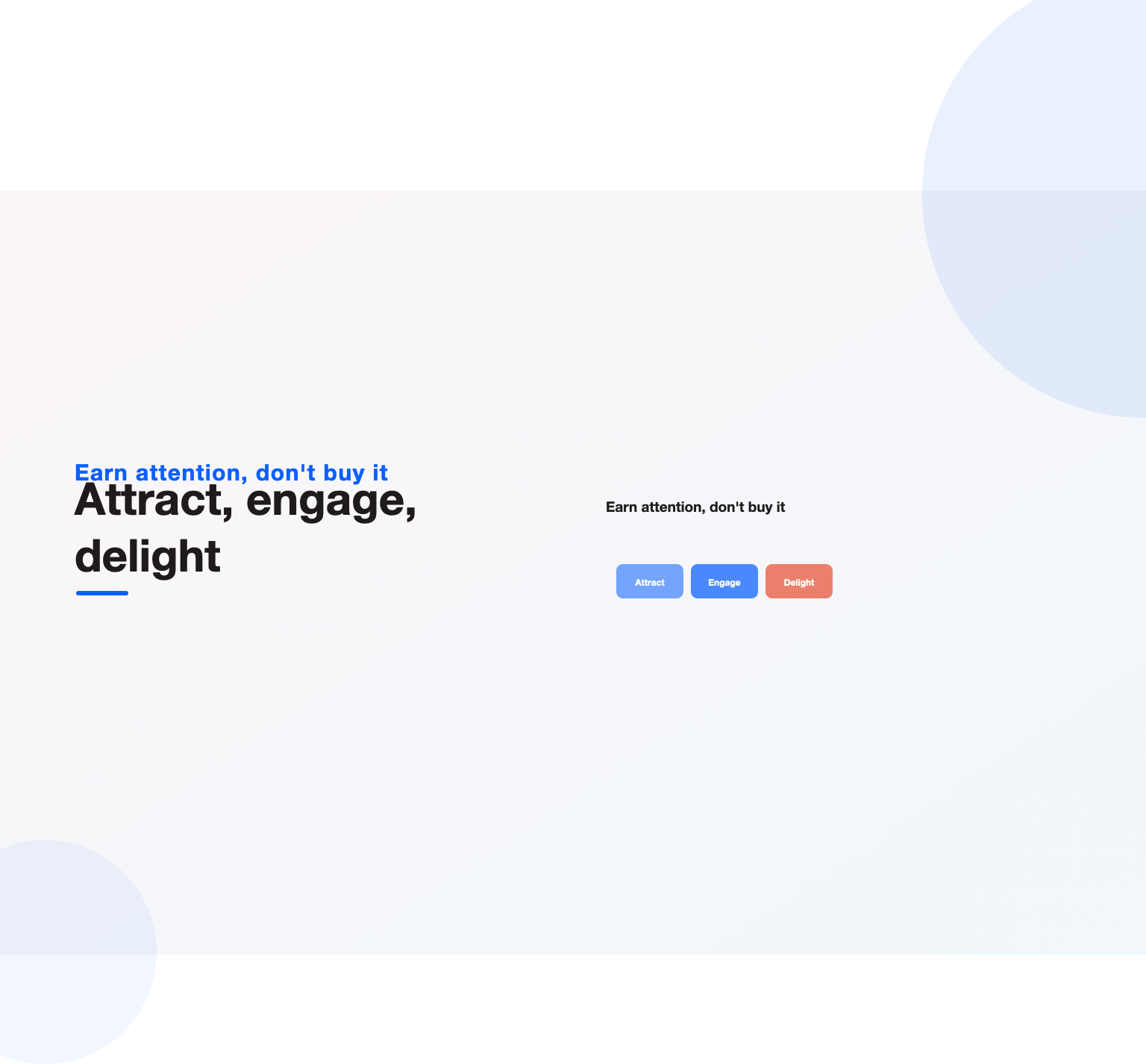
A defining feature of inbound marketing is its methodology, usually described as attract, engage, and delight, a cycle rather than a funnel that ends at the sale. Attract is the first stage: drawing the right strangers to your business with useful content that answers the questions they are already asking, so they find you through search, social, and sharing rather than through interruption.
Engage is the second stage: building relationships with the people you have attracted by continuing to provide value, addressing their needs, and making it easy to take the next step, so interest deepens into intent. Delight is the third: continuing to help customers after the sale so they succeed, stay, and recommend you, which turns satisfied customers into a source of new ones. The cycle matters because delighted customers feed the attract stage through word of mouth and advocacy, making the whole thing compound. Seen this way, this approach is not a one-way path to a transaction but a self-reinforcing loop where serving people well is the engine of growth.
The channels inbound marketing runs on
The channels that power inbound are the ones that let a business be found and be useful rather than interrupt. Content is the foundation, a blog, guides, videos, and tools that answer buyers’ questions and demonstrate expertise. Search is inseparable from it, because ranking for the questions people type is how most of them find that content, which is why a disciplined SEO program sits at the heart of any serious inbound effort.
A considered social media presence extends the reach, carrying content to audiences and building familiarity over time, while email nurtures the people a business has already attracted, keeping them engaged until they are ready to act. These channels reinforce one another: content gives search and social something to distribute, and email keeps the audience they build engaged. As a form of content marketing tied to distribution, the whole set compounds, because each published piece keeps attracting and engaging people long after it goes live. The lesson is that inbound is not a single channel but a connected system where content, search, social, and email work together.
Why inbound marketing works
The reason the discipline works is that it aligns with how people actually buy today rather than fighting it. Buyers do most of their research online before they ever talk to a salesperson, they trust useful content and peer opinion more than advertising, and they have grown adept at ignoring interruption. A strategy that meets them with genuine help at the moment of need fits that behaviour, while one that interrupts them fights it and loses ground every year.
There is a compounding logic too. A piece published today keeps attracting and converting people for years, so the cost of acquiring a customer falls over time as the library grows, unlike paid interruption whose cost resets with every campaign. The trust earned by being useful also converts better and lasts longer than attention that was bought. Taken together, these are why inbound marketing has moved from a novel idea to a central pillar of modern growth: it produces higher-quality relationships at a lower long-term cost, precisely because it earns attention rather than renting it.
The benefits of the approach
The benefits of inbound marketing follow directly from how it works. The leads it generates tend to be higher quality, because they come from people who chose to engage rather than from a list that was interrupted, which means they convert better and cost less to close. The cost of acquisition falls over time as the content library compounds, so the economics improve the longer the program runs, unlike paid channels whose costs stay flat or rise.
Beyond the numbers, inbound builds an asset the business owns: a body of content, a search presence, and an engaged audience that no algorithm change or ad-budget cut can take away entirely. It also builds trust and authority, positioning the business as a helpful expert rather than an intrusive seller, which pays off across every later interaction. Pairing a strong inbound engine with a coordinated demand generation program is what turns these benefits into predictable pipeline, so the attention earned actually converts to revenue rather than merely accumulating as traffic. Keeping the audience it builds engaged over the long run usually depends on a disciplined email marketing layer, which nurtures the people the content attracts until they are ready to act, so none of the hard-won attention quietly leaks away between the first useful visit and the eventual decision to buy.
The approach in the Indian market
In India, inbound fits a market that is rapidly moving online and researching before it buys, which makes the approach increasingly effective. Audiences here weigh trust and peer opinion heavily, so genuinely useful content that builds credibility tends to outperform interruptive advertising, especially for considered purchases. As internet access deepens and buyers grow more research-led, the pull of inbound aligns with exactly how the Indian market is evolving.
Local texture shapes how it is applied. Regional-language content widens reach considerably, mobile-first consumption favours formats that suit a phone, and channels like WhatsApp increasingly carry engagement and nurture because they are woven into how Indians communicate. Search is growing fast as a discovery channel, which raises the value of the content-and-search core of inbound. Pairing a useful content engine with distribution tuned to these realities, and following up through a channel buyers actually use, is what turns inbound attention into customers in India rather than into traffic that never converts to anything meaningful.
How to start with inbound marketing
Starting with the method does not require a large budget, but it does require the right sequence. Begin with the foundations: a sharp understanding of who you are trying to reach and what questions they ask, because every piece of content targets that person and misfires without it. From there, create genuinely useful content around those questions and make sure it can be found in search, since discovery is what turns content into attraction.
Once that content is being found, add the engagement layer, an email newsletter or nurture sequence that keeps the people you attract warm, and a clear path for them to take the next step when ready. Then extend into social distribution and, over time, into the delight stage that turns customers into advocates. The sequence matters: attract first so there is an audience, then engage so it converts, then delight so it compounds. Much of the engagement and nurture runs on marketing automation, which lets a small team run inbound at scale without the follow-up collapsing under manual effort. Start focused, prove the model on a narrow slice, and expand into new topics and channels only as the results justify the added effort, so the program grows on evidence rather than on optimism, and never spreads itself thinner than a lean team can genuinely sustain over the long haul. The businesses that succeed with this approach are almost always the ones that started small, stayed consistent, and let compounding do the heavy lifting rather than chasing every tactic at once.
Measuring inbound marketing
Inbound marketing must be measured to business outcomes, or it drifts into producing content that looks busy but converts nothing. Traffic, rankings, and engagement are useful diagnostics of whether the attract stage is working, but they are not the goal. The metrics that matter are how inbound contributes to pipeline and revenue: the leads it captures, their quality, the rate at which they convert, and ultimately the cost of acquiring a customer compared with other channels over time.
Measuring this way lets you see the compounding effect that is inbound’s whole advantage, the way cost per lead falls and quality rises as the content library matures, which a short-term view misses entirely. It also depends on connecting content to the funnel it feeds, often through a coordinated revenue operations foundation, so the numbers are trustworthy enough to act on. Judged on outcomes over time rather than on a single month’s traffic, inbound reveals its real value, and the program can be tuned toward whatever genuinely produces customers rather than whatever merely produces views.
A worked example of inbound in action
An example makes the idea concrete. Picture a company selling accounting software to small businesses. Rather than buying ads that interrupt people watching a video, it publishes a genuinely useful guide answering a question its buyers actually type, how to manage cash flow in a small business, which ranks in search and reaches people at the exact moment they are worried about the problem. A reader who found real help there now associates the brand with expertise, long before any sales conversation.
From that first useful encounter, the relationship deepens. A calculator on the site lets the reader estimate their own position, and in using it they willingly share their details; a newsletter keeps delivering practical advice; and when the reader is finally ready to choose software, the brand that helped them all along is the obvious candidate. After the sale, continued help keeps them successful and turns them into someone who recommends the product to peers, feeding the cycle again. Nothing in that journey interrupted anyone; every step earned the next by being useful. Wiring these steps together through a coordinated marketing automation setup is what lets a small team run the whole sequence at scale. The example shows the mechanism plainly: help first, sell later, and let each useful touch pull the buyer one step closer of their own accord.
Inbound marketing and search go hand in hand
No part of the approach matters more than search, because search is how most people discover the content that attracts them in the first place. A guide that answers a real question is only useful if the people asking that question can find it, and that discovery happens overwhelmingly through search engines. This is why search engine optimization is not a separate discipline bolted on afterwards but a core part of how the whole strategy works.
The practical implication is to build content around the questions and terms buyers actually search, so each piece is discoverable by the people it is meant to help. Done well, this creates a compounding asset: a library of content that ranks and keeps attracting qualified visitors for years, lowering the cost of acquiring each customer as it grows. Building that presence deliberately, the way a disciplined SEO program does, is what turns a scattering of posts into a genuine engine of attraction. The lesson is that being useful is necessary but not sufficient; the usefulness has to be findable, and search is what makes it so, which is why the two disciplines are effectively inseparable in practice.
Building an inbound engine step by step
Turning the idea into a working engine is a matter of sequence rather than scale, and a small team can build one by adding layers in the right order. The first layer is attraction: a handful of genuinely useful cornerstone pieces built around real buyer questions and optimised so they can be found. Without this, there is no audience to engage, so it comes first, and rushing past it to fancier tactics is the most common early mistake.
The second layer is engagement: a way to capture the attention the content earns and keep it warm, usually an offer worth exchanging details for and a nurture sequence that continues to help. The third is measurement and refinement, so the engine improves toward whatever produces customers rather than merely traffic, and the fourth is the delight work that turns customers into advocates and starts the cycle over. Feeding the whole thing into a coordinated demand generation program, and capturing the interest it earns through the tactics in our guide to how to generate leads, is what connects attraction to revenue. The lesson is to build in order and prove each layer before adding the next, so the engine grows on a foundation that actually works rather than on ambition alone.
Common misconceptions about the approach
- It is free. It is lower-cost over time, but it takes real investment in content, tools, and patience to work.
- It works overnight. Returns compound over months; judging it on a single month misreads it entirely.
- It is just blogging. The foundation is content, but search, social, email, and nurture are all part of the system.
- It replaces sales. It feeds sales higher-quality leads; it does not remove the need to sell.
- Assume outbound is dead. It still reaches people who never search; the point is balance, not abolition.
- Publish and they will come. It must be found and distributed; creation without discovery attracts no one.
Each misconception hides the real point, which is that inbound marketing is a patient, compounding system that earns attention by being useful, not a quick or costless trick.
Balancing inbound with outbound
Although the two are often framed as opposites, the smartest programs use both in balance rather than choosing one and abandoning the other. The pull of a useful content engine builds durable, compounding growth over time, while a well-targeted outbound push can accelerate a specific goal, reaching named accounts or entering a new market faster than organic attraction alone would allow. Treating them as enemies wastes the strengths of each; treating them as complementary lets a business grow steadily while still moving quickly when it needs to.
The practical rule is to let the buyer’s behaviour set the weighting. For audiences who research online before they buy, which is most of them now, lead with the pull approach because it meets them where they already are, and use outbound selectively where it genuinely reaches people the content cannot. A business entering a market with no brand and no rankings may lean harder on outbound at first, then shift weight toward the compounding engine as the content library and search presence mature. Paid channels such as a targeted LinkedIn ads push can even amplify the reach of the content itself, blurring the line between the two approaches usefully. The lesson is that the question is rarely one or the other but how to weight them for your market and stage, and to shift that balance deliberately as the compounding engine takes hold and the cost of relying on paid reach starts to tell.
How inbound fits the wider growth engine
Seen whole, inbound marketing is the engine that fills the top of the growth funnel by attracting and engaging people, which the rest of the go-to-market machine then converts and retains. The attention it earns feeds demand generation, the leads it captures feed sales, and the customers it delights feed the advocacy that starts the cycle again. A business can run inbound in isolation, but it produces the most when wired into the wider engine that turns attracted interest into revenue.
This is why the approach is best understood not as a standalone tactic but as the front end of a connected system. The trust and authority it builds make every later stage convert better, and the content it produces serves the whole funnel rather than just the top. For the capture side that inbound feeds, our guide to how to generate leads covers the tactics in depth, and the content core that powers inbound is set out in our guide to a content marketing strategy, which the two disciplines share almost entirely.
Key Takeaways
- Inbound marketing attracts customers with useful content rather than interrupting them with ads.
- It follows an attract, engage, and delight cycle that compounds through customer advocacy.
- Content, search, social, and email are its core channels, and they reinforce one another over time.
- It differs from outbound by pulling interested people in rather than pushing a message out to a cold audience.
- The payoff is higher-quality leads, a lower long-term cost of acquisition, and an owned audience.
- In India, a research-led, mobile-first, trust-driven market makes the approach increasingly effective.
- Measure it to pipeline and cost of acquisition over time, not to a single month’s traffic.
Frequently asked questions
What is the strategy in simple terms?
At its simplest, inbound marketing is a strategy that attracts customers by creating genuinely useful content and experiences, so people come to you when they have a need instead of being interrupted by ads. Rather than pushing a message out to a cold audience, it earns attention by being helpful, publishing content that ranks in search and gets shared, engaging people on their own terms, and building the trust that turns strangers into customers. In simple terms, it pulls interested people toward a business by being worth finding, which tends to produce higher-quality, lower-cost, and more durable growth than interruption.
What is the difference between inbound and outbound marketing?
The outbound model pushes a message out to a broad, often cold audience through ads, cold calls, and unsolicited email, interrupting whatever the audience was doing. Pulling interested people in by being genuinely useful, inbound reverses that direction, so they come to the business when they have a need. It tends to produce higher-quality leads at a lower long-term cost because the content keeps working after publication, while outbound stops the moment you stop paying. It still reaches people who would never search, so the practical answer is usually balance rather than choosing one exclusively.
Does inbound marketing cost anything?
No. It is often lower-cost than paid interruption over time, because its content compounds and keeps working after it is published, but it is not free. It requires real investment in creating quality content, in the tools that distribute and measure it, and above all in patience, since the returns build over months rather than appearing immediately. The honest framing is that inbound trades upfront money for upfront effort and time, and pays it back through a falling cost of acquisition as the content library and audience grow.
How long does this approach take to work?
As a compounding, long-horizon approach, inbound usually takes several months as search rankings build and content attracts and nurtures an audience through their buying cycle. Some pieces aimed at high-intent questions can produce leads sooner, but the real advantage, a falling cost of acquisition as the library matures, shows up over quarters, not weeks. That is why inbound should be judged on outcomes growing over time rather than on a single month, and why abandoning it early for lack of instant returns is a common and costly mistake.
What channels does inbound marketing use?
It runs on the channels that let a business be found and be useful rather than interrupt: content such as blogs, guides, videos, and tools; search, which is how most people find that content; social media, which extends its reach and builds familiarity; and email, which nurtures the audience a business has attracted. These reinforce one another, content gives search and social something to distribute, and email keeps the audience engaged, so the whole set compounds over time. Marketing automation usually ties the engagement and nurture together so a small team can run it at scale.
Is inbound better than outbound?
Neither is universally better; they suit different situations, and the right answer is usually a balance weighted toward how your buyers behave. For businesses whose buyers research online before purchasing, which is most now, inbound tends to win on lead quality and long-term cost because it earns attention and compounds. It still has a role in reaching people who would never search or in accelerating a specific push. The strongest programs lead with inbound for durable, compounding growth and use outbound selectively where it genuinely reaches audiences inbound cannot.
Ready to put this into practice?
Talk to the team that runs SEO, AI search and paid growth programs every day.
Book a Strategy Call →