 Skip to content

ChatGPT SEO: How to Get Your Brand Mentioned by ChatGPT
ChatGPT SEO is how you get mentioned and recommended by ChatGPT. How it surfaces brands, becoming the consensus answer, content and product tactics, and how to measure it.
Quick Answer
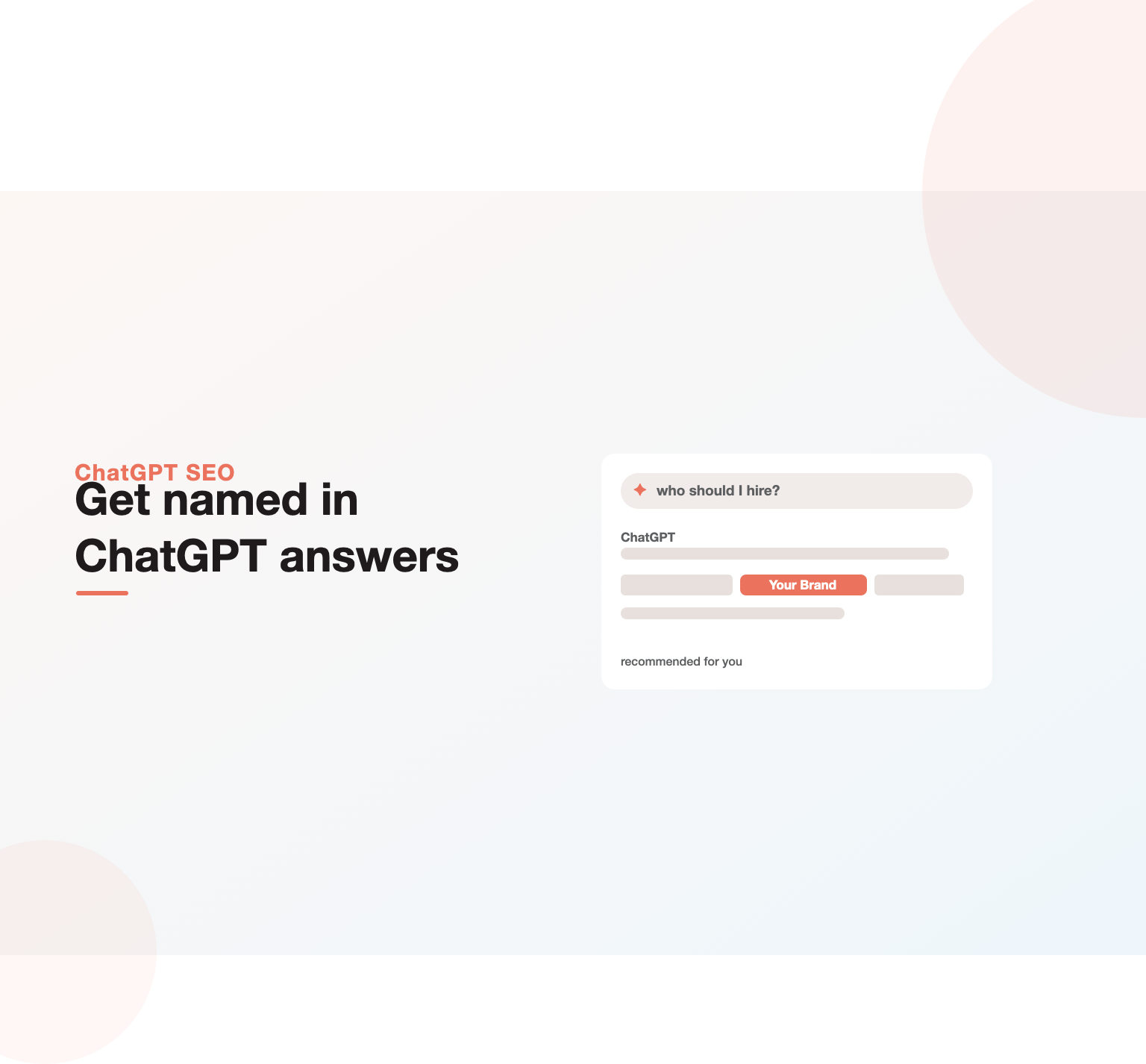
ChatGPT SEO is the practice of optimizing your brand and content so that ChatGPT mentions, cites or recommends you when it answers relevant questions. It works differently from Google SEO because ChatGPT draws on a mix of training data, live browsing, and its own retrieval rather than a ranked index, so success depends on being a widely referenced, consistently described, credible presence across the web that the model has learned to associate with your category. In practice that means earning mentions across many trusted sources, publishing clear answer-first content, and being described consistently everywhere ChatGPT might encounter you.
Hundreds of millions of people now ask ChatGPT the questions they used to type into Google, including questions about which product to buy, which provider to hire, and which brand to trust. When ChatGPT answers, it names a few brands and omits the rest, and for a growing share of buyers that answer is the whole research process. ChatGPT SEO is the practice of making your brand one of the ones ChatGPT names. It is a distinct challenge because ChatGPT does not work like a search engine, and the tactics that earn a mention are shaped by how this specific assistant is trained, how it browses, and how it decides what to say. This guide explains how ChatGPT surfaces brands and what it takes to become part of its answers, from the sources it draws on to the concrete steps that turn an overlooked brand into one the assistant recommends by name to the people deciding what to buy.
Key Highlights
- The practice targets being named in ChatGPT’s answers, which is a different goal from ranking in Google and requires different tactics.
- ChatGPT draws on training data, live browsing and retrieval, so both your long-term reputation across the web and your current, crawlable content matter.
- Being the consensus answer, mentioned consistently across many credible sources, is more powerful than any single optimized page.
- Clear, answer-first content and consistent brand and entity information help ChatGPT understand and reproduce who you are accurately.
- You can measure ChatGPT SEO directly by asking the assistant your priority questions and watching whether and how your brand appears.
What ChatGPT SEO actually means
At its core, it is the work of becoming a brand that ChatGPT reaches for when it composes an answer. That is not the same as ranking a page, since ChatGPT does not present a list of links for the user to choose among. It reads across what it knows and, increasingly, what it can browse, then writes a single response that mentions only a handful of brands or sources. Your objective is to be one of those few. Achieving it depends less on optimizing an individual page and more on shaping the overall picture of your brand that the model has absorbed, because ChatGPT’s answer reflects a synthesis of many sources rather than the ranking of one.
This makes ChatGPT SEO as much a reputation and presence discipline as a content one. When ChatGPT is asked to recommend providers in your category, it draws on the associations it has formed from the vast body of text it trained on and, where browsing is available, from what it can find in the moment. A brand that appears frequently, consistently and credibly across that body of text is one ChatGPT has effectively learned to consider a legitimate answer. The task, then, is to build and maintain that broad, consistent, credible footprint, so that the model’s synthesized view of your category naturally includes you rather than leaving you out.
How ChatGPT surfaces brands
To do ChatGPT SEO well you have to understand where the assistant’s answers come from, because it blends several sources. The first is training data: the enormous corpus the model learned from, which shapes its baseline knowledge of your brand and category and explains why long-standing, widely referenced brands are mentioned even without any live lookup. The second is live browsing and search, now built into ChatGPT, which lets it retrieve current information from the web when a question needs it, bringing your crawlable, up-to-date content into play. The third is the immediate context of the conversation, including anything the user has shared. Different questions lean on different sources, which is why ChatGPT SEO has to address both your durable, web-wide reputation and your current, retrievable content.
The practical consequence is that you cannot win at ChatGPT SEO through a single channel. Relying only on optimized pages ignores the training-data reputation that drives many answers, while relying only on brand-building ignores the live browsing that increasingly brings fresh sources into ChatGPT’s responses. The brands that succeed work both sides: they build the broad, consistent presence that shapes the model’s learned knowledge, and they maintain the clear, current, crawlable content that browsing can surface in the moment. Understanding which questions in your category are answered from memory and which trigger live browsing helps you focus each kind of effort where it matters most.
Becoming the consensus answer
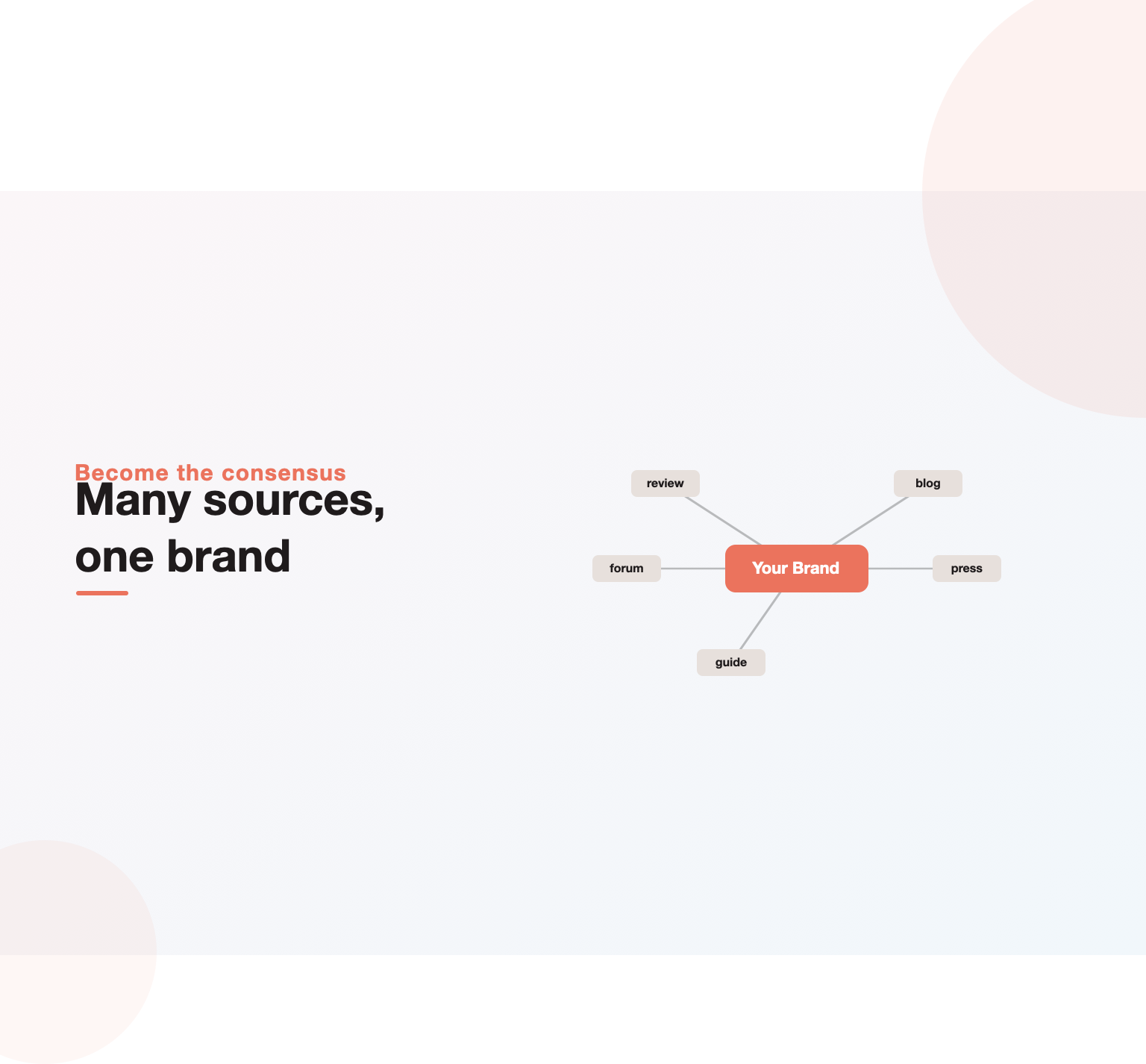
The single most powerful move in this discipline is becoming the consensus answer in your category, the brand that many independent, credible sources associate with a given need. Since ChatGPT synthesizes across sources, a brand mentioned consistently by review sites, industry publications, community discussions and other trusted places is far more likely to appear in its answers than one that only promotes itself. This is fundamentally different from traditional link-building; the goal is not ranking signals but genuine, widespread association between your brand and your category in the text ChatGPT has learned from and can find. Earning that association is slow, but it is the most durable form of this work, since it is hard for a competitor to displace.
Building consensus is the work of earning legitimate mentions at scale: being included in credible roundups and comparisons, being discussed in the communities where your buyers gather, being referenced by publications your industry trusts, and being described consistently wherever you appear. Each credible mention adds to the picture ChatGPT forms of your category, and the cumulative effect is a brand the model treats as an obvious answer. This is where ChatGPT SEO overlaps with digital PR and reputation work, and why the brands that already invest in being genuinely well-regarded across the web have a head start: the same signals that build human trust build the model’s associations, because the model learned from what humans wrote.
Content that ChatGPT can use
Alongside reputation, the content on your own site plays a real role in ChatGPT SEO, especially for questions that trigger live browsing. The content ChatGPT uses most readily states answers clearly and directly, so that a clean, self-contained point can be drawn into a response. Leading with the direct answer to a question and then supporting it, phrasing headings as the questions people actually ask, and keeping key facts precise and quotable all make your content more usable to the assistant. Vague, promotional or padded writing gives ChatGPT little to work with, while clear, specific, genuinely useful content gives it exactly the kind of material it prefers to draw on.
Consistency of information is equally important for ChatGPT SEO. Since the assistant may encounter your brand across many places, contradictory descriptions, outdated facts or inconsistent details give it an unreliable picture and a reason to trust another source. Describing your brand, offerings and key facts the same way across your site and the wider web helps ChatGPT form an accurate, confident understanding of who you are, which in turn makes it more willing to represent you correctly in an answer. Clear content and consistent information together give the model both something to say about you and confidence that saying it is safe.
Products and shopping in ChatGPT
As ChatGPT takes on more shopping and product-research queries, a specific strand of the practice has emerged around being recommended for purchases. When a user asks the assistant which product to buy or compares options, it draws on reviews, comparisons, specifications and discussions from across the web to form its recommendation. Brands that want to appear here need accurate, consistent product information, a genuine presence in the reviews and comparisons buyers rely on, and clear, structured details that the assistant can reconcile into a confident answer. This is high-stakes optimizing for ChatGPT, because a purchase recommendation sits at the very bottom of the funnel, and being the product the assistant suggests can directly influence a buying decision.
Winning product recommendations follows the same logic as the rest of this work but with sharper stakes. The assistant favors products that are well-reviewed, consistently described, and clearly specified across many sources, because that consistency lets it recommend with confidence. A brand with fragmented or contradictory product information, or a thin presence in the places buyers research, gives ChatGPT little basis to suggest it and every reason to name a better-documented competitor. Ensuring your products are accurately and consistently represented wherever the assistant might look is the product-side expression of the same consensus-building that drives ChatGPT visibility overall.
How ChatGPT SEO relates to the wider discipline
This practice is one important instance of a broader shift toward optimizing for AI-mediated search, and it shares its foundations with the adjacent disciplines. The clear, answer-first content and genuine authority that help with ChatGPT also help with Gemini, Perplexity and Google’s AI Overviews, because these systems reward similar signals. What is specific to ChatGPT is the particular blend of training data, browsing and conversation it draws on, and the enormous scale of its consumer use, which makes it a priority surface in its own right. For the umbrella that connects these efforts, our guide to AI search optimization frames the wider practice, and our explainer on LLM SEO covers the model-facing strategy in depth.
Treating the discipline as part of this broader discipline keeps effort efficient. Rather than building a wholly separate program for ChatGPT, the productive approach is to do the core work, clear content, genuine authority, consistent information, well once and let it pay off across every assistant, while paying attention to the specifics that make ChatGPT distinct. The technical foundations that make your content legible to any model apply here too, and our guide to LLM optimization covers that mechanical layer. Understanding both the shared fundamentals and ChatGPT’s particulars is what lets a brand show up in the assistant’s answers without reinventing its strategy for every platform.
Measuring ChatGPT SEO
One advantage of being named by ChatGPT is that you can measure it directly, in the assistant itself. By asking ChatGPT the priority questions your buyers ask, you can see whether your brand appears, how it is described, and which competitors it names alongside or instead of you. Repeating these checks over time shows whether your presence is improving as you invest, and reveals the specific questions where you are absent and need to build more association. Because the assistant’s answers can vary, it is worth testing each question several times and across relevant phrasings, but the overall picture of where you appear and where you do not is usually clear enough to guide action.
This direct testing turns this practice into a concrete feedback loop. When the assistant omits you from an answer where you should appear, that is a signal to build more credible mentions and clearer content around that topic; when it misdescribes you, that points to inconsistent information to correct across the web. Tracking how ChatGPT answers your key questions, and treating each gap or error as a specific task, keeps your effort focused on the answers that matter to your buyers. Our overview of how brands win AI search connects this kind of measurement to the actions that move it, and our look at the most cited websites in AI answers shows what a strong presence looks like.
Getting started with ChatGPT SEO
For a brand starting out, the path is practical. Begin by asking ChatGPT the questions your buyers ask and recording where you appear, where you do not, and who it names instead, which reveals both your current standing and the competitors to study. Then work on two fronts in parallel. On your own site, make your most important pages clear and answer-first, with consistent, accurate information about your brand and offerings, so browsing and retrieval have good material to draw on. Across the web, begin building the credible mentions and consistent presence that shape the model’s learned associations, through the roundups, communities and publications your buyers already trust.
From there, ChatGPT visibility becomes an ongoing program: expand the questions you cover, deepen your presence in the places that shape your category’s consensus, keep your information consistent and current, and re-test the assistant regularly to confirm your presence is growing. Because being named in ChatGPT’s answers is still winnable for focused brands, early and consistent effort earns an outsized share of a rapidly growing surface. If you want a partner to build and run that program, our answer engine optimization services team does exactly this work across ChatGPT and the other assistants, and our generative engine optimization services extend it to every generative surface. As more of your buyers start their research by asking an assistant, being the brand ChatGPT names becomes one of the most valuable positions in your market.
Common ChatGPT SEO mistakes
Several avoidable errors keep brands out of ChatGPT’s answers. The most common is treating the assistant like a search engine and chasing page-level ranking tactics, when what actually drives a mention is broad, credible association across many sources. Keyword stuffing, in particular, does nothing here and can undermine the clarity ChatGPT rewards. A second error is relying solely on self-published content: a brand that only talks about itself, with no independent sources corroborating it, gives the model little reason to treat it as a legitimate answer. A third is inconsistency, describing the brand or its products differently in different places, which leaves ChatGPT with a fragmented picture it cannot confidently reproduce.
A subtler ChatGPT SEO mistake is impatience. Since the reputation and consensus that shape many answers build over months, brands sometimes abandon the effort before it compounds, or expect a single campaign to move the assistant’s synthesized view of an entire category. The reality is that being named by ChatGPT is the cumulative result of sustained credibility-building, not a quick optimization, and the brands that win treat it accordingly. Avoiding these mistakes, chasing rankings instead of association, self-publishing in isolation, tolerating inconsistency, and giving up early, is often as valuable as any positive tactic, because each removes a reason the assistant had to leave you out. Our roundup of the common mistakes that hurt AI citation covers these patterns in more depth.
B2B versus consumer brands
The emphasis of ChatGPT SEO shifts depending on whether you sell to businesses or consumers. For B2B and services brands, the decisive questions are recommendation and comparison queries, prospects asking the assistant which providers to consider or how options compare, so the priority is being the well-regarded, consistently referenced name in your category across the publications, communities and comparisons buyers trust. As these buyers increasingly use assistants to build a shortlist before ever contacting a vendor, being named at that stage is a genuine pipeline advantage, as our analysis of how buyers use AI to choose vendors explains.
For consumer and ecommerce brands, product and shopping queries dominate, so the emphasis falls on accurate, consistent, well-reviewed product information across the web that lets the assistant recommend with confidence. The underlying discipline is the same, build broad credible presence and keep your information consistent, but the surfaces and signals differ, with reviews and specifications mattering more on the consumer side and thought leadership and case studies mattering more on the B2B side. Knowing which query types matter for your business lets you focus your ChatGPT SEO effort where it will actually influence the answers your buyers see, rather than spreading it thin across queries that do not apply to you.
Where ChatGPT search is heading
The trajectory is toward assistants handling more of the journey, from initial research to product comparison to final recommendation, and toward tighter integration between ChatGPT and live web data. As that happens, being present in the assistant’s answers will shift from an edge to a necessity, and the brands that built their association and consistency early will hold positions that late entrants struggle to dislodge, because the model tends to reinforce the sources it has learned to trust. At the same time, the assistant will keep improving at detecting genuine credibility, which means shortcuts will fade while durable reputation-building compounds. The same principles extend to Google’s own assistant surfaces, and our guide to winning citations in Google AI mode shows how the approach carries across.
For brands, the implication is to treat ChatGPT SEO as a foundational channel now rather than a curiosity to revisit later. The surface is large, growing and still winnable for focused brands, which is exactly the condition under which early, disciplined effort pays off most. Building the credible presence, consistent information and clear content that the assistant rewards is work that compounds, and starting while competitors still treat ChatGPT as a novelty is how a brand establishes itself as a default answer before the category’s positions harden. The move from typing queries to asking an assistant is well underway, and being the brand it names is becoming one of the most valuable forms of visibility a business can hold.
How ChatGPT SEO builds on your existing SEO
A reassuring truth for teams already investing in search is that ChatGPT SEO does not start from scratch. Much of the work that earns you a mention in the assistant, credible references across the web, clear and answer-first content, consistent and accurate information, is work that strong SEO and content programs already produce. A brand with genuine authority, a healthy backlink and mention profile, and well-structured content has, almost by accident, been building the very associations ChatGPT relies on. The shift is one of emphasis rather than a wholesale change: the same investments pay off in a new surface, and the reputation you have earned in traditional search feeds directly into how the assistant perceives you.
The difference lies in what you optimize toward. Traditional SEO points those investments at ranking; the newer practice points them at being the synthesized, consensus answer. In practice this means caring less about the position of a single page and more about the breadth and consistency of your presence, less about exact-match keywords and more about being genuinely and clearly associated with the needs your buyers describe. Teams that already do real SEO well can extend into ChatGPT SEO by broadening their view of success from rankings to presence in answers, and by auditing how the assistant currently represents them. The foundation is already there; the work is to aim it at the surface where more of your buyers are now beginning their search.
A realistic timeline and expectation
It helps to set honest expectations for ChatGPT SEO. The content and consistency improvements you make can influence browsing-based answers within weeks, but the deeper prize, being part of the assistant’s synthesized understanding of your category, is built over months of sustained credibility work and does not respond to a single push. This is not a reason to wait; it is a reason to start, because the compounding nature of the work means the brands that begin now accumulate an advantage that later entrants cannot quickly buy. A steady program of earning credible mentions, improving content, and maintaining consistency will show up first as occasional appearances and, over time, as a reliable presence in the answers that matter.
Setting this expectation also protects the effort from being abandoned prematurely. Because the payoff builds gradually, ChatGPT SEO is vulnerable to being judged too early and dropped just before it compounds, which is exactly the mistake that leaves the field to more patient competitors. Treating it as a long-term channel with regular measurement, rather than a campaign with a fixed end date, is what allows the association to accumulate. The brands that hold this perspective, investing consistently and measuring their presence in the assistant over quarters rather than days, are the ones that end up as the default answers their category returns.
Related reading
- AI Search Optimization: The Definitive Guide
- LLM SEO: How to Get Recommended by AI Models
- LLM Optimization: The Technical Guide
- How AI Search Engines Choose Which Brands to Cite
- How Brands Win AI Search
Key Takeaways
- Earn credible mentions across the roundups, communities and publications your buyers trust.
- Make your site content clear, answer-first and consistent so browsing can surface it.
- Keep product and brand facts identical everywhere ChatGPT might encounter them.
- Ask ChatGPT your priority questions regularly and act on where you are absent.
Frequently asked questions
What is ChatGPT SEO?
In short, it is the practice of optimizing your brand and content so that ChatGPT mentions, cites or recommends you when it answers relevant questions. It differs from Google SEO because ChatGPT draws on training data, live browsing and retrieval rather than a ranked index, so success depends on being a widely referenced, consistently described, credible presence across the web that the model associates with your category.
How is ChatGPT SEO different from Google SEO?
Google SEO aims to rank a page in a list of links, while the practice aims to be named in a single synthesized answer. Google rewards page-level ranking signals; ChatGPT reflects the broad associations it learned from across the web plus what it can browse now. That makes reputation, consistency and consensus across many sources more decisive than optimizing any one page, though clear content still helps for browsing-based answers.
Does ChatGPT use live web data?
Yes, increasingly. Modern ChatGPT can browse and search the web to answer questions that need current information, which brings your crawlable, up-to-date content into its responses. But it also relies on training data for much of its baseline knowledge, so optimizing for ChatGPT has to address both your long-term web-wide reputation and your current, retrievable content rather than only one of them.
How do I get my brand mentioned by ChatGPT?
Become the consensus answer in your category by earning credible mentions across the sources ChatGPT learns from and can find: roundups, comparisons, industry publications and the communities where your buyers gather. Pair that with clear, answer-first content and consistent brand and product information across the web. The combination of broad, credible association and clean, consistent content is what makes ChatGPT comfortable naming you.
Can I do ChatGPT SEO for ecommerce products?
Yes, and it is increasingly important as ChatGPT handles more shopping queries. Ensure your products have accurate, consistent information and a genuine presence in the reviews and comparisons buyers rely on, with clear specifications the assistant can reconcile. ChatGPT favors well-reviewed, consistently described, clearly specified products because that consistency lets it recommend with confidence, so fragmented product information is a direct disadvantage.
How do I measure ChatGPT SEO?
Measure it directly in the assistant: ask ChatGPT your priority buyer questions and note whether your brand appears, how it is described, and which competitors it names. Repeat over time and across phrasings, since answers vary, to see whether your presence improves as you invest. Treat each absence or misdescription as a specific task, either building more association or correcting inconsistent information.
Is ChatGPT SEO the same as optimizing for Google’s AI Overviews?
They are closely related but not identical. Both reward clear, answer-first content and genuine authority, and much of the same work helps with each, but the surfaces differ: ChatGPT blends training data with its own browsing, while Google’s AI Overviews lean heavily on Google’s live index and ranking systems. A sound approach optimizes for the shared fundamentals once and then attends to each surface’s specifics, as our guide to winning citations in Google AI mode describes for the Google side.
How long does ChatGPT SEO take?
Content and consistency improvements can affect browsing-based answers relatively quickly, while the reputation and consensus that shape training-influenced answers build over months. Because ChatGPT names few brands and being the consensus answer is durable, early and consistent effort compounds, but this work is a sustained program rather than a one-time optimization.
Ready to put this into practice?
Talk to the team that runs SEO, AI search and paid growth programs every day.
Book a Strategy Call →