 Skip to content

WhatsApp Marketing Strategy: A Lifecycle Plan That Converts
Build a WhatsApp marketing strategy that converts: one goal, a consent-based list, a lifecycle message map, template-category cost control, automation, and the metrics that matter.
Quick Answer
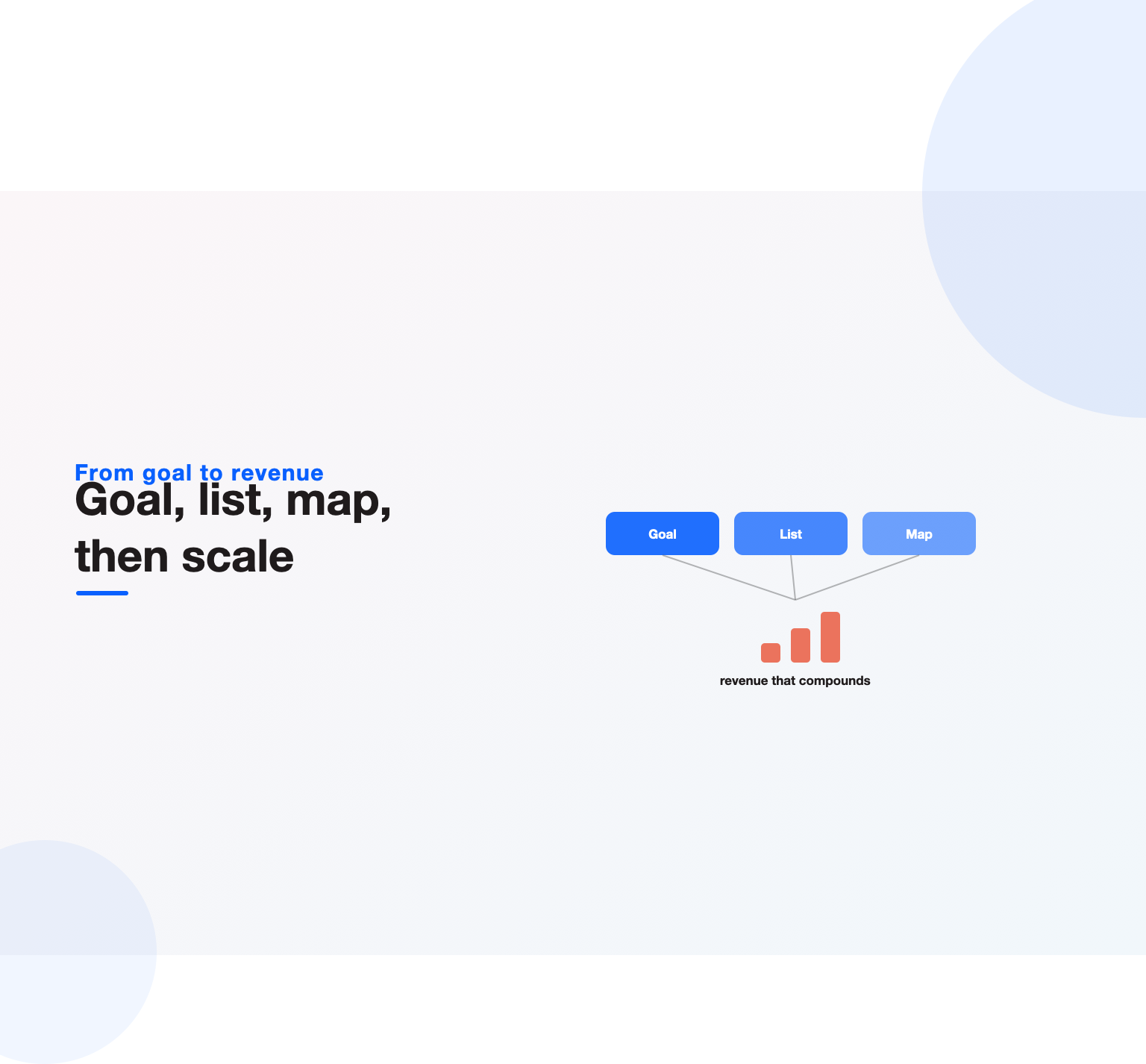
A WhatsApp marketing strategy is the plan for turning an opt-in contact list into revenue on WhatsApp: define the goal, build a consent-based list, map messages to the customer lifecycle, pick the right template categories, automate the repeatable journeys, and measure on replies and revenue rather than sends. In India the winning strategy is consent-first and lifecycle-led, not broadcast-led, because relevance is what keeps your number’s quality rating high and your cost per outcome low.
Key Highlights
- A real strategy starts from one business goal and one primary audience, not from a wish to send more messages.
- Consent is the foundation; a smaller opted-in list beats a large scraped one every time on both results and safety.
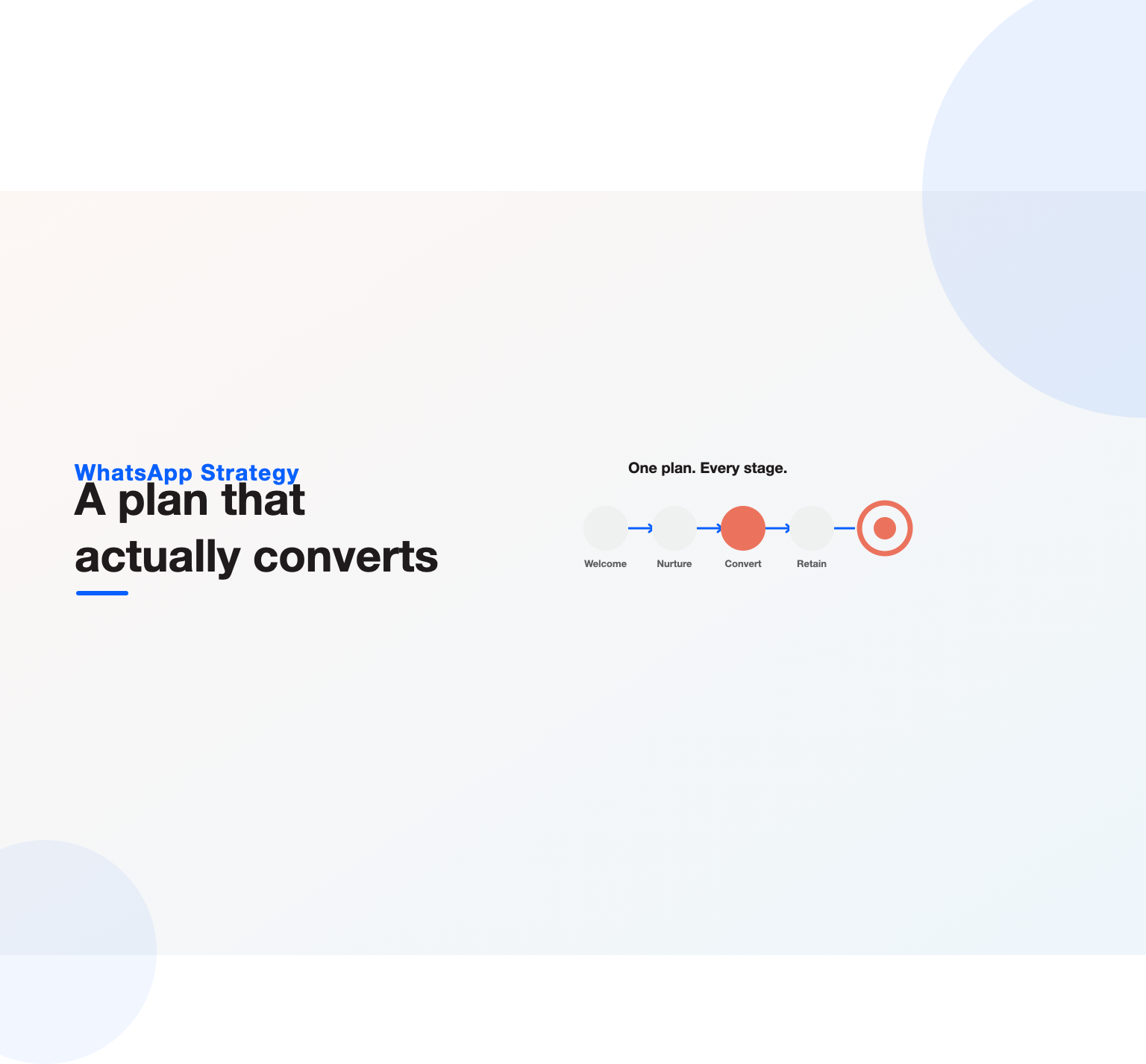
- Map messages to lifecycle stages, welcome, nurture, purchase, retention, win-back, so every send has a reason.
- Template category discipline (utility versus marketing) is a strategic cost lever, not a technical detail.
- Automation and segmentation are what let the plan scale without your quality rating dropping.
- Measure replies, conversions, revenue, and quality rating weekly, and cut whatever only burns credits.
Why WhatsApp anchors the plan in India
Before the tactics, it helps to be clear why WhatsApp earns the centre of the plan here specifically. India is WhatsApp’s largest market, with hundreds of millions of daily users who treat it as the default way to talk to businesses, not just friends. That behaviour is the reason a WhatsApp-led plan outperforms an email-led one for most Indian brands: the message actually gets read, usually within minutes. The channel also supports rich, two-way conversations through the official WhatsApp Business Platform, which Meta documents in its Cloud API overview, so you can run buttons, media, and automated flows rather than one-way texts.
None of that reach matters without a plan behind it, which is the point of this whole exercise. Reach is potential; a strategy is what converts potential into orders. The brands that win in India are not the ones sending the most messages. They are the ones whose every message has a job, a trigger, and a measurable result, sent to people who genuinely opted in. That is the bar this plan is built to clear.
Start with one goal and one audience
Every effective WhatsApp marketing strategy begins by narrowing, not broadening. Pick the single outcome that matters most in the next quarter: recover abandoned carts, drive repeat purchases, book more consultations, or cut support cost. A plan built to do everything does nothing well, because the message cadence, the templates, and the automation all differ by goal. Write your goal as a number you can check, such as recovering fifteen percent of abandoned carts, so the strategy has a target to serve.
Then name the one audience that goal depends on. For cart recovery it is recent abandoners; for repeat purchase it is buyers in the ninety days after their first order; for consultations it is warm leads who engaged but did not book. This is where relevance begins, and relevance is the whole game on a permission channel. A message that lands as useful to a specific person keeps your list healthy; a generic blast to everyone trains people to mute or block you, which is the fastest way to wreck the number your whole strategy runs on.
Build a consent-based list, deliberately
No WhatsApp marketing strategy survives a bad list. WhatsApp is permission-first, and Meta polices it with a quality rating on every number that falls when people block or report you. So list building is not a growth hack bolted on later; it is step one of the strategy. Collect explicit opt-in and record it, and make sure every contact knew it was your brand and can leave with one reply.
The consent sources that work in India, in rough order of quality:
- Click-to-WhatsApp ads on Facebook and Instagram, where the tap that opens the chat is itself the opt-in and the conversation starts customer-initiated.
- Checkout and signup checkboxes that clearly state what you will send and how often.
- Website chat widgets and QR codes on packaging, receipts, and stores that invite a first message.
- Keyword campaigns where a customer messages a word to start updates, making intent unambiguous.
Whatever the source, honour opt-outs instantly. A working “reply STOP to leave” protects the quality rating that your entire WhatsApp marketing strategy depends on, and it costs far less than the reporting damage a trapped contact does. If you want the full setup done compliantly, our WhatsApp marketing services cover opt-in design and list hygiene, but you can build a clean list yourself with the sources above. The mechanics of getting a number verified and running are covered in our companion guide on how to do WhatsApp marketing in India, which pairs with this plan.
Treat compliance as part of the strategy
Compliance is not a legal afterthought bolted onto the plan; in India it is a strategic input that shapes how you collect contacts and how often you message them. The country’s telecom regulator, the Telecom Regulatory Authority of India, has steadily tightened the rules on unsolicited commercial communication, and the broader direction of data and consent regulation points the same way: messaging people who did not clearly agree is getting harder, not easier. A strategy built on explicit, recorded consent is therefore also the only future-proof one.
Practically, this means three commitments baked into the plan from day one. Collect consent you can prove, with a timestamp and a source. State plainly what you will send and roughly how often, so expectations match reality. And make leaving effortless, because a frictionless opt-out preserves your quality rating far better than a trapped, resentful contact ever could. Businesses that treat these as constraints resent them; businesses that treat them as the strategy build lists that keep performing for years. The discipline pays for itself the first time a competitor’s number gets throttled and yours does not.
Map messages to the customer lifecycle
The core of any WhatsApp marketing strategy is a message map: which message fires at which lifecycle stage, and why. Broadcasting the same offer to your whole list ignores where each person actually is. A lifecycle map fixes that by giving every contact the message that fits their moment.
A practical lifecycle map for an Indian business looks like this:
- Welcome: the moment someone opts in, confirm what they will get and ask one question that helps you segment. First impressions set engagement for everything after.
- Nurture: for prospects not yet ready to buy, useful content and social proof, spaced so it never feels like pressure.
- Conversion: cart recovery, limited offers, and clear next steps for people showing intent.
- Post-purchase: order and delivery updates, which are cheap utility messages, genuinely wanted, and quietly keep the number warm.
- Retention: reorder reminders, loyalty perks, and cross-sell timed to the product cycle.
- Win-back: a real reason to return for buyers who have gone quiet, not a generic discount.
Language belongs in the map too. In India a Hindi or regional-language message to the right segment routinely outperforms an English one to everyone, and a good WhatsApp marketing strategy plans that variation rather than treating the country as one audience. The map is what turns scattered sends into a system, and it is the difference between a plan and a habit of blasting.
Make template categories a cost lever
Here is where strategy meets economics, and where most plans quietly leak money. On the WhatsApp Business Platform every business-initiated message is a template in a category, and the category sets the price. Marketing templates cost the most; utility templates, tied to a customer action like an order or payment, cost a fraction; and your replies inside the twenty-four-hour service window after a customer messages you are effectively free. Meta lays out the categories and the marketing-message rules in its guidance on pricing for marketing messages.
The strategic move is to route as much as you honestly can through utility and service rather than marketing. An order update is utility, not marketing, so write it as one. A support answer inside the service window is free, so design flows that keep customers messaging you first. A WhatsApp marketing strategy that treats every message as a marketing broadcast pays several times more than one that uses categories deliberately, for the same customer outcomes. Over a year that discipline is the difference between WhatsApp being your cheapest channel and your most wasteful.
Templates also carry your brand voice, so write them like a person: personalise with name and order detail, make one clear offer, and add a single action such as a quick-reply button. Templates crammed with capitals, multiple links, and hype get rejected or rated poorly, which drags the whole number down.
Automate the journeys, then segment
A WhatsApp marketing strategy only scales when the repeatable parts run without a human remembering to send them. Manual broadcasting caps out fast and gets the timing wrong; automation is what lets the plan grow while the quality rating holds.
Automate the journeys you mapped: a welcome flow on opt-in, cart recovery triggered by your store, order and delivery updates fired by fulfilment, and a win-back that starts when a buyer crosses a quiet threshold. Add an FAQ chatbot that answers pricing, availability, and delivery instantly and hands off to a person when it cannot help, which keeps conversations customer-initiated and therefore cheap. Connect the whole thing to your CRM so a WhatsApp conversation updates the same customer record as everything else. Pairing WhatsApp with a broader marketing automation layer is what turns single sends into lifecycle journeys that run themselves.
Segmentation is the other half. Even three or four segments, past buyers, cart abandoners, high-value repeat customers, and quiet contacts, beat one giant list, because each gets a message that fits. The tighter the segment, the higher the reply rate and the lower the block rate, which is exactly the health your WhatsApp marketing strategy needs to keep sending at scale.
Choose tools that fit the plan, not the other way round
Only after the strategy is clear should you lock a tool, because the plan dictates the features you need. At any real volume you are on the WhatsApp Cloud API through a Business Solution Provider, and in India the common names are AiSensy, Interakt, Wati, Gallabox, and Zoho. They differ on per-message markup, campaign tooling, chatbot quality, and CRM integrations. Judge them against your message map: if retention automation is central, weigh the flow builder heavily; if ads are your main list source, weigh the click-to-WhatsApp handling.
Compare on total cost, the provider’s platform fee plus Meta’s per-message charge, not the sticker price, and pick the one that fits where your strategy is going in a year, because switching later costs sending reputation you cannot easily rebuild. Our breakdown of the best WhatsApp marketing tools maps the options to use cases, and it sits alongside a wider view of the marketing automation tools you will connect it to. If your stack already overlaps, a quick read on martech consolidation often shows you can add WhatsApp without adding cost.
Measure what matters and prune hard
A WhatsApp marketing strategy without measurement is just optimism. WhatsApp gives cleaner numbers than almost any channel, so use them. Track delivered, read, replied, and clicked for every template, and tie campaigns to revenue wherever the store lets you. Read rates routinely clear seventy percent, well above email, so if a well-read campaign is not converting, the problem is the offer or the segment, not the channel.
Watch two health metrics as closely as the vanity ones: the number’s quality rating and the block rate. A rating sliding toward yellow is an early warning that frequency or targeting is off, and fixing it then is easy where fixing a red rating is slow and costly. Then prune. Kill the templates and segments that only burn marketing credits without producing replies or sales, and move that budget to the journeys that pay. The same relentless-improvement habit behind good conversion rate optimisation applies here, and WhatsApp rewards it faster than most channels because the feedback is immediate. Feed every result back into the reporting your other channels use so revenue is attributed honestly rather than double-counted.
A 30-day plan to put it in motion
Strategy is only useful if it becomes action, so here is a realistic first month. It assumes you are starting close to scratch.
- Week 1: lock the one goal and audience, verify a dedicated number, complete Meta business verification, and connect a provider.
- Week 2: stand up two opt-in sources, usually a click-to-WhatsApp ad and a checkout checkbox, and write the welcome flow.
- Week 3: build and submit your first templates by category, then automate cart recovery and order updates.
- Week 4: launch to your first segments, watch quality rating and replies daily, and hold a review to cut what is not working.
By the end of the month you will have a live, consent-based, lifecycle-led WhatsApp marketing strategy producing measurable outcomes, which you then widen segment by segment. If you would rather have the whole plan built and run for you, that is exactly what a specialist team does, but nothing here requires it; a disciplined founder can execute this alone. The click-to-WhatsApp piece is worth pairing with a proper Meta ads program so your list grows from qualified taps rather than cold uploads.
Tailor the plan to your business type
One plan does not fit every business, and a good strategy adapts its emphasis to the model. The lifecycle map stays, but which stages carry the weight changes.
- D2C and ecommerce brands should lean hardest on cart recovery, order updates, and reorder prompts, because the purchase cycle is fast and repeatable. Here WhatsApp often becomes the single highest-ROI retention channel, and the plan should wire it tightly to the store and to a broader automation stack.
- Service and consulting businesses should weight the nurture and conversion stages, using WhatsApp to answer questions, share proof, and book consultations. The offer is considered, so conversation matters more than volume, and a fast reply beats a polished broadcast.
- Local retail and clinics should focus on appointment reminders, back-in-stock alerts, and loyalty perks to their existing customers, where relevance is naturally high and consent easy to gather in person.
Whatever the model, the strategic principles hold: one goal, a consent-based list, a lifecycle message map, category discipline on cost, automation for scale, and weekly measurement. The emphasis shifts; the system does not. Matching the plan to your business type is what keeps it from feeling like a generic template and makes the messages land as genuinely useful, which is the whole point of a permission channel. A retailer running the D2C playbook, or a consultancy blasting like an ecommerce brand, wastes both money and goodwill.
Common strategy mistakes to avoid
- Broadcast-only thinking. Sending everyone the same message on the same day is the most common failure and the surest route to a falling quality rating.
- List over consent. Chasing a big list with bought or scraped contacts kills the number your whole plan depends on.
- Treating every message as marketing. Ignoring utility and service categories multiplies cost for no extra outcome.
- No segmentation or language variation. One message for all of India reads as spam even when it is technically allowed.
- Tool before plan. Buying a platform and then wondering what to send inverts the order; the message map comes first.
- Set and forget. A WhatsApp marketing strategy that is not reviewed against replies, revenue, and quality rating drifts into waste.
Sample messages for each lifecycle stage
Principles are easier to apply with concrete examples, so here is how the message map looks in practice for a typical Indian D2C brand. Treat these as patterns to adapt, not scripts to copy, and remember that anything business-initiated must be an approved template in the correct category.
- Welcome (utility-style, on opt-in): “Hi Aarav, thanks for joining Brand updates. You will get order updates and the occasional offer, no spam. Reply MENU to see what we do, or STOP to leave anytime.”
- Cart recovery (marketing, one hour after abandon): “Hi Aarav, your cart is still saved. The blue kurta you liked is selling fast. Complete your order in two taps: [link]. Need a size check? Just reply here.”
- Order update (utility, on dispatch): “Good news, Aarav. Your order 4821 has shipped and arrives by Friday. Track it here: [link].”
- Win-back (marketing, after 90 quiet days): “We have missed you, Aarav. Here is what is new since your last order, plus free shipping this week: [link]. Not interested? Reply STOP.”
Notice the pattern: each message is personalised, has one clear action, and fits the stage. The utility messages carry no hard sell and stay cheap; the marketing messages earn their higher cost with a real, timely reason to act. That balance is the practical face of a disciplined WhatsApp marketing strategy, and it is why the examples read like a helpful business rather than a spammer. If email is still in your mix, these sit naturally alongside a longer email nurture rather than replacing it.
Benchmarks to aim for
Targets keep a plan honest, so set expectations from realistic WhatsApp benchmarks and adjust to your own data over time. Delivery on a clean, consented list should sit well above ninety percent; anything lower usually signals list or number-health problems worth fixing before you scale. Read rates commonly clear seventy percent, far above email, which is exactly why a weak conversion on a well-read message points to the offer or the segment rather than the channel.
On outcomes, cart-recovery flows for Indian ecommerce routinely recover a meaningful share of otherwise-lost orders, and reorder and win-back journeys lift repeat-purchase rates when they are timed to the product cycle. Keep your number’s quality rating green by holding frequency sane and targeting tight, and watch the block rate as your early-warning gauge. Feed all of it into the same reporting your paid search and other channels use, so WhatsApp is judged on revenue on equal footing rather than on flattering open rates alone. A plan measured this way improves every month instead of plateauing.
Fit the channel into your wider funnel
A WhatsApp plan works best when it is one instrument in an orchestra, not a solo act. Decide deliberately what WhatsApp owns and what it does not. It owns fast, two-way engagement: recovery, updates, support, and timely offers to people who opted in. It does not replace the top-of-funnel discovery that paid and organic search drive, nor the long-form storytelling that email and your site do better. The strategy is strongest when each channel hands off cleanly to the next and a customer never gets messaged three ways about the same thing.
In practice that means your acquisition channels feed WhatsApp with warm, consented contacts, and WhatsApp then does the close and the retention work it is uniquely good at. A click-to-WhatsApp campaign run through a disciplined Meta ads program turns ad spend into opt-ins; steady demand from search keeps the pipeline full; and the conversation itself becomes the place where questions get answered and carts get recovered. Tie the whole thing together with shared measurement and a single customer record, and the plan compounds rather than competing with your other efforts. That orchestration, more than any single clever broadcast, is what makes a WhatsApp marketing strategy a lasting revenue line for an Indian business, and it is worth revisiting every quarter as your mix and your data mature. The brands that treat it as a living plan, reviewed and pruned, keep pulling ahead of those that set it once and walk away. If you would rather hand the build, compliance, and ongoing optimisation to a team that does this daily, our WhatsApp marketing team can run the entire plan for you while you focus on the product.
Key Takeaways
- Anchor the strategy to one goal and one audience; a plan that tries to do everything moves nothing.
- Build the list on explicit consent with instant opt-out, because the number’s quality rating is the asset the whole plan runs on.
- Map every message to a lifecycle stage, welcome through win-back, so no send is a random broadcast.
- Use template categories as a cost lever, routing everything honestly into utility and free service messages where you can.
- Automate the mapped journeys and segment tightly so the plan scales without the quality rating falling.
- Measure replies, revenue, and quality rating weekly, prune what only burns credits, and reinvest in what pays.
- Execute it in a focused 30-day rollout, or have a specialist run it, but either way let the plan lead the tools.
Frequently asked questions
What is a WhatsApp marketing strategy?
It is the documented plan for turning opted-in WhatsApp contacts into business outcomes: a defined goal, a consent-based list, a message map tied to the customer lifecycle, deliberate use of template categories to control cost, automation of the repeatable journeys, and weekly measurement on replies and revenue. It is what separates a channel that compounds from a habit of sending occasional broadcasts.
How do I build a WhatsApp marketing strategy in India?
Start with one goal and the single audience it depends on, then build a consent-based list through click-to-WhatsApp ads, checkout opt-ins, and QR codes. Map messages to lifecycle stages, plan language variation for regional segments, submit templates by the right category, automate cart recovery and updates, and review results weekly. Consent and lifecycle relevance, not broadcast volume, are what make it work in the Indian market.
How is a strategy different from just sending WhatsApp messages?
Sending messages is activity; a strategy is a system. Ad hoc broadcasting ignores where each contact is in their journey, wastes money on the wrong template categories, and damages the quality rating with irrelevant sends. A strategy assigns every message a reason and a trigger, segments the audience, controls cost through category discipline, and improves through measurement, so results compound instead of plateauing.
What should a WhatsApp marketing strategy measure?
Track delivered, read, replied, and clicked for each template, and tie campaigns to revenue where possible. Just as important are two health metrics, the number’s quality rating and the block rate, which warn you early when frequency or targeting is wrong. Optimise toward replies and revenue rather than sends or read rates alone, because a well-read message that does not convert signals an offer or segment problem.
How much should I spend to start?
You can start small. The costs are your provider’s monthly platform fee and Meta’s per-message template charges, which are category-based and modest in rupees, plus any ad spend for click-to-WhatsApp list building. Because utility and service messages are cheap or free, a disciplined lifecycle strategy keeps the per-outcome cost low from the start, and you scale spend only as the paying journeys prove themselves.
Do I need automation from day one?
Not for the very first sends, but you will need it quickly. A welcome flow, cart recovery, and order updates are the journeys that produce most of WhatsApp’s return, and they depend on automation triggered by your store rather than a person remembering. Plan for the Cloud API through a provider early, because migrating from manual sending later costs time and sending reputation.
Ready to put this into practice?
Talk to the team that runs SEO, AI search and paid growth programs every day.
Book a Strategy Call →