 Skip to content

Marketing Technology Trends 2027: What the Data Actually Shows
The real marketing technology trends for 2027, read off a benchmark of 190 enterprise stacks: consolidation, the AI reality gap, the activation layer, owned data, and efficiency as the new scoreboard.
Quick Answer
The defining marketing technology trends for 2027 are consolidation over acquisition, the rise of the activation layer, the gap between AI promise and AI usage, the return of owned data as third-party signals disappear, and a shift in how success is measured from tool count to orchestrated outcomes. These are not speculative forecasts; each is measurable in the stacks enterprises already run today, where sprawl is high, integration is thin, and the newest categories are the least used. The through-line is that the winning move has changed from buying the next capability to making the capabilities you already own work together.
Every January the industry publishes a fresh list of shiny predictions, and by March most of them are forgotten. The trends that actually reshape a marketing organization are quieter, slower, and visible in the data long before they appear in a keynote. In our State of Enterprise MarTech 2027 report we benchmarked the observable stacks of 190 enterprise SaaS companies and scored them on a seven-dimension efficiency index. The picture that emerged is the real story behind the headlines: the average stack scores just 43 out of 100, only 5 percent qualify as leading, and the loudest category in every sales deck, artificial intelligence, is the weakest in practice. This guide reads the genuine marketing technology trends off that benchmark rather than off a vendor roadmap, so the shifts you plan around are the ones the data supports.
Key Highlights
- The dominant shift is from accumulation to orchestration: leaders are removing tools and connecting the survivors, not adding to a footprint that already averages dozens of vendors.
- AI is the widest gap between narrative and reality; it is the most-hyped category and, by observable usage, the least adopted, which makes disciplined AI selection a defining theme rather than blanket enthusiasm.
- The activation layer, led by the customer data platform, is where the next round of value is created, because most stacks are strong at measuring behavior and weak at acting on it.
- The disappearance of third-party cookies and the tightening of privacy rules are pushing owned first-party data from a nice-to-have to the foundation of the entire stack.
- The metric that matters is moving from how many tools you own to how much of the stack is used and connected, which is why efficiency, not capability, is the benchmark leaders now compete on.
Where these trends come from
Most trend lists are assembled from vendor announcements and analyst briefings, which means they describe what the industry wants to sell rather than what marketing teams actually do. The marketing technology trends in this guide are drawn from a different source: the stacks themselves. By examining the tools 190 enterprises visibly run, how those tools connect, and which layers are populated versus empty, the benchmark reveals behavior rather than intention. That distinction matters, because the gap between what companies buy and what they use is the single most important fact about the modern stack, and it is invisible to any forecast built on press releases. When a trend shows up in the observable data, it is real; when it only shows up in the keynote, it is a hope.
This is also why several widely predicted shifts do not appear here. The metaverse, blockchain-based loyalty, and a dozen other perennial forecasts never materialized in enterprise stacks in any measurable way. The trends that did materialize are less glamorous and far more consequential, and they share a common root: after fifteen years of a market that grew from a few hundred products to more than fifteen thousand, the constraint on marketing performance is no longer the availability of capability. It is the ability to use and connect the capability already purchased. Every genuine trend below is a response to that single, defining condition.
Consolidation replaces accumulation
For most of the past decade the reflex when a marketing team hit a wall was to buy a tool. The result is the sprawl the benchmark measures: stacks with overlapping vendors in nearly every category, many of them barely used. The clearest of the marketing technology trends for 2027 is the reversal of that reflex. Leading teams are auditing what they own, identifying the thirty to forty percent of tools that duplicate a capability already present elsewhere, and deliberately removing them. Consolidation is not cost-cutting dressed up as strategy; it is a performance move, because every redundant tool is a source of conflicting data, wasted administration, and integration surface that no one maintains.
The companies doing this well treat consolidation as an ongoing discipline rather than a one-time purge. They establish a clear owner for the stack, a rule that no new tool enters without a named business case and a retirement plan for whatever it replaces, and a regular review that catches redundancy before it compounds. The payoff is not merely a smaller bill. A leaner, well-connected stack produces cleaner data, faster campaigns, and a marketing operation that a new hire can actually understand. In a market that spent fifteen years adding layers, the teams that learn to subtract will hold a structural advantage.
The AI reality gap
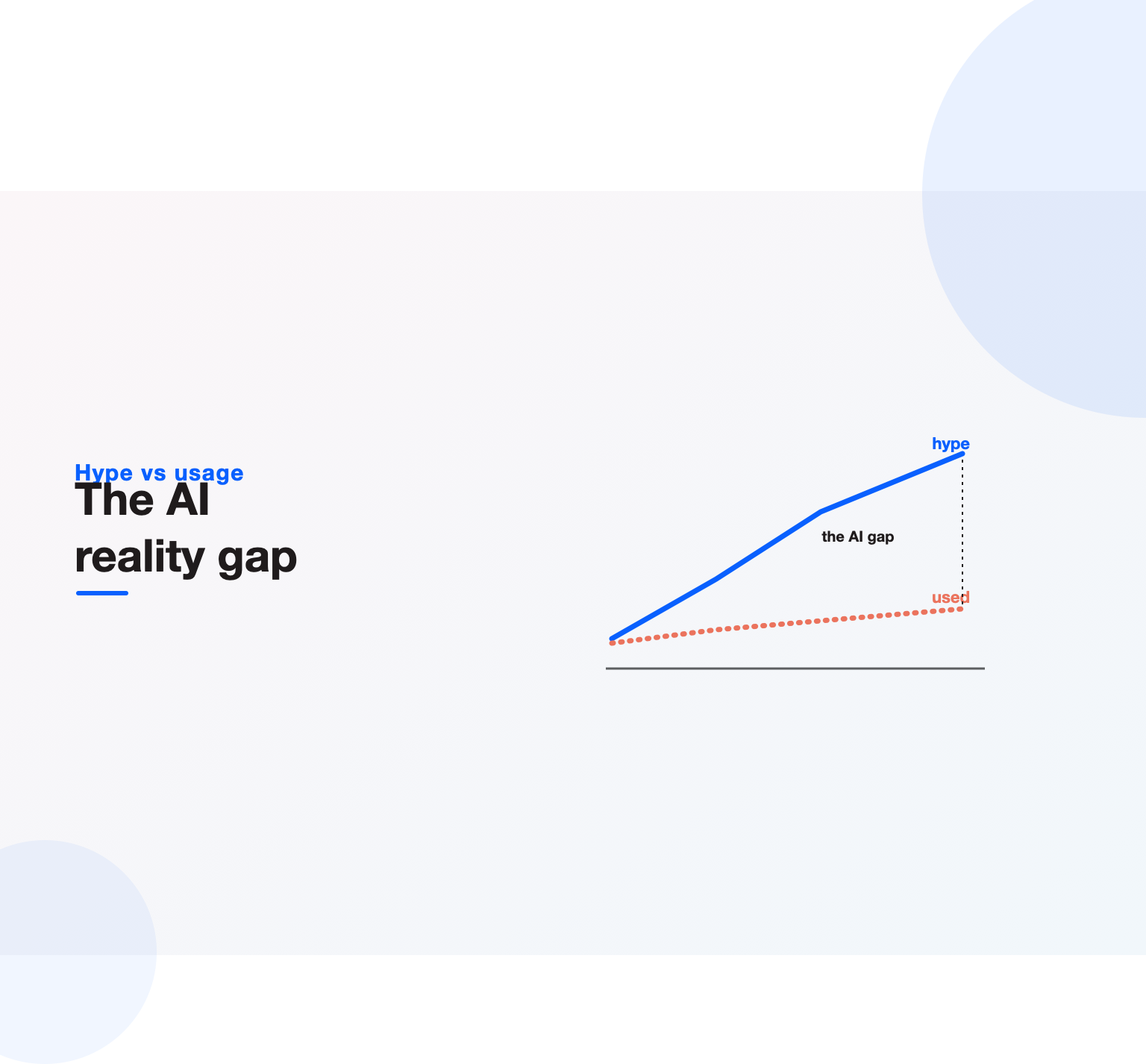
No category is louder in the 2027 sales cycle than artificial intelligence, and none is quieter in the observable stack. In the benchmark, AI scored lowest of every dimension at 27 out of 100, and 45 percent of enterprises reported that the AI agents their vendors sold them had underdelivered. That gap between narrative and reality is itself one of the most important marketing technology trends, because it separates the teams that will get value from AI from the teams that will spend on it and get little back. The lesson is not that AI is overhyped and can be ignored; it is that AI rewards the same discipline every other layer does. Data has to be clean, use cases have to be specific, and the output has to be measured against a real baseline.
The teams extracting value are not the ones that bought the most AI features. They are the ones that identified a narrow, high-volume, well-defined task, gave the model good data, and held it to a measurable standard before expanding. Content variation at scale, predictive lead scoring on a rich first-party dataset, and support-driven personalization are working because they are bounded and measurable. Autonomous, do-everything marketing agents are underdelivering because they were sold as a replacement for strategy rather than a tool within it. Reading this trend correctly means resisting both the hype and the backlash, and treating AI as a capability that has to earn its place layer by layer.
The activation layer rises
The benchmark’s most consistent finding is that stacks are strong at measurement and weak at action. Companies can see what customers do in exhaustive detail and struggle to act on it in the moment. The trend correcting this is the rise of the activation layer, anchored by the customer data platform and the experimentation practice that sits on top of it. Only 28 percent of the enterprises benchmarked had a functioning CDP, which means the majority are sitting on rich behavioral data they cannot unify or act on. As that number climbs, the competitive frontier shifts from who can collect data to who can turn it into a triggered, personalized, revenue-producing action fast enough to matter.
Activation is where measurement finally pays off, and it is the reason the CDP has moved from a specialist purchase to a foundational one. A unified customer profile is what lets a stack move from reporting on behavior to responding to it, and the teams building that layer now are the ones who will convert their existing analytics investment into outcomes. This is the quiet counterpart to the AI trend: before an organization can benefit from intelligent automation, it needs a single, trustworthy view of the customer for that automation to act on. The activation layer is the precondition for almost everything else on the roadmap.
Owned data becomes the foundation
The slow-motion disappearance of the third-party cookie, combined with tightening privacy regulation and platform-level restrictions on tracking, has changed the economics of the entire stack. Signals that marketers rented for years are becoming unreliable or unavailable, and the response visible in leading stacks is a decisive move toward owned, first-party data. This is one of the marketing technology trends with the longest tail, because it touches everything from how content is gated to how loyalty programs are designed to how the CDP is populated. A company that owns a direct relationship with its audience, and the data that relationship produces, is insulated from the erosion happening in the rented-signal economy.
Practically, this is driving investment in the channels and mechanics that generate first-party data at scale: email and community as owned audiences, progressive profiling that earns data through value rather than demanding it up front, and consent architectures that make first-party collection both compliant and durable. The teams treating this as a compliance headache are missing the strategic point. First-party data is not just the safe option; it is the higher-quality option, because it reflects a real relationship rather than an inferred one. As the rented-signal era ends, the companies that built an owned-data foundation early will find their entire stack works better than their competitors’.
Efficiency becomes the scoreboard
For years the implicit measure of a sophisticated marketing organization was the size and modernity of its stack. That standard is inverting. The metric that leaders now compete on is efficiency: how much of what they own is actually used, how well the pieces connect, and how much outcome the whole system produces relative to its cost. The benchmark exists precisely to make this measurable, and the average score of 43 out of 100 tells the story of a market that optimized for capability and neglected utilization. Among the marketing technology trends, this is the most fundamental, because it changes what “good” means. A lean stack scoring 70 is now a better marketing operation than a sprawling one scoring 40, regardless of which owns more tools.
This shift rewards a different kind of leadership. The marketing technology leader who wins in this environment is not the one with the biggest budget or the newest logos on the stack diagram, but the one who can show that every tool earns its keep, every integration works, and the system as a whole moves the numbers the business cares about. Efficiency as the scoreboard also reframes the annual planning conversation, from “what should we add” to “what should we connect, retire, or make people actually use.” That is a healthier question, and the organizations asking it are pulling away from the ones still measuring themselves by tool count.
What these trends mean for planning
Read together, these shifts point to a single planning principle for 2027: invest in orchestration before capability. Before adding a new category, make the existing categories work together, populate the activation layer, and put a real owner in charge of the whole. The marketing operations function is what makes this possible, because trends only translate into results when someone is accountable for the system rather than the individual tools. A roadmap organized around these trends spends less on net-new logos and more on integration, data quality, adoption, and the operating discipline that keeps a stack from drifting back into sprawl.
It also means resisting the pull of the annual hype cycle. The trends that matter are already visible in your own stack if you look: the tools nobody opens, the integrations that never got built, the customer data sitting unused, the AI features bought and abandoned. Planning around the real marketing technology trends starts with an honest look at that internal evidence, because the gap between what your organization owns and what it uses is almost certainly the largest and cheapest source of improvement available to you. The external forecast is a distraction; the internal data is the plan.
The trends that will not matter
It is worth naming the shifts that get airtime but will not move enterprise marketing performance in 2027, because avoiding them is as valuable as pursuing the real ones. Blanket generative AI adoption without clean data or a defined use case will keep underdelivering, exactly as the benchmark shows. Buying a tool to solve a problem that better use of existing tools would solve will keep inflating stacks that already score poorly. And chasing whatever category the market has decided is essential this year, without a business case tied to your own funnel, is how the average stack reached 43 out of 100 in the first place. The discipline that separates leaders is not predicting the future better; it is refusing to act on predictions that their own data does not support.
How to turn trends into a roadmap
Translating these marketing technology trends into a concrete plan follows a sequence. Start with an audit that scores your stack on the same dimensions the benchmark uses, so you know where you actually stand rather than where you assume you do. Use that score to identify the two or three highest-return moves, which for most organizations will be consolidating redundant tools, standing up the activation layer, and shoring up first-party data. Assign a clear owner and a cadence so the improvements stick. Only then, and only with a specific business case, should new capability enter the stack. This ordering, orchestration first and acquisition last, is the practical expression of every trend above, and it is the difference between a roadmap that raises your efficiency score and one that simply adds to your sprawl.
Companies that need help reading their own stack against these trends, or building the roadmap that responds to them, can work with a partner through our digital marketing consulting services, where the benchmark’s framework becomes a specific plan for a specific stack. The value of a trend is only ever in what you do about it, and the organizations that act on the real shifts, deliberately and in the right order, are the ones that will look back on 2027 as the year their marketing technology finally started earning its cost.
Composability over the suite
A structural shift sits underneath several of the marketing technology trends already described: the move away from the all-in-one suite toward a composable architecture of best-fit components connected through a common data layer. For years the promise of the single-vendor suite was simplicity, and for many organizations it delivered the opposite, because no suite is best at everything and the parts that lag drag down the whole. The composable approach accepts a little more integration work in exchange for the freedom to choose the right tool for each job and to swap any one of them without replatforming. What makes composability viable now, where it was fragile before, is the maturity of the integration and data layers that hold the components together.
This is not a mandate to abandon suites, and for smaller teams a good suite remains the pragmatic choice. But the trend among sophisticated enterprises is unmistakable: they treat the customer data platform and the integration layer as the durable core and the surrounding tools as interchangeable modules. That architecture is what makes the consolidation and activation trends achievable, because you cannot easily retire a redundant tool or populate an activation layer if everything is welded into a monolith. Composability is the quiet enabler that turns the other trends from aspirations into operations, and the teams building on it are giving themselves room to keep improving without a painful rip-and-replace every few years.
How buyer behavior is driving the stack
Trends in the stack do not originate in the stack; they originate in how buyers now research and decide. Buyers self-educate across search, communities, and increasingly AI answer engines long before they talk to a vendor, which raises the premium on being present, credible, and cited wherever that research happens. This is why the activation and owned-data trends are inseparable from a broader shift in demand generation: the stack has to support a motion where the buyer is anonymous and self-directed for most of the journey, then expects a personalized, informed experience the moment they raise a hand. A stack strong at measurement but weak at activation simply cannot deliver that experience, which is why buyer behavior keeps pushing organizations toward the activation layer.
The rise of AI-mediated research adds a further dimension. As more buyers begin their journey by asking an answer engine rather than scanning a list of links, being recommended inside those answers becomes a distribution channel in its own right, and the data and content practices that earn those recommendations become part of the stack’s job. The organizations reading this correctly are aligning their marketing technology with how buyers actually behave now, not with how the funnel worked a decade ago, and they are building the attribution and content foundations that let them show up and prove value across a fragmented, self-directed journey.
Budgets, ROI, and proving the stack pays
Underlying every trend is a budget conversation that has grown sharper. Marketing technology commands a meaningful share of the marketing budget, and finance is no longer willing to fund a growing stack on faith. The efficiency trend is, in part, a response to that scrutiny: leaders are being asked not how modern their stack is but what return it produces, and they need an answer grounded in utilization and outcomes rather than feature lists. This is where the discipline of tying every tool to a business case, measuring adoption, and retiring what does not earn its place stops being good hygiene and becomes a survival skill. A stack that cannot prove its return is a stack that will be cut.
The organizations that thrive under this scrutiny treat proving ROI as a design goal rather than an afterthought. They instrument the stack so that usage and outcomes are visible, they consolidate so the spend is legible, and they can point to the specific moves, integrations, and adoption gains that improved their efficiency score. That capability turns the budget conversation from defensive to strategic, because a leader who can show that the stack is used, connected, and productive earns the credibility to invest where it genuinely matters. In a year defined by scrutiny, the ability to prove the stack pays is itself one of the most valuable marketing technology trends to master.
What to stop doing in 2027
Acting on the real marketing technology trends means abandoning a few habits that quietly built the sprawl the benchmark measures. Stop buying a tool to solve a problem that better use of an existing tool would solve; the reflex to purchase is exactly what produced stacks that score 43 out of 100. Stop adopting AI features without a defined use case and clean data behind them, because that is the pattern the benchmark shows underdelivering. Stop treating the annual forecast as a shopping list, and stop measuring the marketing organization by how many logos sit on the stack diagram. Each of these habits optimizes for the appearance of sophistication rather than the substance of it.
Replace them with the disciplines the trends reward. Run a regular audit so decisions rest on evidence. Build the activation layer and the unified data foundation before layering automation on top. Put a real owner in charge of the system, connect the tools you keep, and tie growth investment to a defined outcome through disciplined conversion and growth programs rather than another speculative purchase. The organizations that stop accumulating and start orchestrating will not just track the marketing technology trends of 2027; they will be the ones the next benchmark holds up as the leaders everyone else is trying to catch.
Related reading
- The State of Enterprise MarTech 2027
- The Modern MarTech Stack: Built to Measure, Not Convert
- Customer Data Platforms: The Missing Activation Layer
- Marketing Operations: The Discipline That Turns a Stack Into Revenue
- The MarTech Audit: Seven Signs Your Stack Is Underperforming
Key Takeaways
- Audit your own stack for the trends that matter: sprawl, unused AI, missing activation.
- Consolidate and orchestrate before buying any new capability.
- Stand up the activation layer and shore up owned first-party data.
- Judge the stack on efficiency and outcomes, not tool count.
Frequently asked questions
What are the biggest marketing technology trends for 2027?
The biggest shifts are consolidation replacing accumulation, the gap between AI hype and AI usage, the rise of the activation layer led by the customer data platform, the move to owned first-party data as third-party signals disappear, and efficiency replacing tool count as the measure of a good stack. Each is measurable in the stacks enterprises already run, not just predicted.
Why is AI listed as both a top trend and the weakest area?
Because the two facts coexist. AI is the loudest category in the market and, by observable usage, the least adopted, scoring lowest in the benchmark, with 45 percent of enterprises reporting their vendor AI agents underdelivered. The trend is not blanket adoption but disciplined selection: narrow use cases, clean data, and measured results outperform buying every AI feature on offer.
Is buying new tools still part of a modern strategy?
Yes, but last rather than first. The dominant trend is orchestration before acquisition, which means making existing tools work together, populating the activation layer, and retiring redundancy before adding capability. New tools should enter only with a specific business case tied to your funnel, because the average stack already scores just 43 out of 100 on utilization and connection.
What is the activation layer and why does it matter now?
The activation layer is the set of capabilities that turn measured behavior into action, anchored by the customer data platform and experimentation. It matters now because most stacks are strong at measurement and weak at action, and only 28 percent of benchmarked enterprises had a functioning CDP. As that gap closes, the competitive frontier shifts from collecting data to acting on it quickly.
How does the end of third-party cookies change the stack?
It moves owned first-party data from optional to foundational. As rented signals become unreliable, leading stacks invest in channels and mechanics that generate first-party data at scale, such as email, community, progressive profiling, and durable consent architecture. First-party data is not only the compliant choice; it is the higher-quality one, because it reflects a real relationship rather than an inferred signal.
How do I know which trends apply to my own stack?
Run an audit that scores your stack on the same dimensions the benchmark uses, then look at the internal evidence: tools nobody opens, integrations never built, customer data sitting unused, AI features bought and abandoned. The trends that matter for you are the ones your own data already shows. That gap between what you own and what you use is usually the largest and cheapest source of improvement.
Is the all-in-one suite dead?
No, but its dominance is fading among sophisticated enterprises. The trend is toward a composable architecture where the customer data platform and integration layer form a durable core and surrounding tools are interchangeable modules. Suites remain a pragmatic choice for smaller teams, but composability is what makes consolidation and activation achievable, because you cannot easily retire redundancy or populate an activation layer inside a welded monolith.
How much of the budget should marketing technology take?
There is no single right number, and fixating on the percentage misses the point. The question finance now asks is not how modern the stack is but what return it produces. The efficiency trend means budget is justified by utilization and outcomes, not feature lists, so a leaner stack that proves its return is on firmer footing than a larger one that cannot. Instrument the stack so usage and outcomes are visible, and the budget conversation becomes strategic rather than defensive.
Where should a 2027 roadmap start?
Start with an honest audit, use the score to pick the two or three highest-return moves, assign a clear owner and cadence, and only then consider new capability with a defined business case. Orchestration first and acquisition last is the practical expression of every genuine trend, and it is what separates a roadmap that raises efficiency from one that adds to sprawl.
Ready to put this into practice?
Talk to the team that runs SEO, AI search and paid growth programs every day.
Book a Strategy Call →