 Skip to content
Generative Engine Optimization
Generative Engine Optimization for SaaS
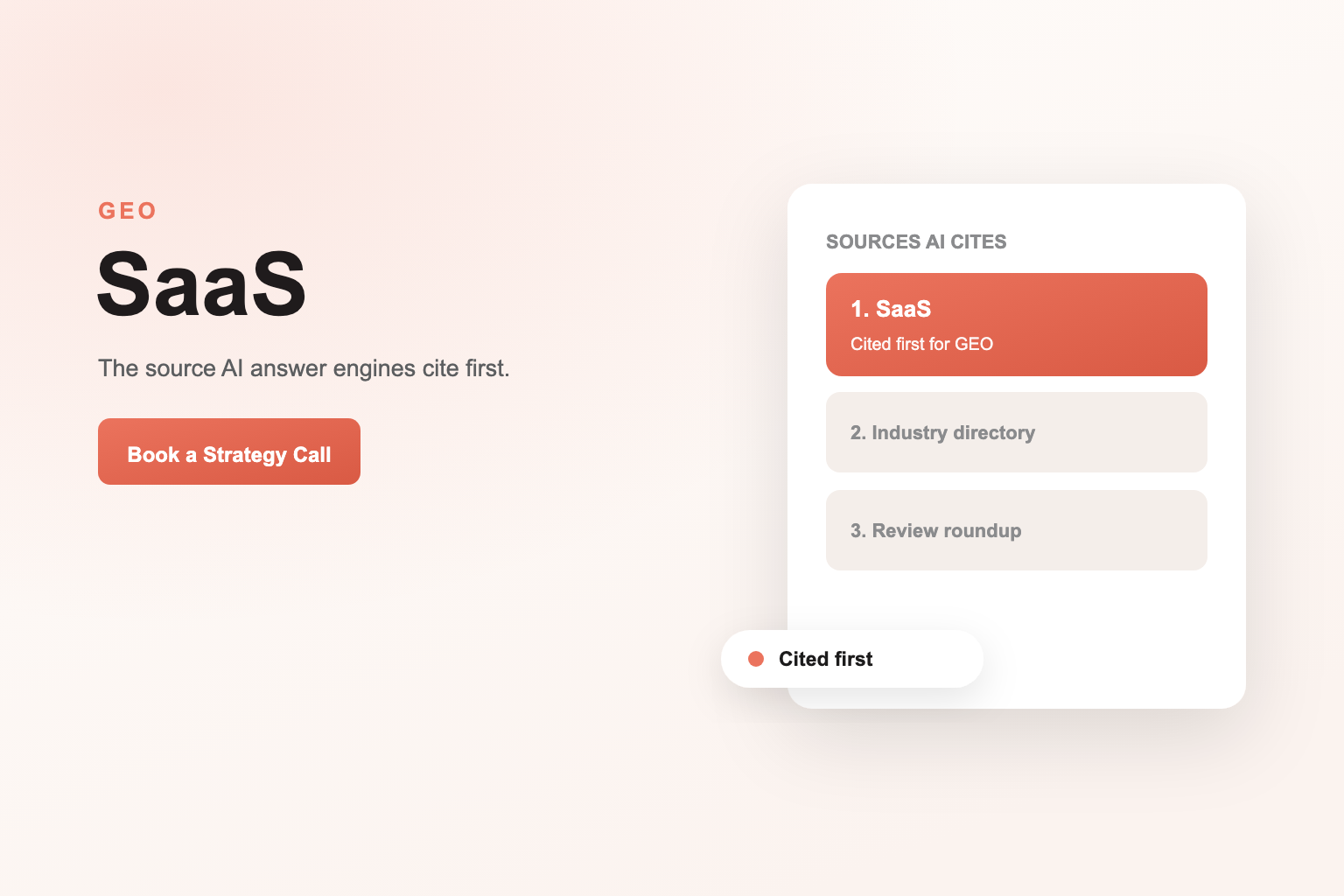
Generative engine optimization for SaaS gets your product named and cited when ChatGPT, Perplexity, Gemini and Google AI Overviews answer your buyers' questions. We do the entity, evidence and content work that makes you the source the model quotes, and we measure it in trials and pipeline, not vanity scores.
- Cited in answers, not just ranked in links
- SaaS-native, buyer-question led
- Measured in trials and pipeline
Our Clients
Brands that have worked with us
From global giants to fast growing startups, teams trust Unified Platforms with their growth.






What Generative Engine Optimization for SaaS Covers
- Category answer research
- Entity and evidence engineering
- Comparison and alternative content
- Third-party proof the engines trust
- Structured data and product clarity
- Citation tracking and pipeline measurement
Overview
What Generative Engine Optimization for SaaS Covers
Generative engine optimization for SaaS is the work of getting your product named and cited when ChatGPT, Perplexity, Gemini and Google AI Overviews answer the questions your buyers ask. It is not classic SEO, and it is not the scramble for the featured answer box. These engines do not simply rank links; they generate an answer and attribute a handful of sources, and generative engine optimization is how a software brand becomes one of those sources. For SaaS, whose buyers now open an AI assistant before they open Google, that citation is often the first impression you get, and sometimes the only one.
Unified Platforms runs generative engine optimization for SaaS companies from research through to results. We study how the models actually answer your category, do the entity and evidence work that makes your product citable, and tie the whole thing to trials, pipeline and MRR rather than to a score on a dashboard. We treat generative engine optimization as a revenue channel a SaaS team can hold accountable, not a science project, because a citation that never turns into a signup is just a nicer kind of vanity metric.
SaaS is where this discipline matters most, and where it behaves differently from any other category. Your buyers ask the engines comparison questions, the endless X versus Y, alternative questions such as the best tool for a specific job, and detailed use-case questions, and the models answer them by synthesizing review sites, documentation, community threads and comparison content. A SaaS product that is missing from those sources is missing from the answer, however good the software is, because the model can only cite what it can find and trust.
A generative engine optimization for SaaS engagement with us covers the full picture: researching the questions and the current answers in your category, engineering your entity presence so the models understand exactly what you do and who you serve, building the comparison, alternative and use-case content the engines pull from, earning third-party proof on the review sites and communities they trust, and marking up your product so it is machine-readable. Then we track which answers cite you, and tie those citations back to trials and pipeline.
It helps to be precise about the difference, because these terms get blurred. Answer engine optimization fights for the single featured answer; traditional SEO fights for the blue link; generative engine optimization makes you the source a model quotes when it writes its own answer from scratch. For a SaaS company the three are strongest together, and we run them as one AI search system, but the generative-citation work is its own discipline with its own tactics, and it is the one most SaaS teams are still completely absent from.
Our generative engine optimization for SaaS suits B2B SaaS platforms, vertical SaaS, developer tools, fintech and martech companies whose buyers do most of their research inside an AI assistant long before they reach a demo form. If prospects arrive already knowing your competitors by name but not you, that is the tell: the engines are answering your category's questions and citing someone else, and closing that gap is exactly what this work does.
We work primarily with United States and North American SaaS companies, alongside teams across the UK and wider markets, and we bring the same discipline to an early-stage product fighting for its first mentions as to an established platform defending its category. Wherever you are, the promise of our generative engine optimization for SaaS is the same: your product cited in the answers your buyers actually trust, and the result measured in trials and pipeline, not applause.
Category answer research. We start by asking the engines the questions your buyers ask, across ChatGPT, Perplexity, Gemini and Google AI Overviews, and recording exactly how your category is answered today: who gets named, which sources are cited, and where you are absent. That map of the real answers, not assumptions, is the foundation every later decision in your generative engine optimization program is built on.
Entity and evidence engineering. Models cite sources they can identify and trust. We build your product's entity presence so the engines understand precisely what your SaaS does, who it is for and how it differs, and we assemble the evidence, the specifics, the numbers, the proof, that makes a claim about you safe to repeat. This is the core of getting cited rather than merely mentioned.
Comparison and alternative content. The questions that bring SaaS trials are comparisons and alternatives: this tool versus that one, the best option for a particular use case. These are exactly the prompts the engines answer from comparison and alternative pages, so we build honest, specific ones that make your product the obvious cited choice for the buyers you actually want, and skip the ones you do not.
Third-party proof the engines trust. AI-generated answers lean heavily on sources outside your own site, review platforms like G2, community threads, and independent write-ups. We map which third-party sources the models pull from in your category and help you earn a genuine, credible presence there, because for a SaaS brand a citation from a source the engine already trusts often matters more than anything on your own domain.
Structured data and product clarity. An engine can only cite what it can parse. We mark up your product, pricing, features and FAQs with clean structured data and rewrite the fuzzy product explanations that leave a model guessing, so your SaaS is machine-readable and unambiguous. Clarity is a ranking factor when the reader is a language model deciding whether it understands you well enough to quote you.
Citation tracking and pipeline measurement. We track which questions cite your SaaS, on which engines, and how that share of voice moves over time, then we connect it to what a SaaS team actually cares about: trials, demos and pipeline. You get a clear read on whether your generative engine optimization is producing revenue, not just a prettier visibility chart, and we reprioritise the work around what converts.
The Difference
Be the SaaS the AI names
When a buyer asks ChatGPT or Perplexity which tool to use, the engine names a few products and ignores the rest. Generative engine optimization for SaaS is how you become one of the named, cited few, by making your product the source the model can understand, trust and quote for the questions that lead to trials. We build the entity, evidence and third-party proof that earn the citation, and we measure the result where it counts, in signups and pipeline, so AI visibility stops being a guess and becomes a channel you can grow.
Our Process
How We Make Your SaaS a Cited Source
A disciplined sequence, adapted to your competitive landscape. Open each step.
01Audit the AI answers in your category
02Map the citable gaps
03Build the entity, evidence and content
04Earn the third-party citations
05Track citations and tie them to pipeline
Why Unified Platforms
Why SaaS Teams Choose Us for GEO
The working habits behind every engagement.
GEO as a revenue channel, not a vanity score
We hold your generative engine optimization to trials, demos and pipeline, and we will drop work that produces citations but no signups. For a SaaS team that is the only test that matters, and it is the one most GEO providers quietly avoid.
SaaS-native, not a generic playbook
We understand how software gets bought now, the comparison and alternative questions, the role of G2 and communities, the trial-to-paid journey, and we build for it. A generic GEO approach misses the specific questions that actually move a SaaS pipeline.
One system: GEO, AEO and SEO together
Generative citation, the featured answer and the classic search ranking reinforce each other, and we run them as one program rather than three disconnected efforts, alongside the wider generative engine optimization work. That is how your SaaS gets named by the model, ranked in the results and clicked by the buyer, instead of winning one and losing the rest.
Senior people who know the models
Your account is run by specialists who study how ChatGPT, Perplexity, Gemini and AI Overviews actually choose and cite sources, and who update as the engines change. This field moves monthly, and a stale playbook stops working fast.
Honest about what earns a citation
There is no trick that makes a model cite a product it cannot verify. We will tell you plainly where your evidence, proof or clarity is too thin to be cited yet, and fix the substance, because that is the only thing that holds up as the engines get stricter.
You own the work
The entity assets, content and third-party presence we build are yours and keep paying off, on your own accounts and properties, with transparent reporting and no long lock-in. We would rather re-earn the engagement each quarter with results you can see in your trial numbers.
Industries
Industries We Work With
Deep experience across the sectors we serve, with strategy tailored to each.
Ready to be the SaaS the AI names?
Book a free GEO audit for your SaaS. We will show you which buyer questions the AI engines already answer in your category, who they cite instead of you, and the fastest path to becoming a cited source for the questions that bring trials.
Questions
Frequently Asked Questions
Straight answers before you ever get on a call.
Generative Engine Optimization for SaaS Essentials
What is generative engine optimization for SaaS?
How is GEO different from AEO and SEO?
How do AI engines decide which SaaS products to cite?
Does GEO for SaaS actually drive trials and pipeline?
Which AI engines do you optimize for?
Do comparison and alternative pages really matter for this?
How important is G2 and third-party proof?
Will GEO replace our SEO?
More on the Service
How long before we see results?
How much does GEO for SaaS cost?
Do you work with early-stage SaaS with little authority?
Can you handle developer tools and technical products?
How do you measure GEO success?
How is this different from just publishing more blog content?
Can you work alongside our in-house SaaS marketing team?
How do we get started?
Working With Unified Platforms
How do you price generative engine optimization for saas?
How do we get started with generative engine optimization for saas at Unified Platforms?
Do you work with our in-house team, or fully manage it?
How do you report on progress?
Why choose Unified Platforms for generative engine optimization?
Do you work with companies outside India?
What size of company do you work best with?
Can we start small and scale the engagement later?
How do you stay accountable for results?
What makes Unified Platforms different from a large consultancy?
How involved will our team need to be?
Do you offer a pilot or discovery engagement to start?
Let's get your product into the answer
Tell us your product, your category and the questions your buyers ask before they buy. We will map a generative engine optimization plan that makes your SaaS the brand the AI engines name and cite, and we will hold it to trials and pipeline, not to a visibility number nobody can bank.
Explore more