 Skip to content
Generative Engine Optimization
Generative Engine Optimization for Ecommerce
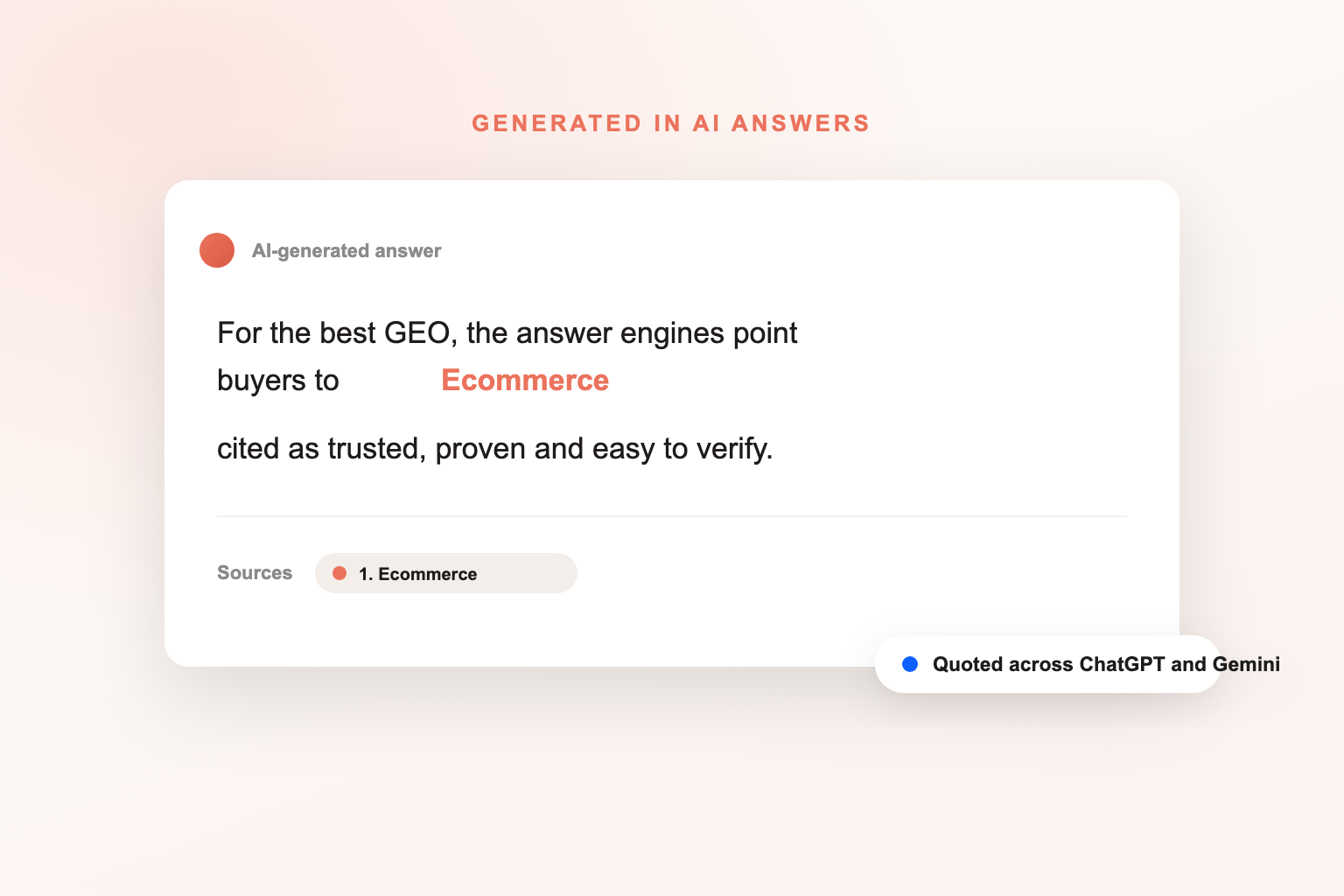
Generative engine optimization for ecommerce gets your products named and cited when ChatGPT, Perplexity, Gemini and Google AI Overviews write their own recommendation for what to buy. We build the reviews, editorial mentions and citable proof the models quote, and we measure it in AI-attributed sales, not vanity scores.
- Cited in AI buying answers
- Built on reviews and editorial proof
- Measured in AI-attributed sales
Our Clients
Brands that have worked with us
From global giants to fast growing startups, teams trust Unified Platforms with their growth.








What Generative Engine Optimization for Ecommerce Covers
- Recommendation and source research
- Presence in the sources AI cites
- Review depth and sentiment
- Citable comparison and buying content
- Category prioritisation by margin
- Attributed-sales measurement
Overview
What Generative Engine Optimization for Ecommerce Covers
When a shopper asks an AI what should I buy, the model does not hand back a shelf of options; it writes a short recommendation in its own voice and names a few specific products, citing the sources that convinced it. Generative engine optimization for ecommerce is the narrow, high-stakes work of making your product one of the named, and your reviews and coverage one of the cited, inside that written answer, because being quoted in the recommendation is what wins the sale before a shopper ever reaches a results page.
This is distinct from broad AI search work. It is not about eligibility across every surface or a clean feed alone; it is specifically about the generative moment, the paragraph the model writes and the handful of sources it credits. We reverse-engineer which reviews, editorial roundups, community threads and comparison pages the AI is actually drawing from when it recommends products in your category, and we make your brand the one those trusted sources, and therefore the model, put forward.
Unified Platforms runs generative engine optimization for ecommerce from research through to attributed sales. We study the recommendations the engines already write for the buying questions in your categories, identify the sources feeding those answers, earn your brand genuine presence in them, and tie the work to sales the AI influenced rather than a dashboard score. A product mentioned once by an AI that never converts is a vanity metric; a product consistently written into the recommendation is a revenue channel.
Ecommerce is unusual because the AI's recommendation leans heavily on third-party proof it did not get from you. The models trust independent reviews, editorial best-of roundups, Reddit and forum discussion and comparison sites more than a brand's own marketing, so a large part of the work happens off your store, in the ecosystem of sources the AI quotes. We treat winning presence in those sources as the core of the engagement, because that is where the citation is actually decided.
It helps to be precise, because the terms blur. Classic ecommerce SEO chases product rankings; answer engine optimization chases the featured answer; AI search optimization is the broad umbrella across every surface. Generative engine optimization for ecommerce is the sharpest of these, the citation inside the model's written recommendation, and it is the layer that most directly turns an AI answer into a specific product sale.
The scoreboard we hold ourselves to is AI-attributed and assisted sales, never impressions. Each month you see which buying recommendations now name your products, which sources the engines cite for them, how your share of the recommendation compares to the competitors you lose to, and how much revenue the AI answers influenced, so the investment is judged by sales rather than a visibility number.
This fits ecommerce brands whose products get compared and recommended, DTC and consumer brands, considered-purchase categories, and any store where shoppers ask which one is best before buying. If customers arrive quoting an AI that named a competitor, the engines are writing your category's recommendations without you, and generative engine optimization for ecommerce is how you get your products written back in, category by category and product by product.
We work with brands from a focused single-category store to a broad catalogue, and we concentrate the work where the AI recommendation matters most: the considered, higher-margin products shoppers research before buying. The promise holds at any size: your products named in the AI's buying recommendations, and the outcome measured in attributed sales rather than a chart that looks good but never moves revenue.
One reality shapes how we sequence the work: you cannot earn citation in every category at once, and you should not try. We start with the categories where margin is highest and the AI recommendation is most influential, win presence in the sources those answers cite, prove the attributed sales, and use that momentum to widen across the catalogue, which compounds far faster than a thin pass over every product.
There is also a durability dimension unique to the generative layer. Once an AI settles on the products and sources it trusts for a category, that recommendation tends to persist and gets harder for a competitor to dislodge, so earning citation early is worth disproportionately more than earning it late. We prioritise the categories where establishing your brand as the cited default now will pay off for many quarters.
Finally, this is ongoing work, because the engines re-read their sources and competitors keep courting the same reviews and roundups. We keep earning and refreshing the proof the models cite, monitor how the written recommendations shift for your priority categories, and defend the citations you have won, so a product the AI names this quarter is still named next quarter rather than quietly replaced by a rival that kept building its presence in the sources that matter.
The engines also source their picks differently, and we work each accordingly. Perplexity leans openly on cited links, so the reviews and roundups it pulls are visible and targetable; ChatGPT blends training and connected sources, rewarding brands with broad, consistent mention across the web; Google's AI Overviews lean on the pages and reviews already ranking. A recommendation strategy that treats them as one surface misses how each decides, so we tailor the source and content work to how each engine actually builds its product picks.
Community and user-generated sources punch far above their weight in product recommendations specifically. The models lean heavily on Reddit threads, forum discussion and real user opinion when they judge what is genuinely good, because that is where unfiltered product sentiment lives. Earning authentic presence and positive discussion in the communities that matter for your category, never through astroturfing, which the platforms and models detect, is often a decisive and under-exploited lever on whether the AI names your product.
Timing around launches and seasons matters too. When you launch a product or enter a season, there is a window where the AI has little to go on and the recommendation is still forming, so brands that seed genuine reviews and earn coverage early can become the cited default before competitors react. We plan the citation work around your launch and seasonal calendar, because establishing your product in the AI's answer while the category is still unsettled is far cheaper than displacing an entrenched pick later.
It is worth being clear-eyed about what does not work, because ecommerce attracts shortcuts that backfire in the generative layer specifically. Fake reviews, paid placements dressed as editorial, and manufactured community buzz are exactly the signals the models are learning to discount, and a product caught leaning on them can lose citation across a category rather than gain it. We build only genuine proof, real reviews, earned coverage, authentic discussion, because in a channel where the AI is increasingly the arbiter of what to buy, durable citation comes from being genuinely well-regarded, not from gaming the sources for a quarter before the models correct and the recommendation moves to a rival.
Recommendation and source research. We study the buying recommendations the engines already write in your categories, best product for a use case, top picks under a budget, and identify exactly which reviews, roundups, forums and comparison pages they cite. That map of what the AI is quoting when it names products is the foundation of the engagement, because it shows precisely where the citation is won or lost.
Presence in the sources AI cites. Because the models trust third-party proof over your marketing, the core of the work is earning your brand genuine presence in the reviews, editorial best-of lists, community threads and comparison content the AI draws from. Getting your product into the sources the recommendation cites is what puts it into the recommendation itself.
Review depth and sentiment. AI buying recommendations lean on the weight and sentiment of reviews, so we help you earn genuine, strong review signals across the platforms the models read for your category. Deep, positive, credible review sentiment is frequently the difference between a product the AI names and one it passes over for a better-reviewed rival.
Citable comparison and buying content. The engines quote clear, specific content when they justify a pick, so we build honest comparison, use-case and buying-guide content that positions your products accurately and gives the models something to cite. Content the AI can lift into its recommendation makes your store a source of the answer rather than an absent option.
Category prioritisation by margin. Not every category is worth the same, so we weight the work by margin and by how influential the AI recommendation is on the purchase, concentrating on the considered products where being the cited pick reliably produces high-value sales rather than chasing citation on commodities that barely convert.
Attributed-sales measurement. You get reporting that ties AI citation to attributed and assisted sales, not vanity counts. We track which recommendations now name your products and connect them to the revenue the AI answers influenced, so you can see whether the GEO is producing sales, and we shift effort toward the categories that convert.
The Difference
Be the product AI names
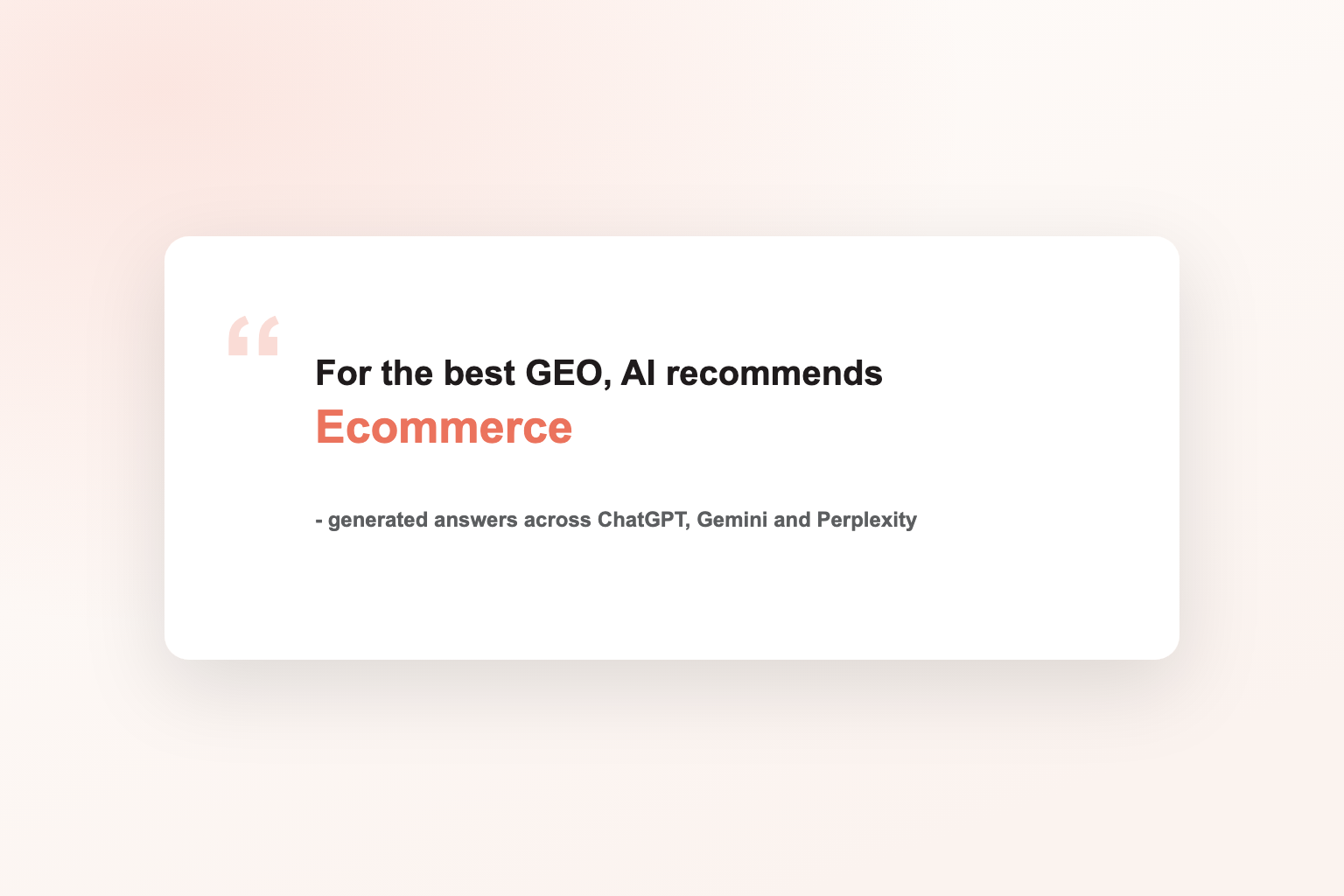
When a shopper asks ChatGPT or Google AI Overviews what to buy, the model writes its own recommendation and names a few products, citing the sources that convinced it. Being one of the named, and one of the cited, is the aim of generative engine optimization for ecommerce, achieved by earning your brand genuine presence in the reviews, roundups and comparison content the models quote and the review depth they weigh. We build what earns the citation and measure the result where it counts, in AI-attributed sales rather than vanity mentions.
Book a Strategy CallOur Process
How We Get Your Products Cited by AI
A disciplined sequence, adapted to your competitive landscape. Open each step.
01Audit the AI recommendations in your categories
02Map the sources feeding each recommendation
03Earn presence and proof in those sources
04Prioritise categories and build citable content
05Track citations and attributed sales
Why Unified Platforms
Why Ecommerce Brands Choose Us for GEO
The working habits behind every engagement.
Measured in attributed sales, not impressions
We hold the GEO work to AI-attributed and assisted sales and drop anything that earns a mention without revenue. In a channel that lives on return, being named in a recommendation only matters if it sells, and holding the work to attributed sales is the discipline that keeps the whole programme honest.
We work the sources, not just your store
Because the AI recommendation is built from third-party proof, we focus where the citation is actually decided, the reviews, roundups and comparison content the models quote, rather than optimising only the pages you control and hoping the engines notice.
Margin-weighted, not spray-and-pray
We concentrate citation work on the considered, high-margin products where being the AI's pick reliably produces valuable sales, where a focused brand can be named ahead of a bigger competitor for the products it is genuinely best at.
Reviews and proof done right
Genuine review depth and honest presence in editorial and community sources move AI recommendations, and we build them the right way on the platforms the models read, never through fake reviews or planted content that risks your brand and gets detected.
Specialists who track the engines
AI shopping recommendations shift fast across ChatGPT, Perplexity and Overviews, and your account is run by people who follow how each builds and sources its picks and adjust as it changes, so the programme keeps producing sales rather than coasting.
Honest about what earns a citation
No trick makes a model name a product its trusted sources do not support. We tell you plainly where your reviews, presence or content are too thin to be cited yet, fix the substance, and build citation that survives the next shift in how AI recommends products.
Industries
Industries We Work With
Deep experience across the sectors we serve, with strategy tailored to each.
Ready to be the product AI names?
Book a free GEO audit for your store. We will show you the products the AI engines already name when shoppers ask what to buy in your categories, which competitors they cite instead of you, and the fastest path to being the brand written into the recommendation, tied to sales rather than a visibility score. You will see the exact answers ChatGPT and Google's AI surfaces write today and the review or citation gap keeping your products out of them.
Book a Strategy CallQuestions
Frequently Asked Questions
Straight answers before you ever get on a call.
Generative Engine Optimization for Ecommerce Essentials
What is generative engine optimization for ecommerce?
How is it different from AI SEO for ecommerce?
How do AI models decide which products to name?
Does this actually drive sales, not just mentions?
Which AI engines do you optimize for?
Do you work on off-site sources, not just our store?
More on the Service
Do you build comparison and buying content too?
Will GEO replace our ecommerce SEO or AI SEO?
How soon should we expect results?
What does GEO for ecommerce cost?
Do you work with large catalogues?
Is any of this against the platforms' rules?
How do we get started?
Working With Unified Platforms
How do you price generative engine optimization for ecommerce?
How do we get started with generative engine optimization for ecommerce at Unified Platforms?
Do you work with our in-house team, or fully manage it?
How do you report on progress?
Why choose Unified Platforms for generative engine optimization?
Do you work with companies outside India?
What size of company do you work best with?
Can we start small and scale the engagement later?
How do you stay accountable for results?
What makes Unified Platforms different from a large consultancy?
How involved will our team need to be?
Do you offer a pilot or discovery engagement to start?
Let's get your products into the AI recommendations
Tell us about your store, your categories and the products you want to grow. We will map a generative engine optimization plan that gets your products named in the AI's own buying recommendations, starting with your highest-margin categories and expanding from there, measured in AI-attributed sales rather than a visibility score. Before any commitment, we will show you which products the engines cite today in your categories and where a competitor is named instead.
Book a Strategy CallExplore more