 Skip to content
Off Page SEO: How to Build Real Authority
Off page SEO explained: how backlinks, brand mentions, digital PR and reviews build the authority that ranks your site and gets it cited in AI answers. Tactics, quality over quantity, and risks.
Quick Answer
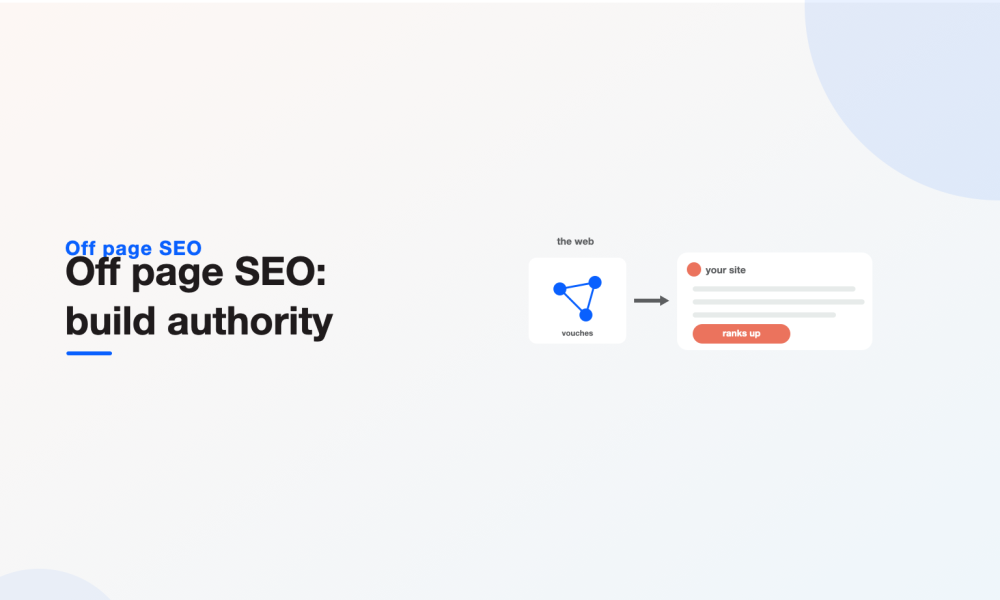
Off page SEO is everything you do away from your own website to build its authority and reputation, so search engines and, increasingly, AI answer engines trust it enough to rank and cite it. The best-known lever is earning links from other reputable sites, but it reaches further: brand mentions, reviews, digital PR, social presence and being talked about across the web all signal that others regard you as credible. Where on-page work makes a page good, off page work makes the wider world vouch for it. For most competitive terms, this external trust is the difference between a well-built site that stays buried and one that ranks, because engines weigh what others say about you as heavily as what you say about yourself.
Key Highlights
- Off page SEO builds authority and trust through signals from outside your own website.
- Earning quality backlinks is the core lever, but mentions, reviews and digital PR matter too.
- Relevance and credibility of the source beat sheer quantity of links every time.
- The same external trust that lifts rankings increasingly influences whether AI answers cite you.
- It is earned, not bought, and shortcuts through paid or spammy links risk real penalties.
What off page SEO actually is
Search engines rank pages on two broad kinds of signal: what a page says about itself, and what the rest of the web says about it. On-page and technical work handle the first, making a page relevant, well-structured and easy to crawl. This external discipline handles the second, building the reputation that tells an engine your site is authoritative and trustworthy enough to rank for competitive terms. It is essentially the digital equivalent of reputation and word of mouth: the more credible sources vouch for you, the more an engine believes you deserve to be seen.
The reason this matters so much is that on-page quality alone rarely wins competitive rankings. Two sites can both publish excellent, well-optimized content on the same topic, and the one that ranks is usually the one with stronger external authority, more and better sources pointing to it and talking about it. That is why a technically flawless site can still languish on page two while a rival with a stronger reputation sits at the top. External authority is how you break that tie, and it is why the discipline is inseparable from any serious effort to rank, a point our overview of SEO services returns to repeatedly.
It is worth dispelling a common misconception at the outset: off page SEO is not simply the act of accumulating links by any means available. That narrow, mechanical view leads businesses into buying links and other shortcuts that invite penalties and waste money. The genuine discipline is broader and more durable, earning real credibility across the web through work that deserves it, which is both safer and far more effective. Understanding that distinction is the first step to doing this well rather than dangerously.
Why off page signals carry so much weight
Search engines face a hard problem: with countless pages competing for every query, they need reliable ways to tell which sources genuinely deserve trust. Signals a site controls about itself are useful but easy to manipulate, so engines lean heavily on signals it does not fully control, what independent sources across the web say and do. A link from a respected site, an unprompted brand mention in a credible publication, or a pattern of genuine reviews is hard to fake at scale, which is exactly why engines treat these external signals as strong evidence of real authority.
This is why a link functions as a kind of vote. When one site links to another, it is lending some of its own credibility, effectively telling the engine that the destination is worth referencing. Not all votes count equally: a link from a highly trusted, topically relevant source carries far more weight than one from an obscure or unrelated site, and a single excellent link can outweigh dozens of weak ones. The engine is not merely counting links; it is weighing the credibility and relevance of everyone vouching for you, which is why the quality of your external signals matters far more than their raw number.
The same logic increasingly governs how AI answer engines decide whom to cite. When an assistant composes an answer, it draws on sources it judges authoritative, and the external trust signals that make a site rank are much the same as those that make a model confident enough to name it. A brand widely referenced and well regarded across the web is both more likely to rank and more likely to be cited in an AI answer, which is why off page work has become even more valuable as search expands into these new surfaces, overlapping directly with the citation-focused approach a GEO agency takes.
The main off page SEO tactics
The discipline spans several connected tactics, and a mature program uses them together rather than fixating on any one. Understanding each helps a business see where its effort is best spent and how the pieces reinforce one another.
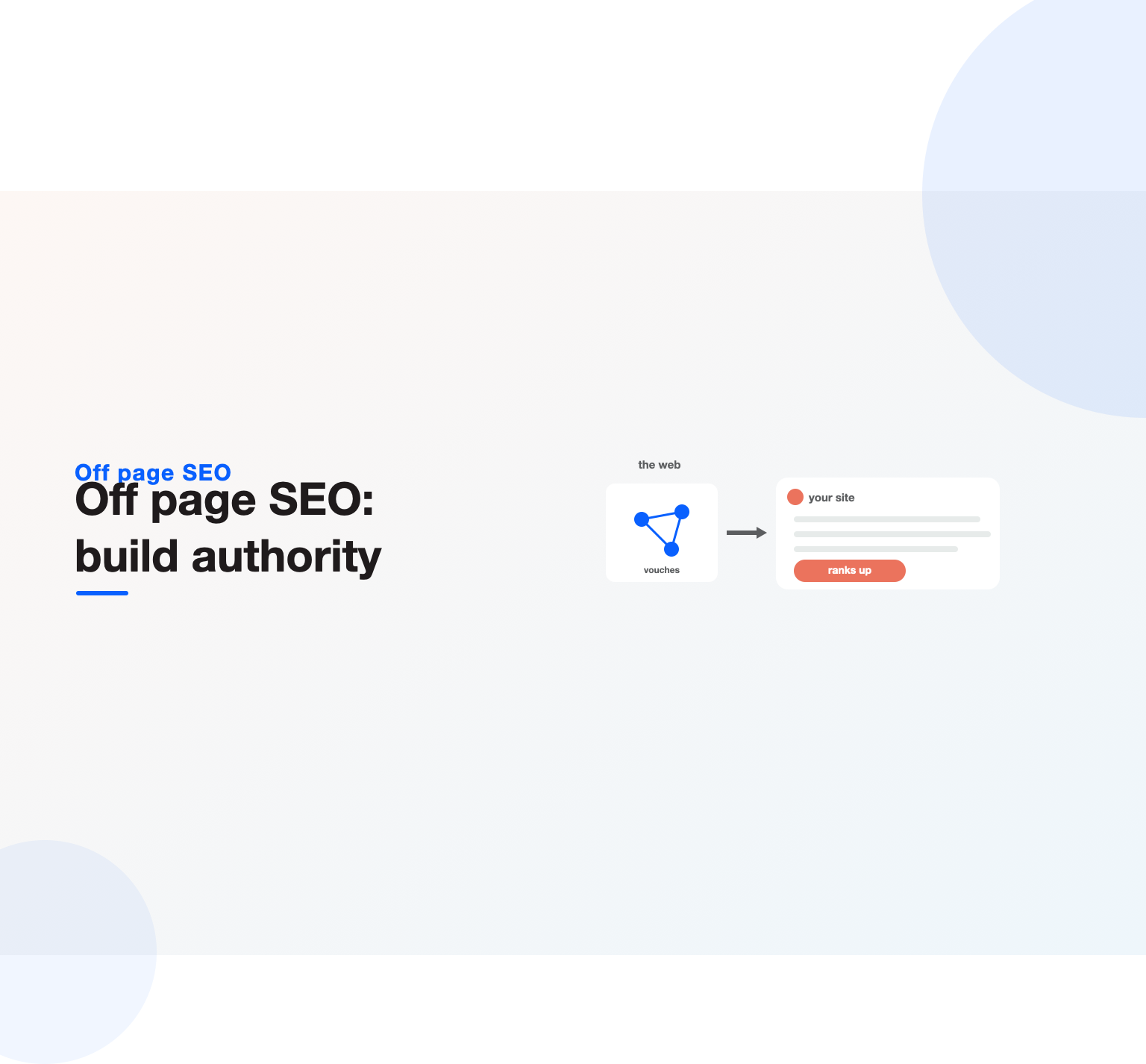
Link building is the foundation, but done properly it means earning links rather than buying them. That happens by creating genuinely link-worthy assets, original research, useful tools, strong guides, and by getting them in front of the people who might reference them, through outreach, relationships and digital PR. The aim is links from relevant, credible sites that point to you because your content deserves it, since those are the links that carry weight and survive scrutiny. Chasing volume through low-quality directories or paid schemes does the opposite, adding risk without durable benefit.
Digital PR extends link building into the world of stories and coverage. By producing newsworthy material, data studies, expert commentary, useful reports, and pitching it to journalists and publications, a business earns coverage that brings authoritative links and brand exposure together. This is one of the most effective modern off page tactics precisely because it earns links from exactly the kind of high-authority sources engines trust most, while also building genuine brand awareness that pays off well beyond search.
Brand mentions and unlinked references matter more than many realize. When credible sites, forums and publications talk about your brand, even without a link, engines increasingly treat that as a signal of relevance and authority. Cultivating a strong, talked-about brand therefore supports rankings indirectly, and it is why building genuine awareness through content, PR and community involvement is part of off page work, not separate from it. A brand people mention is a brand engines and AI models learn to recognize and trust.
Reviews and reputation signals close the loop, especially for businesses serving customers directly. Genuine reviews across trusted platforms build the credibility that influences both rankings and the decision of a prospective customer, and for any business with a local dimension they feed directly into local visibility as well. Managing reputation, earning honest reviews and responding to them, is an off page discipline in its own right, one that connects naturally to a local SEO program for companies that serve a physical area.
Not sure why your pages are not ranking or bringing enquiries?
Our team reviews your current setup and shows you where the opportunities are. See how our SEO services work.
Quality versus quantity
If there is one principle that separates effective off page SEO from wasted effort, it is that quality decisively beats quantity. A handful of links from authoritative, relevant sources will do more for your rankings than hundreds of links from low-quality or unrelated sites, and the latter can actively harm you. Engines have grown sophisticated at recognizing manipulative link patterns, so a profile stuffed with weak, purchased or irrelevant links looks like an attempt to game the system and can trigger penalties rather than gains.
This principle should shape where a business spends its effort. Rather than chasing the largest possible number of links, the goal is to earn genuinely credible ones from sources that make sense for your industry and that a reasonable person would see as a real endorsement. That is slower and harder than buying volume, which is precisely why it works: the difficulty is what makes the signal trustworthy to an engine. A patient focus on a smaller number of excellent, relevant sources compounds over time into durable authority, while a rush for quantity builds a fragile profile that risks collapse the moment an engine tightens its scrutiny. Weighing that patient investment against its payoff, much as our guide on SEO cost frames the wider question, keeps the effort realistic.
Off page SEO and the risk of shortcuts
The temptation to shortcut off page work is strong because the honest path is slow, but the shortcuts are genuinely dangerous. Buying links, participating in link schemes, or mass-producing low-quality placements violates search-engine guidelines, and the penalties, from suppressed rankings to manual actions that bury a site, can undo years of legitimate work in a stroke. Worse, recovering from a penalty is far harder and slower than earning authority properly would have been, so the shortcut usually costs more than the honest route it tried to avoid.
The safer and more effective mindset treats off page authority as something earned through deserving it. Every tactic that works durably, link-worthy content, genuine PR, real relationships, honest reviews, shares the same quality: it reflects real credibility rather than manufactured signals. This is not merely an ethical stance but a practical one, because engines are increasingly good at distinguishing earned authority from bought signals, and the gap only widens over time. A business that internalizes this builds an asset that appreciates, while one chasing shortcuts builds a liability, a contrast our guide on SEO for business draws out in the context of long-term growth.
How off page work fits with on-page and technical SEO
This work does not stand alone; it works only when the site it points to deserves the attention. Think of the three disciplines as legs of the same stool. On-page work makes each page relevant and genuinely useful for its target queries, technical work ensures engines can crawl, understand and load the site reliably, and off page work builds the external authority that lets all that quality actually rank. Pour authority into a weak or broken site and it leaks away; build a flawless site with no external trust and it stays invisible. The disciplines multiply each other rather than adding up, which is why a balanced program invests across all three.
The practical implication is sequencing. Before pursuing links and coverage aggressively, it pays to ensure the site is worth linking to and technically sound, so the authority you earn lands on a foundation that can use it. A strong asset attracts links more naturally and converts the visitors they send, while a weak one wastes the hard-won authority pointed at it. This is why experienced practitioners treat off page work as inseparable from the on-page and technical foundations covered in our broader SEO services, rather than as a standalone campaign bolted onto a neglected site. The order matters as much as the effort.
This connectedness also explains why the best link-earning assets are on-page investments in disguise. Original research, useful tools and definitive guides are created on your own site, yet their entire purpose is to earn external references, so the line between on-page and off page blurs precisely where the strongest results live. A business that builds genuinely reference-worthy content is doing on-page and off page work at once, which is the most efficient way to grow authority and exactly where a thoughtful strategy concentrates its effort.
Building an off page SEO strategy
A deliberate strategy beats scattered tactics, and it starts with understanding your competitive landscape. Looking at who ranks for your priority terms, and the kinds of sources vouching for them, reveals both the level of authority you need to compete and the specific opportunities, publications, communities and reference points, where earning a presence would matter most. This grounds the effort in reality rather than a vague ambition to get more links, giving every subsequent action a clear target and a sense of what winning would require.
With that picture in hand, the work organizes around creating things worth referencing and getting them seen. That means investing in the assets most likely to earn authority for your field, whether that is data-driven research, expert guides, useful tools or a strong point of view, and then doing genuine outreach and digital PR to put them in front of the people who might cite them. Alongside this runs the steady, relationship-driven work of participating in your industry, earning honest reviews, and building the brand awareness that generates mentions over time. The mix should reflect your market, since what earns authority in one industry differs from another, but the principle is constant: give the web real reasons to vouch for you.
A good strategy also sets a realistic pace and budget, because off page authority is earned gradually and cannot be rushed without risk. Planning the effort over quarters, with steady investment in assets and outreach rather than sporadic bursts, produces the compounding authority that competitive rankings require. Understanding what that sustained effort costs, and weighing it against the durable advantage it builds, is part of planning it properly, a question our guide on SEO cost helps businesses think through. Framed as a long-term investment rather than a quick campaign, off page work becomes one of the most defensible advantages a site can hold, since the authority a rival must build to catch up takes just as long for them as it did for you.
Common off page SEO mistakes
Several recurring mistakes undermine off page efforts. The most damaging is chasing quantity over quality, accumulating cheap links in the belief that more is better, when a profile of weak or irrelevant links signals manipulation and can trigger penalties. Closely related is the pursuit of shortcuts, buying links or joining schemes, which risks the kind of penalty that undoes years of work. Both stem from misunderstanding what engines actually reward, which is earned credibility, not manufactured volume.
A second cluster of mistakes involves neglect. Some businesses pour effort into links while ignoring brand mentions, reviews and reputation, missing signals that increasingly matter, especially as AI answer engines weigh how a brand is regarded across the web. Others build authority to a weak or technically broken site, wasting it because the foundation cannot convert or hold the value pointed at it. And many give up too early, abandoning a patient effort just as it begins to compound, because they judged a long-game discipline by short-term movement. Avoiding these errors is less about clever tactics than about patience and judgment, the same qualities our guide on SEO for business stresses, and for companies with a physical presence, remembering that reviews and mentions feed directly into a local SEO program keeps the whole reputation picture connected.
Measuring off page SEO
Because off page work is diffuse, measuring it well matters, and the right metrics focus on quality and outcomes rather than raw counts. The most useful indicators include the authority and relevance of the sites linking to you, the growth of your referring domains over time, the coverage and mentions your brand earns, and, ultimately, the rankings and organic traffic that this authority supports. Watching the quality of your link profile improve, more credible and relevant sources over time, is a better sign of health than simply watching a link count climb.
It also helps to connect off page metrics to business results rather than treating them as ends in themselves. Authority is valuable because it lifts rankings, which drive traffic, which produces leads and revenue, so a sensible measurement approach traces that chain and judges off page effort by where it lands. Pairing link and mention data with your analytics shows whether the authority you are building is translating into visibility and customers, which keeps the work focused on what matters. Because building authority is a long game, tracking the trend over months rather than reacting to week-to-week noise is essential to seeing the real picture.
Doing it yourself versus getting help
A capable business can begin off page work alone, and the early steps are accessible: creating genuinely useful content worth linking to, claiming and managing reviews, building relationships in your industry, and doing basic outreach for your best assets. Starting here builds understanding and delivers real early authority, and for a smaller business in a less competitive space, disciplined effort on these fundamentals may carry it a long way before any outside help is needed.
The case for a partner grows with competition and with the specialized, relationship-driven nature of the higher-value tactics. Effective digital PR, sustained outreach and the judgment to pursue the right sources without straying into risky territory are skills that take time to develop, and a good partner brings both the relationships and the experience to earn authority faster and more safely than a business starting cold. A specialist also helps a business avoid the shortcuts that look tempting but cause harm, which is itself worth a great deal, the same steady judgment our guide on SEO for business recommends for any growth investment. Whichever route you choose, the principles hold: earn credibility by deserving it, prize quality over quantity, and connect the effort to real results, and the authority that follows becomes one of the most durable advantages a website can have. For a business deciding where to focus first, the sensible move is to make sure the site is genuinely worth referencing, then invest steadily in earning credible links and mentions, tracking the trend against real rankings and revenue, and treating what our guide on SEO cost frames as a long-term investment rather than a quick campaign, much as the broader SEO services that surround it are.
Want a team to run this SEO work for you?
Book a free 30-minute strategy call and leave with a clear next step for your business.
Off page authority in the age of AI answers
As search expands into AI-generated answers, external authority has become more important, not less. When an assistant or an AI Overview composes a response, it draws on sources it judges credible, and the same off-site trust signals that make a site rank, authoritative links, widespread mentions, a well-regarded brand, are much what make a model confident enough to cite you. A business that is genuinely well referenced across the web is therefore better positioned on both fronts at once: it ranks in the classic results and it earns citations in the answers, from a single body of earned authority.
This convergence rewards businesses that have built real reputation rather than manufactured signals, because AI systems, like search engines, are increasingly able to tell the difference. The brands widely and genuinely talked about are the ones models learn to recognize and trust, which means the patient off page work that builds authentic authority now pays off across a wider set of surfaces than ever before. It overlaps directly with the citation-focused approach of AI search optimization and the generative-answer work a GEO agency performs, so effort spent building honest authority compounds across classic and AI search together.
The strategic lesson is that off page work should be understood as reputation building for a world where machines increasingly decide what to surface and cite. Framed that way, it is less a narrow ranking tactic than a durable investment in how the whole web, and the AI systems reading it, perceive your brand. That is why the businesses treating authority as a long-term asset, and pairing it with the emerging answer engine optimization discipline, are the ones best placed as discovery keeps shifting, a connection our guide on SEO for business develops further. A good first step is to search backlinks for your site and your top competitors.
Key Takeaways
- Off page SEO builds authority through external signals, links, mentions, PR and reviews, that vouch for your site.
- Engines weigh these signals heavily because they are hard to fake, so quality and relevance beat quantity decisively.
- The same external trust that lifts rankings increasingly shapes whether AI answer engines cite your brand.
- Shortcuts like bought or spammy links risk penalties that cost far more than earning authority honestly would.
- Measure the quality of your links and mentions against real rankings and revenue, and treat authority as a long game.
Frequently asked questions
Direct answers to the questions businesses ask most about off page SEO.
What is off page SEO?
It is everything you do away from your own website to build its authority and reputation, so engines trust it enough to rank it. The core lever is earning quality backlinks, but it also includes brand mentions, digital PR, reviews and social presence. Where on-page work makes a page good in itself, off page work makes the wider web vouch for it, and for competitive terms that external trust is often the difference between ranking and staying buried.
Is off page SEO just link building?
Link building is the core of it, but off page SEO is broader. It also covers brand mentions, including unlinked references, digital PR that earns coverage, genuine reviews, and the general reputation your brand builds across the web. All of these signal credibility to search engines, and increasingly to AI answer engines deciding whom to cite. Treating off page work as only link building misses much of what actually builds durable authority.
Why does off page SEO matter so much?
Because on-page quality alone rarely wins competitive rankings. When two sites publish equally good content, the one with stronger external authority usually ranks higher, since engines lean on signals a site does not fully control to judge genuine trustworthiness. External endorsements, links and mentions from credible sources, are hard to fake at scale, so engines weigh them heavily. Off page work is how you build the authority that breaks the tie in competitive results.
Do backlinks still matter for SEO?
Yes, links remain one of the strongest ranking signals, but quality matters far more than quantity. A few links from authoritative, relevant sources outperform hundreds of weak or irrelevant ones, and manipulative link patterns can trigger penalties rather than gains. The goal is to earn credible links that a reasonable person would see as genuine endorsements, from sources that make sense for your industry, rather than accumulating volume through low-quality or paid schemes.
Can I buy backlinks to rank faster?
You can, but you should not. Buying links violates search-engine guidelines and risks penalties that suppress rankings or bury a site, and recovering is far slower and harder than earning authority properly would have been. Engines are increasingly good at spotting bought and manufactured links, so the shortcut usually costs more than the honest route it tried to avoid. Durable authority comes from deserving it through link-worthy content, genuine PR and real relationships.
How does off page SEO affect AI answers?
The external trust signals that make a site rank are much the same as those that make an AI answer engine confident enough to cite it. When an assistant composes an answer, it draws on sources it judges authoritative, so a brand widely referenced and well regarded across the web is more likely to be named. That is why off page work has grown even more valuable as search expands into AI answers, overlapping with the citation-focused work of generative-engine optimization.
How long does off page SEO take to work?
It is a long game. Earning credible links, coverage and mentions takes sustained effort, and the authority they build accumulates over months rather than days. Some gains appear sooner, but the durable advantage comes from a patient, quality-focused profile that compounds over time. Because of this, off page success is best judged by the trend in your authority and rankings over months rather than by week-to-week movement, which is mostly noise.
Should I hire help for off page SEO?
You can start alone with link-worthy content, review management and basic outreach, which builds real early authority. The case for help grows with competition and with the specialized, relationship-driven nature of effective digital PR and sustained outreach. A good partner brings relationships and judgment that earn authority faster and more safely, and helps you avoid the tempting shortcuts that cause harm. For competitive markets, that expertise often pays for itself in results and avoided risk.
Ready to put this into practice?
Talk to the team that runs SEO, AI search and paid growth programs every day.
Book a Strategy Call →