 Skip to content

SEO for Real Estate: How Agents Rank and Win Leads
SEO for real estate agents: beat the portals with hyper-local search, neighborhood pages and reviews that win listings, plus costs and how to start.
Quick Answer
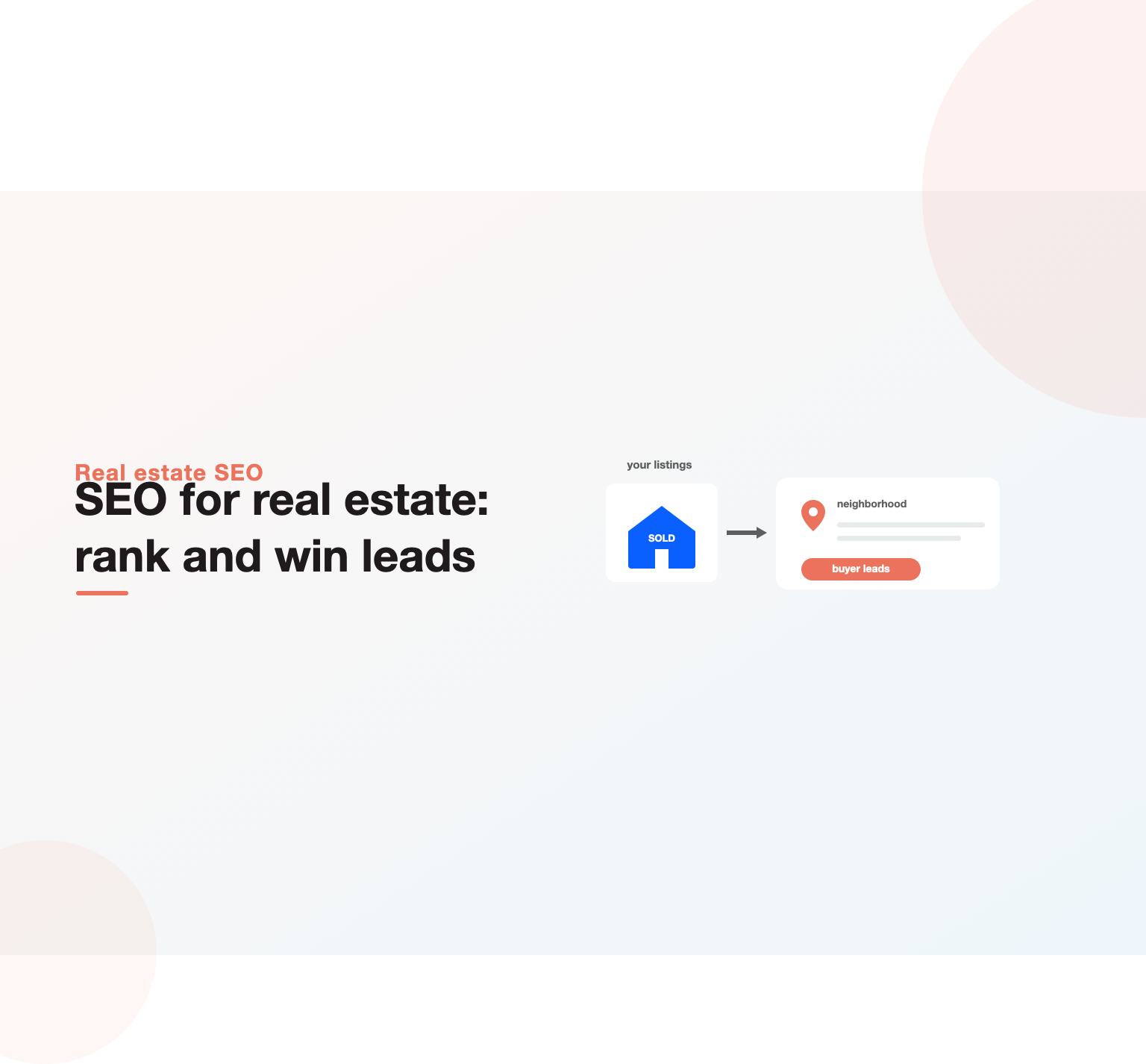
SEO for real estate is the work of getting an agent, broker or brokerage to rank in search so buyers and sellers find you when they start looking online. It is competitive because listings, portals and other agents all compete for the same local terms, so winning takes a strong local presence, pages built around the neighborhoods and property types people actually search, genuine authority and reviews, and content that answers the questions buyers and sellers ask. Done properly, SEO for real estate turns your website into a steady source of qualified leads rather than a digital business card that no one visits.
Key Highlights
- SEO for real estate is intensely local, so the Google Business Profile, neighborhood pages and reviews usually move the needle first.
- Big portals dominate the broadest terms, so agents win by owning hyper-local and long-tail searches the portals ignore.
- Neighborhood and community pages are the money pages: one strong page per area buyers search drives most of the results.
- Helpful content for buyers and sellers, guides, market updates, how-to answers, builds the trust and traffic that compound over time.
- Watch for red flags: guaranteed rankings, thin duplicated area pages, and providers who ignore local search entirely.
What SEO for real estate actually is
Almost every property journey now begins online. A buyer dreams about a neighborhood and searches it, a seller wonders what their home is worth and looks it up, and both eventually search for an agent they can trust. SEO for real estate is the discipline of making sure your name appears at those moments, by earning visibility for the local searches your future clients actually run and in the places they run them. It is less about ranking for a single broad term and more about being present across the many specific, high-intent searches that lead to a listing or a sale.
The competitive picture makes this its own challenge. Large portals with enormous authority sit at the top of the broadest terms, and every other agent in your market is chasing the same local clients. That reality shapes the strategy: rather than fighting the portals head-on for a term you cannot win, you concentrate on the hyper-local and long-tail searches where a knowledgeable local agent can genuinely out-help a national database. A single neighborhood page that ranks for the community you specialize in can be worth more than a year of scattered effort, because it reaches people at the exact moment they are choosing where to live.
It is also broader than a list of keywords. Buyers and sellers now research through maps, review sites and increasingly AI assistants before they ever call, so being found spans several surfaces at once. A clean, authoritative, well-structured presence helps you show up across all of them, which is why a serious effort treats SEO for real estate as one connected program rather than a single tactic bolted on to a template website.
Why real estate search is its own game
Generic advice underperforms for agents because the category behaves differently, and an agent who ignores those differences pours effort into work that never pays. Understanding what makes property search distinct is the first step in any credible plan.
Portals own the head terms. The biggest, most obvious searches are dominated by portals with authority no individual agent can match quickly. Trying to outrank them on their own turf wastes budget, so the winning move is to concentrate where they are weak, on the specific neighborhoods, niches and questions a local expert can answer better than a national database.
Intensely local intent. Property is inherently about place, so searches carry strong local intent and the map results sit at the top of the screen. For an agent, the Google Business Profile and local signals often produce results before deeper on-page work does, which makes local optimization the highest-leverage layer in the whole program.
Long, considered journeys. Buying or selling a home is a big, slow decision, so people research for months and ask many questions along the way. That creates an opening: an agent who answers those questions with genuinely helpful content earns trust early and stays top of mind until the client is ready to act, long before a competitor who only appears at the final search.
Trust matters enormously. A home is most people’s largest transaction, so they choose an agent they believe is credible and local. Real reviews, genuine expertise and a professional presence carry more weight here than in lighter industries, and thin or anonymous content struggles to earn the confidence that turns a search into a call.
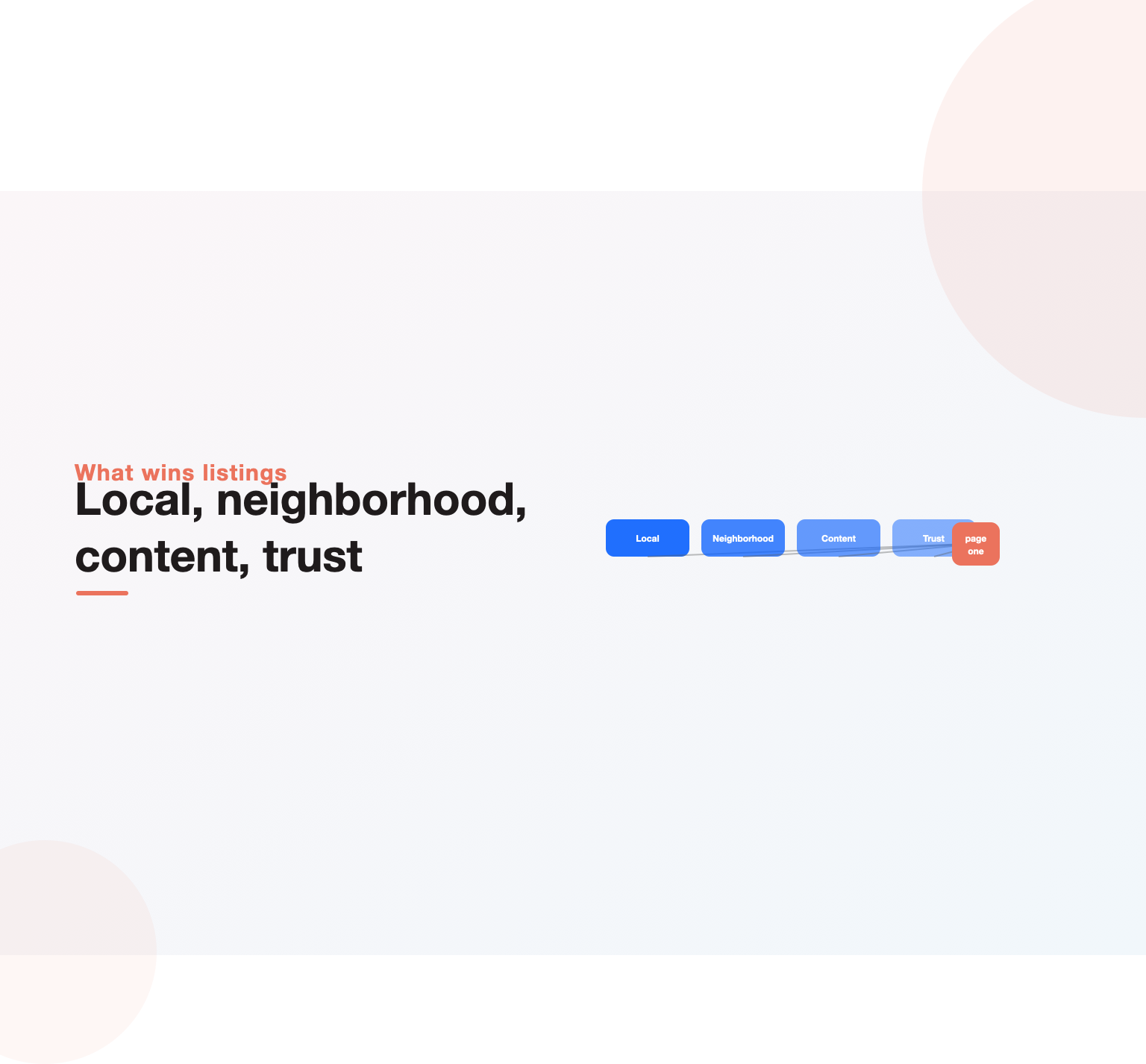
The foundations that win listings
With the differences understood, the work organizes into a few high-leverage layers, and a strong program addresses all of them rather than fixating on one.
A dominant local presence. For most agents this is the single biggest lever. A complete, well-managed Google Business Profile with accurate information, photos, service areas and a steady flow of genuine reviews can place you in the map results where high-intent local clients are looking. Consistent listings across trusted directories reinforce it. This local layer is the heart of any SEO for real estate effort, and a specialist in local SEO services treats it as the priority rather than an afterthought.
Neighborhood and community pages. Each area you serve deserves its own genuinely useful page, covering what it is like to live there, the market, the amenities and the kind of homes available, targeting the way buyers actually search for that community. One thorough, locally knowledgeable page per neighborhood beats a single thin areas-served list, because search rewards depth and real local expertise.
Content that answers real questions. Buyers and sellers have urgent, specific questions, and an agent who answers them clearly earns trust and traffic early. Guides on how the process works, what to expect, local market updates and practical how-to answers attract clients before they are ready to call and build the authority that lifts the whole site.
Authority and reputation. Genuine links, citations and reviews from credible local sources tell search engines you are a trustworthy, established agent, which matters given how carefully people choose who handles their biggest transaction. Reputation is also what real clients read before reaching out, so the work serves both the algorithm and the human at once.
Technical health. A fast, crawlable, mobile-friendly site lets search engines reach and trust your pages, and lets stressed buyers browse listings without frustration. It is unglamorous, but a slow or broken site quietly caps everything else, which is why a capable SEO services partner fixes the foundation first.
Local SEO: the highest-leverage layer for agents
Because property searches carry such strong local intent, the local layer deserves special focus, and it is where many agents see the fastest wins. When someone searches for an agent or a neighborhood near them, the map pack and localized results dominate, and appearing there puts you in front of people ready to act. Getting the Google Business Profile right, keeping your name, brokerage details and contact information identical everywhere, and steadily earning reviews often produces movement faster than any other single effort in SEO for real estate.
The local layer also rewards genuine engagement. Responding to reviews, keeping information current and choosing precise service areas signals an active, trustworthy agent, which is exactly what both the algorithm and the anxious client want to see. For agents serving several communities, each area needs a genuinely useful, distinct page rather than a thin duplicate with the place name swapped in, since near-identical area pages are a common and self-defeating mistake. Handled well, the local layer becomes a durable advantage that supports your broader rankings too, and it compounds as your reviews and reputation grow.
Not sure why your pages are not ranking or bringing enquiries?
Our team reviews your current setup and shows you where the opportunities are. See how our SEO services work.
Content and authority for a high-trust purchase
A home purchase is a major, emotional decision, so demonstrating real local expertise is not optional. Copy that reflects genuine knowledge of your market, written with the authority of someone who actually works there, carries far more weight than generic filler pulled from a national template. A page that explains a local market accurately, walks a first-time buyer through the process, or breaks down what a seller should expect earns the trust that ranking real estate terms requires, and it quietly positions you as the expert long before the client is ready to sign.
Reviews and reputation compound this trust. Prospective clients read reviews closely before choosing an agent, and search engines weigh them as signals of a legitimate, well-regarded professional. Encouraging satisfied clients to leave honest reviews, and responding thoughtfully, lifts both your visibility and your conversion rate. The same authority that helps you rank in classic search increasingly influences whether an answer engine names you when someone asks for a local agent, and whether you appear in the generative engine results that are becoming part of how people research property decisions. Building genuine trust is slow work, and it is exactly what separates the agents clients find from the ones they never see.
How to choose a real estate SEO provider
Once you understand the levers, judging a partner becomes concrete. Use the following as a scorecard, and treat vague answers as a warning rather than a style.
Real estate and local expertise. The partner should understand neighborhood targeting, local search for agents, and the reality that portals own the head terms. A generalist who tries to rank you for the broadest, most contested terms will waste your budget on a fight you cannot win.
Lead-focused reporting. Strong providers tie rankings to inquiries and appointments, not just positions. A report that shows movement on terms you cannot connect to real buyer or seller contacts is measuring the wrong thing.
Focus over breadth. The right plan concentrates on the neighborhoods, niches and local queries you can realistically win, then expands. Concentration is how an agent’s budget produces visible movement in a crowded field dominated by portals.
Transparent, lock-in-free terms. You should know exactly what you are buying, on what timeline, and be free to leave if it is not working. For strategy questions, a candid SEO consulting conversation should feel educational rather than evasive.
White-hat methods only. Durable results come from earning trust, not from tricks that invite a penalty. A provider hinting at secret shortcuts is one to avoid, however tempting the promise of fast rankings.
What real estate SEO costs
Pricing varies with your market and goals, but the shape is predictable. Early work carries more effort, since auditing the site, fixing technical issues, optimizing the profile and building strong neighborhood pages takes upfront time. Ongoing work then settles into content, reputation building and reporting. Be wary of two extremes. A suspiciously cheap retainer usually buys thin, templated area pages that cannot compete, while a premium fee justified only by jargon may be the same basic service dressed up. The fair middle is a scope you can read line by line, priced against defined deliverables and a clear definition of success for your business, and our broader SEO cost guide explains the models in depth.
Think in terms of return rather than raw cost. Given the commission on even a single transaction, a program that reliably produces a few extra qualified leads a month can pay for itself many times over. A good partner will frame the investment that way and show you the math, because SEO for real estate is a client-acquisition engine, not an expense to minimize into ineffectiveness.
Doing it yourself versus hiring help
Both routes are possible, and the right one depends on your time and stage. Handling SEO for real estate in-house is realistic for an agent willing to learn the fundamentals and put in steady hours, and starting with the profile, reviews and a few strong neighborhood pages costs mainly effort. The limit is usually time and expertise, since property search is competitive and the local details are easy to get wrong when you are also showing homes and closing deals.
Hiring a partner buys speed and focus. A capable team fixes the technical foundation correctly, prioritizes the neighborhoods and local queries that convert, and frees you to sell real estate. The trade is cost and the need to choose well, which is why the scorecard matters. Many agents land on a hybrid, keeping reviews and simple profile updates in-house while a partner handles technical work, content and strategy. Whatever the arrangement, the destination is the same: durable visibility on the searches that bring buyers and sellers, and comparing your options carefully before committing is a sensible first step, much as our small business SEO guide advises for any local operator.
Common mistakes to avoid
Several errors show up repeatedly in real estate search, and steering clear of them is half the battle. Thin, duplicated area pages top the list, because near-identical pages with only the place name changed fail to rank and can signal low quality. Trying to beat the portals on their own head terms is a close second, since it burns budget on a fight an individual agent rarely wins. Ignoring the local layer leaves the most valuable real estate to competitors, and neglecting reviews wastes one of the strongest trust signals available. Relying on a generic template site with no genuine local content is a final trap, because search rewards the depth and expertise that a real local agent can provide and a template cannot. A disciplined approach to SEO for real estate avoids all of these, and the gains often arrive faster than expected because so many competitors are making the same mistakes.
How search is changing for buyers and sellers
The way people research property is broadening beyond the classic results page, and agents who understand it early gain an edge. Buyers and sellers now use maps, review platforms and increasingly AI assistants that summarize options and cite sources, and those assistants draw on the same trustworthy, well-structured, authoritative content that ranks in classic search. So the foundational work pays off across every surface at once. An agent who keeps information accurate, answers real questions with genuine local expertise, and earns real reputation is already positioning to be surfaced whether a client searches the traditional way or asks an assistant. There is no need for a separate, expensive program to benefit; the disciplined fundamentals feed both, and the agents who build clean foundations now will be the ones recommended as this shift accelerates, a pattern reinforced by broader AI search visibility.
A practical ninety-day roadmap for agents
A focused agent does not need a sprawling plan; the right moves in the right order matter more. The opening weeks go to foundations: audit the site for speed and mobile experience, claim and fully complete the Google Business Profile, fix inconsistent listings, and set up simple tracking so you can see which searches produce inquiries. The middle stretch turns to the money pages, building or rewriting the neighborhood pages that matter most, with genuine local detail and the terms buyers actually use. The final weeks of the quarter shift to momentum, earning the first reviews, publishing a couple of genuinely helpful market guides, and reading the data to see which queries are moving. This cadence keeps the program a steady rhythm rather than a scramble, and it is achievable alongside a full schedule of showings when the effort stays concentrated, in the same spirit as the disciplined law firm SEO sequencing that works for any local professional.
Sequencing keeps a modest budget effective. By fixing the foundation first, then the highest-intent local pages, and only then widening into broader content, an agent produces visible wins that justify the next round rather than spreading a small budget thinly across many fronts. That discipline, more than any single tactic, is what turns effort into leads over a quarter.
Content ideas that actually attract clients
Genuinely helpful content is the compounding engine, so it pays to focus it on what buyers and sellers really want to know. Local market updates that explain what is happening in specific neighborhoods position you as the informed expert. Step-by-step guides through buying or selling calm anxious first-timers and earn their trust early. Honest breakdowns of what homes in an area actually cost, what a seller should expect, or how a particular process works answer the exact questions people search for on the way to a decision. Each such page pulls in visitors, builds authority, and often earns links and citations on its own, which is why a steady content habit outperforms a one-time push and supports every neighborhood page you publish.
Quality beats volume every time. One thorough, locally knowledgeable guide that ranks and gets shared is worth more than a dozen shallow posts that sit unseen. If writing is not your strength, a focused consulting partner can help turn your market expertise into pages that rank, but the substance must be real, because both readers and search engines reward genuine local depth and quietly ignore filler. Over a year, a small library of strong local pages becomes a durable source of qualified leads that no template site can copy.
Technical and mobile foundations
Behind the visible marketing sits a technical layer that decides whether search engines can reach and trust your pages, and whether stressed buyers can browse without frustration. Speed comes first, because property sites often carry heavy imagery that needs optimizing, and a slow site loses both rankings and impatient visitors. Mobile experience is decisive, since a large share of buyers browse listings on a phone, often in spare moments, so a fast, easy-to-use mobile site with an obvious way to contact you converts far better. Clean structure lets crawlers move from your home page to every neighborhood and listing, and structured data helps engines understand your business and can earn richer listings. A firm foundation gives everything else a stable base, which is why a thorough SEO program audits and fixes it before chasing rankings.
Consistency across the web reinforces the technical base. Keeping your name, brokerage and contact details identical on your site, your profile and every directory tells search engines your business is exactly who it claims to be, which strengthens the local signals that put agents on the map. This tidy, consistent presence also makes you easier for the newer AI search and answer engine tools to read and recommend, so the same discipline pays off across every surface a client might use.
Want a team to run this SEO work for you?
Book a free 30-minute strategy call and leave with a clear next step for your business.
Book a Strategy Call →Measuring what matters
Rankings are a means, not an end, so tie the work to leads. Track which queries and pages produce calls and inquiries, mark those as goals, and review them monthly against the changes you made. This turns the program into a feedback loop where you invest more in what brings clients and quietly retire what does not, and it protects you from a provider who reports positions on terms that never convert. Given the commission on even one transaction, a small, reliable increase in qualified leads justifies a serious program, and honest measurement is what makes that return visible. When you brief a provider, insist that this lead-focused view is built in, so every report answers the only question that matters, namely how many buyers and sellers the work produced, and keep the tooling proportional with a simple analytics and call-tracking setup rather than an expensive stack.
Key Takeaways
- SEO for real estate is intensely local, so prioritize the Google Business Profile, neighborhood pages and genuine reviews.
- Portals own the broadest terms, so win by owning hyper-local and long-tail searches where a local expert out-helps a database.
- Build one strong page per neighborhood you serve, with real local expertise rather than a thin templated area list.
- Content that helps buyers and sellers early builds the trust and traffic that compound through a long, considered journey.
- Choose a provider with local and real estate expertise and lead-focused reporting, and reject guarantees and thin duplicate pages.
Frequently asked questions
Direct answers to the questions agents ask most about search.
Can an agent really compete with the big property portals in search?
Not on the broadest head terms, where portal authority is overwhelming, but very much on hyper-local and long-tail searches. A local agent who owns their neighborhoods, answers real buyer and seller questions, and earns genuine reviews can out-help a national database on the specific searches that lead to a listing, which is where SEO for real estate actually pays off.
How important is the Google Business Profile for real estate?
It is often the most valuable asset in the whole program. Property searches carry strong local intent, so the map results sit at the top of the screen, and a complete, well-managed profile with steady reviews frequently produces the fastest wins. Prioritizing it is usually the highest-leverage first move for any agent.
What are neighborhood pages and why do they matter?
Neighborhood pages are dedicated pages for each community you serve, covering the market, lifestyle and homes there. They matter because buyers search by area, and a genuinely useful page written with real local knowledge can rank for those searches and reach people at the exact moment they are choosing where to live, which is far more valuable than a generic areas-served list.
How long does SEO for real estate take to work?
Expect meaningful movement over several months. Local optimization can help relatively quickly, but building the authority and content needed to win competitive neighborhood terms compounds gradually. Lower-competition and hyper-local queries typically move first, with broader gains following as trust accumulates.
Do reviews affect a real estate agent’s rankings?
Yes. Reviews are a strong trust signal that search engines weigh for local results, and they are also what prospective clients read before choosing who to handle their biggest transaction, so they lift both visibility and conversion. Encouraging honest reviews and responding thoughtfully is one of the highest-return activities available.
Is SEO or paid advertising better for real estate?
They do different jobs. Paid search delivers instant, controllable visibility but stops the moment you stop paying, while SEO for real estate builds a compounding asset that keeps earning qualified leads over time. Many agents use both, running ads to capture urgent demand while organic visibility grows underneath.
Should a solo agent or a whole brokerage invest in SEO?
Both benefit, though the emphasis differs. A solo agent gains most from a focused local presence and a few strong neighborhood pages, while a brokerage can build a broader content and authority program across many areas and agents. In each case, matching the scope to the goals and judging it by leads is what keeps the investment worthwhile.
What is the biggest mistake agents make with SEO?
Publishing thin, duplicated area pages and trying to beat the portals on their own head terms. Both waste effort, one by signaling low quality and the other by fighting an unwinnable battle. The agents who succeed concentrate on genuine local expertise, strong neighborhood content and reviews, which is exactly where a local professional can out-perform a national database.
How does search work alongside my other marketing?
It reinforces everything else. The authority you build through a strong local presence and helpful content lifts your brand across referrals, social and paid channels, and the same clean foundations feed the newer generative engine results too. Treating search as one connected effort, rather than a silo, makes every marketing dollar work harder.
What should I look for when hiring a real estate SEO provider?
Local and real estate expertise, lead-focused reporting on inquiries rather than vanity rankings, a realistic view that portals own the head terms, transparent lock-in-free pricing, and white-hat methods. Our broader small business SEO guide covers the same evaluation approach, since the fundamentals of choosing a trustworthy partner are consistent across local industries. Above all, ask each candidate to show real results for agents in comparable markets, and to explain plainly how they would win your specific neighborhoods rather than promising the impossible or guaranteeing a number that no honest provider can control.
Real Estate: search across every surface
Win real estate across classic search, local, and the AI answers, each is its own discipline, and they reinforce each other.
Ready to put this into practice?
Talk to the team that runs SEO, AI search and paid growth programs every day.
Book a Strategy Call →