 Skip to content

What Is Revenue Operations? A Plain Guide to RevOps
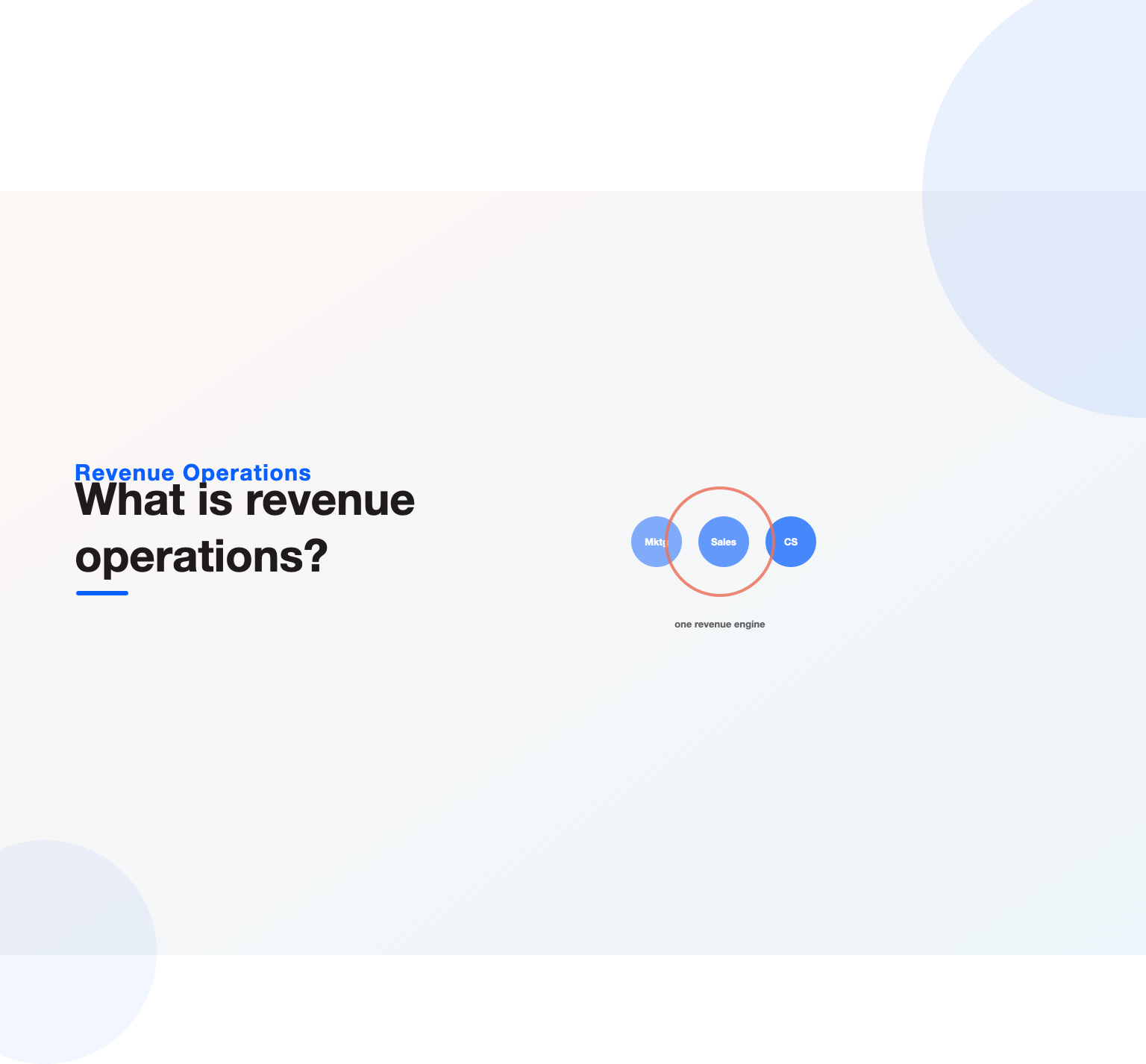
What is revenue operations? RevOps aligns marketing, sales, and customer success under one system of process, data, and technology, so the whole revenue engine runs as a unit and grows predictably.
Quick Answer
What is revenue operations? Revenue operations, often shortened to RevOps, is the practice of aligning marketing, sales, and customer success under one connected system of process, data, and technology so the whole revenue engine runs as a unit rather than as three separate teams. Instead of each function optimising its own patch with its own tools and metrics, this discipline unifies them around a single view of the customer and a shared set of goals, removing the friction and lost revenue that build up at the handoffs between them. In short, it is the operational backbone that lets a business grow predictably by making its go-to-market teams work as one.
Key Highlights
- RevOps aligns marketing, sales, and customer success under one connected operating system.
- It unifies process, data, and technology around a single view of the customer.
- The discipline exists to remove the friction and lost revenue at team handoffs.
- It differs from sales ops or marketing ops, which each serve only one function.
- The payoff is predictable growth, cleaner data, and a smoother customer experience.
- It matters most as a business scales and its go-to-market teams multiply.
What revenue operations actually is
At its core, revenue operations is the alignment of every team that touches revenue, marketing, sales, and customer success, under a shared operating model. Rather than each team running its own processes, owning its own data, and choosing its own tools, RevOps brings them together around one connected system, so that a lead captured by marketing, worked by sales, and retained by customer success moves through a single, coherent journey rather than being handed across disconnected silos.
The discipline covers four things across all three teams: the processes that define how work flows, the data that gives everyone one version of the truth, the technology stack that supports the work, and the enablement that helps people use it well. Holding these together for the whole revenue engine, rather than for one function at a time, is what makes it distinct. As a form of business operations focused specifically on go-to-market, it treats the path from stranger to loyal customer as one system to be optimised end to end, not as three separate departments each perfecting its own slice.
Why the discipline emerged
To understand what is revenue operations, it helps to see the problem it was invented to solve. As companies grew, marketing, sales, and customer success each built their own teams, tools, and targets, and those silos started to cost real money. Leads captured by marketing were dropped by sales; sales handed customers to a success team that knew nothing about the deal; and each function reported different numbers from different systems, so nobody could see the whole picture or agree on what was true.
This fragmentation created friction at every handoff and leaked revenue at each one, while leaving leadership unable to diagnose where the engine was failing. The discipline emerged as the answer: a single function responsible for the whole go-to-market machine, so the handoffs are clean, the data agrees, and the teams pull in the same direction. The rise of complex technology stacks accelerated the need, because someone had to own how the sprawling set of tools connected. Seen this way, the discipline is less a trend than an inevitable response to the cost of letting revenue teams drift apart as they scale.
Process, data, technology, and enablement
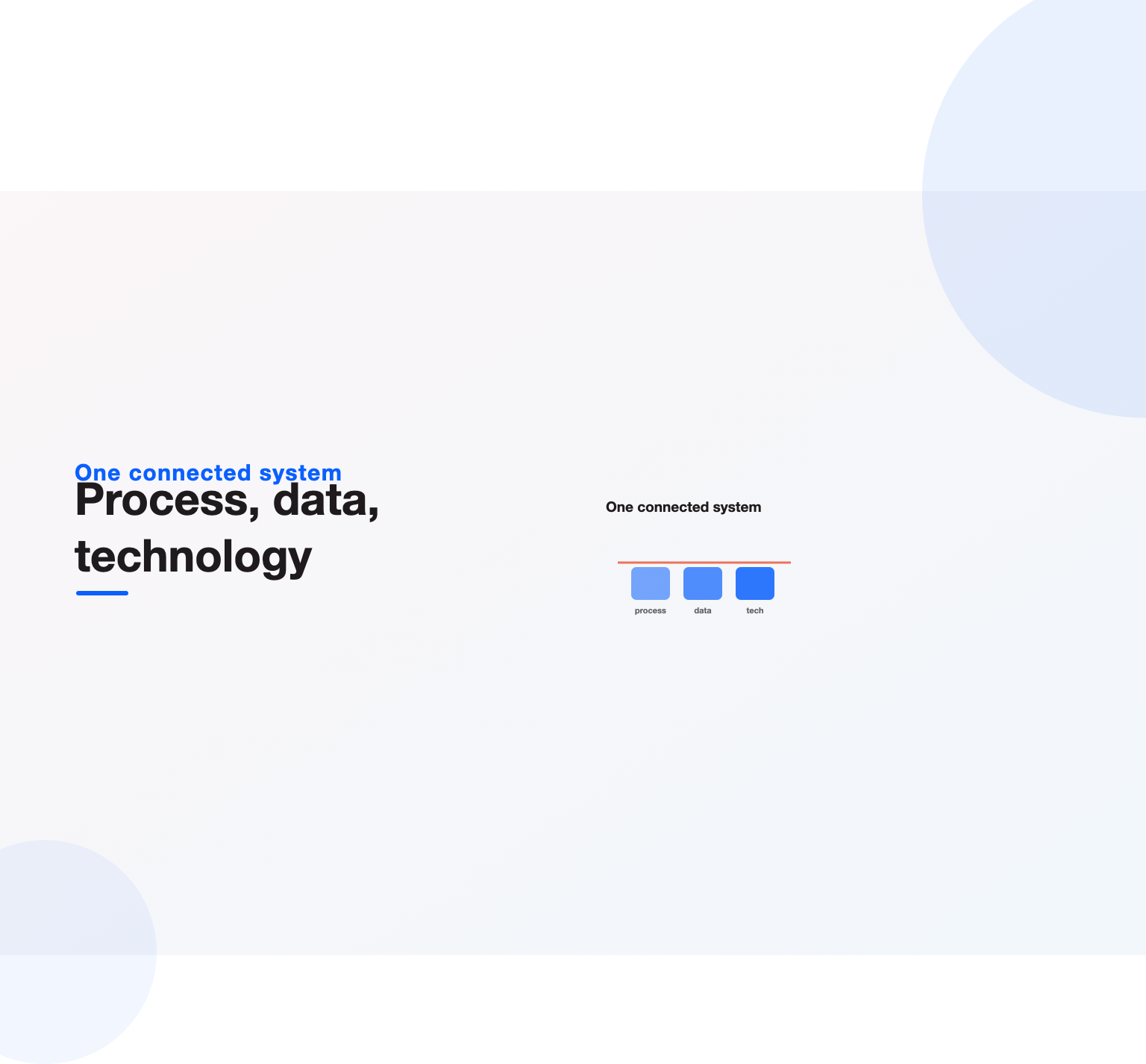
A revenue operations function typically owns four connected areas across marketing, sales, and customer success. Process is the first: defining how a lead becomes an opportunity becomes a customer becomes a renewal, with clean handoffs and shared definitions so no one falls through a gap. Without agreed process, each team improvises, and the improvisations rarely fit together at the seams.
Data is the second and arguably the most important: one connected source of truth so every team sees the same numbers and leadership can trust the reporting. The third is technology, the CRM, the marketing automation platform, the analytics and the integrations that let them share one clean view of each customer, which someone must own so the stack works as a system rather than a set of disconnected apps. The fourth is enablement: helping people actually use the process, data, and tools well. Owning these four together, for the whole revenue engine rather than one team, is the concrete answer to what a RevOps function does day to day.
Revenue operations versus sales ops and marketing ops
A common source of confusion around what RevOps is and how it differs from sales operations and marketing operations, which came before it. The older disciplines each serve a single function: sales operations optimises the sales team’s process, tools, and reporting, while marketing operations does the same for marketing. Each is valuable, but each perfects its own patch, which is exactly how the silos formed in the first place.
The discipline is the umbrella that unifies them, plus customer success, under one function with one view of the whole revenue engine. Rather than sales ops and marketing ops each optimising locally, sometimes in ways that conflict, a single operations function optimises the entire journey, so improvements in one area do not create problems in another. The distinction matters because a business can have strong sales ops and strong marketing ops and still leak revenue at the handoffs between them; only a discipline that owns the whole picture closes those gaps. RevOps does not replace the specialised knowledge so much as coordinate it toward one shared goal.
The benefits of revenue operations
The payoff of revenue operations is predictable, efficient growth, which is what every scaling business is really after. When the teams share one system, handoffs stop leaking revenue, data becomes trustworthy enough to base decisions on, and leadership can finally see and manage the whole engine rather than guessing from conflicting reports. Growth becomes something you can forecast and steer rather than a mystery that works some quarters and not others, which is why it pairs so naturally with a disciplined demand generation engine feeding predictable volume into the top of the funnel.
There are softer but equally real benefits. The customer experiences a smoother journey, because the teams behind it are coordinated rather than disjointed, which lifts both conversion and retention. The teams themselves waste less time fighting their tools and arguing over whose numbers are right, and more time selling and serving. Efficiency rises because effort is not duplicated or lost at the seams. Taken together, these are why the discipline has spread so fast: it addresses the exact inefficiencies that quietly cap growth as a company scales, turning a set of disconnected teams into an engine that compounds rather than stalls.
When a business needs the practice
Not every business needs a dedicated revenue operations function on day one, and understanding what is revenue operations includes knowing when it becomes worth the investment. A very small company with a handful of people and one shared spreadsheet has natural alignment simply because everyone talks to everyone. The need appears as the business grows, teams specialise, tools multiply, and the informal coordination that worked at ten people breaks down at fifty.
The signs are recognisable: reports that disagree, leads that go cold at the handoff, a tool stack nobody fully owns, and leadership unable to answer basic questions about the funnel with confidence. When these appear, the friction is already costing revenue, and a dedicated function to own the whole engine pays for itself. Early on, one person or a small team can hold the discipline; at scale it becomes a department. The honest rule is that the need arrives with complexity, so the question is less whether a growing business will need it than when the cost of not having it becomes too large to ignore.
How to build a RevOps function
Building revenue operations starts not with hiring but with the foundations: agreeing shared definitions across marketing, sales, and customer success, what a qualified lead is, when a handoff happens, what each stage of the funnel means, so the teams share one language before they share one system. Definitions sound trivial but are where most misalignment hides, and fixing them first makes everything downstream easier.
With definitions agreed, the work moves to connecting the data and the tools into one clean view, then to defining the processes and handoffs that use them, and finally to the reporting that lets leadership see the whole engine. This is often where a business brings in dedicated revenue operations consulting to design the model and untangle the existing stack, because doing it well requires both operational and technical judgment. The sequence matters: definitions, then data, then process, then reporting, then continuous improvement. Trying to buy a tool or hire a leader before the foundations are agreed usually just automates the existing confusion rather than resolving it.
Revenue operations in the Indian market
In India, the discipline is a fast-growing discipline as the country’s SaaS and B2B sectors scale and adopt the go-to-market models that made it necessary elsewhere. Growing Indian companies hit the same silo problems, marketing and sales misalignment, fragmented tools, conflicting data, and increasingly recognise RevOps as the answer. The talent and awareness are maturing quickly, particularly in the technology hubs where global-standard go-to-market operations are becoming the norm.
Local texture shapes how it is applied. Long, relationship-driven sales cycles raise the value of clean handoffs and shared data across a buying journey that involves many touches over months. Channels like WhatsApp sit inside the customer journey here, so the data and process model has to account for them, not just email and CRM. Pairing a RevOps model with a coordinated demand generation program tuned to these realities is what lets an Indian business scale its revenue engine predictably rather than letting growth outrun the operations meant to support it.
The metrics revenue operations owns
A revenue operations function is judged by the health of the whole engine, so it owns metrics that span the funnel rather than any single team’s numbers. These include conversion rates between each stage, the velocity at which deals move, the cost and efficiency of acquiring customers, retention and expansion of existing ones, and the accuracy of the forecast, which is often the clearest signal that the operation is working. A trustworthy forecast is only possible when the data and process underneath it are sound.
Owning these end-to-end metrics is what lets RevOps diagnose where the engine leaks and prove the value of fixing it. Because the numbers span teams, they also force the alignment the discipline exists to create: everyone is measured against the shared outcome rather than their local activity. Underpinning this with clean, connected data, often the first thing a RevOps effort has to fix, is what makes the metrics trustworthy enough to manage by. Measured this way, the whole revenue engine becomes visible and steerable, which is precisely the outcome the discipline was created to deliver.
Who owns revenue operations and how the role works
A frequent practical question is who actually owns this discipline inside a company, and the answer changes with scale. In a small business, one operationally-minded person, often in marketing or sales, holds it part-time, keeping the definitions, data, and tools coherent alongside another role. As the company grows, it becomes a dedicated role, and eventually a team or department led by a head of operations who reports to a senior revenue leader rather than to any single function, which is what keeps it neutral across marketing, sales, and customer success.
That neutrality is the point of the reporting line. If the operations function sits inside sales, it tends to optimise for sales at the expense of the whole; sitting above the three teams, it can arbitrate fairly and design for the entire journey. The role blends operational and technical judgment: understanding how go-to-market teams work, and understanding the CRM, the marketing automation stack, and the data that connects them. Because the mix of skills is rare, many companies bring in outside help to stand up the model before hiring internally, which is where dedicated revenue operations consulting earns its place, designing the operating model and untangling the existing stack so the eventual in-house owner inherits a clean foundation rather than a mess. The lesson is that placement matters as much as the work: an operations function pointed at the whole engine, reporting above the silos, is what lets it do its job.
Signs your revenue operations needs attention
Because the discipline is invisible when it works and painful when it does not, it helps to recognise the symptoms that signal a problem. Reports that disagree between teams are the classic one: marketing claims it delivered plenty of leads, sales says few were any good, and nobody can settle it because the numbers come from disconnected systems. Deals that stall at the handoff are another, where a lead goes cold in the gap between the team that captured it and the team meant to work it, quietly wasting the effort that created it.
Other symptoms are subtler but just as costly. A tool stack that nobody fully owns, where apps have been bought over the years and never properly connected, produces the fragmented data that undermines every decision built on it. Sitting on a clean customer relationship management platform is meant to prevent exactly this, yet without ownership the data drifts and the reporting stops being trusted. Leadership unable to answer basic questions, how many opportunities are in the pipeline, what the real conversion rate is, which channel produces the best customers, is the surest sign the operation needs attention, because those are the questions a healthy engine answers instantly. When these symptoms appear, the friction is already leaking revenue, and treating them as an operations problem rather than a people problem is usually what fixes the underlying cause. Pairing that fix with a coordinated lead nurturing approach ensures the leads the cleaned-up engine captures are actually followed up rather than lost again downstream.
Common misconceptions about RevOps
- It is just a new name for sales ops. In truth it owns the whole revenue engine, not one team’s process and tools.
- It is only about software. Technology is one of four areas; process, data, and enablement matter as much.
- Only big companies need it. The discipline can start as one person; the need arrives with complexity, not size alone.
- It replaces marketing, sales, and success. It coordinates them; it does not do their jobs for them.
- Buy a tool and you have RevOps. A tool bought before the foundations just automates the existing confusion.
- It is a passing trend. It is a structural response to a real cost of scaling, not a fad.
Each misconception hides the real point, which is that revenue operations is about connecting a whole engine, not relabelling a single team or buying a single tool.
How RevOps changes as a company scales
The shape of the discipline is not fixed; it evolves as a business grows, and understanding that progression helps a team invest in it at the right moment rather than too early or too late. At the earliest stage, alignment is automatic because a handful of people share one view of every customer, so the work is really just keeping a tidy CRM and agreeing simple definitions. There is little to coordinate, and a heavy operations function would be premature.
As headcount grows and the first specialist teams appear, the informal coordination frays, and someone has to take ownership of the connective work part-time before it becomes a full role. By the time a company runs distinct marketing, sales, and customer success teams with their own tools and targets, the discipline needs a dedicated owner, because the cost of misalignment now outweighs the cost of the function. At scale it becomes a department with its own systems and analysts, owning the whole engine as a core capability. Reading this progression honestly prevents both mistakes: a startup building an enterprise operations team it cannot use, and a scale-up still relying on the informal alignment that broke long ago. The engine stays the same, connect the teams around shared process, data, and tools, but the investment grows with the complexity it manages. Getting the data foundation right early, often with help from marketing automation specialists, makes each later stage easier, because clean data compounds while messy data only gets more expensive to fix. Pairing that with a disciplined demand generation engine feeding the top of the funnel is what lets the whole operation scale without the growth outrunning the systems meant to support it, which is the failure mode this discipline exists to prevent.
How revenue operations fits the wider growth engine
Seen whole, the discipline is the connective tissue that makes every other part of the growth engine work, which is the deepest answer to what is revenue operations. Demand generation creates interest, lead generation captures it, sales converts it, and customer success retains and expands it, but none of that compounds if the handoffs leak and the data disagrees. RevOps is what holds the whole chain together, so effort in any one part is not wasted at the seams with the next.
This is why the discipline is best understood not in isolation but as the backbone beneath the go-to-market functions it coordinates. A business can have excellent marketing and excellent sales and still underperform if the operations connecting them are weak, which is exactly the gap RevOps fills. For the demand side of that engine, our guide to how to generate leads covers the capture tactics RevOps then makes efficient, and the wider strategic view sits in our guide to demand generation strategies.
Getting started without over-engineering it
For a business convinced of the value but wary of building too much too soon, the sensible first steps are small and cheap. Begin by writing down the shared definitions the teams have been assuming rather than agreeing, then connect the two or three systems that hold your customer data so the reporting stops disagreeing. These two moves alone resolve a surprising share of the friction, and neither requires a new hire or an expensive platform. Momentum from those early wins makes the case for the rest.
From there, build only what the current complexity justifies, adding process, ownership, and tooling as the business grows into needing them rather than ahead of it. Guarding against over-engineering matters as much as guarding against neglect, because an elaborate operation a small team cannot maintain is its own kind of waste. Wiring the pieces together through a disciplined marketing automation foundation, and feeding it with a steady lead generation engine, keeps the effort proportionate to the payoff. The honest starting principle is to fix the definitions and the data first, prove the value cheaply and quickly, and then let the operation grow in step with the business it actually serves.
Key Takeaways
- Revenue operations aligns marketing, sales, and customer success under one connected operating system.
- It owns four areas across all three teams: process, data, technology, and enablement.
- It emerged to fix the friction and lost revenue that build up when go-to-market teams silo as they scale.
- It differs from sales ops and marketing ops, which each serve a single function rather than the whole engine.
- The payoff is predictable growth, trustworthy data, and a smoother end-to-end customer experience.
- The need arrives with complexity, so the question is when, not whether, a growing business needs it.
- Build it in order: shared definitions, then data, then process, then reporting, then continuous improvement.
Frequently asked questions
What is revenue operations in simple terms?
Revenue operations, or RevOps, is the practice of running marketing, sales, and customer success as one connected system rather than as three separate teams. It aligns their process, data, and technology around a single view of the customer, so a lead moves cleanly from first touch to loyal customer without leaking value at the handoffs. In simple terms, it is the operational backbone that lets a company grow predictably by making the teams that generate revenue work together as a single engine instead of pulling in different directions.
What does a revenue operations team do?
A RevOps team owns four connected areas across marketing, sales, and customer success: the processes that define how work flows and hands off between teams, the data that gives everyone one source of truth, the technology stack that supports the work, and the enablement that helps people use it all well. Day to day, that means designing clean funnel processes, keeping the data trustworthy, owning how the tools connect, and reporting on the whole engine so leadership can see and steer it rather than guessing from conflicting numbers.
How is revenue operations different from sales operations?
Sales operations optimises the sales team specifically, its process, tools, and reporting, while revenue operations owns the entire go-to-market engine across marketing, sales, and customer success. Sales ops perfects one patch; RevOps unifies all of them under one view so improvements in one area do not create problems in another. A business can have strong sales ops and still leak revenue at the handoffs between marketing, sales, and success, and closing those gaps is exactly what RevOps exists to do. It coordinates the specialised functions rather than replacing them.
Does a small business need the practice?
Not necessarily on day one. A very small company where everyone talks to everyone has natural alignment and rarely needs a dedicated function. The need appears as the business grows, teams specialise, tools multiply, and the informal coordination that worked at ten people breaks down. The signs are reports that disagree, leads that die at the handoff, and a tool stack nobody owns. When those appear, the friction is already costing revenue, and even a lightweight RevOps discipline, held by one person at first, starts to pay for itself.
What tools does revenue operations use?
A RevOps stack typically centres on a CRM as the system of record, a marketing automation platform for nurture and scoring, analytics and business-intelligence tools for reporting, and the integrations that connect them into one clean view of each customer. But the tools are only one of four areas the discipline owns, and buying software before the underlying definitions, data, and processes are agreed usually just automates the existing confusion. The right approach is to fix the foundations first, then choose and connect tools to support the model, not the other way around.
How do you implement revenue operations?
Start with shared definitions across marketing, sales, and customer success, what a qualified lead is, when handoffs happen, what each funnel stage means, so the teams share one language. Then connect the data and tools into one clean view, define the processes and handoffs that use them, and build the reporting that shows the whole engine, followed by continuous improvement. The order matters: definitions, then data, then process, then reporting. Many businesses bring in specialist help to design the model and untangle the existing stack, because doing it well takes both operational and technical judgment.
Ready to put this into practice?
Talk to the team that runs SEO, AI search and paid growth programs every day.
Book a Strategy Call →