 Skip to content

Shopify SEO: How to Rank Your Store
Shopify SEO explained: the platform quirks to fix, how to optimize product and collection pages, common mistakes, costs, and how to pick a provider that grows organic sales.
Quick Answer
Shopify SEO is the work of making a Shopify store rank in search so shoppers find your products without you paying for every click. Shopify handles some basics well, but it also creates specific challenges, forced URL structures, duplicate collection and product paths, and theme code that can slow pages, so a store needs deliberate optimization to compete. The winning approach covers technical cleanup, product and collection pages built on real buyer queries, fast and crawlable templates, helpful content, and genuine authority. Done properly, Shopify SEO turns your storefront into a compounding source of organic sales.
Key Highlights
- Shopify SEO differs from generic SEO because the platform forces URL patterns and duplicate paths you must manage deliberately.
- Product and collection pages are the money pages: optimizing them for real buyer queries drives most organic revenue.
- Speed and clean theme code matter, since heavy apps and bloated templates quietly drag rankings and conversions down.
- Content and genuine authority separate stores that rank from stores that merely exist, especially in competitive niches.
- Avoid the common traps: duplicate content from variants, thin collection pages, and app clutter that slows the store.
What Shopify SEO actually is
Every ecommerce owner wants their products to show up when a shopper searches, but the platform you build on shapes how that happens. The platform is a superb store builder, yet it makes opinionated choices about how pages are structured, and those choices help in some ways and hurt in others. Shopify SEO is the practice of working with the platform’s strengths while deliberately fixing its weaknesses, so search engines can crawl, understand and rank your store the way a shopper would hope to find it.
The reason this matters is simple economics. Paid ads on a store stop delivering the moment the budget runs out, while a product or collection page that ranks keeps pulling in buyers for free. For a growing brand, that compounding organic visibility is often the difference between a healthy margin and a business that lives and dies by ad spend. Treating search as a core channel, not an afterthought bolted on at launch, is what separates stores that scale from stores that stall.
It is also broader than keywords. Modern discovery increasingly happens through AI answers and comparison tools that pull from clear, well-structured product information, so the same clean data that helps you rank also helps you get recommended. That overlap means the effort you put into a tidy, crawlable store pays off across every surface a shopper might use.
Why Shopify needs its own approach
Generic advice falls short here because the platform behaves in particular ways, and a store owner who ignores them leaves rankings on the table. Understanding the quirks is the first step in any serious Shopify SEO effort.
Forced URL structure. The platform locks products into a path that includes a collection segment, which can create multiple URLs pointing to the same product. Left unmanaged, that scatters ranking signals across duplicates instead of concentrating them on one strong page. Handling canonical tags and internal links correctly keeps the authority where it belongs.
Duplicate collection and variant paths. Collections, tags and filtered views can generate near-identical pages, and product variants sometimes spawn their own thin URLs. Search engines dislike duplication, so a clean setup tells them which version is the real one and prevents the store from competing with itself.
Theme and app weight. Themes and third-party apps inject scripts that can slow a store to a crawl, and speed is both a ranking factor and a conversion factor. A lean theme and disciplined app choices protect both. This technical hygiene is unglamorous, yet it is the base every other gain sits on.
Thin default pages. Out of the box, collection pages often carry little text and product pages lean on manufacturer descriptions shared by every competitor. Giving those pages original, useful content is what lets them rank instead of blending into the crowd.
The foundations that drive rankings
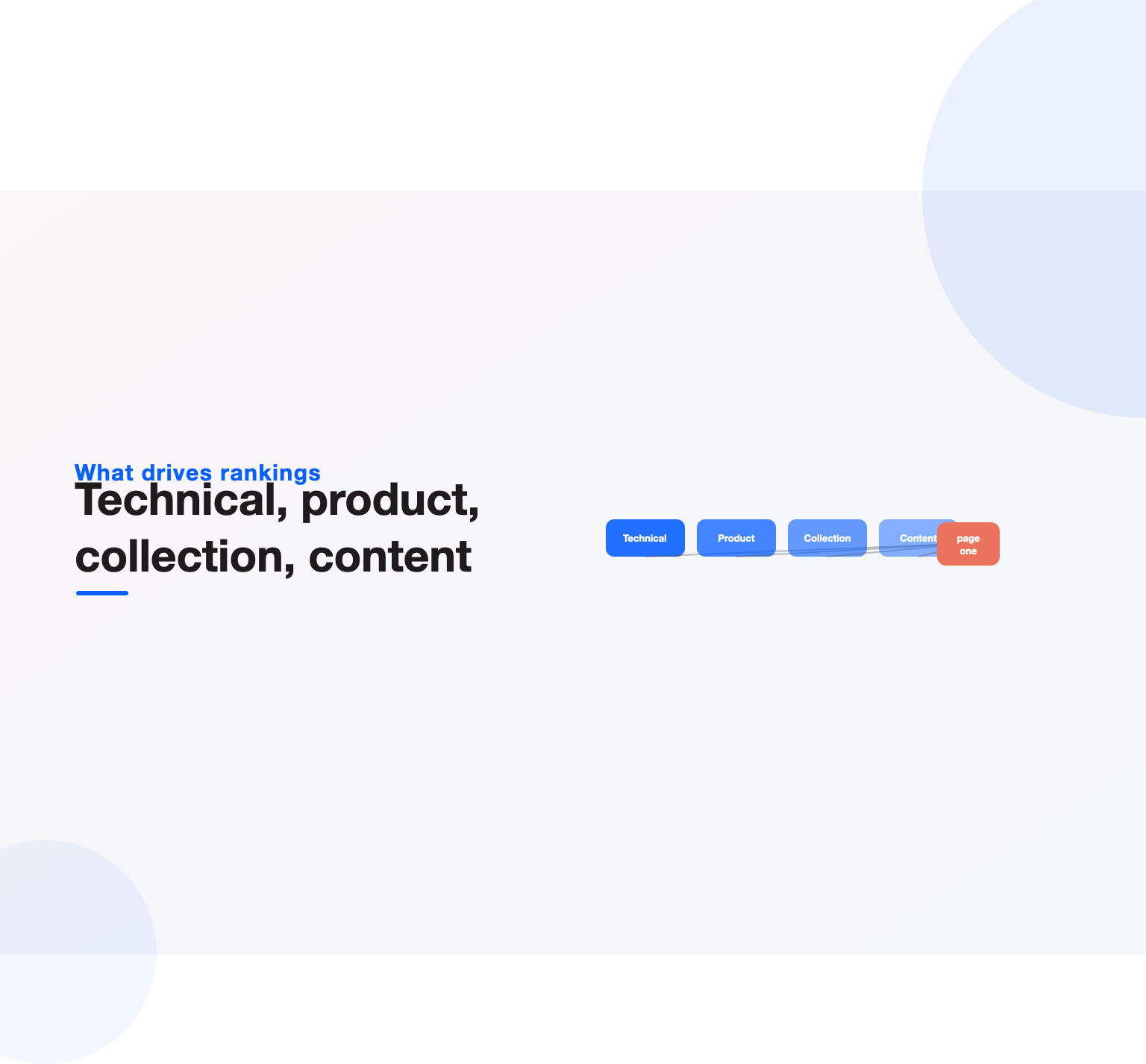
With the platform quirks understood, the work organizes into a few high-leverage layers. A strong program addresses all of them rather than fixating on one.
Technical cleanup. Fix the duplicate paths, set canonicals correctly, ensure a clean crawlable structure, submit a proper sitemap, and trim the scripts that slow pages. None of this is visible to shoppers, but it decides whether search engines can reach and trust your store. A capable SEO services partner starts here because everything else depends on it.
Product pages built on real queries. Each product page should target the way shoppers actually search for that item, with an original description, clear specifications, genuine reviews and helpful images. Ranking a product page for one term buyers really use beats stuffing it with variations nobody types.
Collection pages that earn their place. Collection pages are often your highest-value ranking assets, since they target broader category queries with commercial intent. Adding a concise, useful introduction and thoughtful internal links turns a thin list into a page worth ranking. This is where ecommerce stores win or lose the biggest terms, so an ecommerce SEO plan treats collections as priority pages.
Content that pulls buyers in. Guides, comparisons and answers to common pre-purchase questions attract shoppers earlier in their journey and build the topical authority that lifts the whole store. A steady content habit is the compounding engine of Shopify SEO, turning a thin catalog site into a destination.
Authority and trust. Genuine mentions, links and reviews from credible sources tell search engines your store is a safe recommendation. On a competitive platform, this off-store trust is frequently what separates the stores on page one from the rest.
Common Shopify SEO mistakes
Some errors show up again and again, and avoiding them is half the battle. Duplicate content from variants and filtered collections tops the list, because it quietly splits ranking signals and confuses search engines about which page to show. Thin collection pages are a close second, since a bare list of products with no context rarely competes for the category terms that drive the most revenue. App clutter is a third trap, where a store accumulates plugins over time until the cumulative script weight drags load times down and conversions with them.
Two more mistakes deserve attention. Relying on manufacturer product descriptions leaves your pages identical to every competitor selling the same item, so original copy is not a luxury but a requirement. And ignoring internal linking wastes the authority you have earned, since a store that never guides crawlers and shoppers from strong pages to important ones leaves value stranded. A disciplined approach to Shopify SEO fixes all five, and the gains often come faster than owners expect because the store was handicapping itself.
How to choose a Shopify SEO provider
Once you know the levers, judging a partner becomes concrete. Use the following as a scorecard, and treat vague answers as a warning rather than a style.
Platform-specific expertise. The partner should speak fluently about Shopify’s URL structure, canonical handling, theme performance and app trade-offs. A generalist who treats a store like a blog will miss the issues that matter most.
Revenue-focused reporting. Strong providers tie rankings to sales, tracking which pages and queries produce orders. A report that shows positions on terms you cannot connect to revenue is measuring the wrong thing.
Focus over breadth. The right plan concentrates on the collection and product pages that drive the most revenue and the queries you can realistically win, then expands. Concentration is how a sensible budget produces visible movement.
Transparent, lock-in-free terms. You should understand exactly what you are buying, on what timeline, and be free to leave if it is not working. For strategy questions, a candid SEO consulting conversation should feel educational rather than evasive.
White-hat methods only. Durable results come from earning trust, not from tricks that invite a penalty. A provider hinting at secret shortcuts is a provider to avoid.
Doing it yourself versus hiring help
Both routes are valid, and the right one depends on your time and stage. Handling Shopify SEO in-house is realistic for an owner willing to learn the platform’s quirks and put in steady hours, and the foundational fixes, canonicals, lean apps, original product copy, cost little but effort. The limit is usually time and expertise, since search moves quickly and the technical details are easy to get wrong when you are also running a store.
Hiring a partner buys speed and focus. A capable team fixes the technical issues correctly the first time, prioritizes the pages that drive revenue, and frees you to run the business. The trade is cost and the need to choose well, which is why the scorecard matters. Many brands land on a hybrid, keeping product copy and app decisions in-house while a partner handles technical work, collections and strategy. Whatever you choose, the destination is the same: a store that ranks for the searches that bring buyers, and a comparison of your options, from broad providers to specialists, is a sensible first step before committing.
Technical Shopify SEO in detail
The technical layer is where most stores quietly lose ground, so it rewards a careful pass. Start with canonical tags: Shopify can serve the same product under several paths, and a correct canonical points every duplicate to the one page you want ranked, concentrating authority instead of splitting it. Review how your theme outputs product URLs, and prefer linking to the clean canonical version everywhere in your navigation and internal links so crawlers see a single consistent signal. Good Shopify SEO treats this as step one because every later gain compounds on a clean crawl.
Structured data is the next win. Product schema that exposes price, availability and reviews helps search engines understand your catalog and can earn rich results that lift click-through. Many themes include some markup, but it is often incomplete, so verifying and completing it is worth the effort. Pagination on large collections also needs care, since sloppy handling can bury deeper products where crawlers rarely reach. A store with a clean sitemap, correct canonicals and complete schema gives search engines everything they need, and that technical discipline is the least glamorous yet most reliable part of Shopify SEO.
Finally, watch the theme and app footprint. Every app that injects script into your pages adds weight, and weight slows the store. Audit your installed apps periodically, remove what you no longer use, and favor a lean, well-coded theme. Because speed is both a ranking signal and a conversion lever, this cleanup pays twice. If the technical picture feels overwhelming, a focused SEO program can handle it while you run the store, and a short SEO consulting engagement can at least map the priorities.
Optimizing product pages that convert and rank
Product pages are where browsing becomes buying, so they deserve real attention rather than a copied manufacturer blurb. Write an original description that answers the questions a shopper actually has, covers the specifications they compare, and uses the language they search with. Add genuine reviews, since they build trust for both the algorithm and the buyer, and include clear, fast-loading images with descriptive alt text. A product page optimized this way ranks for the specific terms buyers use and converts the visits it earns, which is the whole point of Shopify SEO rather than traffic for its own sake.
Variants need a deliberate decision. If every color or size spins up its own thin URL, you dilute signals and risk duplicate content, so in most cases you want one strong product page with variants handled on it rather than scattered across near-identical pages. Internal links matter here too: guide shoppers and crawlers from related products and from strong collection pages into your key products, so the authority you earn flows to the pages that make money. This same discipline in structured, extractable product information also helps your catalog surface in AI search tools that shoppers increasingly use to compare options.
Winning with collection pages
Collection pages are frequently the highest-value ranking assets a store owns, because they target the broad category queries where commercial intent and volume meet. The default collection page, a bare grid with no words, rarely competes for those terms, so adding a concise, genuinely useful introduction that frames the category and links to key products transforms it into a page worth ranking. Thoughtful internal linking between related collections builds a structure that both shoppers and crawlers can follow, and it spreads authority across the categories you most want to win. For a store in a competitive niche, this collection-level work is often the single biggest lever in the entire Shopify SEO program, which is why an ecommerce SEO plan prioritizes it.
Filtered and tag-based collection variants need guardrails so they do not spawn endless thin duplicates. Decide which filtered views are genuinely useful search targets and let the rest be handled cleanly so they do not compete with your main category pages. A tidy collection structure concentrates strength where it counts instead of scattering it across pages nobody searches for.
Content and authority around the store
Ranking product and collection pages is easier when the store around them demonstrates real expertise. A steady stream of guides, comparisons and answers to pre-purchase questions attracts shoppers earlier in their journey, earns links and citations, and builds the topical authority that lifts the whole catalog. A store selling running shoes that also genuinely helps people choose the right pair will out-rank a bare catalog over time, because search engines reward the depth and shoppers reward the help. This content habit is the compounding core of Shopify SEO, and it pairs naturally with your product pages rather than competing with them.
Authority also comes from beyond your own store. Genuine mentions, reviews and links from credible sources tell search engines your brand is a safe recommendation, which matters enormously on a competitive platform where many stores sell similar items. The same signals increasingly influence whether an answer engine names your store when a shopper asks for a recommendation, and whether you appear in the generative engine results that are becoming part of everyday product research. Building that trust is slow, deliberate work, and it is what separates the stores on page one from the rest.
A practical ninety-day roadmap
A focused store does not need a sprawling plan; it needs the right moves in order. The opening weeks go to the technical foundation: audit and fix canonicals, trim unused apps, complete structured data, and set up tracking so you can see which pages produce orders. The middle stretch turns to the money pages, rewriting the most important collection and product pages with original content targeting real buyer queries, and tightening internal links so authority flows to them. The final weeks of the quarter shift to momentum, publishing a few genuinely helpful guides, earning the first citations, and reading the data to see which queries are moving. This cadence keeps Shopify SEO a steady program rather than a scramble, and it is entirely achievable alongside running the store.
Owners who have also read our guide on picking a partner, including the questions to ask in our piece on how to choose an SEO agency, tend to brief providers better and get more from the engagement. And if you are a smaller merchant, the fundamentals in our small business SEO guide apply directly to a lean Shopify store.
Measuring what matters
Rankings are a means, not an end, so tie the work back to revenue. Track which queries and pages produce orders, watch organic sessions to your key collections and products, and review them monthly against the changes you made. This turns Shopify SEO into a feedback loop where you double down on what sells and quietly retire what does not, and it protects you from a provider who reports positions on terms that never convert. A store that measures honestly, and a local presence where it applies, keeps every hour of effort pointed at customers rather than vanity metrics.
Prioritizing when resources are tight
Most merchants have limited time and budget, so sequence matters more than scope. Put effort where intent and revenue are highest first. For most stores that means fixing the technical foundation so nothing is being held back, then rewriting the handful of collection and product pages that drive the most sales, and only then widening into broader content and additional categories. Spreading a thin budget across the whole catalog produces movement on nothing, while concentrating it on the pages that already have commercial intent produces visible wins that justify the next round of investment. This discipline is the difference between Shopify SEO that compounds and effort that evaporates.
It also helps to think of search as one connected presence rather than isolated tactics. The clean structure and genuine authority that lift your classic rankings also support visibility in the newer answer and comparison surfaces, so a dollar spent on real quality tends to work in more than one place. A partner fluent in both traditional SEO and the emerging AI search layer can sequence the work so early wins fund later ones, which is exactly what a lean store needs. For larger catalogs, a dedicated ecommerce SEO engagement usually pays for itself quickly through the compounding return on organic orders.
Rich results and how shoppers see you in search
Ranking is only half the battle; how your listing looks in the results decides whether the click comes to you or a competitor. Complete product structured data can earn rich results that show price, availability and star ratings right in the search listing, which lifts click-through even when the position is the same. For a store, that visual advantage compounds across every product that appears, so verifying the markup your theme outputs and filling the gaps is a high-return task rather than a technical nicety. The same structured, machine-readable data also makes your catalog easier for comparison tools and answer engines to read, which matters more every quarter as shoppers research through assistants.
Titles and meta descriptions still earn the click within a standard listing, and the defaults a store generates are rarely as compelling as a human-written version. Writing a clear, benefit-led title and description for your priority collection and product pages, using the language shoppers search with, turns a bland listing into one worth clicking. Because these fields are quick to edit and directly influence traffic, they are among the most efficient wins in the whole program, and they reinforce the ranking work rather than competing with it.
Reviews deserve a final mention, since they serve two masters at once. Genuine ratings build the trust that both the algorithm and the shopper weigh, and when exposed through structured data they can surface as stars in the results, drawing the eye and the click. Encouraging honest reviews and displaying them cleanly is therefore both a conversion tactic and a search tactic, which is exactly the kind of double-duty work a lean store should prioritize. Taken together, rich results, sharp titles and visible reviews decide how much of your hard-won ranking actually turns into visits, and neglecting them leaves qualified traffic on the table.
Key Takeaways
- Shopify SEO means working with the platform’s strengths while deliberately fixing its URL, duplicate-content and speed quirks.
- Collection and product pages are your money pages: optimize them for real buyer queries and give them original content.
- Keep the store lean and crawlable, since app clutter and heavy themes drag both rankings and conversions.
- Content and genuine authority are what separate stores that rank from stores that merely exist.
- Choose a provider with real platform expertise, revenue-based reporting and white-hat methods, and reject guarantees and lock-in.
Frequently asked questions
Direct answers to the questions Shopify owners ask most about search.
Is Shopify good for SEO?
Shopify is capable, with clean defaults like automatic sitemaps and mobile-ready themes, but it also forces URL patterns and can create duplicate paths, so it needs deliberate optimization to compete. The platform is a solid foundation; the results come from how well you manage its quirks and build strong product and collection pages.
Why is my Shopify store not ranking?
The usual culprits are duplicate content from variants and filtered collections, thin collection pages, slow load times from app clutter, manufacturer descriptions identical to competitors, and a lack of authority. Fixing the technical foundation and giving key pages original, useful content typically unlocks movement that was being held back.
How long does Shopify SEO take to work?
Expect meaningful movement over a few months. Technical fixes can help quickly, but building the authority and content that win competitive product and category terms compounds gradually. Lower-competition queries and long-tail product terms often move first, with broader gains following.
Do I need apps for Shopify SEO?
A few well-chosen apps can help with tasks like structured data or redirects, but more is not better. Each app adds script weight that can slow the store, so choose sparingly and audit regularly. The fundamentals, clean structure, original content and authority, matter far more than any plugin.
Are collection pages or product pages more important for SEO?
Both matter, but collection pages often carry the most weight because they target broader category queries with strong commercial intent. Giving them original introductions and thoughtful internal links, while keeping product pages original and specific, is the balance that drives the most organic revenue.
How much does Shopify SEO cost?
It varies with your catalog size and competition, but the fair middle is a transparent scope priced against defined deliverables. Early work costs more because audits and technical fixes take upfront effort, then it settles into content, optimization and reporting. Judge it by return: even a modest lift in organic orders usually pays for a sensible program.
Can I do Shopify SEO myself?
Yes, especially the foundations: set canonicals, trim unused apps, write original product and collection copy, and publish helpful guides. The limit is time and the technical learning curve, which is why many owners eventually bring in a partner for the trickier work while keeping content in-house.
Does Shopify SEO help with AI search and recommendations?
It does. The same clean, well-structured product data and genuine authority that help you rank also make your store easier for AI answer tools to understand and recommend, so a tidy store built for search is already positioned for the newer discovery surfaces too.
How do product variants affect Shopify SEO?
Handled poorly, variants can spawn thin, near-duplicate URLs that split ranking signals and confuse search engines. In most cases the right move is one strong product page that manages its variants on the page itself, with a correct canonical, rather than a separate URL per color or size. That keeps the authority concentrated on the page you actually want to rank.
Should I write my own product descriptions?
Yes. Manufacturer descriptions are shared by every store selling the same item, so relying on them leaves your pages identical to competitors and hard to rank. Original copy that answers real buyer questions and uses the terms shoppers search with is one of the highest-return tasks in Shopify SEO, and it lifts conversions as well as rankings.
Do Shopify blogs help with SEO?
They can, when the posts genuinely answer pre-purchase questions rather than padding the site. Helpful guides and comparisons attract shoppers earlier in their journey, earn links, and build the topical authority that lifts your product and collection pages, so a focused blog is a real asset rather than busywork.
How often should I revisit my store’s SEO?
Treat it as ongoing rather than a one-time project. Review technical health and app weight every quarter, refresh your priority collection and product pages as your catalog and competition change, and keep publishing helpful content on a steady cadence. Search results shift constantly, so a store that revisits its optimization regularly holds and extends its rankings, while one that sets and forgets slowly slides as competitors keep improving. A light, consistent rhythm beats an occasional heroic overhaul every time.
Ready to put this into practice?
Talk to the team that runs SEO, AI search and paid growth programs every day.
Book a Strategy Call →