 Skip to content
Unified Platforms
Programmatic SEO Services
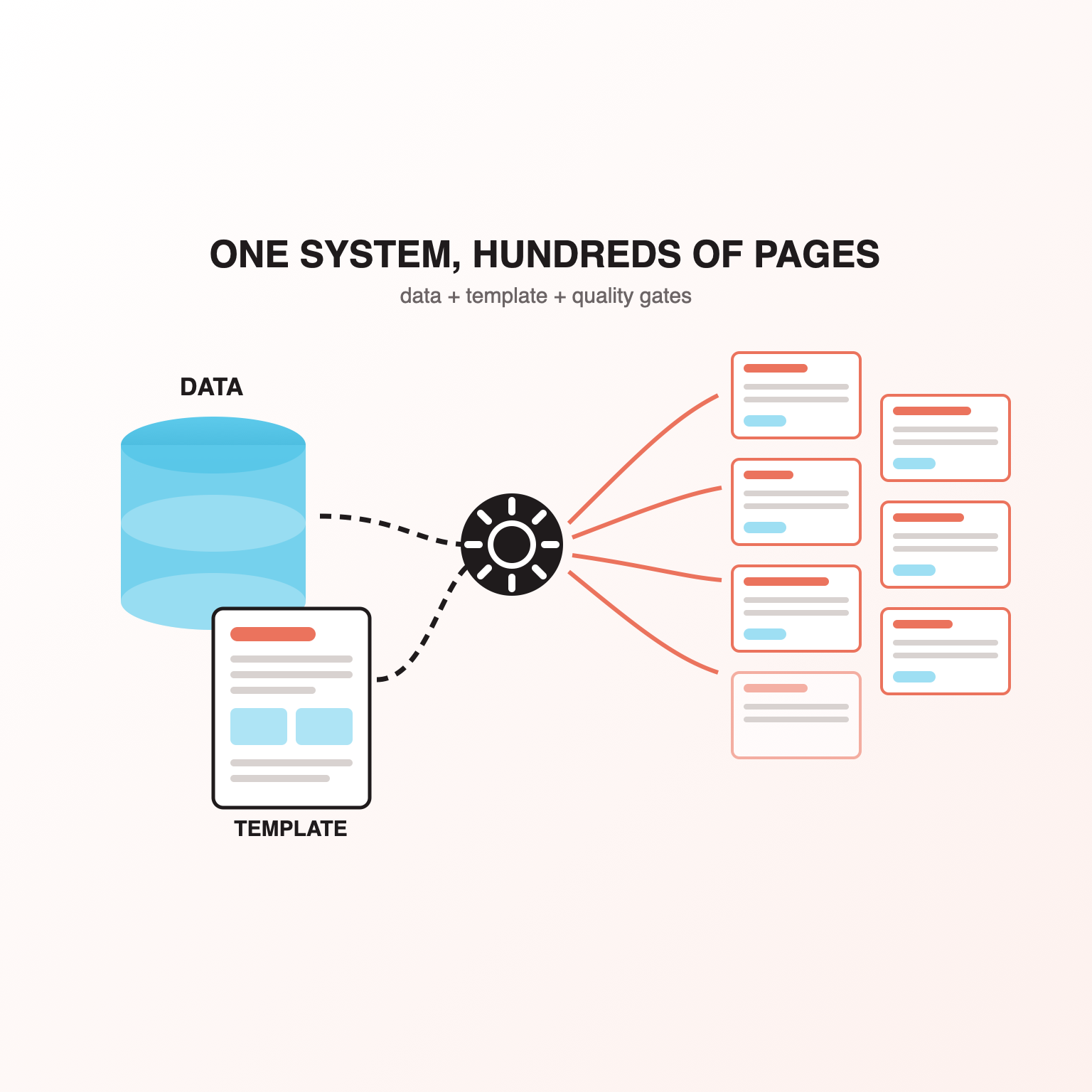
Unified Platforms builds programmatic SEO systems that turn one data set and one template into hundreds of pages that rank, each answering a real search with real substance. We handle the keyword matrix, the data work, the templates, and the quality gates, so scale never turns into thin content. Programmatic SEO done properly is a compounding asset, and we build it to last.
- Scale without thin content
- Data-driven page generation
- Quality gates on every page
Our Clients
Brands that have worked with us
From global giants to fast growing startups, teams trust Unified Platforms with their growth.







What Programmatic SEO Services Covers
- Query pattern research
- Data sourcing and enrichment
- Template design and copy systems
- Generation and publishing pipeline
- Internal linking architecture
- Quality gates and index management
Overview
Programmatic SEO That Captures the Long Tail Properly
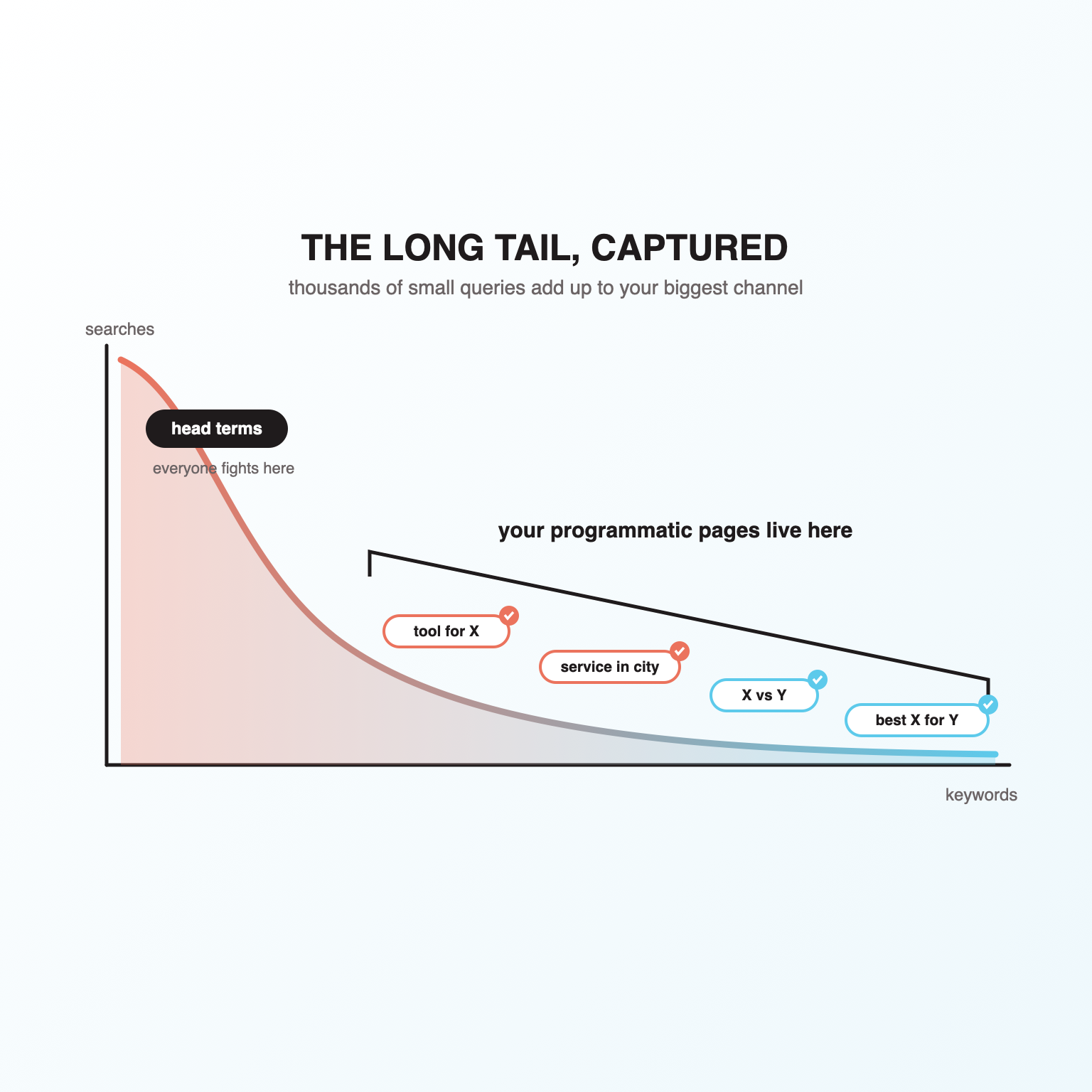
Some search demand cannot be answered one page at a time. When buyers search a pattern, best X for Y, X in city, X vs Y, X for industry, the demand spreads across hundreds or thousands of long-tail queries, each too small to justify a hand-written page and together too large to ignore. Programmatic SEO answers that pattern with a system: one well-designed template, one trustworthy data set, and a generation pipeline that produces a page for every real variation of the query. Done well, it captures demand competitors cannot afford to chase manually.
The catch is that most programmatic SEO is done badly. Teams scrape a keyword list, stamp out thousands of near-identical pages, and wonder why Google ignores or penalises them. The difference between an asset and a liability is substance. Every generated page must answer its specific query with information a visitor actually values: real data, real differences between variations, real reasons for the page to exist. That is an editorial and engineering problem before it is an SEO problem, and it is the problem we solve.
Our programmatic SEO services cover the whole system, not just the idea. We find the query patterns worth building for, source and structure the data that makes each page genuinely useful, design templates that read like pages a person would write, and build the generation and publishing pipeline on your stack. Then we wire in the boring parts that decide whether the project works: internal linking, indexation management, crawl budget, and a quality gate that blocks any page that does not clear the bar.
The query patterns themselves are more varied than most teams expect. Location pages for a service footprint, integration pages for a SaaS ecosystem, comparison pages for a crowded category, calculator and template pages for a jobs-to-be-done audience, glossary and statistics pages for an industry: each follows the same underlying logic of one template multiplied across a data set, and each demands its own data model, its own layout, and its own quality bar. Part of our work is choosing the pattern that fits your market rather than copying whatever worked for a portfolio company on a very different data advantage.
We are operators, not theorists. The team has shipped page systems at scales from dozens to tens of thousands of URLs and has lived with the consequences: the crawl traps, the cannibalisation, the index bloat, the templates that looked clever and read like a spreadsheet. Experience with those failure modes is most of the value, because in programmatic SEO the expensive mistakes happen at scale, and prevention costs a fraction of cleanup.
This kind of search asset also compounds differently from paid channels. A generated page that ranks keeps earning traffic without a media bill, and the system that produced it can produce the next thousand pages at near-zero marginal cost. For businesses whose market naturally breaks into locations, industries, integrations, use cases, or comparisons, it is often the highest leverage SEO investment available. Our job is to make sure the leverage works in your favour, with pages you are proud to have your brand on.
Query pattern research. We start by finding the patterns, not the keywords. Using search data, your market structure, and competitor coverage, we map the repeatable query shapes your buyers use and size the real demand behind each. Then we rank the patterns by intent and business value, because a thousand pages that attract the wrong visitors are worse than a hundred that attract buyers. The output is a keyword matrix that defines exactly which pages deserve to exist and why each one earns its place in the index.
Data sourcing and enrichment. The data set is the soul of a programmatic page. We identify, license, scrape, or build the data that makes each variation genuinely different: prices, specs, locations, features, benchmarks, reviews, whatever your pattern needs. Then we clean and enrich it so every field earns its spot on the page. Thin data produces thin content no matter how good the template is, so we treat data work as the core investment rather than an afterthought bolted onto a copywriting project.
Template design and copy systems. A good programmatic template reads like a page a knowledgeable person wrote, not a mail merge. We design layouts and copy systems with conditional logic, variation, and real editorial judgment: sections that appear only when the data supports them, sentences that adapt to what is actually true for each entity, and headings that answer the query directly. The goal is that a visitor never feels the page was generated, and a search engine finds unique substance on every URL.
Generation and publishing pipeline. We build the pipeline that turns data plus template into live pages on your stack, WordPress, headless, or custom, with clean URLs, correct canonicals, structured data, and sitemaps. Publishing is staged and monitored rather than dumped, so search engines meet the section gradually and crawl budget goes to the pages that matter. The same pipeline handles updates, because programmatic pages that never refresh quietly rot into liabilities as their data ages.
Internal linking architecture. Hundreds of pages are only findable if the architecture makes them findable. We design hub and spoke structures, category indexes, and contextual cross-links so authority flows into the generated section and every page sits within a coherent site structure. This is also what makes the section useful to humans who browse rather than search, and it is one of the strongest ranking levers in programmatic SEO because it is fully under your control.
Quality gates and index management. Every generated page passes automated checks before it ships: minimum unique substance, data completeness, duplication thresholds, and rendering sanity. Pages that fail stay out of the index until they earn their way in, and we monitor indexation, impressions, and rankings per pattern so weak segments get fixed or pruned. This discipline is what separates a durable programmatic asset from the thin-content graveyards that get swept away in every core update.
The Difference
Scale Is Easy. Substance at Scale Is the Craft
Anyone can generate ten thousand pages. The craft is making every one of them worth a visitor's click and a crawler's index: unique data, honest answers, clean architecture, and a quality gate that never sleeps. That is the difference between a programmatic asset that compounds for years and a thin-content liability waiting for the next core update, and it is the difference we are hired for.
Book a Strategy CallOur Process
How We Build a Programmatic SEO System
A disciplined sequence, adapted to your competitive landscape. Open each step.
01Opportunity audit
02Keyword matrix and page plan
03Data build
04Template and prototype
05Staged launch
06Link architecture and integration
07Measure, prune, and expand
Why Unified Platforms
Why Teams Choose Us for Programmatic SEO
The working habits behind every engagement.
Systems thinking, editorial standards
This discipline fails at the extremes: engineers who scale junk, and writers who cannot scale at all. We hold both ends, pipelines that generate thousands of pages and an editorial bar that any single page must clear on its own merits. The combination is rare, and it is exactly what this discipline demands, because the search engine judges every page individually and so does every visitor.
We have seen the failure modes
Index bloat, cannibalisation, crawl traps, doorway penalties, templates that read like spreadsheets: we have watched each of these kill projects, and we design against all of them from day one. In programmatic SEO the mistakes ship at scale, so judgment about what not to build is worth more than enthusiasm about what could be built.
Data is treated as the product
Most agencies treat the template as the deliverable and the data as someone else's problem. We invert that: the data set is the product, because it is the only thing that makes generated pages genuinely different from each other. Our projects budget real effort for sourcing, cleaning, and enriching data, and the pages show it.
Built on your stack, owned by you
The pipeline, the data, and the pages live in your systems, documented well enough for your team to run without us. We build with your engineers when you have them and around your constraints when you do not. A programmatic asset you cannot maintain yourself is a slow-motion liability, and we do not sell those.
Honest about fit
A page system is powerful where a real pattern of demand meets a real data advantage, and pointless where either is missing. We tell you which one you have before any build starts. Some of our best engagements began with us talking a client out of a page system and into a smaller, better plan, and that honesty is why they stayed.
Proof from real programs
The numbers on this page come from search programs we have actually operated, not industry benchmarks borrowed for a pitch. We are happy to walk through what was done and what it produced, because a partner asking you to trust a system should be able to show you the systems it has already built.
Industries
Industries We Work With
Deep experience across the sectors we serve, with strategy tailored to each.
Get a Straight Feasibility Read
Bring us your market and your data, a product catalogue, a location footprint, an integration list, a pricing database, and we will give you a straight first read: whether a programmatic play exists, roughly how big it is, and what it would take to build properly. The first conversation usually settles the biggest question, whether your data advantage is real, in under an hour. If the opportunity is not there, we will tell you that too, and save you a very expensive experiment. Either way you leave knowing exactly where you stand, which is more than most teams get from a quarter of internal debate.
Book a Strategy CallQuestions
Frequently Asked Questions
Straight answers before you ever get on a call.
Programmatic SEO Basics
What is programmatic SEO?
Is programmatic SEO safe, or will Google penalise it?
How is this different from AI-generated content?
What are some well-known examples of programmatic SEO?
Fit and Feasibility
How do I know if my business has a programmatic opportunity?
What if we do not have a good data set?
How many pages do we need for this to be worth it?
Working With Us
What does programmatic SEO cost?
What does a typical engagement look like?
Do you work with our developers or build it yourselves?
How long until we see results?
Technical Decisions
How do you decide URL structure for programmatic pages?
How do you prevent generated pages from cannibalising existing rankings?
Do programmatic pages get structured data and schema markup?
Measurement and Maintenance
How do you measure success?
What maintenance does a programmatic section need?
Can you fix an existing programmatic section that is underperforming?
Turn Your Data Into a Compounding Asset
One more thing worth saying plainly: the window matters. Long-tail patterns are cheap to win while nobody is contesting them, and expensive once a well-funded competitor builds the definitive system for your category first. In several of the markets we watch, that race has already been run, and the winner now collects compounding traffic the runners-up pay for in ads. Long-tail demand is sitting in your market right now, spread across queries no competitor will ever hand-write pages for. A programmatic SEO system built with real data and real discipline can capture it and keep capturing it, compounding quietly while paid channels get more expensive every year. If you want to know whether that opportunity exists for your business, and what it would honestly take to build, book a free strategy call. We will bring numbers, not adjectives, and if the play is not there we will say so.
Book a Strategy CallRelated: technical SEO audit services.