 Skip to content
Unified Platforms
Growth Marketing Services
Unified Platforms builds growth marketing services around a single job: turning marketing spend into predictable revenue. We run acquisition, activation, and retention as one connected system, test relentlessly against a growth model, and report on the numbers your leadership actually cares about.
- Full-funnel growth operators
- Experiment-led growth, not guesswork
- Revenue reported, not vanity metrics
Our Clients
Brands that have worked with us
From global giants to fast growing startups, teams trust Unified Platforms with their growth.










What Growth Marketing Services Covers
- Full-funnel growth strategy
- Paid acquisition that scales
- SEO and content engine
- Lifecycle and retention
- Conversion rate optimization
- Analytics and attribution
Overview
Growth Marketing Services That Turn Spend Into Revenue
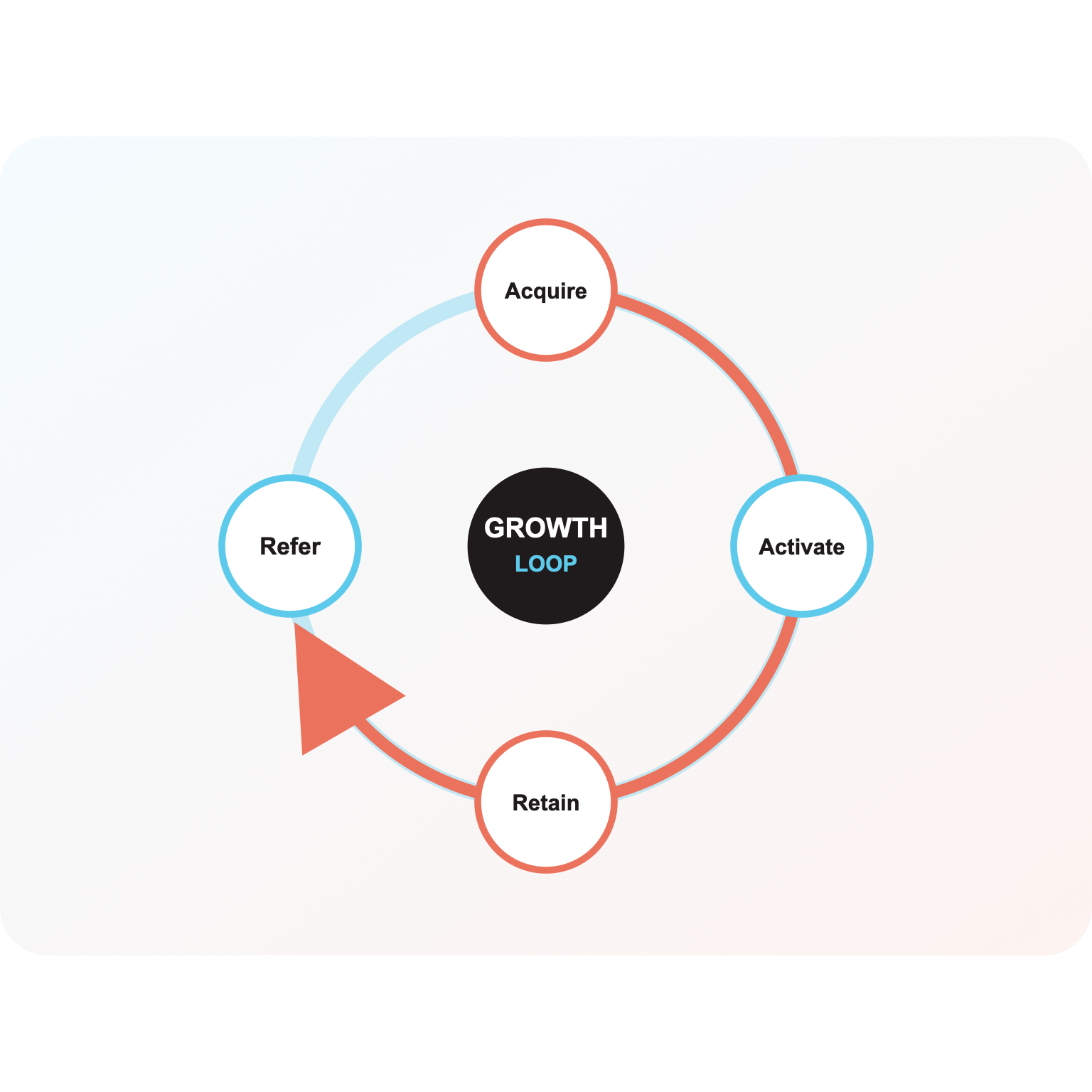
Most companies do not have a traffic problem or a creative problem. They have a system problem. Paid sits in one silo, SEO in another, email in a third, and nobody owns the handoffs where growth actually leaks. Our growth marketing services exist to close those gaps. We treat acquisition, activation, retention, and referral as one loop, and we manage that loop with the same discipline a product team brings to a roadmap. When those pieces finally work together, the business stops paying twice for the same customer and starts compounding the value of every one it wins.
Growth marketing is not a channel. It is a way of working. Instead of betting a quarter on one big idea, we run a steady cadence of experiments, keep the ones that move revenue, and cut the ones that do not. That rhythm compounds. A single winning test rarely changes a business, but a team that ships fifty disciplined tests a quarter, learns from every one, and doubles down on the winners will pull away from competitors who are still arguing in meetings. The advantage is not any one clever tactic. It is the machine that keeps finding and scaling the next one.
Every engagement starts with a growth model, not a channel plan. We map how a visitor becomes a lead, a lead becomes a customer, and a customer becomes revenue and repeat revenue. That model tells us where the biggest constraint sits today. Sometimes the answer is more traffic. Just as often the real leak is a landing page that converts at half its potential, an onboarding flow that loses people in week one, or a paid account bidding on terms that never close. Fixing the true constraint almost always beats pouring more spend into a funnel that cannot hold it.
We are operators, not observers. The people running your account have managed real budgets, owned real targets, and lived with the consequences of their own decisions. That matters because growth marketing is full of advice that sounds smart and costs money. We would rather show you a test result than a slide, and we would rather kill our own idea early than defend it because it was ours. Ego is expensive in this work, and the fastest teams are the ones most willing to be proven wrong quickly and cheaply.
This approach fits companies at very different stages. An early business needs focus, a clear first constraint, and a handful of channels that actually pay back before it spreads itself thin. A scaling business needs a backlog disciplined enough to keep dozens of moving parts pointed at the same targets. A mature business often needs the opposite of more activity: a hard look at where spend has quietly stopped earning its keep. We size the program to the stage rather than forcing every client through the same template.
The goal of our growth marketing services is not a busier dashboard. It is a business that knows which levers move which numbers, and can pull them on purpose. When we hand work back to an in-house team, they inherit a documented growth model, a live experiment backlog, and a measurement setup they can trust, not a black box only we understand. A good engagement should leave you more capable than you were, not more dependent, and that principle shapes how we work from the first week.
Full-funnel growth strategy. We build one plan that spans the whole journey rather than a stack of disconnected channel plans. That means a shared growth model, a clear north-star metric, and a prioritized backlog of experiments ranked by expected impact and effort. Every channel earns its place by the job it does in the funnel, not by how fashionable it is this year. The strategy is a living document, revisited as results come in, so the plan you start with is not the plan you are stuck defending three months later when the data says something different.
Paid acquisition that scales. We run paid search, paid social, and retargeting as a performance system, not a set-and-forget spend. Structured accounts, tight audience and keyword mapping, creative testing, and offer experiments let us push volume without watching cost per acquisition run away. When a channel hits diminishing returns, we know, and we reallocate before the money is wasted. Scaling paid is less about finding one perfect ad and more about building a pipeline of creative and offers that keeps the account fresh as audiences fatigue and auction costs shift.
SEO and content engine. Organic is the compounding half of growth, and we treat it that way. We build topic clusters around real commercial intent, fix the technical issues holding rankings back, and publish content that answers the questions your buyers actually search. Over time this lowers blended acquisition cost because a growing share of pipeline arrives without a media bill attached. Search also feeds every other channel, giving paid better landing pages, email better content, and sales better answers to the objections buyers raise before they ever fill in a form.
Lifecycle and retention. Acquisition without retention is a bucket with a hole in it. We design onboarding, email and messaging flows, and win-back sequences that turn first purchases into habits and habits into referrals. For subscription and repeat-purchase businesses, small improvements in activation and retention often move revenue more than any new acquisition channel could. This is also the cheapest growth available, because talking to people who already chose you costs a fraction of what it takes to earn a stranger, and it lifts the return on every rupee spent up top.
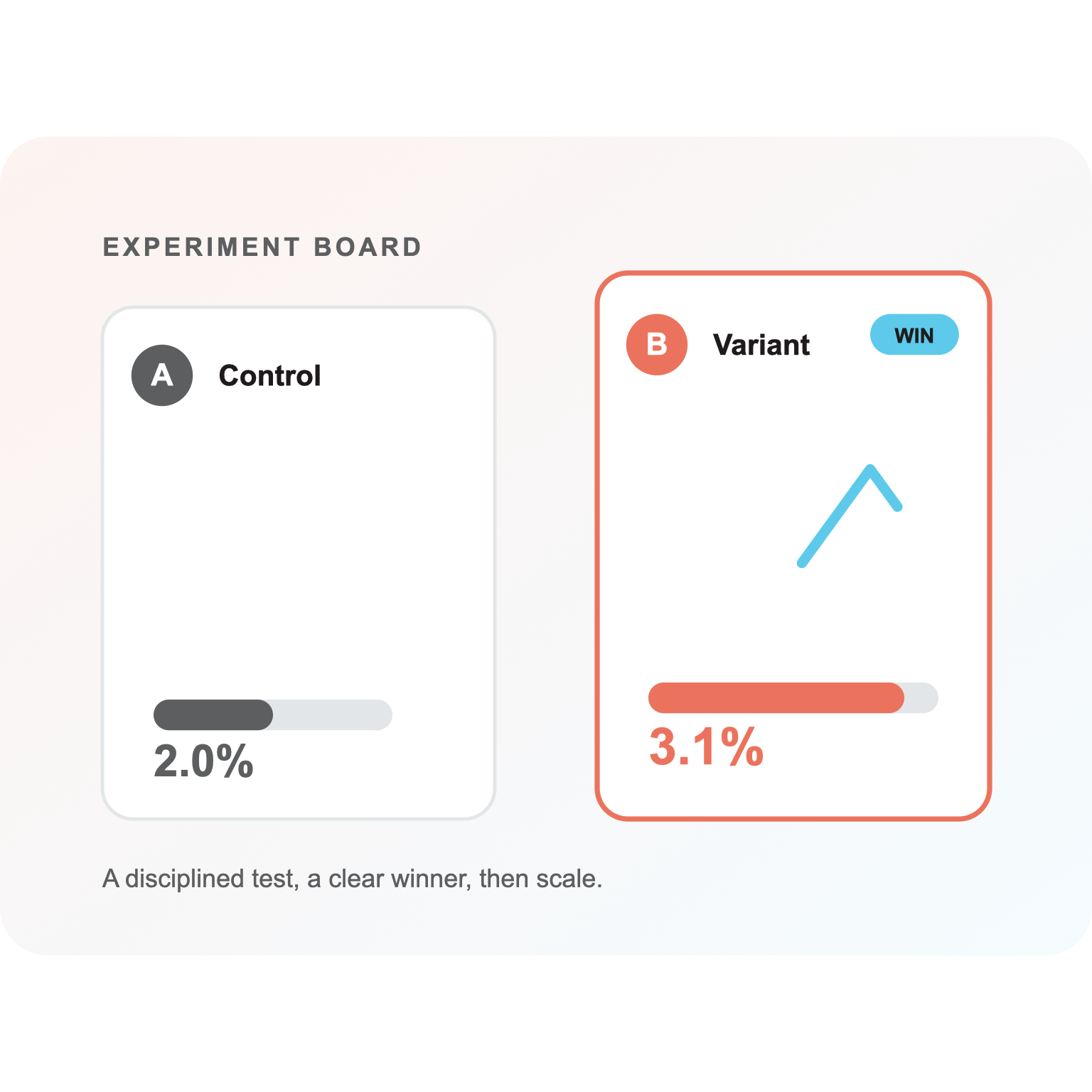
Conversion rate optimization. The cheapest traffic is the traffic you already pay for and fail to convert. We audit landing pages, signup flows, and checkouts, then run structured experiments on the friction points that matter. Better conversion improves the economics of every channel at once, which is why it usually sits near the top of our backlog rather than as an afterthought. A page that moves from two percent to three percent has effectively made every ad, email, and search click that lands on it fifty percent more valuable without adding a rupee of media spend.
Analytics and attribution. You cannot run experiments on numbers you do not trust. We set up clean tracking, sane attribution, and dashboards that tie marketing activity to revenue rather than to clicks. Once the measurement is solid, decisions get faster and cheaper, because the debate moves from opinion to evidence and the team stops relitigating the same arguments every month. We do not chase perfect attribution, which does not exist, but we do insist on measurement good enough to tell a real winner from a lucky month and to catch a losing channel before it drains the budget quietly.
The Difference
Growth Compounds When You Run It Like a System
A single clever tactic rarely changes a business. A team that ships disciplined experiments every week, learns from each one, and reinvests in the winners will pull ahead and keep pulling ahead. That compounding is the whole point of our growth marketing services, and it is why we build a durable system rather than chase a lucky month. The system is also what survives the things you cannot control, a channel that gets more expensive, an algorithm that shifts, a competitor that floods the auction, because a team that knows how to test its way out of a problem is far harder to knock off course than one that got lucky with a single winning campaign.
Book a Strategy CallOur Process
How We Run Growth As a System
A disciplined sequence, adapted to your competitive landscape. Open each step.
01Audit and baseline
02Build the growth model
03Set the north-star and targets
04Fill the experiment backlog
05Build, launch, and ship
06Measure and learn
07Scale what works
Why Unified Platforms
Why Teams Choose Us for Growth
The working habits behind every engagement.
Operators behind the plan
The team on your account has owned budgets and targets, not just built decks. When we recommend a move, it comes from having lived with the outcome of the same call before, which is a very different thing from repeating advice we read somewhere. Experience shows up most in the mistakes we help you avoid, the expensive detours that look reasonable on paper but that we have already paid for once and would rather you did not.
One team, whole funnel
Paid, organic, lifecycle, and conversion sit under one roof and one plan, so nobody optimizes their slice at the expense of the business. The handoffs where growth usually leaks are owned, not left in the gap between three separate agencies. When one team can see the whole funnel, it can move budget and attention to wherever the constraint actually is this month rather than defending a fixed scope of work.
Evidence over opinion
We would rather run a small test than win an argument. Decisions get made against results, which makes the whole program calmer and faster, because the team stops relitigating the same debates and starts trusting the numbers in front of them. It also protects you from the loudest voice in the room, since a clean experiment settles a question that seniority and confidence never really could.
Speed with discipline
We ship quickly, but every experiment is designed to teach something whether it wins or loses. Fast and rigorous are not opposites here, and the combination is what lets a program compound instead of just staying busy. Plenty of teams are busy and going nowhere. The difference is whether the work is structured so that this month is measurably smarter than last month, and we build for exactly that.
Real proof, no invented numbers
We talk about work we have actually done and metrics we can stand behind. You will not hear fabricated client counts or borrowed case studies, because a growth partner that inflates its own results will happily inflate yours, and that helps no one. Honest reporting sometimes means delivering news you would rather not hear, and we would rather be the partner who tells you early than the one who hides a problem until it is expensive.
Built to hand back
We document the growth model, the backlog, and the measurement setup so your team can run the system without us if they choose to. A dependency is not a strategy, and an engagement that leaves you stronger and more self-sufficient is the only kind worth selling. The clients who get the most from us are the ones who end up absorbing the way of working into their own team, and we treat that outcome as a success rather than a lost account.
Industries
Industries We Work With
Deep experience across the sectors we serve, with strategy tailored to each.
Get a Straight First Read
Bring us the one number that keeps you up at night, blended acquisition cost, a plateaued channel, a retention curve that dips too early, and we will give you a straight first read on where the real constraint sits and what we would test first. No pitch theatre, no borrowed case studies, just an experienced look at your funnel and an honest opinion on where the next unit of effort would earn the most. If that read is useful and we are a fit, we can talk about working together from there.
Book a Strategy CallQuestions
Frequently Asked Questions
Straight answers before you ever get on a call.
Growth Marketing Basics
What is growth marketing?
How is growth marketing different from digital marketing?
Is my business too small or too large for this?
Do we need a big budget to start?
Working With Us
What does an engagement look like?
Do you replace or work with our in-house team?
How quickly will we see results?
Channels and Scope
Which channels do you cover?
Can you focus on just one channel?
Do you handle creative and content production?
Measurement and Results
How do you measure success?
What reporting do we get?
What if an experiment fails?
Will you tie growth work to actual pipeline and revenue?
Put Evidence Behind Every Rupee
Every rupee of marketing spend is a decision, and decisions deserve evidence. If you want a growth program that treats your budget like it is real, runs on tests instead of opinions, and reports on revenue instead of vanity metrics, let us take a look. We will start where the constraint is, not where the fashionable channel is, and we will be straight with you about what is working and what is not from the first month onward. The best time to build a compounding growth system was a year ago, and the second best time is now, before another quarter of spend goes out without a way to learn from it. Book a free strategy call and we will show you where we would start.
Book a Strategy CallRelated: influencer marketing services.
Related: social media marketing services.